Lebanon’s geology mixes coastal plains, mountain ranges and valleys, producing a surprising variety of minerals that have supported local crafts and industry for generations. Whether you’re curious about raw materials or regional geology, a concise list helps make sense of what’s found where.
There are 14 Minerals in Lebanon, ranging from Anhydrite to Quartz. The list is laid out so each entry shows Mineral type,Main locations,Common uses, which you’ll find below.
Which of these minerals show up in everyday products and construction?
Many do: minerals like limestone and gypsum (related to anhydrite) are key for building materials, quartz appears in glass and electronics, and various salts are used in food and industry. The table below links each mineral to its typical uses so you can see practical applications at a glance.
How current and reliable is this list for research or fieldwork?
This compilation aims to be comprehensive for general reference, but for detailed mapping, permitting or commercial work you should consult recent geological surveys, local mining records or academic studies; those sources provide the latest deposit data, production figures and regulatory context.
Minerals in Lebanon
| Name | Mineral type | Main locations | Common uses |
|---|---|---|---|
| Calcite | Industrial / construction | Keserwan (Jeita Grotto), Mount Lebanon widespread | Cement, lime, construction aggregate, cave formations |
| Aragonite | Decorative / industrial | Jeita Grotto (Keserwan), coastal caves and springs | Decorative, collectors, minor industrial uses |
| Gypsum | Industrial / construction | Bekaa Valley, Mount Lebanon outcrops | Plaster, drywall, cement additive, soil amendment |
| Anhydrite | Industrial / construction | Bekaa Valley subsurface, evaporite beds | Cement, chemical industry, soil treatment |
| Dolomite | Industrial / construction | Mount Lebanon, Anti‑Lebanon margins | Aggregate, lime, cement flux, ornamental stone |
| Quartz | Industrial / decorative | Widespread (veins, sands, gravels) throughout Lebanon | Glassmaking, abrasives, aggregates, jewellery |
| Kaolinite | Industrial (clay) | Coastal plain and Bekaa clay deposits | Ceramics, bricks, paper coating, fillers |
| Halite | Salt | Coastal sabkhas and salt pans (northern coast/Akkar area) | Table salt, food processing, local salt production |
| Natural bitumen (asphaltum) | Industrial (organic mineraloid) | Coastal southern Lebanon and historic coastal sites | Waterproofing, road paving, historical caulking |
| Hematite | Metallic (iron oxide) | Scattered gossans and weathered zones in Mount Lebanon | Iron ore (historical), pigments, ballast |
| Goethite | Metallic (iron oxide) | Weathered zones in mountain outcrops | Pigments, minor iron source, soil indicator |
| Pyrite | Sulphide (metallic) | Veins and sedimentary beds in Bekaa and Mount Lebanon | Sulfur source, collector mineral, occasional ore |
| Barite | Industrial (heavy mineral) | Reported in vein occurrences in Mount Lebanon ranges | Drilling muds, ballast, industrial chemicals |
| Apatite (phosphorite) | Industrial (fertilizer) | Localized phosphatic beds reported in coastal/Bekaa studies | Fertilizers, phosphorus chemicals |
Images and Descriptions
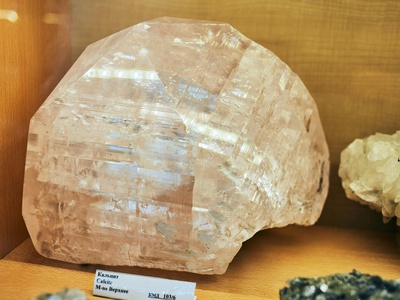
Calcite
Calcite is the common carbonate mineral forming Lebanon’s limestones and spectacular cave stalactites (Jeita). It’s used in cement and lime production and underpins much of the country’s building stone and karst scenery; some quarrying is commercial.
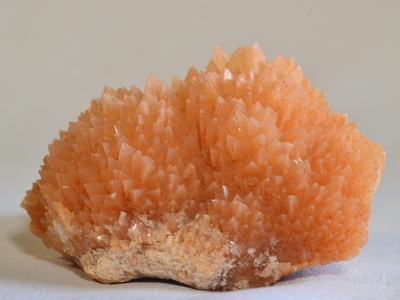
Aragonite
Aragonite is the needle‑like carbonate that forms some cave speleothems and tufa crusts in Lebanon. Valued by collectors and important for cave tourism, it occurs alongside calcite in notable show caves.
Gypsum
Gypsum (calcium sulfate) occurs in sedimentary layers in parts of the Bekaa and surrounding ranges. It’s used to make plaster, drywall and as a cement additive; small to moderate local extraction has occurred for construction materials.

Anhydrite
Anhydrite is the anhydrous calcium sulfate often associated with gypsum in evaporite sequences beneath parts of the Bekaa. It’s used in cement and industrial applications and is documented in regional geological studies.
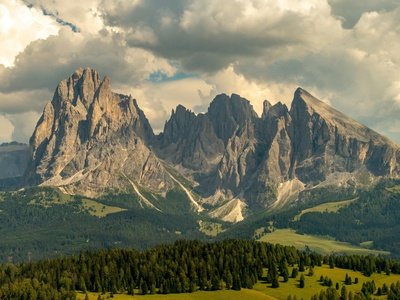
Dolomite
Dolomite (calcium magnesium carbonate) forms dolostone units in Lebanon’s mountains and is quarried as aggregate and a source of magnesium‑bearing lime for construction and industrial uses.
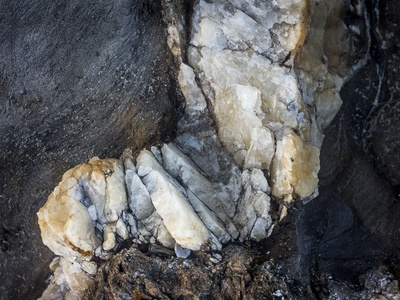
Quartz
Quartz is abundant in Lebanon as veins, sands and hard rock fragments. It’s a basic industrial mineral for glass and abrasives and appears in gravels and vein minerals, sometimes collected as clear crystals.
Kaolinite
Kaolinite and related clay minerals occur in weathered deposits used locally for ceramics and brickmaking. These clays have been exploited at small scale for traditional pottery and building materials.
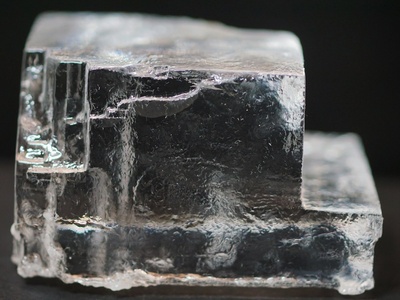
Halite
Halite (rock salt) and coastal evaporative salt make up natural and managed salt pans along parts of Lebanon’s northern coast. Salt harvesting has been a local, traditional activity though not a large modern industry.
Natural bitumen (asphaltum)
Natural bitumen seeps and asphaltic residues are recorded along the Lebanese coast and in antiquity were used for waterproofing and caulking. Small historic extraction occurred; modern commercial petroleum resources are limited.
Hematite
Hematite is an iron oxide found in oxidized zones and gossans across Lebanon’s ranges. Historically noted as a small local iron source and used for pigments; no large modern iron mining industry exists.
Goethite
Goethite commonly forms as yellow‑brown iron oxide in soils and weathered rock in Lebanon. It’s an indicator of iron mineralisation and has local historical uses for pigment and small iron extraction.
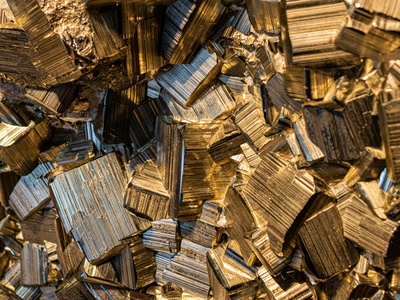
Pyrite
Pyrite (“fool’s gold”) occurs in Lebanon’s veins and sedimentary layers. While not a major commercial sulfur source, it is widespread in mineralised rocks and noted in regional geological reports.

Barite
Barite (barium sulfate) has been reported in hydrothermal vein occurrences in Lebanon’s coastal and mountain belts. When present it’s useful industrially (drilling fluids, weighting agent); documented occurrences are limited and not large‑scale.
Apatite (phosphorite)
Apatite‑bearing phosphorite occurrences have been described in some coastal and inland sedimentary sequences. Phosphate minerals are important for fertilizer manufacture; Lebanese deposits have been of limited extent and small‑scale in importance.