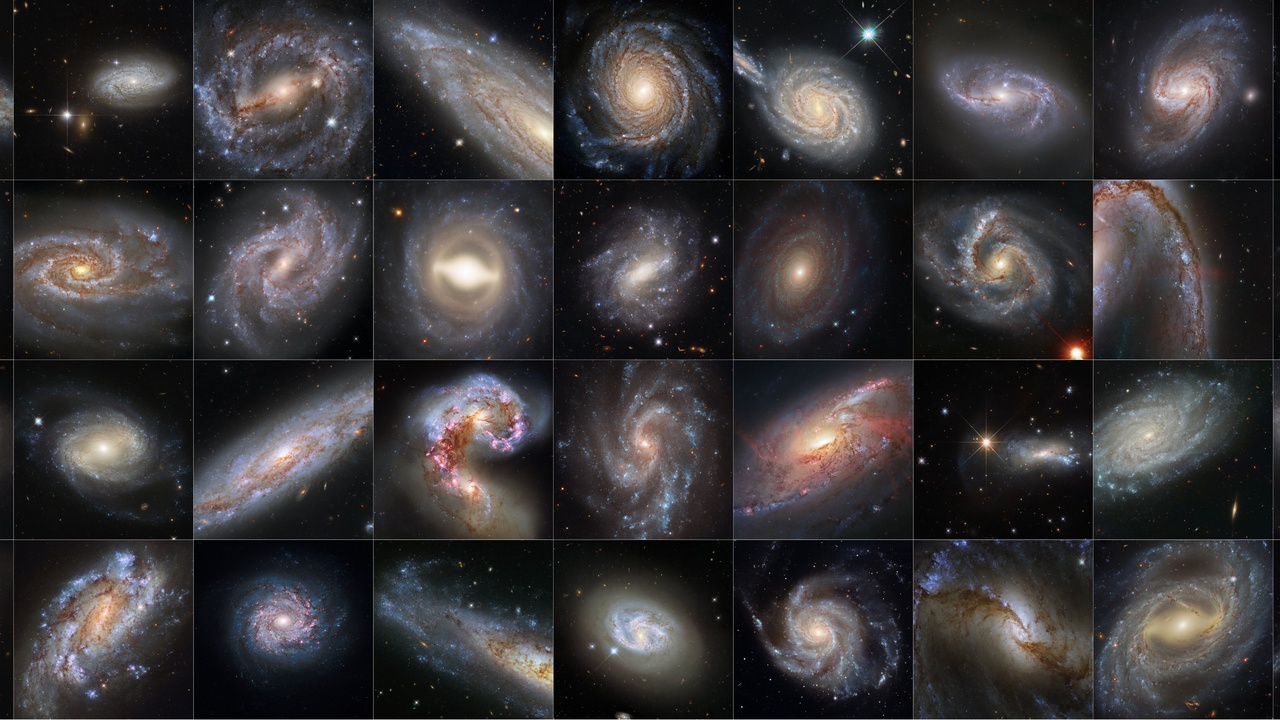
In 1929 Edwin Hubble published observations showing galaxies recede from us, a discovery that set the stage for what would become the Big Bang picture of an expanding universe. That simple measurement—redshifts that grow with distance—led to a century of refinement, not a single definitive sound bite.
Popular accounts have a habit of flattening nuance into catchy phrases, producing persistent misconceptions. This piece debunks ten common errors and explains what modern cosmology actually says, using observations, experiments, and clear examples. Along the way I point out why those confusions matter for interpreting telescopic data, for assessing what physics can and can’t answer, and for talking about science with friends.
Conceptual and Historical Myths
Many conceptual mistakes come from shorthand phrasing and early metaphors—the phrase “Big Bang” itself was coined in 1949 by Fred Hoyle during a radio broadcast. Clearing language up helps avoid false impressions about space, time, and scientific certainty.
1. The Big Bang was an explosion of matter into empty space
That’s a common image, but it’s misleading. The Big Bang refers to the expansion of space itself, not debris flying outward into pre-existing emptiness.
A useful analogy is dots on an inflating balloon: as the surface stretches every dot moves away from every other dot, without a center on the surface. The analogy breaks down in some ways (our universe is three-dimensional and not the balloon’s surface), but it captures the core idea.
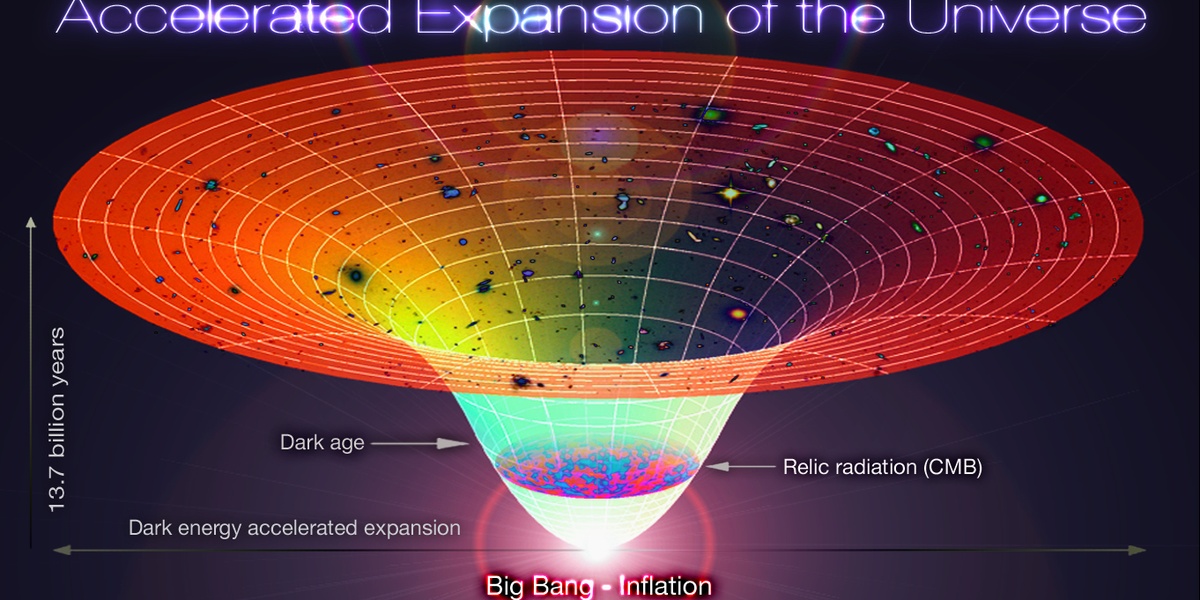
Hubble’s 1929 redshift catalog quantified recession velocities, and modern measurements put the universe’s age at roughly 13.8 billion years (Planck mission estimates). That expansion is what produces the redshifts astronomers measure, and understanding metric expansion is essential for interpreting distance measures and galaxy surveys.
2. The Big Bang was the origin of everything from a single point
People often say “everything came from a point,” but the term “singularity” is a mathematical extrapolation where general relativity breaks down—not a proven physical description of a literal point in space.
Physicists use Planck time (about 10−43 seconds) to mark where classical equations stop being reliable and quantum gravity must take over. Rather than describing t = 0 in detail, cosmologists focus on epochs we can test—nucleosynthesis in the first few minutes and the later photon-decoupling era that produced the cosmic microwave background.
3. The Big Bang proves the universe had a single cause or a creation event in the philosophical sense
Scientific models explain and predict observational patterns; they don’t, on their own, settle metaphysical questions about purpose or ultimate cause.
Data such as the cosmic microwave background (CMB) and primordial element abundances constrain physical theories, but multiple physical scenarios—different inflationary models, some cyclic proposals—can be compatible with the same observations. That multiplicity shows physics informs philosophy but doesn’t automatically answer it.
4. The Big Bang was a sudden event and there was “nothing” before it
Saying there was “nothing” before the Big Bang misunderstands time in general relativity. Time and space are part of the model, so “before” can be ill-defined in some descriptions.
Some theories posit pre-expansion phases—an inflationary era at roughly 10−32 seconds, or speculative bouncing models—while quantum-gravity research explores what comes closer to t = 0. Observational constraints mainly apply to epochs after inflation and to the particle-physics eras we can probe with telescopes and accelerators.
Evidence and Observation Myths
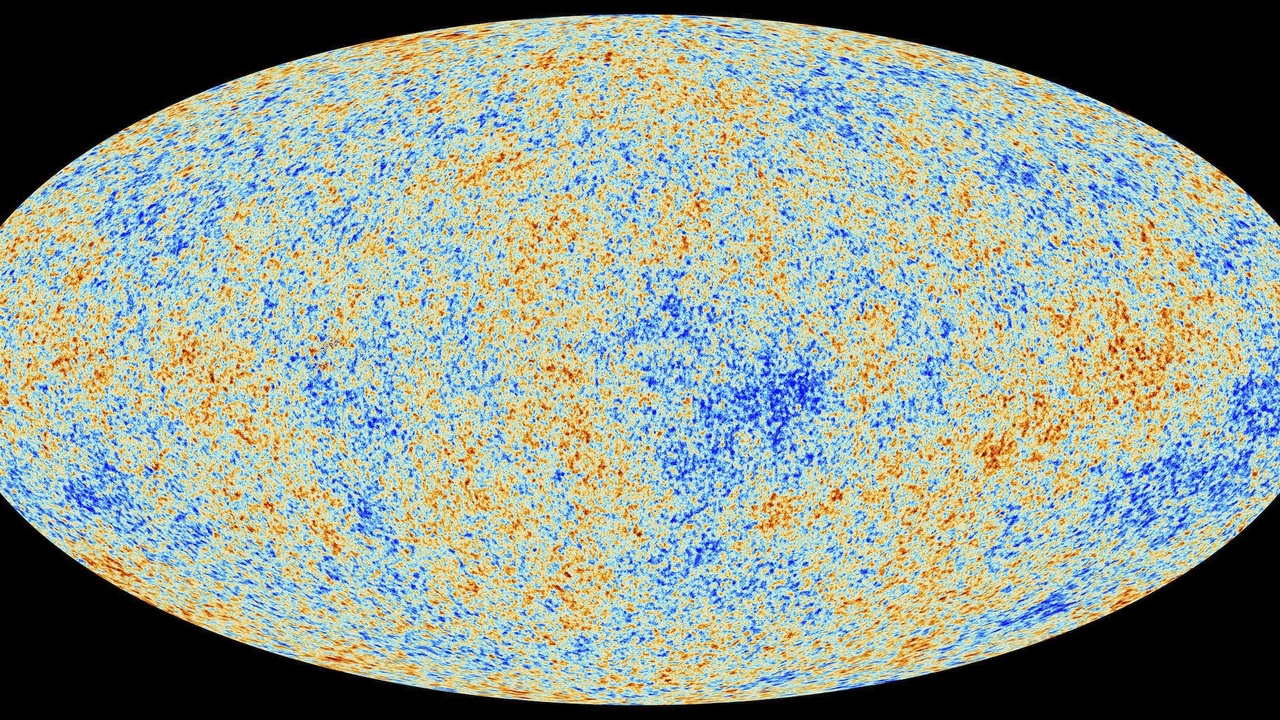
Confusion often comes from misreading what observations actually show. The standard Big Bang framework rests on three robust pillars: the expansion measured by Hubble, the cosmic microwave background discovered in 1965, and Big Bang nucleosynthesis predictions for light elements.
5. There’s no evidence for the Big Bang — it’s just a theory
That dismisses a vast, testable body of evidence. Hubble’s 1929 redshifts showed universal expansion; Penzias and Wilson detected the CMB in 1965; and Big Bang nucleosynthesis predicts light-element abundances that match observations.
Concrete numbers: the CMB is a near-perfect blackbody at 2.725 K; helium’s primordial mass fraction is about 24–25 percent; the universe’s age is ≈13.8 billion years from Planck data. Satellite missions—COBE (first anisotropy detection, 1992), WMAP (2001–2010), and Planck (2013/2018)—tightened those constraints and confirmed independent lines of evidence.
6. The Big Bang model explains galaxy formation without dark matter
Expansion gives the background evolution, but forming galaxies and clusters requires extra ingredients—chiefly non-baryonic dark matter and dark energy in the ΛCDM framework.
Observations demand it: galaxy rotation curves, gravitational lensing, and the CMB power spectrum all point to unseen mass. Current parameter estimates (rounded from Planck results) put ordinary matter at about 5 percent, dark matter ≈27 percent, and dark energy ≈68 percent of the total energy budget. That partition shapes structure formation and drives ongoing searches in underground detectors and particle accelerators.
7. The cosmic microwave background (CMB) is just background radiation from our galaxy
The CMB is cosmological, not local. It’s an almost-perfect blackbody at 2.725 K seen across the entire sky, with tiny anisotropies at the level of tens of microkelvins.
Penzias & Wilson discovered the signal in 1965, and missions like COBE, WMAP, and Planck mapped its spectrum and anisotropies. Analysts model and subtract galactic foregrounds (synchrotron, dust), leaving a sky pattern that matches predictions from early-universe physics—the acoustic peaks visible in the CMB power spectrum are a clear cosmological fingerprint.
Popular Culture, Language, and Interpretation Myths

Movies, museum placards, and catchy metaphors spread simplified images that stick. Small changes in wording make a big difference: clearer language reduces the chance someone walks away thinking the universe is an ordinary explosion or that scientists are hiding gaps.
8. ‘Singularity’ and ‘Big Bang’ mean the same thing
They’re related but not identical. “Singularity” is a technical label for where classical equations predict infinite density; “Big Bang” is the shorthand for the hot, dense early state and the subsequent expansion we can describe and test.
Try this short line when explaining it: the singularity is where our equations stop working, while the Big Bang is the high-temperature era we actually probe with light and element abundances. The distinction keeps the conversation accurate without getting bogged down in jargon.
9. If there are gaps in the theory, scientists are confused or dishonest
Open questions are a normal part of science and often trigger productive work rather than indicate failure. Cosmology pairs precise, testable predictions with active research areas.
Examples: searches for dark matter particles drive experiments underground and at colliders; Planck’s precision maps of the CMB encouraged new large-scale structure surveys. Healthy skepticism is good—just don’t conflate unanswered details with fraud. The gaps guide where instruments and theory should focus next.
10. The Big Bang is ‘disproven’ by modern discoveries
New data rarely obliterates a well-supported framework; it refines it. Successive missions show how refinement works: COBE first detected CMB anisotropy in 1992, WMAP tightened parameters in the 2000s, and Planck (2013/2018) sharpened them further.
Those improvements narrowed uncertainties on numbers such as the universe’s age (about 13.8 billion years) and composition, and they tested inflationary predictions. Being willing to revise models in light of data is a strength of science, not a sign the framework is inherently unstable.
Summary
- Expansion is a stretching of space, not an ordinary explosion; remember the balloon analogy and its limits.
- The CMB (2.725 K) and light-element abundances (helium ≈24–25% by mass) are independent, strong pillars that support the early hot, dense phase.
- Terms matter: singularity, Big Bang, inflation—each describes different ideas. Using clearer wording helps conversations stay accurate.
- Open problems (dark matter, dark energy, quantum gravity) drive experiments and theory; gaps signal opportunity, not deception.
- Want to follow up? Read mission summaries from NASA/ESA for COBE, WMAP, and Planck, pick a popular science book by a practicing cosmologist, and try explaining one of these myths about the big bang to a friend.