Scandium sits near the start of the transition metals and shows up in small but important roles across materials and organometallic chemistry; its compounds are often niche but useful for catalysts, alloys, and specialized ceramics. A concise list helps spot patterns in formulae and common properties without wading through dense texts.
There are 26 Scandium Compounds, ranging from Bis(cyclopentadienyl)chloroscandium to Tris(cyclopentadienyl)scandium. For each entry you’ll find below: Formula,Oxidation state,Notable property or use (max 15 words), so you can quickly compare structural types, typical oxidation states, and practical notes you’ll find below.
Which oxidation states of scandium are most common?
Scandium is most commonly found in the +3 oxidation state in salts, oxides, and coordination complexes; lower states like +2 are rare and usually stabilized only in specialized organometallic or reduced conditions.
What practical applications do scandium compounds have?
They appear in small but valuable roles: Al–Sc alloys for aerospace, Sc2O3 in high-intensity lamps and ceramics, and organometallic scandium complexes used as catalysts in polymerization and organic synthesis.
Scandium Compounds
| Name | Formula | Oxidation state | Notable property or use (max 15 words) |
|---|---|---|---|
| Scandium(III) oxide | Sc2O3 | 3 | High-temperature ceramic, phosphor host |
| Scandium(III) chloride | ScCl3 | 3 | Lewis acid, catalyst precursor |
| Scandium(III) chloride hexahydrate | ScCl3·6H2O | 3 | Common laboratory hydrated salt |
| Scandium(III) fluoride | ScF3 | 3 | Stable fluoride, optical applications |
| Scandium(III) bromide | ScBr3 | 3 | Hygroscopic halide precursor |
| Scandium(III) iodide | ScI3 | 3 | Sublimable halide used in vapor deposition |
| Scandium hydroxide | Sc(OH)3 | 3 | Amphoteric hydroxide precursor to oxide |
| Scandium oxyhydroxide | ScO(OH) | 3 | Intermediate oxyhydroxide from hydrolysis reactions |
| Scandium nitrate | Sc(NO3)3 | 3 | Soluble salt for materials synthesis |
| Scandium sulfate | Sc2(SO4)3 | 3 | Water-soluble sulfate, used in separations |
| Scandium carbonate | Sc2(CO3)3 | 3 | Rare carbonate precipitated from solutions |
| Scandium oxalate | Sc2(C2O4)3 | 3 | Insoluble precursor for oxide ceramics |
| Scandium acetate | Sc(CH3COO)3 | 3 | Soluble precursor for thin films and materials |
| Tris(acetylacetonato)scandium | Sc(acac)3 | 3 | Precursor for CVD and materials synthesis |
| Scandium nitride | ScN | 3 | Refractory semiconductor, thin-film applications |
| Scandium phosphide | ScP | 3 | Refractory phosphide with covalent character |
| Scandium sulfide | Sc2S3 | 3 | High-temperature ceramic sulfide material |
| Scandium boride | ScB2 | 3 | Hard, refractory boride; electronic interest |
| Scandium phosphate | ScPO4 | 3 | Insoluble phosphate, luminescent host |
| Kolbeckite (scandium phosphate dihydrate) | ScPO4·2H2O | 3 | Rare scandium mineral, hydrated phosphate |
| Thortveitite | Sc2Si2O7 | 3 | Primary scandium mineral, rare ore of scandium |
| Scandium chloride–THF complex | ScCl3·3THF | 3 | Organometallic precursor for syntheses |
| Bis(cyclopentadienyl)chloroscandium | C10H10ClSc | 3 | Organometallic catalyst precursor |
| Tris(cyclopentadienyl)scandium | C15H15Sc | 3 | Study object in organometallic bonding research |
| Scandium oxysulfate hydrate | ScO(SO4) | 3 | Intermediate in sol–gel and sulfate chemistry |
| Scandium oxalate hydrate | Sc2(C2O4)3·xH2O | 3 | Common intermediate for oxide production |
Images and Descriptions

Scandium(III) oxide
A stable ceramic oxide composed of scandium(III) and oxygen, typically synthesized by calcining hydroxides or oxalates. Found rarely in minerals; notable for high melting point and use as a host material for phosphors and advanced ceramic components.
Scandium(III) chloride
A hygroscopic scandium halide used as a Lewis acid and precursor in organometallic chemistry. Prepared by dissolving scandium oxide in hydrochloric acid and dehydrating; notable for catalytic applications and soluble scandium chemistry.
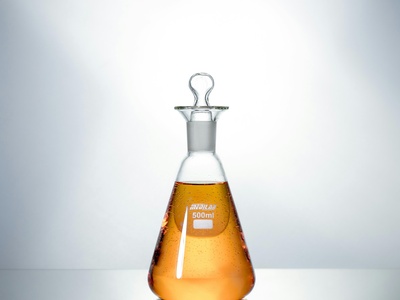
Scandium(III) chloride hexahydrate
The common hydrated form of scandium chloride crystallizes as a hexahydrate. Prepared by crystallizing ScCl3 from aqueous solutions; widely used in laboratories as a convenient, water-soluble scandium source for synthesis and separations.
Scandium(III) fluoride
A thermally stable scandium fluoride used in optical materials and ceramics. Typically prepared from scandium oxide and hydrofluoric acid or by precipitation; notable for low volatility and use in specialty glass and fluoride chemistry.
Scandium(III) bromide
A hygroscopic scandium halide employed as a precursor in inorganic and organometallic syntheses. Produced from scandium oxide and hydrobromic acid; useful for synthesizing organoscandium complexes and other scandium-containing compounds.
Scandium(III) iodide
A heavy halide of scandium used as a precursor for vapor-phase and high-temperature syntheses. Prepared by direct halogenation of scandium or metathesis; notable for volatility and use in specialized deposition processes.
Scandium hydroxide
An amphoteric, gelatinous hydroxide that precipitates from scandium solutions. Often formed by base addition to scandium salts and calcined to Sc2O3; important as an intermediate in scandium purification and oxide production.
Scandium oxyhydroxide
An oxyhydroxide formed on partial hydrolysis of scandium salts or from aging hydroxides. Often appears as an intermediate between hydroxide and oxide, relevant to synthesis routes for high-purity scandium oxide materials.
Scandium nitrate
A water-soluble scandium salt commonly used in solution processing, sol–gel syntheses, and catalyst preparation. Made by reacting Sc2O3 with nitric acid; valued for solubility and easy incorporation into precursor formulations.
Scandium sulfate
A soluble sulfate salt used in scandium chemistry and extraction studies. Formed by reacting scandium oxide with sulfuric acid; useful in hydrometallurgy and laboratory studies of rare-earth separations.
Scandium carbonate
An insoluble carbonate that precipitates from basic aqueous scandium solutions. Typically prepared by adding carbonate to scandium-containing solutions; used as a chemical intermediate in scandium oxide production and separation processes.
Scandium oxalate
An insoluble coordination salt used as a precursor to scandium oxide via calcination. Produced by adding oxalate to aqueous scandium salts; valued for forming fine, uniform oxide powders for ceramics.
Scandium acetate
A soluble organoacetate salt used as a precursor in thin-film deposition and sol–gel routes. Prepared from scandium oxide and acetic acid; convenient for solution-based syntheses of scandium-containing materials.
Tris(acetylacetonato)scandium
A neutral organometallic complex used in chemical vapor deposition and materials chemistry. Synthesized by ligand exchange from scandium salts and acetylacetone; notable for volatility and use in making uniform scandium-containing films.
Scandium nitride
A refractory binary nitride formed by direct reaction of scandium with nitrogen or ammonolysis. Noted as a semiconductor and hard, stable thin-film material used in electronic and optoelectronic research.
Scandium phosphide
A refractory binary phosphide synthesized at high temperatures from the elements. Noted for strong bonding and high thermal stability; studied for fundamental solid-state properties rather than widespread applications.
Scandium sulfide
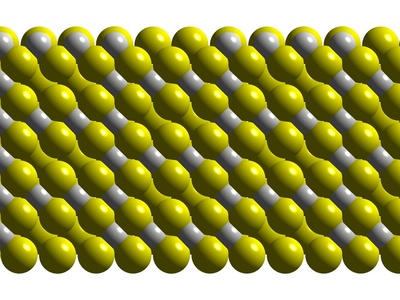
A scandium sulfide ceramic typically prepared by high-temperature reaction of scandium oxide with hydrogen sulfide or elemental sulfur. Exhibits refractory behavior and is examined for its structural and electronic properties.
Scandium boride
A titanium-like diboride where scandium bonds with boron to form a hard, refractory ceramic. Synthesized by direct high-temperature reaction or metallothermic routes; of interest for mechanical and electronic property studies.
Scandium phosphate
A sparingly soluble phosphate prepared via metathesis or precipitation from scandium and phosphate solutions. Investigated as a stable host for luminescent activators and for its thermal and chemical stability.
Kolbeckite (scandium phosphate dihydrate)
A rare hydrated scandium phosphate mineral occurring in pegmatites and secondary zones. Synthesized in laboratories by crystallizing scandium and phosphate from aqueous solutions; notable as a natural scandium-bearing phase.
Thortveitite
A primary scandium silicate mineral found in granitic pegmatites and rare deposits. Composed of scandium(III) silicate, mined historically as a scandium source and notable for concentrating scandium in nature.
Scandium chloride–THF complex
A coordination complex of scandium chloride with tetrahydrofuran commonly used as a soluble organometallic precursor. Prepared by dissolving ScCl3 in THF; used to make a variety of organoscandium complexes.
Bis(cyclopentadienyl)chloroscandium
An organoscandium compound often written Cp2ScCl, used as a starting material in metallocene chemistry. Synthesized by salt metathesis from scandium halides and cyclopentadienyl reagents; studied for catalysis and bonding.
Tris(cyclopentadienyl)scandium
An organometallic complex usually denoted Cp3Sc, prepared under inert conditions from scandium precursors and cyclopentadienyl reagents. Valued for fundamental studies of metal–ligand bonding and unusual coordination chemistry.
Scandium oxysulfate hydrate
An oxy-sulfate species encountered during hydrolysis and processing of scandium sulfate solutions. Forms during partial decomposition or controlled precipitation and is relevant to materials processing and purification workflows.
Scandium oxalate hydrate
A hydrated oxalate precipitated by adding oxalate to scandium solutions; used widely as an intermediate that converts to Sc2O3 on heating, enabling control over particle size and purity in ceramic processing.