In 1929 Edwin Hubble published evidence that galaxies are receding from us, turning the idea of a static cosmos on its head. That single result shifted cosmology from philosophy to a precise, measurable science and set us on a path to ask bigger questions: How did the universe begin, what is it made of, and how will it evolve?
Understanding those answers matters beyond curiosity—cosmology has driven advances in detector technology, data analysis, and computing, and it frames our sense of origins. The best current measurements put the universe at about 13.8 billion years old, and over the past century theoretical ideas and telescopic surveys have repeatedly traded places as drivers of progress. These eight famous cosmologists and their discoveries—from theoretical predictions of expansion to observational proof of dark matter and cosmic acceleration—shaped our modern picture of the cosmos and continue to influence instruments, missions, and public imagination.
Below, we group eight landmark figures by the role their work played in shaping modern cosmology.
Foundations of Cosmic Expansion
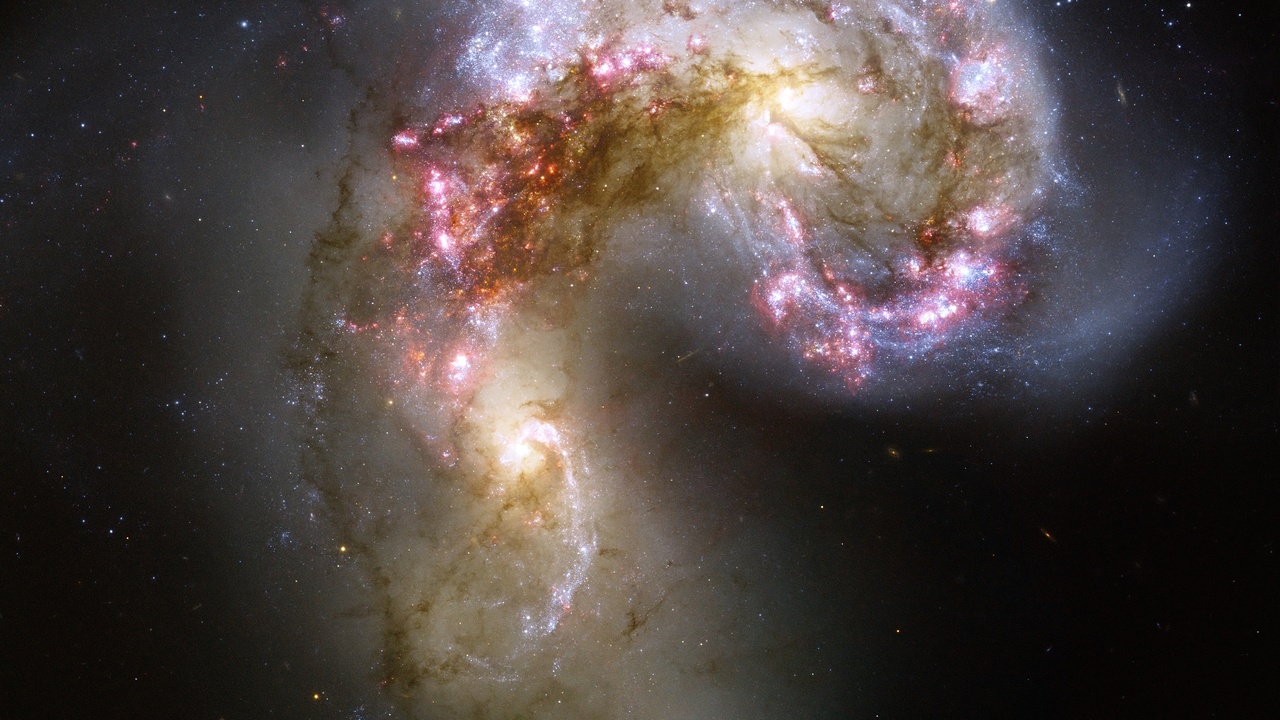
The 1920s and early 1930s were a turning point: mathematical solutions to Einstein’s equations suggested a dynamic spacetime, and telescopic redshift surveys provided the empirical evidence. Work by Friedmann and Lemaître set the theoretical stage in the early 1920s, while Hubble’s 1929 redshift-distance relation gave observational teeth to the idea of expansion. Optical telescopes, measurements of Cepheid variables for distances, and spectroscopic redshifts converged to overturn the long-standing static-universe view.
Those discoveries established the framework that led to the Big Bang concept and a timeline we now test with high-precision instruments such as the Hubble Space Telescope and modern galaxy surveys that measure H0 in the approximate range 67–74 km/s/Mpc.
1. Edwin Hubble — Hubble’s Law and galactic redshifts (1929)
Hubble provided the first clear observational relationship between a galaxy’s distance and its recession speed in 1929, now known as Hubble’s Law. He measured distances using Cepheid variable stars and combined those with spectroscopic redshifts to show that more distant galaxies generally recede faster.
Hubble’s measurements of Andromeda and other “nebulae” showed these were external galaxies—true island universes—whose motions could be quantified. That empirical law underpins the cosmic distance ladder and remains central to cosmology; today refinements from the Hubble Space Telescope and wide surveys like SDSS continually tighten distance estimates and H0 constraints.
2. Alexander Friedmann — Solutions for an expanding universe (1922)
In 1922 Alexander Friedmann derived dynamic solutions to Einstein’s field equations showing that spacetime could expand or contract. His equations, now part of the Friedmann equations, describe how the scale factor of the universe evolves given its energy content.
Friedmann’s math preceded precise observational proof, but it provided the quantitative backbone for the later observational story. Modern FLRW cosmologies used in ΛCDM simulations still rely on those same equations to model expansion, structure formation, and numerical cosmology codes that compare theory to survey data.
3. Georges Lemaître — The primeval atom and an expanding universe (1927)
Georges Lemaître independently derived solutions indicating cosmic expansion in a 1927 paper and went further by proposing what he called the “primeval atom,” an early conceptual form of the Big Bang. He explicitly connected theoretical solutions to available redshift data, offering a physical origin story for expansion.
Lemaître’s thinking anticipated later quantitative Big Bang models and foreshadowed the interpretation of the cosmic microwave background as a relic of a hot, dense early phase. For years his contribution was underappreciated; today his name appears alongside Hubble’s in discussions of the expanding universe.
Theoretical Breakthroughs that Reshaped Cosmology
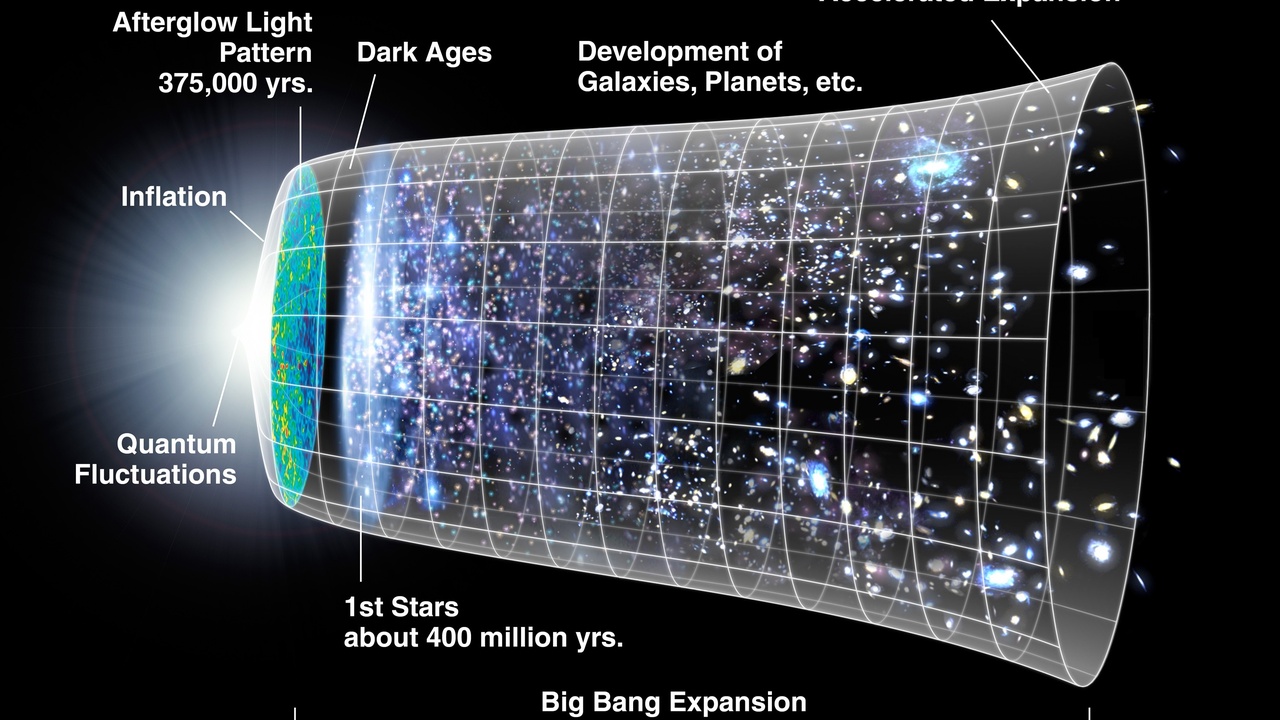
Theory often raced ahead of observation in the late 20th century, proposing mechanisms for phenomena that telescopes later sought to test. Key milestones include Hawking’s 1974 prediction that black holes radiate, Guth’s early-1980s proposal of inflation, and James Peebles’ decades of work building the physical foundations of the standard cosmological model.
These ideas guided instrument design and data interpretation for CMB missions and large-scale structure surveys, turning speculative concepts into testable science.
4. Stephen Hawking — Black hole thermodynamics and singularity theorems (1970s)
Stephen Hawking’s work in the 1970s connected general relativity and quantum theory in a surprising way. In 1974 he predicted that black holes emit radiation—now called Hawking radiation—implying they can slowly evaporate due to quantum effects in curved spacetime.
Earlier singularity theorems proved with Roger Penrose showed that under broad conditions general relativity predicts the formation of singularities, tying black hole physics to cosmology. Hawking’s ideas are faint for stellar-mass black holes but conceptually crucial: they framed the search for a quantum theory of gravity and influenced work on primordial black holes and early-universe quantum processes.
5. Alan Guth — Inflationary cosmology (1981)
Alan Guth proposed inflation in papers around 1980–1981: a brief epoch of exponential expansion in the first ~10^-35 seconds after the putative Big Bang. Inflation explains why the observable universe is so uniform (the horizon problem), why its geometry is close to flat, and why magnetic monopoles or other relics are rare.
Guth’s idea also predicts a nearly scale-invariant spectrum of primordial perturbations, a signature now seen in the CMB. Inflation motivated searches for primordial gravitational waves (for example BICEP experiments) and shaped interpretations of Planck and WMAP anisotropy data; subsequent models (slow-roll, chaotic inflation) refined his original proposal.
6. James Peebles — Building physical cosmology and ΛCDM framework
James Peebles spent decades tying theoretical physics to observable cosmic structure, helping to turn cosmology into a physical science. His work in the 1970s and beyond addressed structure formation, baryon acoustic oscillations, and CMB physics—ingredients central to the ΛCDM framework.
Peebles’ contributions are embedded in simulation codes and parameter-estimation pipelines used by WMAP and Planck. In recognition of those foundational contributions, he received the Nobel Prize in Physics in 2019, a milestone that underscored the maturity of theoretical cosmology.
Observations that Transformed Our View of the Universe
Precision observations in the late 20th century revealed phenomena that existing theory couldn’t explain: galaxy rotation curves indicating unseen mass and distant supernovae revealing accelerating expansion. Those results spawned programs—from particle searches for dark matter to missions like COBE, WMAP, and Planck that measured the cosmic microwave background with ever greater accuracy.
Observational surprises forced new theoretical ideas and large-scale surveys, giving us the quantitative ΛCDM picture used today.
7. Vera Rubin — Galactic rotation curves and dark matter (1970s)
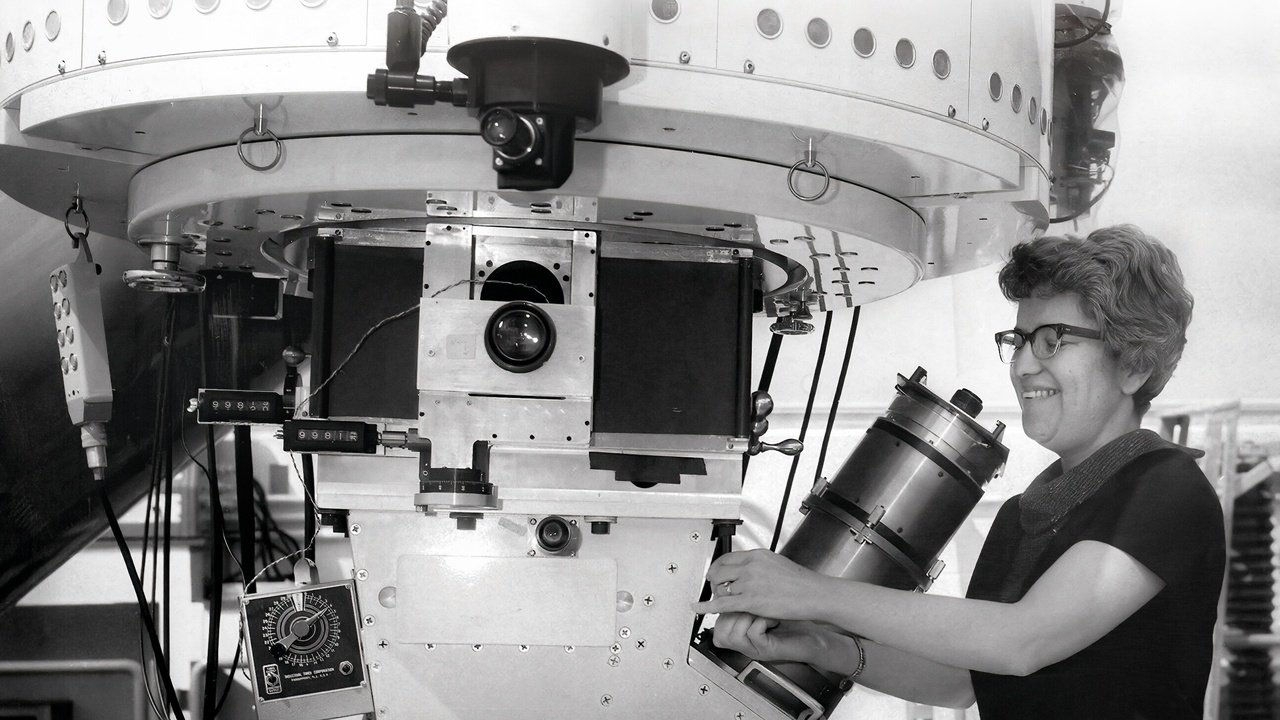
In the 1970s Vera Rubin’s rotation-curve measurements provided compelling evidence that visible stars account for only a fraction of a galaxy’s mass. Instead of the expected Keplerian decline in orbital speed, she found that rotation curves stay roughly flat well beyond the visible disk.
Those flat curves made the missing-mass problem mainstream and shifted observational priorities toward mapping mass rather than light. Rubin’s work, much of it with Kent Ford at Lowell Observatory, helped spur particle-physics searches for dark-matter candidates and led to modern probes such as SDSS and gravitational lensing surveys that map dark-matter halos directly.
8. Saul Perlmutter — Discovery of cosmic acceleration (1998)
In 1998 two teams—one led by Saul Perlmutter and a rival group led by Brian Schmidt and Adam Riess—reported that distant Type Ia supernovae appeared dimmer than expected, indicating the universe’s expansion is accelerating. Perlmutter’s team published key results that year, and the discovery led to the introduction of dark energy as the simplest explanation.
The discovery reshaped the cosmic energy budget: roughly 70% dark energy, 25% dark matter, and 5% ordinary matter. For this work Perlmutter shared the 2011 Nobel Prize in Physics with Schmidt and Riess. The result drove new precision missions and data analyses—Planck and later surveys tightened constraints on dark energy’s properties.
Summary
- Theory often anticipated observation: Friedmann and Lemaître provided expansion models before Hubble’s 1929 data confirmed them.
- Careful measurements revealed new physics—Vera Rubin’s rotation curves made dark matter mainstream, and 1998 supernova surveys revealed cosmic acceleration and dark energy.
- Conceptual advances such as inflation, Hawking radiation, and the ΛCDM framework guided instrument design and data interpretation for COBE, WMAP, Planck, and current surveys.
- These eight famous cosmologists exemplify how mathematical insight, careful observation, and persistent skepticism together reshape our picture of the cosmos.
- Want to explore further? Follow missions like the James Webb Space Telescope, Euclid, and the Vera Rubin Observatory, or read landmark papers and public data portals at NASA and ESA.