France has long punched above its weight in culture, science and diplomacy, producing individuals whose ideas and discoveries shaped the modern world. From Parisian salons to national research institutes, the country’s contributions span literature, physics, chemistry, medicine and peace efforts.
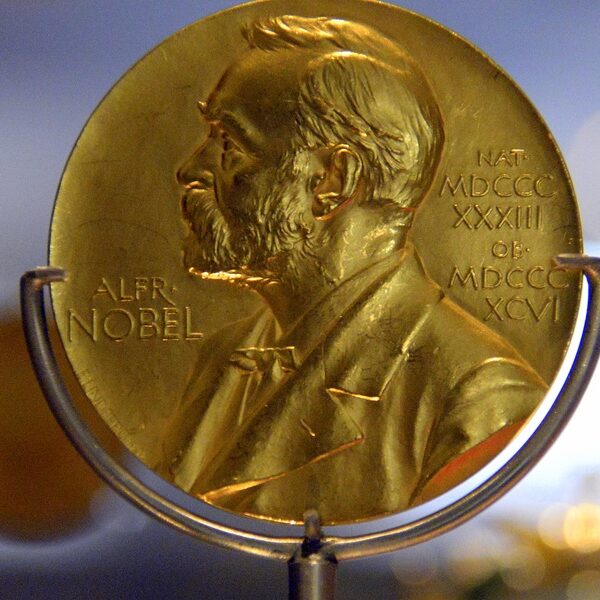
There are 47 France’s Nobel Prize Winners, ranging from Albert Camus to Yves Chauvin. For each entry you’ll find below the data organized as Year (YYYY),Category,Nationality/Affiliation so you can quickly scan when, in which field, and under what affiliation each laureate was recognized.
Which disciplines are most represented among these winners?
The list includes laureates across Literature, Peace, Physics, Chemistry, Medicine and Economic Sciences, with strong showings in Literature and the sciences; individual entries make clear the category and year so you can spot clusters by era or field at a glance.
How can I verify or explore individual entries further?
Use the Year (YYYY),Category,Nationality/Affiliation fields in the table below to cross-check each name with the Nobel Prize official site, academic biographies, or national archives — those sources provide original citations and context for each laureate.
France’s Nobel Prize Winners
| Name | Year (YYYY) | Category | Nationality/Affiliation |
|---|---|---|---|
| Sully Prudhomme | 1901 | Literature | France (citizen) |
| Frédéric Passy | 1901 | Peace | France (citizen) |
| Henri Becquerel | 1903 | Physics | France (citizen) |
| Pierre Curie | 1903 | Physics | France (citizen) |
| Marie Curie | 1903 | Physics | France (naturalized citizen) |
| Frédéric Mistral | 1904 | Literature | France (citizen) |
| Gabriel Lippmann | 1908 | Physics | France (citizen) |
| Marie Curie | 1911 | Chemistry | France (naturalized citizen) |
| Victor Grignard | 1912 | Chemistry | France (citizen) |
| Paul Sabatier | 1912 | Chemistry | France (citizen) |
| Romain Rolland | 1915 | Literature | France (citizen) |
| Léon Bourgeois | 1920 | Peace | France (citizen) |
| Anatole France | 1921 | Literature | France (citizen) |
| Jean Perrin | 1926 | Physics | France (citizen) |
| Henri Bergson | 1927 | Literature | France (citizen) |
| Louis de Broglie | 1929 | Physics | France (citizen) |
| Irène Joliot-Curie | 1935 | Chemistry | France (citizen) |
| Frédéric Joliot | 1935 | Chemistry | France (citizen) |
| Roger Martin du Gard | 1937 | Literature | France (citizen) |
| André Gide | 1947 | Literature | France (citizen) |
| François Mauriac | 1952 | Literature | France (citizen) |
| Albert Camus | 1957 | Literature | France (citizen) |
| Saint-John Perse | 1960 | Literature | France (citizen) |
| Jean-Paul Sartre | 1964 | Literature | France (citizen) |
| François Jacob | 1965 | Physiology or Medicine | France (citizen) |
| Jacques Monod | 1965 | Physiology or Medicine | France (citizen) |
| André Lwoff | 1965 | Physiology or Medicine | France (citizen) |
| Alfred Kastler | 1966 | Physics | France (citizen) |
| René Cassin | 1968 | Peace | France (citizen) |
| Louis Néel | 1970 | Physics | France (citizen) |
| Jean Dausset | 1980 | Physiology or Medicine | France (citizen) |
| Claude Simon | 1985 | Literature | France (citizen) |
| Jean-Marie Lehn | 1987 | Chemistry | France (citizen) |
| Maurice Allais | 1988 | Economic Sciences | France (citizen) |
| Pierre-Gilles de Gennes | 1991 | Physics | France (citizen) |
| Georges Charpak | 1992 | Physics | France (naturalized citizen) |
| Claude Cohen-Tannoudji | 1997 | Physics | France (citizen) |
| Yves Chauvin | 2005 | Chemistry | France (citizen) |
| Albert Fert | 2007 | Physics | France (citizen) |
| Françoise Barré-Sinoussi | 2008 | Physiology or Medicine | France (citizen) |
| Luc Montagnier | 2008 | Physiology or Medicine | France (citizen) |
| J.M.G. Le Clézio | 2008 | Literature | France (citizen) |
| Serge Haroche | 2012 | Physics | France (citizen) |
| Patrick Modiano | 2014 | Literature | France (citizen) |
| Jean Tirole | 2014 | Economic Sciences | France (citizen) |
| Gérard Mourou | 2018 | Physics | France (citizen) |
| Emmanuelle Charpentier | 2020 | Chemistry | France (citizen) |
Images and Descriptions
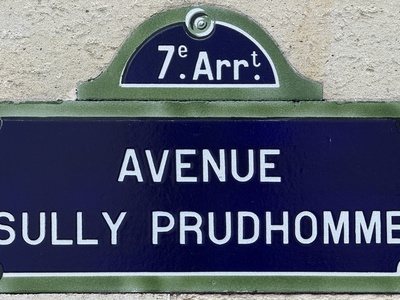
Sully Prudhomme
First Nobel Literature laureate, a French poet and essayist awarded in 1901 for “poetic composition, which gives evidence of lofty idealism, artistic perfection and a rare combination of the qualities of both heart and intellect.” Known for reflective, symbolic verse.

Frédéric Passy
French economist and pacifist awarded the inaugural Peace Prize in 1901 for lifelong work promoting international arbitration and peace societies. A leading voice for peaceful dispute resolution and founder of French peace organizations.
Henri Becquerel
French physicist awarded the 1903 Nobel Prize for the discovery of spontaneous radioactivity, shared with the Curies. His experiments with uranium salts revealed a new type of radiation and launched modern nuclear physics.
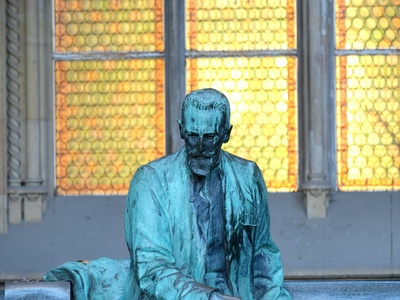
Pierre Curie
Renowned French physicist awarded the 1903 Nobel Prize with Marie Curie and Becquerel for joint research on radiation. Noted for pioneering work on piezoelectricity and collaborative studies that helped establish radioactivity as a field.
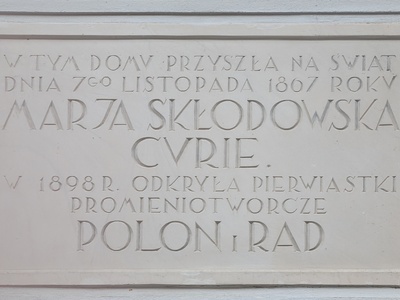
Marie Curie
Polish-born scientist naturalized French, co-recipient of the 1903 Nobel Prize for research on radiation phenomena. Celebrated for foundational studies on radioactivity and collaborative work with Pierre Curie and Becquerel.

Frédéric Mistral
Occitan-language poet from southern France awarded the 1904 Nobel Prize for his idealized regional poetry and work to preserve Provençal language and culture, widely recognized for literary revival and regionalist influence.
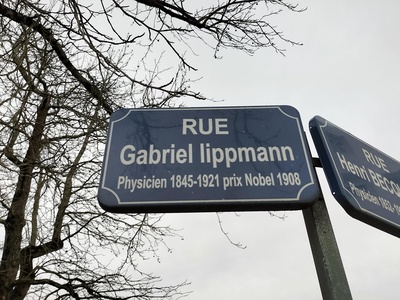
Gabriel Lippmann
French physicist awarded the 1908 Nobel Prize for the method of reproducing colors photographically based on interference phenomena, pioneering color photography and optical physics with lasting technological impact.
Marie Curie
Naturalized French chemist awarded the 1911 Nobel Prize in Chemistry for her discovery of radium and polonium and isolation of radium compounds, recognizing her leadership in radioactive element chemistry and techniques.
Victor Grignard
French chemist awarded the 1912 Nobel Prize for the development of the Grignard reagent, a foundational tool in organic synthesis that transformed chemical construction of carbon-carbon bonds.
Paul Sabatier
French chemist awarded the 1912 Nobel Prize for work on catalytic hydrogenation of organic compounds, founding practical catalytic methods that greatly advanced industrial and synthetic chemistry.
Romain Rolland
French novelist and essayist awarded the 1915 Nobel Prize for his humane writings and dramas promoting internationalism and spiritual idealism, best known for the novel sequence “Jean-Christophe.”
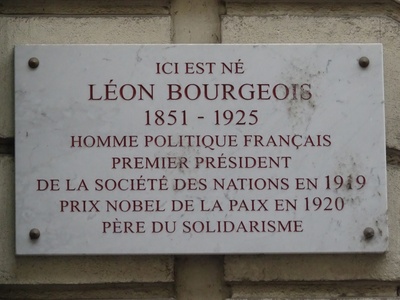
Léon Bourgeois
French statesman awarded the 1920 Nobel Peace Prize for his work on international arbitration and social reform, advancing the League of Nations ideals and promoting collective security and legal mechanisms for peace.
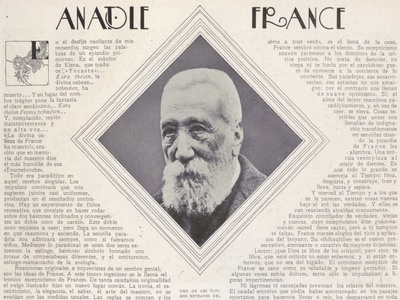
Anatole France
Influential French novelist and critic awarded the 1921 Nobel Prize for his literary achievements marked by irony, classical style, and social commentary; widely read for novels, essays, and public intellectual engagement.
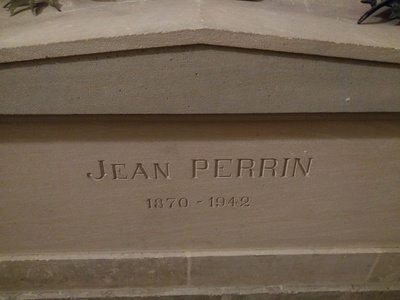
Jean Perrin
French physicist awarded the 1926 Nobel Prize for experimental proof of the atomic nature of matter through studies of Brownian motion and molecular phenomena, confirming foundational aspects of atomic theory.
Henri Bergson
French philosopher awarded the 1927 Nobel Prize for his rich and influential philosophical writings on time, consciousness and creative evolution, which deeply affected literature, psychology, and intellectual life in France and beyond.
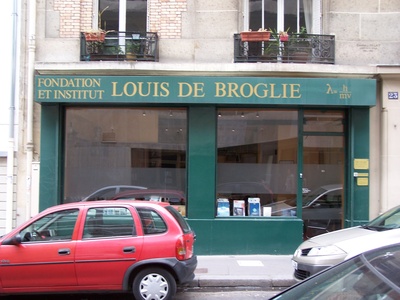
Louis de Broglie
French physicist awarded the 1929 Nobel Prize for introducing wave mechanics and the idea that particles have wave properties, a cornerstone of quantum theory linking waves and particles.
Irène Joliot-Curie
French chemist awarded the 1935 Nobel Prize jointly with Frédéric Joliot for the discovery of artificial radioactivity, extending her parents’ work and advancing nuclear chemistry and radioactive isotope production.
Frédéric Joliot
French physicist and husband of Irène Joliot-Curie awarded the 1935 Nobel Prize for discovering artificial radioactivity, pioneering methods to create radioactive isotopes and expanding applications in science and medicine.
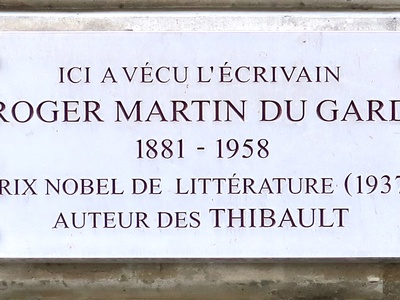
Roger Martin du Gard
French novelist awarded the 1937 Nobel Prize for his realistic and psychologically acute novels, notably the multi-volume “Les Thibault,” recognized for narrative skill and moral insight into modern French society.
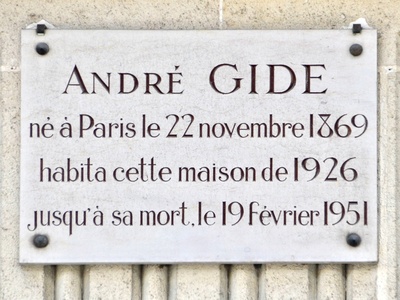
André Gide
Major French writer awarded the 1947 Nobel Prize for his comprehensive and artistically significant writings that explore human freedom, morality, and self-discovery; noted for novels, diaries, and essays challenging conventional norms.
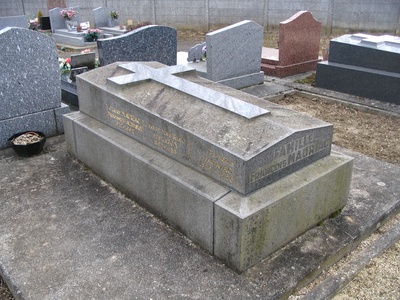
François Mauriac
French novelist and Catholic intellectual awarded the 1952 Nobel Prize for profound moral and spiritual insight in his novels, often examining faith, guilt, and human complexity in provincial France.

Albert Camus
Algeria-born French writer awarded the 1957 Nobel Prize for illuminating the human conscience in novels and essays like “The Stranger” and “The Myth of Sisyphus,” exploring absurdism and moral clarity.
Saint-John Perse
Pen name of Alexis Léger, a French poet awarded the 1960 Nobel Prize for majestic poetic imagery and lyrical work reflecting grand historical and human themes; served also as a diplomat for France.
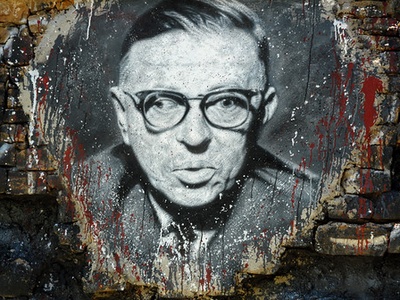
Jean-Paul Sartre
French existentialist philosopher and novelist awarded the 1964 Nobel Prize for his influential writings; he famously declined the prize, emphasizing personal independence and opposition to institutional recognition.
François Jacob
French biologist awarded the 1965 Nobel Prize with Monod and Lwoff for discoveries concerning genetic control of enzyme and virus synthesis, foundational work in gene regulation and molecular biology.
Jacques Monod
French biochemist awarded the 1965 Nobel Prize for elucidating genetic control mechanisms in cells, particularly operon theory and regulatory feedback, shaping modern molecular biology and genetics.
André Lwoff
French microbiologist awarded the 1965 Nobel Prize for discoveries on lysogenic cycles and genetic regulation in microorganisms, providing key insights into viral life cycles and cellular control systems.
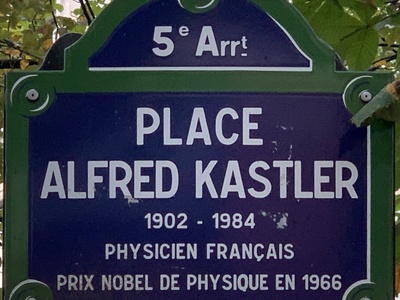
Alfred Kastler
French physicist awarded the 1966 Nobel Prize for developing optical methods to study atomic resonance (optical pumping), enabling precise control of atomic populations and later advances in lasers and spectroscopy.
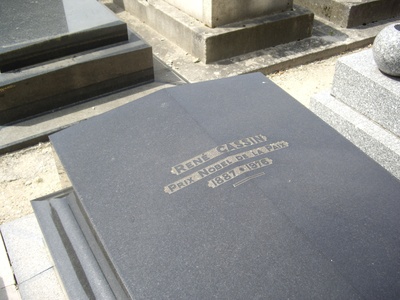
René Cassin
French jurist and diplomat awarded the 1968 Nobel Peace Prize for work on human rights and for his instrumental role drafting the Universal Declaration of Human Rights; a leading figure in postwar international law.
Louis Néel
French physicist awarded the 1970 Nobel Prize for pioneering studies of antiferromagnetism and ferrimagnetism, establishing theoretical and experimental foundations for magnetism in solid-state physics and material science.
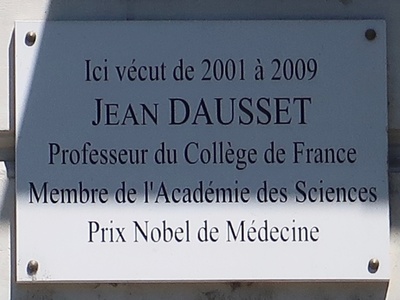
Jean Dausset
French immunologist awarded the 1980 Nobel Prize for discovering the human leukocyte antigen (HLA) system, critical to tissue compatibility and transplant immunology, transforming organ transplantation and immune research.
Claude Simon
French novelist awarded the 1985 Nobel Prize for his experimental narrative technique and portrayal of memory and time, often associated with the Nouveau Roman movement and innovative prose structure.
Jean-Marie Lehn
French chemist awarded the 1987 Nobel Prize for development of supramolecular chemistry and molecular recognition, pioneering designed host-guest systems and influencing materials science, sensors, and synthetic chemistry.
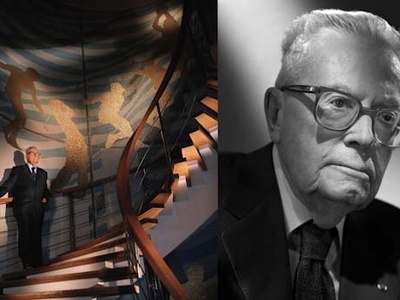
Maurice Allais
French economist awarded the 1988 Nobel Memorial Prize for contributions to market theory and decision-making under uncertainty, notably work on market equilibrium and pioneering theoretical insights in economics.
Pierre-Gilles de Gennes
Renowned French physicist awarded the 1991 Nobel Prize for discovering that methods developed for studying simple systems can be generalized to more complex materials, notably liquid crystals and polymers, bridging disciplines.
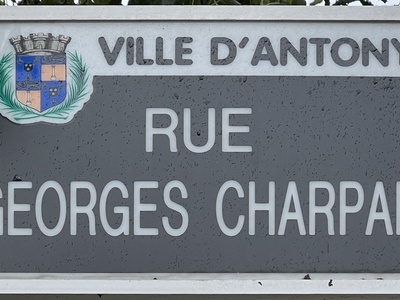
Georges Charpak
Polish-born, naturalized French physicist awarded the 1992 Nobel Prize for inventing particle detectors, especially the multiwire proportional chamber, revolutionizing experimental particle physics and detector technology.
Claude Cohen-Tannoudji
French physicist awarded the 1997 Nobel Prize for development of methods to cool and trap atoms with laser light, enabling precise studies of atomic structure and advances in quantum optics.
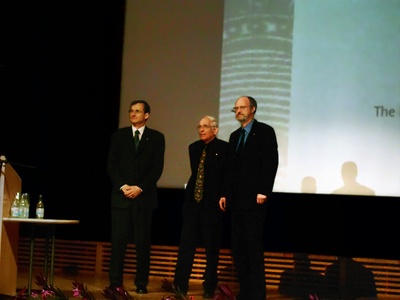
Yves Chauvin
French chemist awarded the 2005 Nobel Prize for elucidating the mechanism of olefin metathesis, clarifying catalytic cycles and enabling practical synthetic methods widely used in polymer and pharmaceutical chemistry.

Albert Fert
French physicist awarded the 2007 Nobel Prize for discovery of giant magnetoresistance (GMR), a quantum effect that revolutionized data storage technology and led to dramatic increases in hard drive capacities.
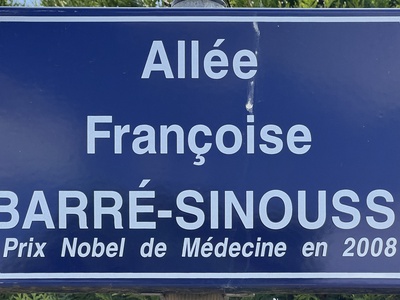
Françoise Barré-Sinoussi
French virologist awarded the 2008 Nobel Prize jointly for discovery of HIV, identifying the virus responsible for AIDS and enabling diagnostic, therapeutic, and epidemiological advances against the epidemic.
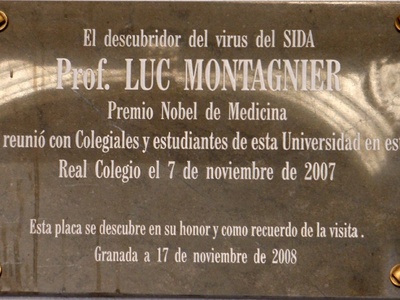
Luc Montagnier
French virologist awarded the 2008 Nobel Prize for co-discovering HIV, instrumental in isolating and characterizing the virus and advancing early understanding of AIDS and viral diagnostics.
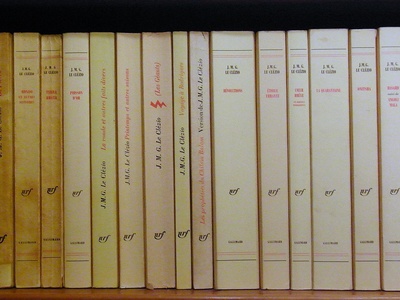
J.M.G. Le Clézio
French-Mauritian novelist awarded the 2008 Nobel Prize for poetic adventure and exploration of humanity, recognized for rich storytelling that addresses cultural encounters, exile, and the natural world.
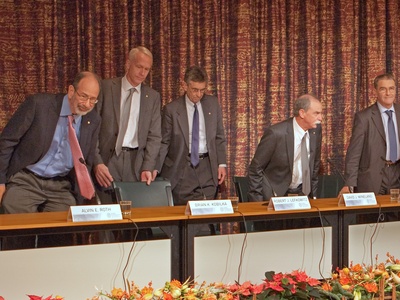
Serge Haroche
French physicist awarded the 2012 Nobel Prize for methods to measure and manipulate individual quantum systems, advancing quantum optics and enabling experiments with single photons and quantum state control.
Patrick Modiano
French novelist awarded the 2014 Nobel Prize for literature for his investigations of memory, identity, and the German occupation of France, known for subtle, haunting narratives and exploration of personal history.
Jean Tirole
French economist awarded the 2014 Nobel Memorial Prize for analysis of market power and regulation, providing frameworks for understanding monopolies, incentives, and public policy design in modern economies.
Gérard Mourou
French physicist awarded the 2018 Nobel Prize for revolutionary work on high-intensity, ultra-short laser pulses (chirped pulse amplification), enabling advances in laser surgery and ultrafast physics applications.
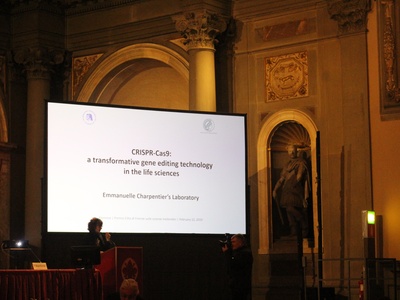
Emmanuelle Charpentier
French biochemist awarded the 2020 Nobel Prize for co-developing CRISPR-Cas9 genome editing, a precise and versatile method to alter DNA with broad impact in biology, medicine, and biotechnology.