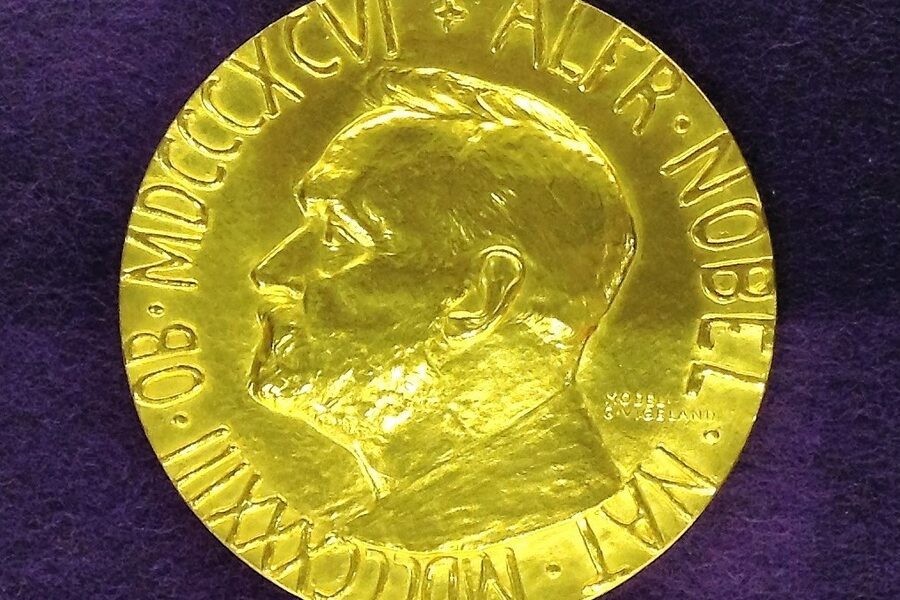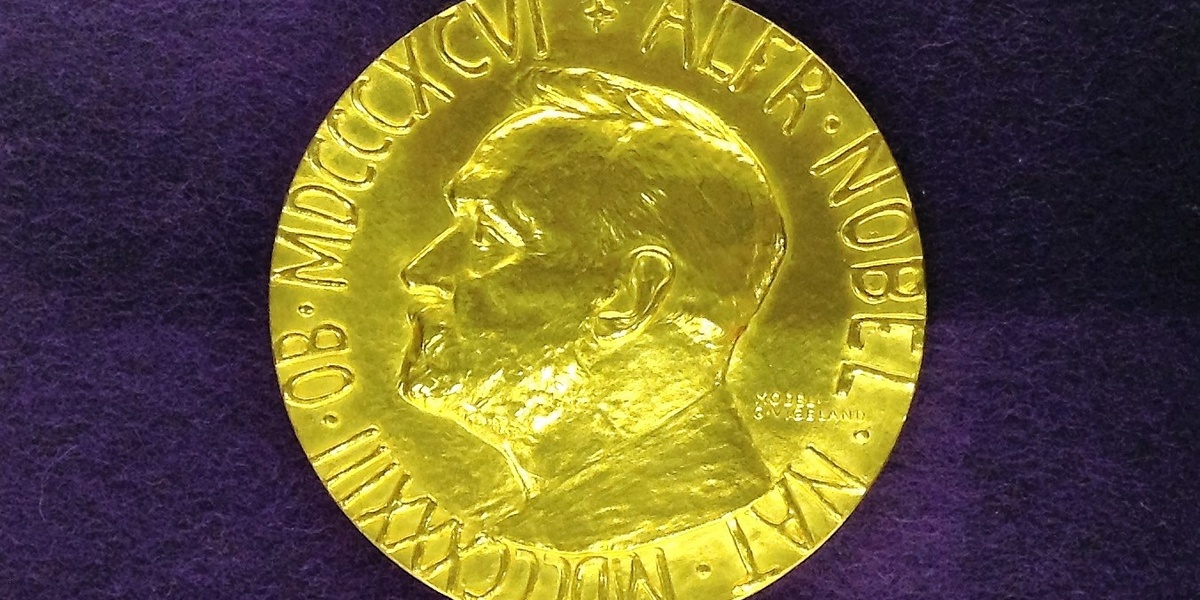
The late 1970s were a time of intense global change, and the Nobel Prizes that year reflected breakthroughs in science, shifts in political conscience, and notable contributions to arts and letters. Thinking about 1977 brings together discoveries, dissent, and creative voices that still matter today.
There are 11 1977 Nobel Prize Winners, ranging from Amnesty International to Vicente Aleixandre. For each, the list shows Category,Country/affiliation,Citation (official, ≤15 words) so you can quickly see the prize field, the winner’s affiliation and the official short citation—you’ll find below.
How is the list organized and what does the “Citation” column mean?
The table is arranged so each row shows the prize Category, the winner’s Country/affiliation (individual or organization), and the Citation (official, ≤15 words), which is the Nobel Committee’s concise reason for the award; that citation helps explain each winner’s recognized contribution.
Are organizations included alongside individuals in the 1977 winners?
Yes. The Nobel Peace Prize can be awarded to organizations—Amnesty International is an example from 1977—while other categories recognize individuals like Vicente Aleixandre; the list treats both types equally and notes affiliations.
1977 Nobel Prize Winners
| Name | Category | Country/affiliation | Citation (official, ≤15 words) |
|---|---|---|---|
| Philip W. Anderson | Physics | United States | for their fundamental theoretical investigations of the electronic structure of magnetic and disordered systems |
| Nevill Mott | Physics | United Kingdom | for their fundamental theoretical investigations of the electronic structure of magnetic and disordered systems |
| John H. Van Vleck | Physics | United States | for their fundamental theoretical investigations of the electronic structure of magnetic and disordered systems |
| Ilya Prigogine | Chemistry | Belgium | for his contributions to non-equilibrium thermodynamics, particularly the theory of dissipative structures |
| Roger Guillemin | Medicine | United States | for their discoveries concerning the peptide hormone production of the brain |
| Andrew V. Schally | Medicine | United States | for their discoveries concerning the peptide hormone production of the brain |
| Rosalyn Yalow | Medicine | United States | for the development of radioimmunoassays of peptide hormones |
| Vicente Aleixandre | Literature | Spain | for a creative poetic writing which illuminates man’s condition in the cosmos and in time |
| Amnesty International | Peace | United Kingdom | for its work in the defence of human rights |
| Bertil Ohlin | Economic Sciences | Sweden | for their pathbreaking contribution to the theory of international trade and international capital movements |
| James Meade | Economic Sciences | United Kingdom | for their pathbreaking contribution to the theory of international trade and international capital movements |
Images and Descriptions

Philip W. Anderson
Provided key theoretical insights into localization and electron interactions in solids, explaining why materials show insulating, magnetic, or superconducting behavior. His work reshaped condensed-matter physics and helped predict and interpret experimental properties of complex materials.
Nevill Mott
Explained how electrons behave in solids with impurities or strong interactions, clarifying metal-insulator transitions and magnetism origins. His theories guided experiments and advanced understanding of disordered materials and transport phenomena in solid-state physics.
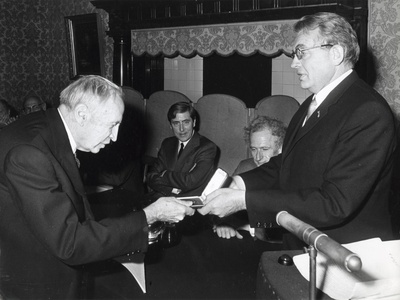
John H. Van Vleck
Pioneered quantum-mechanical theory of magnetism and electronic properties in solids, linking atomic-level behavior to macroscopic magnetic phenomena. His foundational work established methods still used in materials science and solid-state physics.
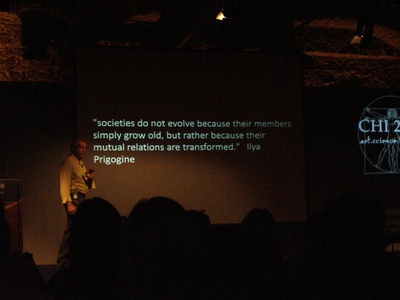
Ilya Prigogine
Developed the theory of dissipative structures and non-equilibrium thermodynamics, showing how order and complex patterns can emerge in open systems far from equilibrium. His ideas influenced chemistry, physics, biology, and understanding of self-organization.
Roger Guillemin
Mapped key hypothalamic hormones and showed how the brain controls pituitary secretions. His work revealed biochemical signaling pathways that regulate growth, reproduction, and metabolism, laying groundwork for modern neuroendocrinology and therapeutic hormone treatments.
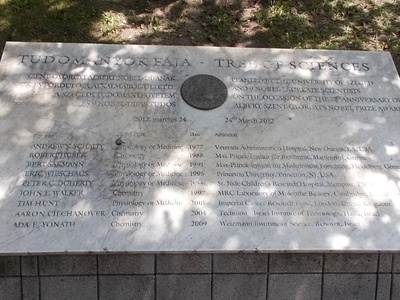
Andrew V. Schally
Discovered hypothalamic releasing hormones that regulate pituitary function, clarifying hormonal control over reproduction and metabolism. His findings enabled targeted therapies and stimulated research into hormone regulation and endocrine disorders worldwide.
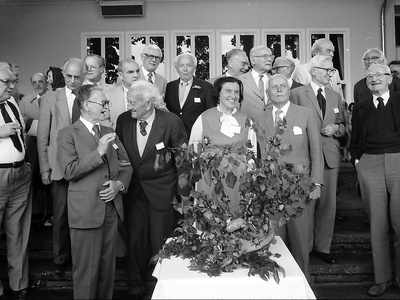
Rosalyn Yalow
Developed the radioimmunoassay technique, allowing precise measurement of hormones and small biological molecules. This sensitive method transformed medical diagnostics and clinical care worldwide by enabling accurate hormone quantification and advancing research.
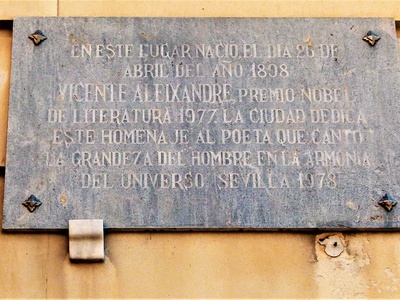
Vicente Aleixandre
Spanish poet whose surreal, visionary verse explored humanity, nature, and time with rich imagery and existential depth. His long poetic career influenced Spanish literature and offered profound reflections on human existence amid modern turmoil.
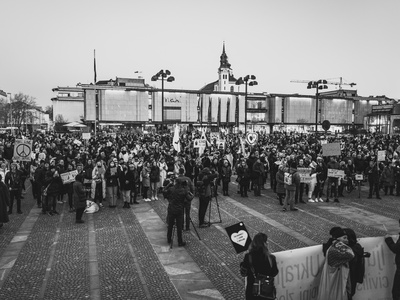
Amnesty International
Global human-rights organization focusing on prisoners of conscience, torture prevention, and legal advocacy. Its documentation and campaigns raised international awareness, pressured governments to improve human-rights practices, and strengthened global norms protecting individual freedoms.
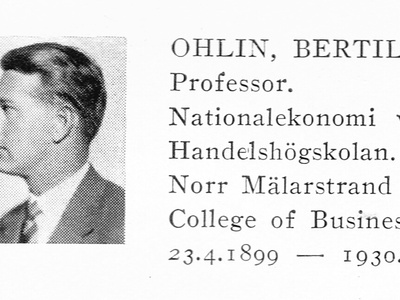
Bertil Ohlin
Developed the Heckscher-Ohlin model explaining international trade patterns based on countries’ factor endowments. His work, together with trade theory, shaped modern international economics and policy on trade and capital flows.
James Meade
Advanced theory of international trade and capital movements, integrating macroeconomic policy with trade models. His analyses guided postwar economic policy, influencing exchange-rate and balance-of-payments thinking in governments and international institutions.