From Bronze Age smelters making early alloys around 3,500 BCE to silicon wafers powering smartphones today — humans have steadily engineered better materials to solve pressing problems.
That long arc matters because each materials breakthrough — whether a stronger alloy for a bridge or a thinner transistor for a phone — changes what engineers can build and what everyday life looks like.
Materials science organizes the diverse ways we design, test, and apply substances into distinct branches; this piece explains eight core branches and how each contributes to real-world technologies. By the early 2020s global crude steel production neared 1.9 billion tonnes, a reminder that some material choices scale to national economies.
Below, the branches are grouped into structural, surface/hybrid, and functional/advanced categories so you can see how basic classes, engineered surfaces and composite structures, and nanoscale or responsive materials each solve different problems.
Structural materials: the workhorses

Structural materials are the classes chosen when load-bearing performance, durability, or formability matter most. Engineers still rely on metals, ceramics, and polymers because these options balance strength, weight, and cost in predictable ways.
These material classes supply the majority of parts in infrastructure, vehicles, and consumer goods — from bridge girders to soda bottles — and they benefit from mature supply chains and recycling systems. For scale: plastics production runs into the hundreds of millions of tonnes per year, while crude steel production tops the billion-tonne mark.
The trade-offs are clear: metals typically give high strength and toughness; ceramics bring hardness and heat resistance; polymers offer light weight and ease of shaping. Designers pick the best fit for stiffness, tensile strength, density, and price to meet the application.
1. Metals and Alloys — High-strength, versatile engineering materials
Metals and alloys are the backbone of heavy engineering, and crude steel output of roughly 1.8–1.9 billion tonnes annually in the early 2020s shows how central they are to the global economy.
Common properties include ductility, toughness, electrical and thermal conductivity, and the ability to be strengthened through heat treatment. Typical manufacturing techniques are casting, forging, extrusion, and machining, followed by processes like annealing or quenching to tune microstructure.
Applications range from building beams and automotive frames to aircraft components. Boeing, for example, uses titanium alloys such as Ti-6Al-4V in landing gear and high-stress aerospace parts, while stainless steel appears in construction, kitchenware, and medical tools.
2. Ceramics and Glasses — Hard, heat-resistant materials
Ceramics and glasses excel at hardness, wear resistance, and stability at high temperatures, and they also serve as electrical insulators in many devices.
These materials resist deformation under heat, making them suited for turbine components, cutting tools, and electronic substrates. Historical pottery and glazes are early examples of ceramic technology that evolved into advanced oxides and carbides used today.
Concrete examples include alumina spark-plug insulators, silicon carbide cutting inserts, and bioceramics like hydroxyapatite coatings used to improve bone integration for dental and orthopedic implants.
3. Polymers and Plastics — Lightweight and moldable
Polymers are lightweight, chemically resistant, and easy to process, which is why they appear in everything from packaging to medical devices.
Global plastic production is on the order of several hundred million tonnes per year, reflecting both disposable uses and long-lived engineering polymers. Common processing methods include injection molding, extrusion, and thermoforming, plus new additive manufacturing approaches.
Examples run from polyethylene and PET bottles in packaging to high-performance polymers like Kevlar in ballistic vests and PLA in desktop 3D printing. Designers exploit low density and chemical tunability to reduce weight and simplify manufacturing.
Surface and hybrid materials: extending performance

Instead of relying on a single material, engineers often combine materials or apply engineered surfaces to unlock properties a lone material can’t deliver. Coatings and composite layups reduce weight, extend service life, or add new functions with relatively small changes to manufacturing.
These techniques show big payoffs in transportation, energy, and electronics — lighter vehicles, tougher cutting tools, and corrosion protection on offshore platforms are a few familiar examples. Numerical examples and product references help show the gains.
4. Composites — Combining materials for tailored properties
Composites blend two or more constituents, typically fibers in a matrix, to achieve combinations of stiffness, strength, and low weight that single materials can’t match.
Modern airliners illustrate the impact: the Boeing 787 contains roughly half its primary structure by weight made from composite materials, a design choice that lowers fuel burn. Manufacturing methods include hand layup, automated fiber placement, and resin transfer molding; the trade-off is often higher material and processing cost versus performance gains.
Suppliers such as Toray and Hexcel produce carbon fibres used in CFRP bicycle frames, wind-turbine blades, and aerospace components where weight savings pay back over the component lifetime.
5. Coatings and Surface Engineering — Thin layers that change everything
Surface engineering modifies only the outermost layer to add corrosion resistance, wear protection, optical effects, or biocompatibility at a fraction of the cost of replacing a bulk material.
Common deposition processes include physical vapor deposition (PVD), chemical vapor deposition (CVD), and electroplating, and benefits can be dramatic — longer tool life, fewer maintenance cycles, and improved performance in marine or medical environments.
Examples include diamond-like carbon (DLC) coatings on cutting and surgical instruments, PTFE coatings for low-friction surfaces, and anodized aluminum finishes on consumer electronics for durability and aesthetics.
Functional and advanced materials: enabling modern tech

This group delivers active, responsive, or nanoscale-enabled behaviors — the materials behind chips, implants, and other high-value products. Small changes in composition or structure can produce large shifts in function.
Across electronics, medicine, and nanotechnology, the branches of materials science focus on how doping, interfaces, and nanoscale architecture create new device classes and product capabilities.
6. Electronic and Semiconductor Materials — The backbone of modern electronics
Semiconductors are materials whose electrical behavior is carefully controlled by composition and processing, enabling diodes, transistors, and integrated circuits.
The global semiconductor market exceeded several hundred billion dollars in the early 2020s, underscoring how material advances translate into major economic sectors. Key materials include silicon, gallium nitride (GaN), and silicon carbide (SiC).
Applications range from microprocessors fabricated in fabs run by TSMC and Intel, to GaN fast chargers for phones and SiC in electric-vehicle inverters that improve efficiency and reduce cooling needs.
7. Biomaterials — Materials for medicine and healing
Biomaterials are engineered to interact safely with biological systems, and modern metal and polymer implants have been widely used since the mid-20th century.
Categories include inert implants (titanium alloys), resorbable polymers like PLGA used in sutures and drug-delivery devices, tissue scaffolds, and hydrogels for wound care. Biocompatibility testing and regulatory approval are central to their adoption.
Concrete examples are titanium hip stems sold by companies such as Stryker, PLGA stents and sutures, and hydrogel dressings that speed healing. Biomaterials drive both surgical-device improvements and regenerative-medicine advances.
8. Nanomaterials and Metamaterials — Control at the smallest scales
At the nanoscale, structure dictates properties in ways bulk matter cannot match, enabling unusual optical, mechanical, and chemical behaviors.
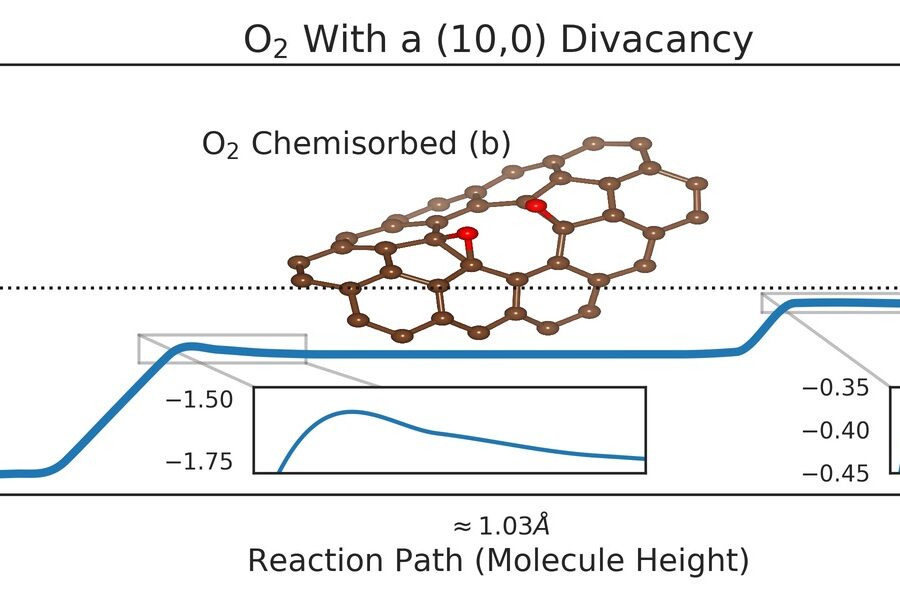
Recognizable examples include carbon nanotubes and graphene explored for strength and conductivity, quantum dots used in displays (seen in some Samsung QLED panels), and nanoparticles in sunscreens or drug carriers. Metamaterials use engineered patterns to bend electromagnetic waves and are being tested for antennas and cloaking experiments.
Commercial wins like quantum-dot displays show practical payoff, while active research areas — plasmonic sensors, graphene composites, and targeted nanoparticle therapies — continue to expand what materials can do.
Summary
- Different material classes map to specific needs: metals and ceramics for strength and heat resistance, polymers for low weight and manufacturability.
- Combining materials or engineering surfaces often delivers more benefit than changing a bulk material alone — for example, the Boeing 787’s composite content and wear-resistant coatings on tooling.
- Advanced and nanoscale materials enable whole new products, from GaN chargers and SiC in EV inverters to quantum-dot displays and nanoparticle medicines.
- Spotting material choices in everyday objects — a smartphone casing, a bicycle frame, or a surgical implant — reveals trade-offs among weight, cost, durability, and function.
- Follow developments in these branches of materials science to understand how small changes in composition or structure will shape future products and industries.