Strontium quietly shapes materials we use every day — from the red hues in fireworks to components in ceramics, glass and some electronic materials — and it appears both in common minerals and in lab-made salts and oxides. You’ll often encounter it when looking at geological samples or when checking material data sheets for industrial uses.
There are 26 Strontium Compounds, ranging from Celestine (mineral) to Strontium tungstate. For each entry, you’ll find below Formula,CAS number,Solubility (g/100 mL water, 20 °C) to help with quick identification, comparison and practical selection for lab or industrial work.
What are the most common uses of strontium compounds?
Many are used for their color and chemical properties: strontium salts supply red color in pyrotechnics and pigments, some oxides and tungstates appear in ceramics and glass, and particular compounds are used in electronics, ferrite materials and certain niche chemical applications; their role depends on solubility and thermal stability.
Are these compounds hazardous to handle?
Hazard varies by compound — soluble salts can be more readily absorbed and some have moderate toxicity — so handle with basic lab precautions (gloves, eye protection, avoid inhalation/ingestion), consult the MSDS for each substance, and follow storage and disposal rules appropriate to the material you’ll find below.
Strontium Compounds
| Name | Formula | CAS number | Solubility (g/100 mL water, 20 °C) |
|---|---|---|---|
| Strontium chloride | SrCl2 | n/a | 51.00 |
| Strontium bromide | SrBr2 | n/a | 45.00 |
| Strontium iodide | SrI2 | n/a | 55.00 |
| Strontium nitrate | Sr(NO3)2 | n/a | 39.00 |
| Strontium sulfate (celestine) | SrSO4 | n/a | 0.01 |
| Strontium carbonate (strontianite) | SrCO3 | n/a | 0.00 |
| Strontium fluoride | SrF2 | n/a | 0.00 |
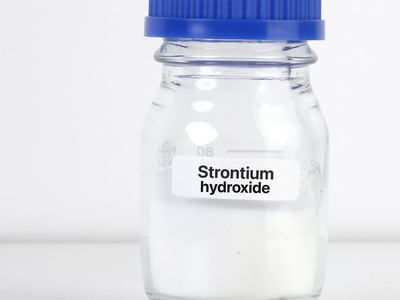
| Strontium hydroxide | Sr(OH)2 | n/a | 0.80 |
| Strontium oxide | SrO | n/a | 0.80 |
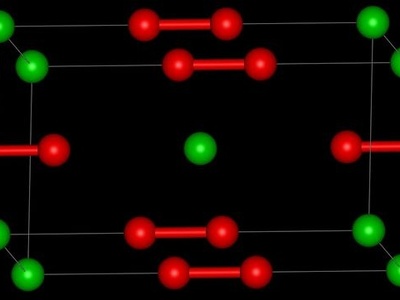
| Strontium peroxide | SrO2 | n/a | 0.10 |
| Strontium acetate | Sr(CH3COO)2 | n/a | 20.00 |
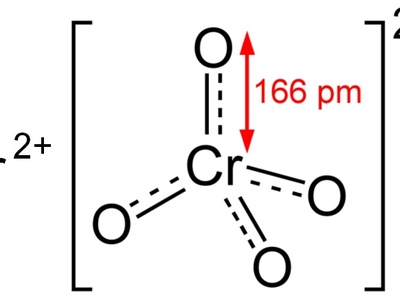
| Strontium chromate | SrCrO4 | n/a | 0.02 |
| Strontium phosphate (tribasic) | Sr3(PO4)2 | n/a | 0.00 |
| Strontium hydrogen phosphate | SrHPO4 | n/a | 0.02 |
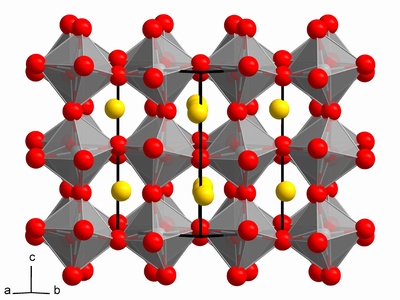
| Strontium titanate | SrTiO3 | n/a | 0.00 |
| Strontium aluminate | SrAl2O4 | n/a | 0.00 |
| Strontium ferrite (strontium hexaferrite) | SrFe12O19 | n/a | 0.00 |
| Strontium oxalate | SrC2O4 | n/a | 0.00 |
| Strontium sulfide | SrS | n/a | 1.00 |
| Strontium sulfite | SrSO3 | n/a | 0.05 |
| Strontium borate | SrB4O7 | n/a | 0.00 |
| Strontium acetylacetonate | Sr(acac)2 | n/a | 0.00 |
| Celestine (mineral) | SrSO4 | n/a | 0.01 |
| Strontianite (mineral) | SrCO3 | n/a | 0.00 |
| Strontium iodate | Sr(IO3)2 | n/a | 5.00 |
| Strontium tungstate | SrWO4 | n/a | 0.00 |
Images and Descriptions
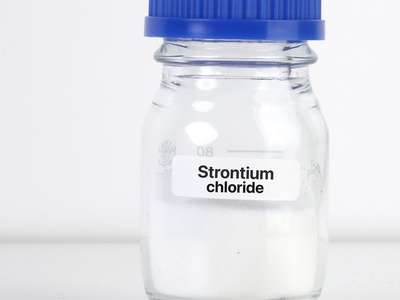
Strontium chloride
White, deliquescent salt used in synthesis, fluxes and medical research. Very soluble in water and commonly handled as the hexahydrate. Soluble strontium can be bioavailable; handle with basic precautions to avoid ingestion or inhalation.
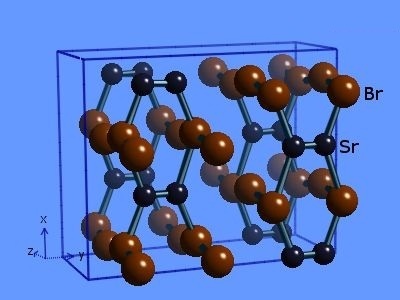
Strontium bromide
Colorless crystalline salt used in optics, organic synthesis and as a precursor to other Sr compounds. Freely soluble and hygroscopic; soluble bromide salts are chemically reactive and should be handled with gloves and eye protection.
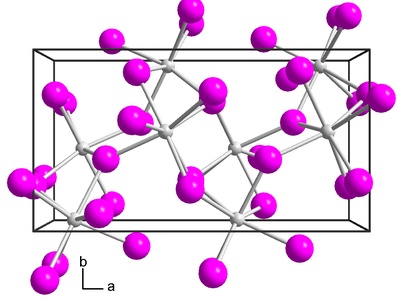
Strontium iodide
White to slightly yellow crystals used in scintillators and specialty optics. Highly water soluble; iodide salts are used in radiation detectors. Avoid ingestion and prolonged exposure; store dry and protected from light.
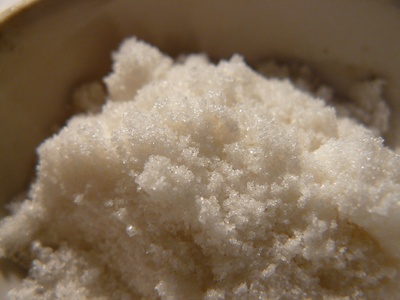
Strontium nitrate
White crystalline oxidizing salt used in pyrotechnics, ceramics and as a precursor to other Sr reagents. Very soluble in water; being an oxidizer it supports combustion and should be kept away from fuels and reducers.
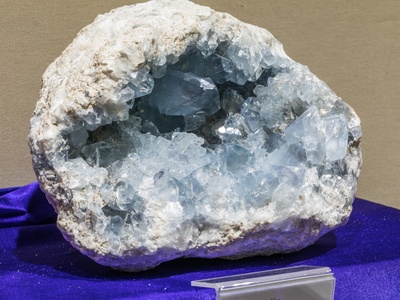
Strontium sulfate (celestine)
Dense white mineral and major ore of strontium known as celestine. Very insoluble in water; occurs naturally in sedimentary rocks. Low solubility limits bioavailability, though mining dusts require respiratory protection.
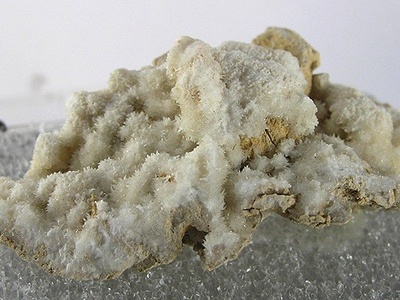
Strontium carbonate (strontianite)
White powder and the principal ore mineral strontianite used in ceramics, glass and ferrite production. Sparingly soluble; converts to other salts in acid. Not highly toxic but fine dusts can irritate lungs and eyes.
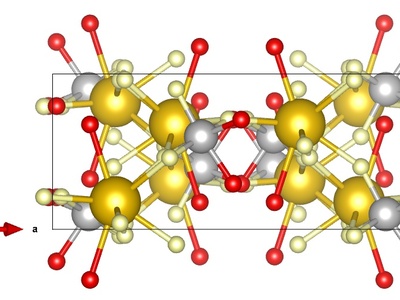
Strontium fluoride
White, hard crystalline solid used for optical windows and infrared optics. Very poorly soluble in water; chemically stable. Handle mechanically with care due to dust; fluorides have specific toxicity in high doses.
Strontium hydroxide
White, moderately soluble strong base formed when SrO hydrates. Used in chemical synthesis and as a precursor to other salts. Corrosive to skin and eyes; handle with protective equipment and avoid inhalation.

Strontium oxide
White ionic oxide that reacts with water to form strontium hydroxide, used in ceramics and glass. Not typically isolated in water because it hydrolyzes; corrosive and should be handled under dry conditions with PPE.
Strontium peroxide
Pale yellow crystalline solid used as an oxygen source and bleaching agent in labs. Releases O2 and reacts with water; handle carefully as a peroxide—oxidizing and potentially reactive with organics.
Strontium acetate
Colorless, water-soluble salt used in laboratories and occasionally in biomarkers. Soluble acetates are convenient precursors to other strontium reagents. Low acute toxicity but ingesting concentrated salts is unsafe.
Strontium chromate
Yellow-orange solid used as a pigment and corrosion inhibitor historically. Poorly soluble; contains hexavalent chromium and is carcinogenic and toxic. Requires strict controls, gloves and respiratory protection when handling.
Strontium phosphate (tribasic)
White, insoluble salt found in ceramics, bioceramics and as a bone-relevant material. Very low solubility makes it stable in soils and rocks. Nonvolatile but dusts may irritate; chemical hazards depend on co-components.
Strontium hydrogen phosphate
White, slightly soluble salt of interest in biomaterials and ceramics. Lower solubility than common salts; used in research on bone substitutes. Handle as a nuisance dust and avoid inhalation of fine powders.
Strontium titanate
Dense, high–melting perovskite ceramic used in electronics, substrates and infrared optics. Insoluble in water; prized for dielectric and optical properties. Non-reactive at ambient conditions but process dusts require protection.
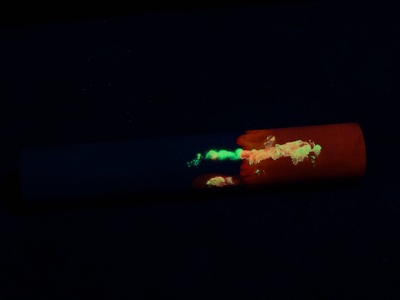
Strontium aluminate
White to pale-green ceramic phosphor base used in long-lasting glow-in-the-dark materials. Insoluble and stable; widely used in paints and emergency signage. Manufacture involves high-temperature processes; product dusts should be controlled.
Strontium ferrite (strontium hexaferrite)
Brown-black magnetic ceramic used for permanent magnets and loudspeakers. Insoluble, chemically stable ceramic produced at high temperatures. Not acutely toxic but fine magnetic oxide powders need dust controls.
Strontium oxalate
White, insoluble salt that forms as a precipitate and occurs in some biological and mineral contexts. Very low water solubility; handle as a dust nuisance. May form during analytical chemistry or precipitation reactions.
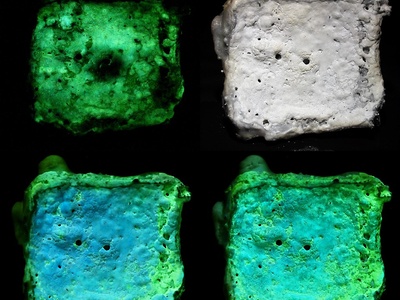
Strontium sulfide
White to yellowish solid used historically in luminous pigments and as a sulfide source. Reacts with water to release sulfide and is somewhat soluble; malodorous and can release toxic H2S under acidic conditions.
Strontium sulfite
Pale solid used in some chemical processes and as an intermediate. Slightly soluble; sulfites can release sulfur dioxide in acid and may irritate respiratory systems. Handle with adequate ventilation.
Strontium borate
White crystalline borate used in glass, ceramics and as a host for phosphors. Insoluble in water and chemically stable; used in specialty optical and luminescent applications. Dusts should be controlled during handling.
Strontium acetylacetonate
Coordination compound used as a precursor in materials synthesis and thin-film deposition. Poorly soluble in water; soluble in organic solvents. Handle with standard lab precautions to avoid inhalation or skin contact.
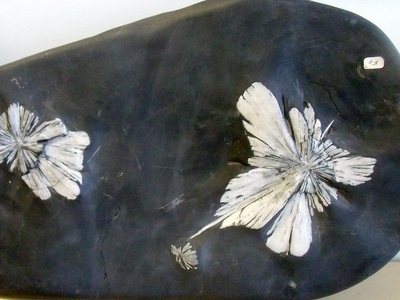
Celestine (mineral)
Naturally occurring mineral form of strontium sulfate, typically pale blue or white. Major ore of strontium used in industry. Very insoluble; mining and crushing can generate dust requiring respiratory protection.
Strontianite (mineral)
Natural mineral form of strontium carbonate, typically white to gray and sometimes banded. Important ore for strontium extraction; insoluble in water, transforms under acid. Mining dusts can be irritating; standard controls apply.
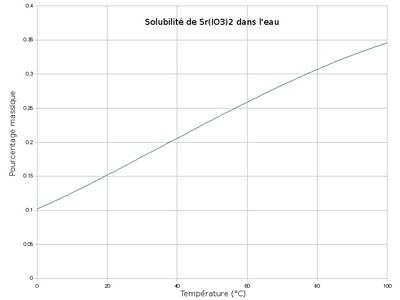
Strontium iodate
Colorless crystalline oxidizing salt used in some optical and chemical applications. Moderately soluble; iodates are oxidizers and should be stored away from combustible materials. Handle with care to prevent dust exposure.
Strontium tungstate
White to gray tungstate used in scintillators and pigments. Insoluble and chemically stable; valued for optical properties. Fine powders used in manufacturing require dust controls and typical industrial hygiene.