China’s scientific legacy reaches from ancient observatories and mathematicians to modern labs and tech centers, with discoveries tied to cities across the country. Many individuals born in different regions have shaped disciplines both within China and globally.
There are 30 Scientists born in China, ranging from Andrew Chi-Chih Yao to Zu Chongzhi; each entry is organized as Birthplace (city, province),Birth year,Field — you’ll find below.
How were names chosen, and does “born in China” account for historical border changes?
The list focuses on individuals with notable, well-documented contributions and verifiable birth locations; “born in China” uses the recorded birthplace mapped to present-day geography where possible, and entries with historical or disputed locations note that context.
Can I sort or export the list by birthplace, birth year, or field?
Yes — the columns (Birthplace (city, province),Birth year,Field) are set up for easy sorting; copy the table into a spreadsheet or export as CSV to filter or group by city, year, or discipline.
Scientists Born in China
| Name | Birthplace (city, province) | Birth year | Field |
|---|---|---|---|
| Tu Youyou | Ningbo, Zhejiang | 1930 | Medicine |
| Chien-Shiung Wu | Taicang, Jiangsu | 1912 | Physics |
| Yuan Longping | Beijing | 1930 | Biology |
| Qian Xuesen | Shanghai | 1911 | Engineering |
| Chen Ning Yang | Hefei, Anhui | 1922 | Physics |
| Tsung-Dao Lee | Shanghai | 1926 | Physics |
| Shiing-Shen Chern | Jiaxing, Zhejiang | 1911 | Mathematics |
| Deng Jiaxian | Huaining, Anhui | 1924 | Physics |
| Fei-Fei Li | Beijing | 1976 | Computer Science |
| Charles K. Kao | Shanghai | 1933 | Engineering |
| Andrew Chi-Chih Yao | Shanghai | 1946 | Computer Science |
| Shing-Tung Yau | Shantou, Guangdong | 1949 | Mathematics |
| Zhong Nanshan | Nanjing, Jiangsu | 1936 | Medicine |
| Hua Luogeng | Jintan, Jiangsu | 1910 | Mathematics |
| Wu Wenjun | Shanghai | 1919 | Mathematics |
| Li Siguang | Huanggang, Hubei | 1889 | Engineering |
| Zhang Heng | Nanyang, Henan | 78 | Engineering |
| Shen Kuo | Hangzhou, Zhejiang | 1031 | Engineering |
| Zu Chongzhi | Jiankang (Nanjing), Jiangsu | 429 | Mathematics |
| Qian Sanqiang | Shaoxing, Zhejiang | 1913 | Physics |
| He Zehui | Suzhou, Jiangsu | 1914 | Physics |
| Hou Debang | Fuzhou, Fujian | 1890 | Chemistry |
| Wang Xuan | Shanghai | 1937 | Computer Science |
| Chen Jingrun | Fuzhou, Fujian | 1933 | Mathematics |
| Yang Liwei | Suizhong, Liaoning | 1965 | Engineering |
| Wang Ganchang | Changshu, Jiangsu | 1907 | Physics |
| Zhao Zhongyao | Zhuji, Zhejiang | 1902 | Physics |
| Su Buqing | Pingyang, Zhejiang | 1902 | Mathematics |
| Ye Qisun | Shanghai | 1898 | Physics |
| Chen-Lu Tsou | Changsha, Hunan | 1925 | Biology |
Images and Descriptions
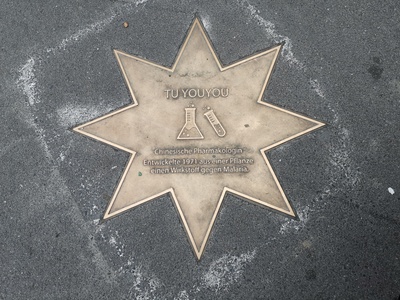
Tu Youyou
A Nobel Prize-winning pharmaceutical chemist who discovered artemisinin, a drug that has saved millions of lives from malaria. She drew inspiration from ancient Chinese medical texts for her groundbreaking research, which began in her native Zhejiang province.

Chien-Shiung Wu
Known as the “First Lady of Physics,” she conducted the Wu experiment, which disproved the law of conservation of parity. Born in a small town near Shanghai, her crucial work was controversially excluded from the 1957 Nobel Prize.
Yuan Longping
Hailed as the “Father of Hybrid Rice,” his agricultural research created high-yield rice varieties that have fed billions worldwide. Born in Beijing, his work dramatically increased global food security and averted potential famines across Asia and Africa.
Qian Xuesen
A brilliant aerospace engineer and cyberneticist considered the father of China’s rocket and space program. After co-founding the Jet Propulsion Laboratory (JPL) in the U.S., the Shanghai-born scientist returned to lead China’s missile development.
Chen Ning Yang
A Nobel laureate who, with Tsung-Dao Lee, disproved the law of conservation of parity in particle physics. Born in Hefei, his theoretical work reshaped the understanding of the fundamental forces of nature and elementary particles.
Tsung-Dao Lee
A Nobel Prize winner who, alongside Chen Ning Yang, developed the theory that parity is not conserved in weak interactions. His early education in his birthplace of Shanghai preceded a celebrated physics career in the United States.
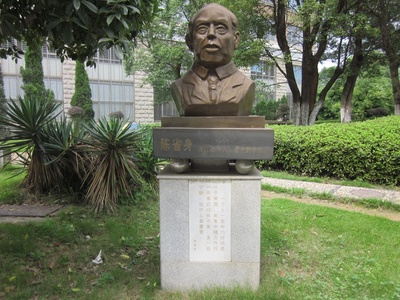
Shiing-Shen Chern
A preeminent mathematician widely regarded as the father of modern differential geometry. He created the Chern-Simons theory, which has profound impacts on both mathematics and physics. He was born in Jiaxing, a city near Shanghai.
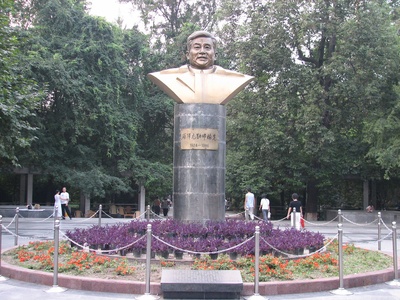
Deng Jiaxian
A nuclear physicist revered as the “Father of China’s Nuclear Weapons.” He led the design of both the atomic and hydrogen bombs for China. Born in Anhui, he dedicated his life to the country’s nuclear program.
Fei-Fei Li
A leading artificial intelligence researcher known for creating ImageNet, a massive visual database that revolutionized computer vision. Born in Beijing, her work has been pivotal in the development of deep learning and modern AI systems.
Charles K. Kao
A Nobel laureate known as the “Father of Fiber Optics” for his groundbreaking work on light transmission in optical fibers. Born in Shanghai, his discoveries paved the way for the modern internet and global telecommunications.
Andrew Chi-Chih Yao
A Turing Award winner for his fundamental contributions to the theory of computation, including the complexity-based theory of pseudorandom numbers. The Shanghai-born scientist’s work is a cornerstone of modern cryptography and computational complexity.
Shing-Tung Yau
A Fields Medal-winning mathematician known for his proof of the Calabi conjecture, leading to the development of Calabi-Yau manifolds. These concepts are now fundamental in string theory. He was born in Shantou on the coast of Guangdong.
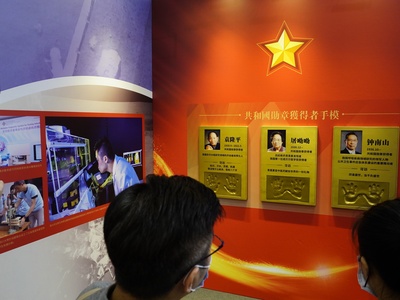
Zhong Nanshan
A renowned pulmonologist who became a national hero for his management of the SARS outbreak in 2003 and his advisory role during the COVID-19 pandemic. Born in Nanjing, he is a leading authority on respiratory diseases.
Hua Luogeng
A legendary self-taught mathematician who became a leading figure in number theory, algebra, and applied mathematics. Despite a lack of formal education in his youth in Jiangsu, he made foundational contributions and promoted mathematical education across China.
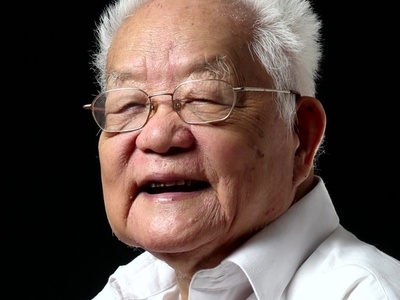
Wu Wenjun
A mathematician celebrated for establishing a method of mechanical theorem proving in geometry, now known as Wu’s method. This work, from the Shanghai-born academician, has had significant applications in computer science, robotics, and artificial intelligence.
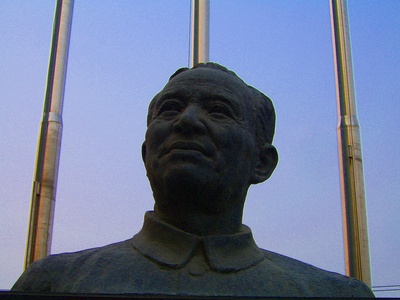
Li Siguang
A geologist and the founder of geomechanics in China. His theories on continental geology led to the discovery of major oil fields in northeastern China, transforming the nation’s energy landscape. He was born and raised in Hubei province.
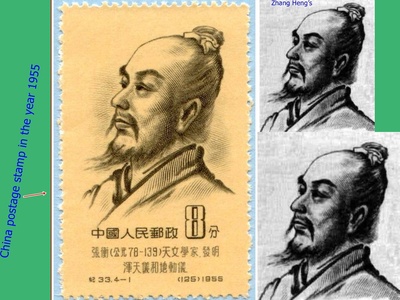
Zhang Heng
An ancient polymath, astronomer, and inventor from the Han Dynasty who created the world’s first known seismoscope. This remarkable device, invented in his home province of Henan, could reportedly detect earthquakes hundreds of kilometers away.
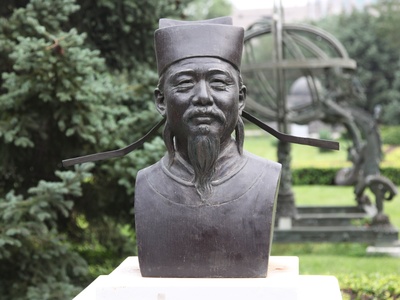
Shen Kuo
A Song Dynasty polymath who made landmark observations in his book “Dream Pool Essays.” He was the first person to describe the magnetic needle compass for navigation, over 400 years before its first mention in Europe.
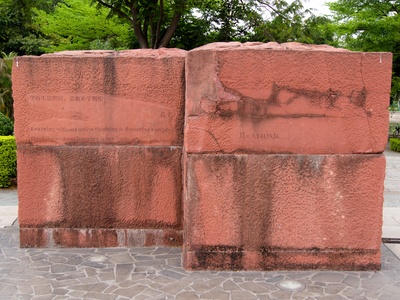
Zu Chongzhi
A brilliant mathematician and astronomer who calculated the value of Pi to seven decimal places. This achievement, made in his home city of Nanjing, was the most accurate in the world for nearly 1,000 years.
Qian Sanqiang
A nuclear physicist known as the “father of China’s atomic bomb” for his administrative leadership of the nuclear weapons program. Born in Shaoxing, he and his wife He Zehui were instrumental in establishing China’s nuclear research capabilities.
He Zehui
A prominent nuclear physicist who made significant discoveries in nuclear fission with her husband, Qian Sanqiang. Born in Suzhou, she was a pioneering female scientist who played a key role in China’s high-energy physics research.
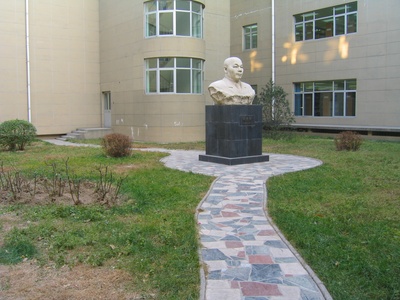
Hou Debang
A chemical engineer famous for developing Hou’s Process for soda ash production, a more efficient method than the established Solvay Process. His innovation, developed after returning to his birth country, broke the international monopoly on the vital chemical.
Wang Xuan
An innovator who developed a revolutionary computerized laser photocomposition system for Chinese characters. Born in Shanghai, his invention transformed China’s printing and publishing industry, moving it from hot-metal typesetting to the digital age.
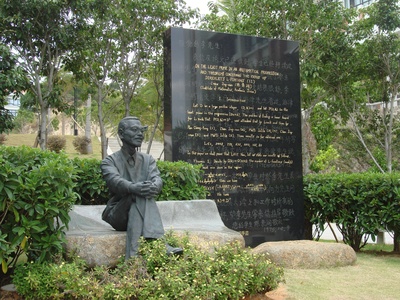
Chen Jingrun
A number theorist renowned for his work on Goldbach’s conjecture, where he proved what is now called Chen’s theorem. His work, completed while enduring harsh conditions, represented the best result on the conjecture at the time.
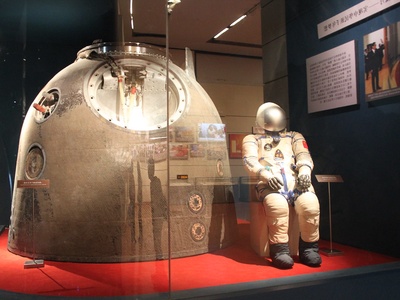
Yang Liwei
The first Chinese person in space, a taikonaut who piloted the Shenzhou 5 mission in 2003. Born in Liaoning, his 21-hour flight made China the third nation to independently achieve human spaceflight, a major national milestone.
Wang Ganchang
A nuclear physicist who was among the first to propose using lasers to induce nuclear fusion. A key contributor to China’s nuclear program, the Jiangsu native also independently discovered the anti-sigma minus hyperon particle in 1959.
Zhao Zhongyao
A pioneering nuclear physicist who was the first to observe electron-positron annihilation. Though his work laid the foundation for the discovery of the positron, the Nobel Prize was awarded to Carl Anderson. He was born in Zhejiang.
Su Buqing
An influential mathematician known as the “King of Mathematics” in China for his work in differential geometry. Born in a rural village in Zhejiang, he founded the school of mathematics at Fudan University and taught for over 60 years.
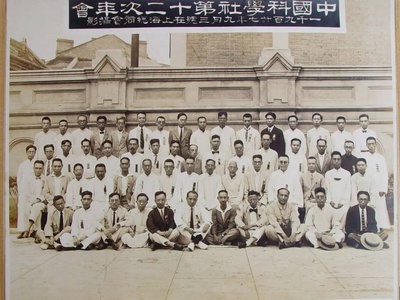
Ye Qisun
A physicist and educator considered a founder of modern physics in China. As a professor at Tsinghua University, the Shanghai-born academic mentored numerous future Nobel laureates and leading scientists, shaping a generation of Chinese physics.
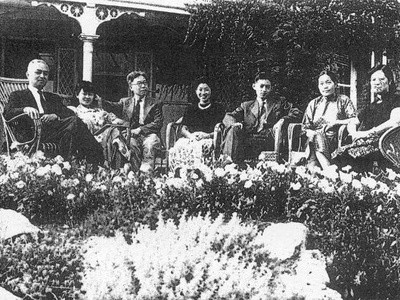
Chen-Lu Tsou
A pioneering biochemist who made significant contributions to the study of enzyme kinetics and protein folding, including the “Tsou plot.” Born in Changsha, he was among the first to propose that an enzyme’s activity depends on its precise conformation.