South Dakota doesn’t give you one bird story. It gives you several.
Out on the prairie, you get meadowlarks, larks, and sharp-tailed grouse. Around lakes and sloughs, it’s ducks, pelicans, and herons. In towns and shelterbelts, the usual backyard suspects show up at feeders. And in the Black Hills, the list shifts again as pines, canyons, and elevation bring in different birds than the east-river grasslands.
If you’re trying to identify birds of South Dakota, the trick is to think by habitat first, species second. That’s how the state actually works.
Table of contents
- TL;DR
- Common birds in South Dakota
- Prairie and grassland birds
- Wetland and water birds
- Backyard birds in South Dakota
- Birds of the Black Hills
- South Dakota birds by season
- State bird and notable species
- Quick birding tips for South Dakota
TL;DR
South Dakota’s easiest birds to find are American robin, red-winged blackbird, mourning dove, American goldfinch, house sparrow, mallard, Canada goose, and northern cardinal in towns and suburbs, plus western meadowlark, bobolink, marsh birds, and prairie grouse in open country.
For the best birding, match the bird to the habitat:
- Prairie: meadowlarks, horned larks, prairie-chickens, grouse
- Wetlands: ducks, pelicans, herons, sandpipers, swans
- Woodlands/Black Hills: chickadees, nuthatches, woodpeckers, raptors
- Backyards: finches, sparrows, robins, blue jays, cardinals
South Dakota’s state bird is the ring-necked pheasant — not native, not subtle, and very much part of the landscape now.
Common birds in South Dakota
The most common birds in South Dakota are the ones that tolerate people, roads, grain fields, and shelterbelts. That sounds unglamorous, but it’s exactly why you’ll see them first.
A good starter list includes:
- American robin — Often the first bird people notice in spring, especially on lawns and in small towns.
- Red-winged blackbird — Easy to spot in cattails and roadside marshes; the shoulder patch gives it away even when it’s not singing.
- Mourning dove — Soft cooing, long tail, tan-gray body. They’re everywhere from farmyards to feeder areas.
- American goldfinch — Bright yellow males in summer, drabber in winter. Loves thistles and sunflower seed.
- House sparrow — Common around barns, parking lots, and feedlots. Not native, but thoroughly established.
- Canada goose — Found on ponds, golf courses, city parks, and agricultural wetlands.
- Mallard — The default duck across the state, especially where shallow water and people overlap.
- Common grackle — Glossy, noisy, and hard to ignore in flocks.
- Northern cardinal — More common in the east and in towns with good shrubs and feeders. In the right neighborhood, they’re a regular winter visitor.
- Blue jay — Loud, smart, and stubborn about feeders.
For a state-level checklist, the South Dakota Game, Fish and Parks bird resources are a useful starting point, especially if you want to compare common species with rarer visitors.
Prairie and grassland birds
South Dakota’s grasslands are not empty. They’re busy. You just have to slow down enough to see the birds that live low, blend in, or prefer open country over trees.
The signature prairie birds include:
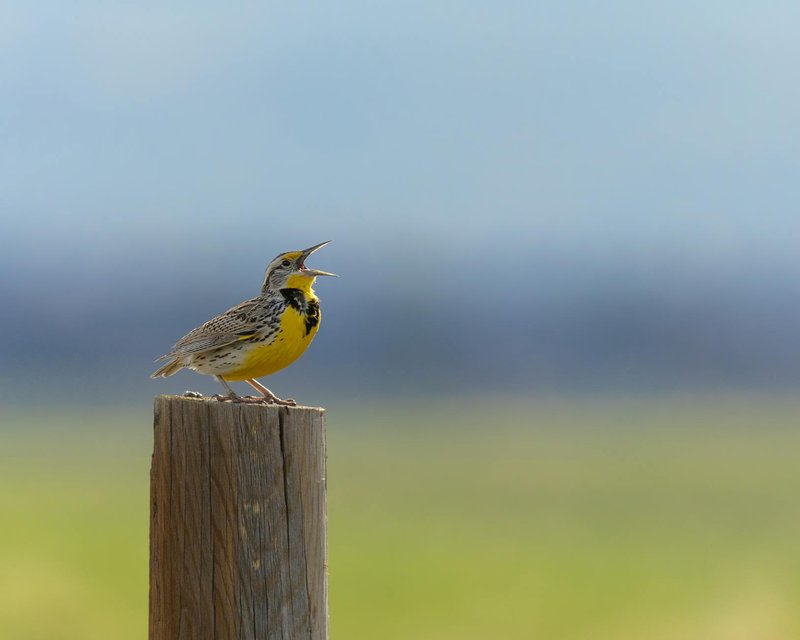
- Western meadowlark — South Dakota’s state bird in spirit, if not on paper. Yellow chest, black V, fence-post habit, and a song that sounds like the prairie has manners.
- Horned lark — Small, sandy-colored, and built for open fields and shortgrass prairie.
- Lark bunting — The breeding male is striking in black-and-white, especially on the Great Plains in spring.
- Bobolink — Black and buff in breeding plumage, often seen in hayfields and wet meadows during migration and summer.
- Sharp-tailed grouse — A classic prairie grouse, often found on leks at dawn in spring.
- Greater prairie-chicken — Present in some prairie regions and famous for its booming courtship displays.
- Burrowing owl — Small, long-legged, and usually associated with prairie dog towns or open grassland burrows.
- Swainson’s hawk — A long-distance migrant that hunts over open country and crop fields.
- Ferruginous hawk — One of the great open-country raptors of the West, often seen over prairie and Badlands edges.
If you want a bird that feels specific to South Dakota rather than just “somewhere in the Midwest,” prairie birds are the best answer. The open country around the central and western parts of the state gives you huge sky, low cover, and birds built for exactly that setup.
Wetland and water birds
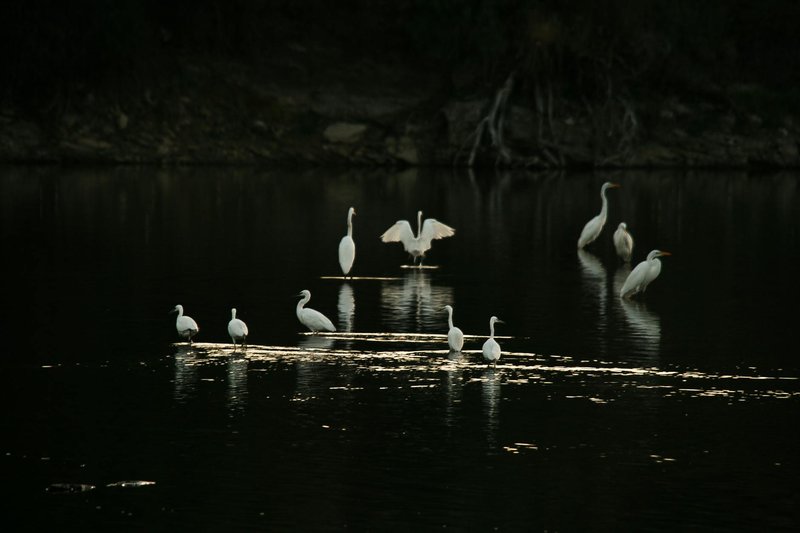
South Dakota’s lakes, potholes, sloughs, rivers, and managed wetlands are a magnet for waterbirds. In migration season, these places can look packed.
Expect to see:
- Mallard
- Blue-winged teal
- Northern pintail
- Gadwall
- American wigeon
- Canvasback
- Redhead
- Ring-necked duck
- Trumpeter swan
- Canada goose
- American white pelican
- Great blue heron
- Great egret
- Sandhill crane
- Killdeer
- Spotted sandpiper
The state is especially well known for waterfowl migration. South Dakota sits on major flyways, and that means spring and fall can bring big numbers of ducks and geese through shallow wetlands and grain-field country. For general migration context, Audubon’s bird migration overview is a solid primer.
One bird worth looking for in shallow wetlands is the American white pelican. It’s huge, bright white, and oddly graceful once it gets going. You don’t confuse it with anything else.
Backyard birds in South Dakota
Backyard birding in South Dakota depends on where you live, but feeders and shrubs pull in a familiar crowd.
The most common feeder birds include:
- Black-capped chickadee — Tiny, lively, and fearless at seed feeders.
- House finch — Males show red on the head and chest; they’re regular feeder birds in towns.
- American goldfinch — Especially fond of nyjer and sunflower.
- White-breasted nuthatch — Often seen creeping headfirst down tree trunks.
- Downy woodpecker — Small, black-and-white, and frequent at suet feeders.
- Hairy woodpecker — Similar to the downy, but larger and sturdier billed.
- Dark-eyed junco — Common in winter, often feeding on the ground beneath feeders.
- House sparrow — Common around human-made structures.
- Northern cardinal — More likely in the eastern part of the state and in bird-friendly neighborhoods with thick cover.
- Blue jay — Loud enough that you usually know it’s around before you see it.
If your yard has native shrubs, seed heads, and a water source, you’ll see more than just the usual feeder regulars. Many birds use South Dakota yards as stopovers, especially during migration.
Birds of the Black Hills
The Black Hills give South Dakota a different bird list than the prairie. Pines, mixed forest, steep slopes, and cooler pockets change what you’ll find.
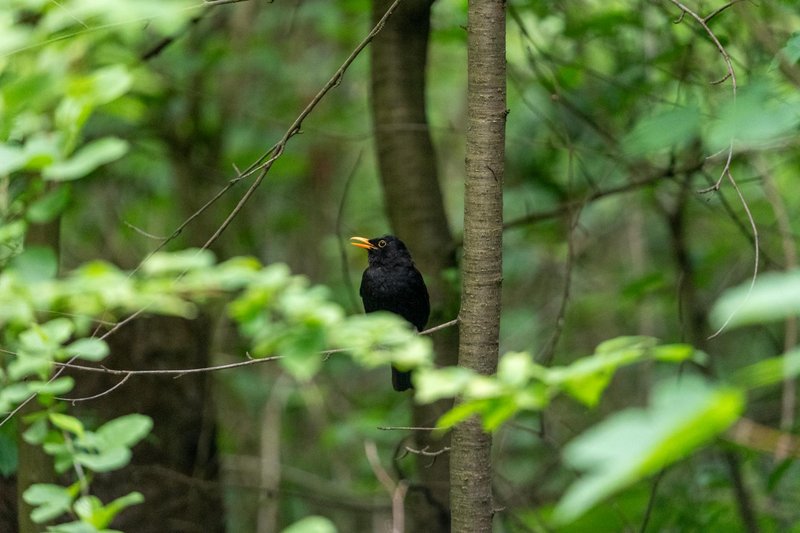
Common and notable Black Hills birds include:
- Mountain bluebird — More likely in open western habitats, but a special sight when it shows up near the Hills.
- Pygmy nuthatch — A pine-forest specialist and one of the most characterful little birds in the region.
- Red-breasted nuthatch — Often associated with conifers and cone crops.
- Steller’s jay — A western species that can appear in the Hills and has no interest in being quiet.
- Pileated woodpecker — Large, loud, and tied to mature forests.
- Myrtle yellow-rumped warbler — Common during migration and in wooded areas.
- Townsend’s solitaire — A western bird tied to juniper and conifer habitats.
- Ruffed grouse — Found in wooded areas with dense understory.
- Cooper’s hawk — Often seen darting through woodland edges and residential areas.
- Bald eagle — Not limited to the Hills, but a regular sight near rivers, lakes, and open forested country.
The Black Hills are one of the best places in the state to mix birding with a road trip that doesn’t feel like birding homework. You get forest species, edge species, and raptors all in one trip.
South Dakota birds by season
Bird life changes fast here.
Spring brings migrants first: warblers, waterfowl, cranes, and shorebirds. Wetlands fill up with movement, and fields can suddenly hold flocks that weren’t there the day before.
Summer is breeding season. Prairie species are vocal, wetlands are busy with nesting birds, and meadow edges hold nesting sparrows, blackbirds, and marsh birds.
Fall is migration again, but quieter-looking. Birds are moving, feeding, and building fat reserves. This is a strong season for ducks, geese, hawks, and passerines.
Winter shifts the cast. Open water matters. Feeders matter. So do shelterbelts and conifer stands. Expect dark-eyed juncos, chickadees, nuthatches, woodpeckers, and winter raptors to dominate the scene.
For migration timing and bird counts, eBird’s South Dakota hotspot data is one of the best public tools around. It’s practical, local, and full of real sightings.
State bird and notable species
South Dakota’s state bird is the ring-necked pheasant. It’s a familiar sight in farm country, roadside ditches, and grass edges, especially in the eastern and central parts of the state. The rooster’s long tail, green head, red face patch, and copper body make it unmistakable once you’ve seen one up close.
That said, many birders think of the western meadowlark as the bird that best represents South Dakota’s native prairie character. It’s not flashy in the same way, but it feels more like the landscape.
Other standout birds worth knowing:
- American white pelican — huge, white, and unmistakable
- Sandhill crane — tall, loud, and elegant in flight
- Sharp-tailed grouse — prairie specialist with famous display behavior
- Bald eagle — winter and migration favorite near water
- Burrowing owl — rare and memorable if you find one
Quick birding tips for South Dakota
A few practical things make birding here easier:
- Start near water in spring and fall. Wetlands concentrate birds fast.
- Check fence lines and power poles in open country. Raptors and meadowlarks use them constantly.
- Bird early in the day when prairie species are most active and the wind is lower.
- Use native plantings at home if you want more feeder and yard activity.
- Watch the edges — shelterbelts, field margins, cattail borders, and woodland transitions are often better than the middle of any habitat.
South Dakota birding rewards patience more than fancy gear. Binoculars help. A field guide helps. But the real advantage is knowing where the habitat changes. That’s where the birds are.
South Dakota’s birds are a mix of prairie specialists, waterfowl, backyard regulars, and western species that give the state a little extra edge. Learn the habitat, and the list starts making sense fast. Birds of South Dakota aren’t just a checklist — they’re a map of the state itself.