Table of Contents
- TL;DR
- What Are Bioluminescent Organisms?
- How Bioluminescence Works
- Why Organisms Glow
- Examples of Bioluminescent Organisms
- Bioluminescence vs Fluorescence vs Phosphorescence
- Where Bioluminescence Is Most Common
- Why Scientists Care About It
TL;DR
Bioluminescent organisms are living things that make their own light through a chemical reaction. The best-known examples are fireflies, glowing jellyfish, deep-sea fish, and certain fungi. Most of the glow comes from a molecule called luciferin reacting with an enzyme called luciferase, often with oxygen involved. The light can help with attracting mates, finding prey, confusing predators, or communicating in the dark.
What Are Bioluminescent Organisms?
Bioluminescent organisms are animals, fungi, bacteria, and other life forms that produce visible light inside their bodies. The light isn’t reflected sunlight or heat glow. It’s made by biology.
That’s the key difference. A glow stick works because chemicals mix and emit light. A firefly does basically the same trick, just with a lot more elegance and a lot less plastic.
Bioluminescence shows up across very different branches of life, which tells you it evolved more than once. In many cases, the ability to glow is tied to survival in dark environments, especially the ocean. The deeper you go, the more useful your own flashlight becomes.
How Bioluminescence Works
At the center of bioluminescence is a chemical reaction that releases energy as light. In many organisms, this involves:
- Luciferin: the light-producing molecule
- Luciferase: the enzyme that helps trigger the reaction
- Oxygen: often required for the reaction to happen
- Energy source: sometimes ATP or other cellular components help drive the process
When luciferin reacts, it moves into a higher-energy state. As it returns to a lower-energy state, it gives off a photon — a tiny packet of light.
Different organisms use different versions of this system. That matters. A firefly doesn’t use the exact same chemistry as a glowing dinoflagellate, and marine life often has its own special light-making machinery. According to the Smithsonian Ocean Portal, bioluminescence has evolved many times in the ocean, which is one reason the chemistry is so diverse.
The color of the light also varies. Blue and blue-green light are common underwater because those wavelengths travel farther in seawater. That’s not a coincidence. Evolution doesn’t waste light on colors nobody can see.
Why Organisms Glow
Bioluminescence is not just for show. It usually solves a problem.
Attracting mates
Fireflies are the classic example. Their blinking patterns are species-specific, and the flashes help males and females find each other. The light is basically a dating profile with a pulse.
Luring prey
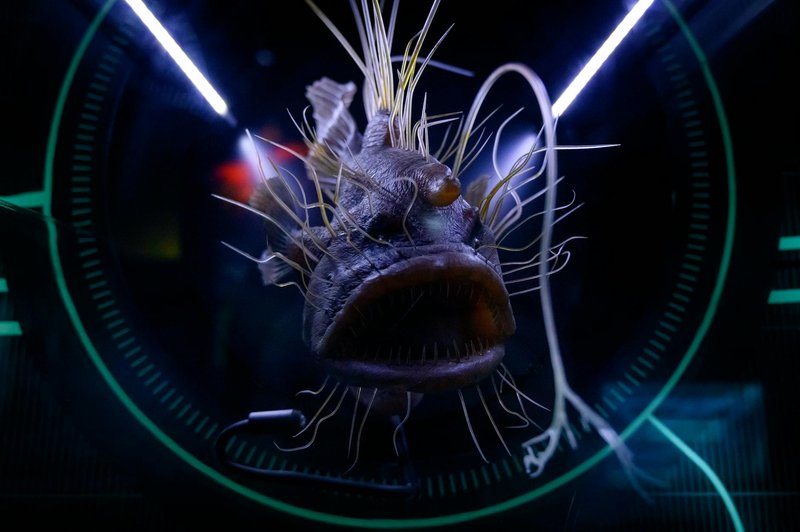
Some deep-sea animals use glowing lures to bait smaller animals close enough to eat. The anglerfish is the celebrity example, with its dangling lighted bait hanging like a neon fishing rod.
Defense
Some organisms flash light to startle predators, confuse attackers, or reveal their own predators to something bigger. A few species use “burglar alarm” behavior — glowing to attract a second predator that may chase the first one away.
Camouflage
In the deep ocean, some animals use light to match the faint glow from above. This is called counterillumination, and it helps them disappear from below.
Communication
Light can carry information in places where sound or scent is less effective. In the dark, a glow signal is hard to ignore.
According to a National Science Foundation overview on deep-sea life, light production is one of the most important adaptations in the ocean’s darker zones.
Examples of Bioluminescent Organisms
Bioluminescence shows up in several major groups. Here’s the useful breakdown.
Marine bioluminescent organisms
The ocean is the heavyweight champion of glow.
- Dinoflagellates: These microscopic plankton, a group of protists, can make waves and shorelines shimmer when disturbed. The result is the famous “glowing water” effect.
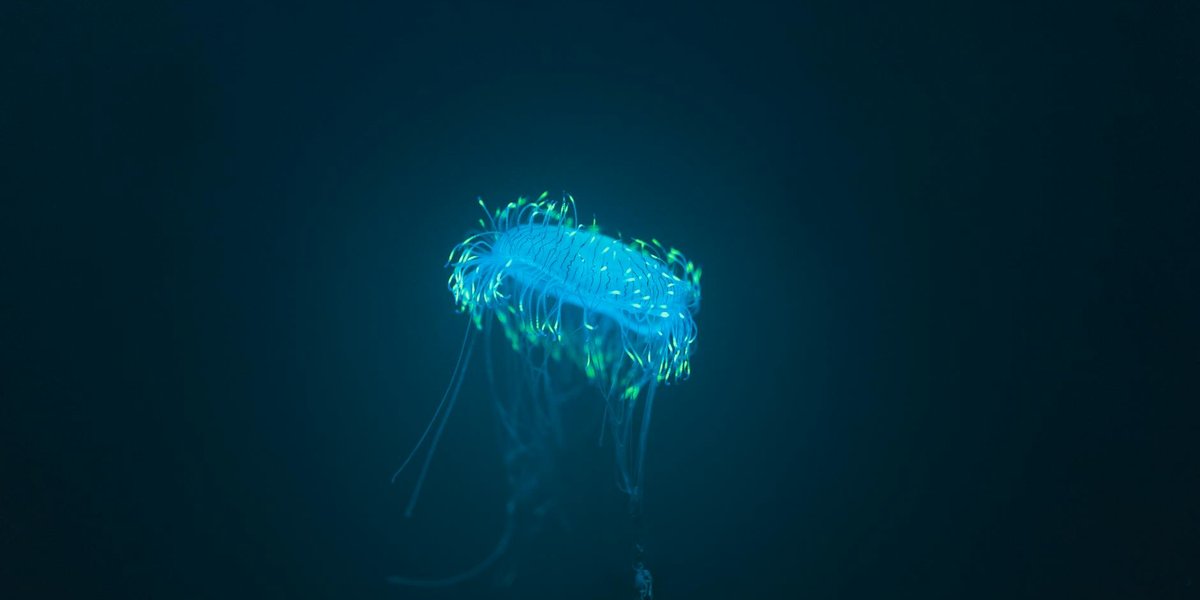
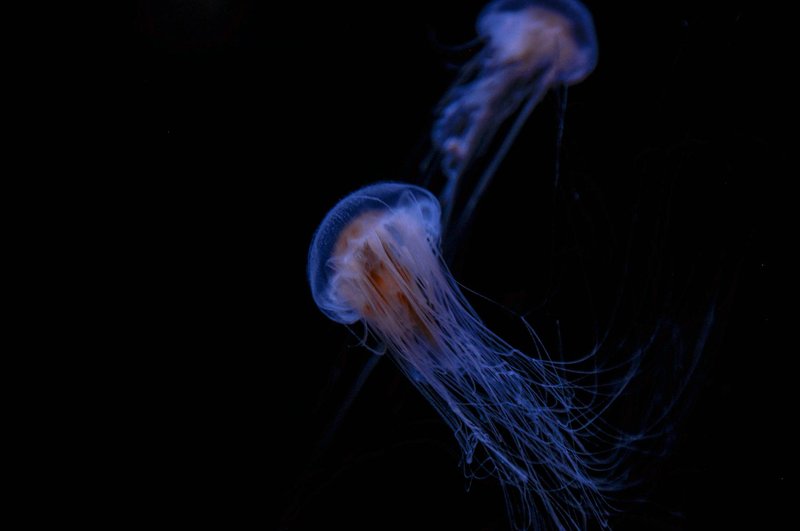
- Jellyfish: Many species glow, often with blue or green light.
- Comb jellies: Some produce their own light or reflect it in a way that looks luminous.
- Squid and octopus species: Several use light for camouflage or signaling.
- Deep-sea fish: Lanternfish, viperfish, and anglerfish are well-known examples.
- Krill and other crustaceans: Some emit light directly, while others rely on symbiotic bacteria.
A lot of the deep sea’s glow is not decorative. It’s functional, and often a little unsettling in the best possible way.
Terrestrial bioluminescent organisms
On land, glowing life is less common but easier to spot.
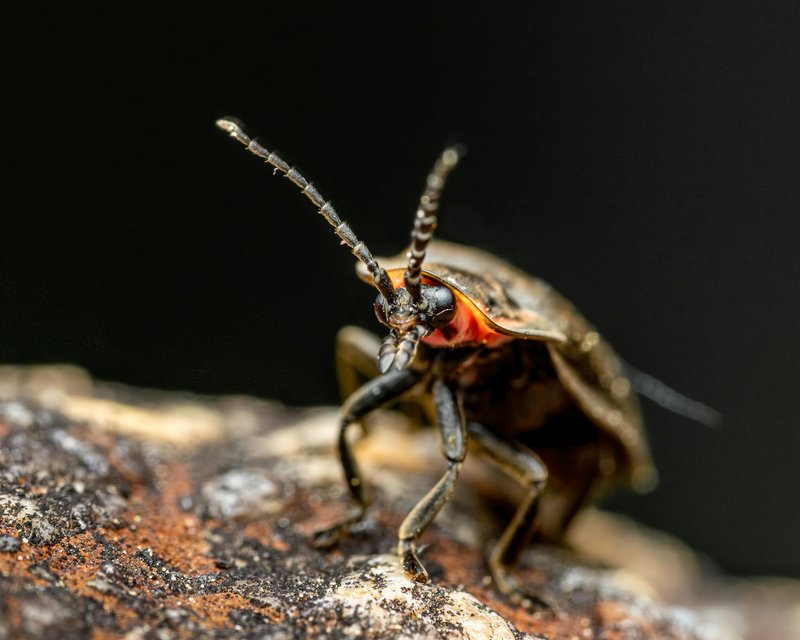
- Fireflies: The most famous land bioluminescent insects. Adults use light displays for mating.
- Glow-worms: In some species, the glowing stage is a larval or female form rather than a worm in the strict sense.
- Some millipedes: A few species emit light, often as a defense.
- Certain beetle larvae: These can glow to signal toxicity or deter predators.
Bioluminescent fungi
Some fungi glow from their mycelium, fruiting bodies, or both. The light is usually faint, so in a moonless forest it’s more eerie rumor than neon sign.
Examples include species in genera such as Armillaria, Mycena, and Panellus. Research summarized by NCBI has shown that fungal bioluminescence is a real metabolic trait, not just a party trick.
For a broader look at fungi, see 10 Interesting Facts About Fungi.
Bioluminescent bacteria
Bioluminescent bacteria are often tiny, but they can create dramatic effects when they live in large numbers or in symbiosis with animals.
- Vibrio species are among the best-known glowing bacteria.
- Some marine animals host these bacteria in specialized light organs and use them for signaling or camouflage.
In other words, sometimes the organism making the light is not the animal you’re looking at. Biology loves a team project.
Bioluminescence vs Fluorescence vs Phosphorescence
These three get mixed up constantly, so here’s the clean version.
- Bioluminescence: living things make light through a chemical reaction
- Fluorescence: a material absorbs light and immediately re-emits it at a different wavelength
- Phosphorescence: a material continues glowing after the light source is gone
Bioluminescence does not need external light to start. Fluorescence and phosphorescence do.
A sea turtle under UV light, a glowing mineral, and a firefly are not doing the same thing. They’re just all being called “glowy” by people who deserve a break but also a glossary.
Where Bioluminescence Is Most Common
Bioluminescence is most common in the ocean, especially in deep water.
That makes sense. Sunlight fades fast underwater, and below a certain depth, natural light becomes scarce. In those conditions, making your own light is useful enough to evolve repeatedly.
You’ll also find bioluminescent species in damp forests, caves, and tropical regions where insects, fungi, and microbes have the right conditions to thrive. But compared with the sea, land is a modest glow show.
The deep sea is the real hotspot. Many scientists estimate that a large share of marine organisms in some midwater and deep-sea zones are capable of producing light in some form.
Learn more about the environments where these organisms thrive in Marine Biomes: The Complete List.
Why Scientists Care About It
Bioluminescent organisms matter far beyond pretty photos.
Researchers study them to understand:
- how genes control light production
- how marine ecosystems function in darkness
- how symbiosis works between hosts and glowing microbes
- how light-producing enzymes can be used in laboratory research
One famous use is the green fluorescent protein, or GFP, which came from a jellyfish and became a hugely important tool in cell biology. While GFP is fluorescence, not bioluminescence, the broader story started with glowing marine life and led to a major shift in how scientists visualize living cells.
Bioluminescence also helps researchers track disease processes, measure gene expression, and study environmental changes. A glowing organism can be a clue, a sensor, and a research tool all at once.
Summary
Bioluminescent organisms are living things that make their own light, and they’ve evolved that ability in multiple branches of life. Fireflies, deep-sea fish, jellyfish, fungi, bacteria, and dinoflagellates all use light in different ways, but the reasons usually come down to the same basic needs: survive, reproduce, hunt, or hide.
The chemistry is simple to describe and weirdly elegant in practice. A molecule gets excited, an enzyme helps, light comes out. Nature, as usual, made it look easy after doing the hard part first.
Bioluminescence is most common in the ocean, but the land versions are memorable because they feel a little magical. The trick is real, though. Living things can make light, and they’ve been doing it for a very long time.