Table of contents
- TL;DR
- What are igneous rocks?
- How igneous rocks form
- Intrusive vs. extrusive igneous rocks
- Common igneous rock examples
- Igneous rocks vs. sedimentary and metamorphic rocks
- Why igneous rocks matter
- FAQ
TL;DR
Igneous rocks are rocks that form when molten material cools and hardens. If that cooling happens underground, the result is an intrusive igneous rock like granite, which grows large crystals because it cools slowly. If it happens at Earth’s surface after a volcanic eruption, you get an extrusive igneous rock like basalt, usually with tiny crystals because the melt cools fast.
That cooling speed is the whole trick. Slow cooling gives crystals time to grow. Fast cooling doesn’t.
What are igneous rocks?
Igneous rocks are one of the three main rock types on Earth. They form from melted rock that cools and solidifies. The word comes from the Latin ignis, meaning fire, which is fitting enough. Fire doesn’t make the rock, but the heat deep in Earth does.
There are two molten forms to know:
- Magma is molten rock underground.
- Lava is molten rock that reaches the surface.
When either one cools, crystals begin to form. Those crystals lock together into a solid rock. According to the U.S. Geological Survey, igneous rocks are classified mainly by how they form and the texture they develop.
How igneous rocks form
The process is simple, but the details matter.
- Rock melts deep inside Earth or in a hot volcanic setting.
- Magma rises because it’s buoyant compared with surrounding solid rock.
- Cooling begins as the magma loses heat.
- Minerals crystallize in a specific order as temperature drops.
- The rock solidifies into an igneous rock.
The important part is that different minerals crystallize at different temperatures. That’s why igneous rocks can have very different mineral mixes even if they started from similar molten material. The National Park Service has a solid overview of how this works in volcanic and plutonic settings.
Cooling rate and crystal size
This is the part students usually remember, because it’s visible.
- Slow cooling = large crystals
- Fast cooling = small crystals
- Very fast cooling = glassy texture, with almost no visible crystals
That’s why granite tends to look speckled and coarse, while basalt usually looks dark and fine-grained. Obsidian is the odd one out: it cools so quickly that crystals barely get started, leaving volcanic glass instead of a crystalline rock.
Intrusive vs. extrusive igneous rocks
This is the main classification system.
Intrusive igneous rocks
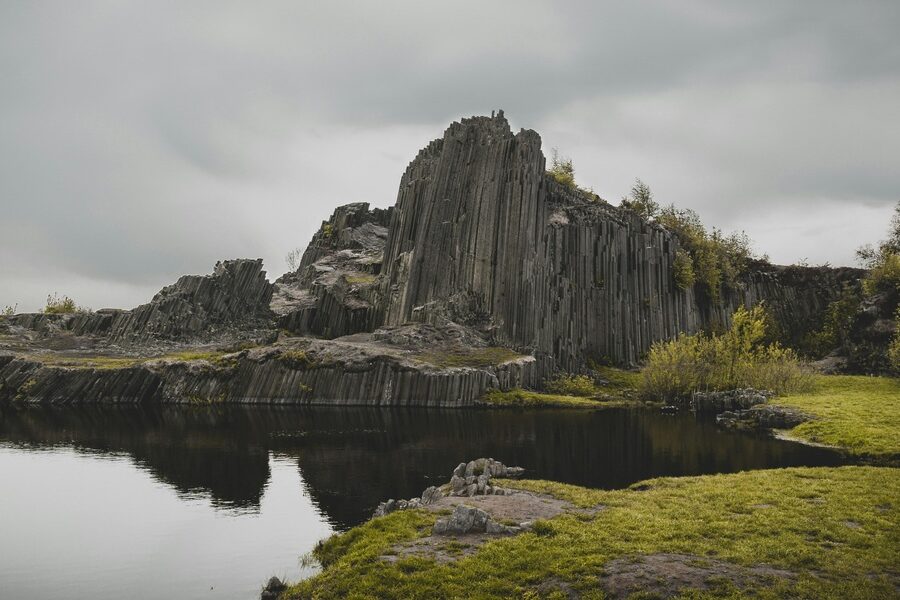
Intrusive rocks form when magma cools below Earth’s surface. Underground insulation lets the melt cool slowly, so crystals have time to grow large.
Common intrusive rocks:
- Granite
- Diorite
- Gabbro
- Peridotite
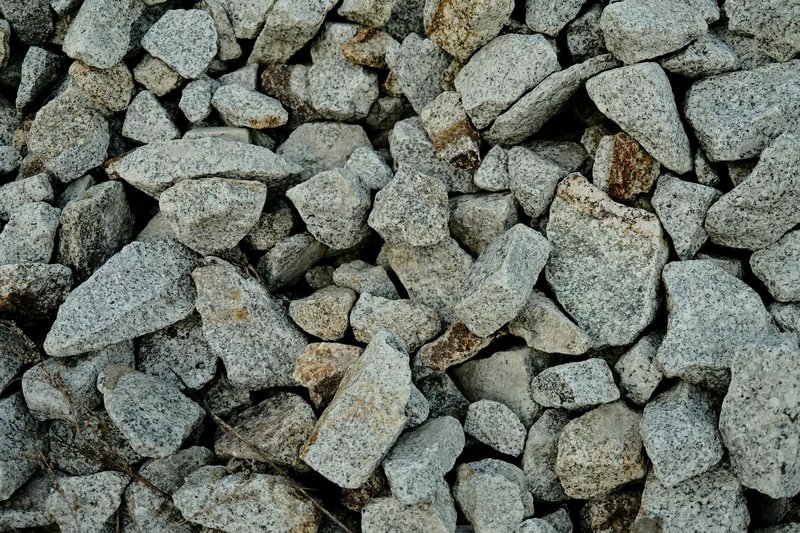
Granite is the classic example. It’s the pale, speckled rock you see in countertops, building facades, and many mountain ranges. Those visible mineral grains are a dead giveaway that it cooled slowly underground.
Extrusive igneous rocks
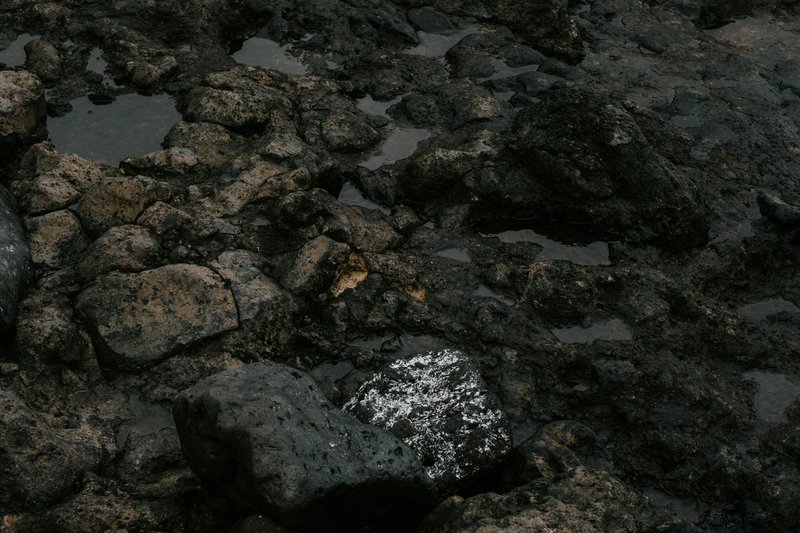
Extrusive rocks form when lava cools at or near Earth’s surface. Air, water, and cold ground strip heat away quickly, so crystals stay tiny or don’t form at all.
Common extrusive rocks:
- Basalt
- Rhyolite
- Andesite
- Obsidian
- Pumice
Basalt is the workhorse of the volcanic world. It makes up a huge portion of the ocean floor and forms much of the dark lava rock seen on volcanic islands. Pumice is the weird lightweight one — full of gas bubbles, so porous it can float.
For a regional look at volcanic activity, see Volcanoes in Illinois.
Quick comparison table
| Feature | Intrusive igneous rocks | Extrusive igneous rocks |
|---|---|---|
| Cooling location | Underground | Surface |
| Cooling speed | Slow | Fast |
| Crystal size | Large | Small |
| Texture | Coarse-grained | Fine-grained or glassy |
| Common examples | Granite, gabbro | Basalt, obsidian, pumice |
Common igneous rock examples
Here are the names worth actually remembering.
- Granite — Light-colored, coarse-grained, rich in quartz and feldspar. Common in continents and countertops.
- Basalt — Dark, fine-grained, dense, and extremely common on Earth’s crust and ocean floor.
- Obsidian — Volcanic glass with a sharp, shiny fracture. It forms when lava cools too fast for crystals to develop.
- Pumice — Frothy volcanic rock packed with gas bubbles. Light enough to float at first.
- Gabbro — A coarse-grained dark rock, chemically similar to basalt but cooled slowly underground.
- Rhyolite — A light-colored extrusive rock that’s the surface equivalent of granite.
A useful shortcut: intrusive rocks often have the same chemistry as extrusive rocks, just with a different texture. Granite and rhyolite are a pair. Gabbro and basalt are a pair.
For a regional snapshot of ancient volcanism in the United States, see Volcanoes in Kentucky.
Igneous rocks vs. sedimentary and metamorphic rocks
The rock cycle gets easier once you stop treating all rocks like the same gray lump.
- Igneous rocks form from cooled molten rock.
- Sedimentary rocks form from compacted sediments, like sand, mud, or shell fragments.
- Metamorphic rocks form when existing rocks are changed by heat and pressure without fully melting.
So if a rock shows crystals that interlock like puzzle pieces, it’s probably igneous or metamorphic. If it has layers, rounded grains, or fossil bits, sedimentary is more likely. If it has a foliated, banded, or squished look, metamorphic usually gets the vote.
For a clear breakdown of rock types, the National Geographic Education resource is a good quick reference.
Simple comparison
| Rock type | How it forms | Common clue |
|---|---|---|
| Igneous | Cooling magma or lava | Crystals |
| Sedimentary | Compacted sediment | Layers or fossils |
| Metamorphic | Heat and pressure | Banded or altered texture |
Why igneous rocks matter
Igneous rocks do more than sit there looking photogenic in museum trays.
They build much of Earth’s crust. Oceanic crust is mostly basaltic, and many continents contain huge bodies of granite formed deep underground. They also tell geologists where magma once moved, where volcanoes erupted, and how hot Earth’s interior was in the past.
They matter in everyday life, too:
- Granite countertops come from intrusive igneous rock.
- Basalt shows up in road base, construction stone, and volcanic landscapes.
- Pumice is used in abrasives and lightweight concrete.
- Obsidian has been used for cutting tools because it fractures to an extremely sharp edge.
If you want to understand Earth’s plumbing, igneous rocks are a good place to start. They’re the frozen record of molten rock doing what molten rock does: moving, cooling, and locking up minerals along the way.
FAQ
Are all volcanic rocks igneous rocks?
Yes. Volcanic rocks are extrusive igneous rocks.
Can igneous rocks contain fossils?
No. Fossils don’t survive the heat of molten rock.
What is the most common igneous rock?
Basalt is one of the most common igneous rocks on Earth, especially in oceanic crust.
Why are some igneous rocks dark and others light?
It depends on mineral composition. Dark rocks tend to be richer in iron and magnesium, while lighter rocks usually contain more silica, quartz, and feldspar.
Is granite igneous or metamorphic?
Granite is igneous. Gneiss can look similar, but it’s metamorphic.
Final thought
Igneous rocks are the clearest example of geology doing something dramatic and then freezing the moment. They start as molten material, cool into solid rock, and preserve the story in their texture. Once you know what to look for, granite, basalt, obsidian, and pumice stop being just rock names and start making sense as different endings to the same process.