Somalia does not get enough credit as a plant hotspot. People tend to picture dry country, scrubby hills, and not much else. But the country’s mix of coastal lowlands, limestone plateaus, mountain foothills, and seasonal river valleys has produced a surprising number of plant species that occur nowhere else on Earth.
That’s what makes the endemic plants of Somalia such an interesting topic. Endemism here is tied to isolation, climate extremes, and very specific soils. It’s also tied to fragility. Habitat loss, overgrazing, charcoal production, and weak conservation infrastructure make many Somali endemics hard to study and harder to protect.
TL;DR
Somalia has a distinctive flora shaped by arid landscapes and isolated habitats. Its endemic plants are often local specialists, many with narrow ranges in limestone, gypsum, or montane habitats. The list is not as long or as neatly documented as in heavily studied regions, but the species that are known are scientifically important and conservation-sensitive. If you need a starting point, focus on the Somali–Mogadishu region, the northern escarpments, and the inland highlands where unusual plants tend to persist.
Table of contents
- What makes Somalia’s plant life unique
- Notable endemic plants of Somalia
- Why these species are so localized
- Conservation pressures
- Why the data is patchy
- Conclusion
What makes Somalia’s plant life unique
Somalia sits in the Horn of Africa, one of the world’s major centers of arid-land biodiversity. The country’s vegetation changes fast over short distances. On one side you’ve got coastal dunes and salty soils. Move inland and the land can turn into acacia bushland, limestone outcrops, or seasonal grassland. In higher or wetter pockets, the flora changes again.
That patchwork matters. Plants that evolve in isolated pockets of suitable habitat can become endemics, especially when those pockets are separated by dry country that acts like a barrier. Somalia’s geography creates exactly that kind of setup.
The country’s flora has been documented in regional floras and global plant databases, but the record is still uneven. Large areas have been under-collected for decades. That means some “endemic” species are solidly established, while others may turn out to be more widespread once more fieldwork happens. For plant distribution, the old rule still applies: no one knows the land as well as the land itself, and the land rarely volunteers the answer.
Notable endemic plants of Somalia
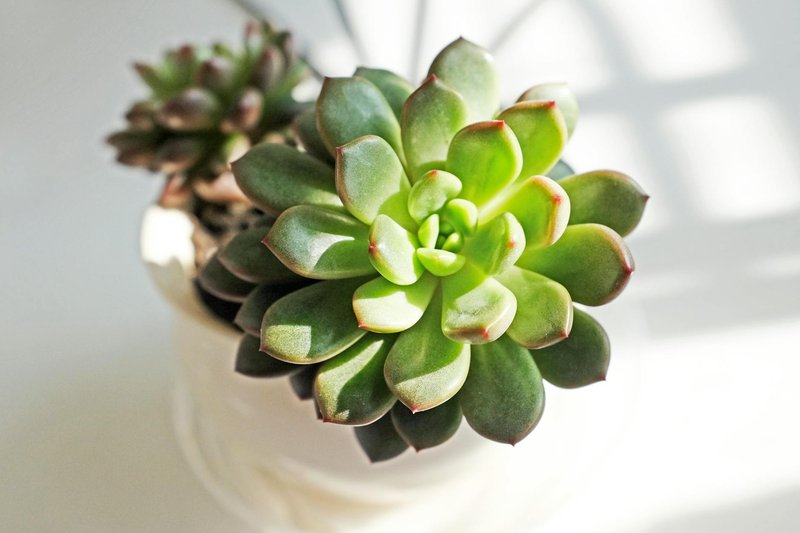
A truly exhaustive list is tricky because taxonomic updates happen often and some Somali plants are known from very few collections. Still, several species are repeatedly treated as Somali endemics or near-endemics in botanical references and biodiversity databases such as GBIF and Kew’s Plants of the World Online.
Here are some of the better-known examples:
| Species | Family | Notes |
|---|---|---|
| Aloe somaliensis | Asphodelaceae | A Somali aloe with striking spotted leaves, associated with dry habitats in northern Somalia. |
| Ceropegia somalensis | Apocynaceae | A narrowly distributed vine-like succulent from Somalia’s arid zones. |
| Euphorbia somalica | Euphorbiaceae | A drought-adapted spurge linked to Somali dryland habitats. |
| Commiphora samharensis | Burseraceae | A resinous shrub/tree from the Horn of Africa, often tied to Somali-type dry habitats. |
| Sansevieria ehrenbergii var. somalensis | Asparagaceae | A localized Somali form in a genus well adapted to arid landscapes. |
| Adenium somalense | Apocynaceae | The desert rose relative that is strongly associated with the Horn of Africa, including Somalia. |
| Barleria somalensis | Acanthaceae | A localized flowering shrub named for its Somali range. |
A couple of notes matter here.
First, “endemic” can mean strictly confined to Somalia, but some species are better described as Somali-region endemics or near-endemics because they also occur just across the border in Ethiopia or Kenya. That distinction matters for conservation and for anyone trying to be precise.
Second, common names are sparse. A lot of these plants are better known by their scientific names because the species are obscure outside botanical circles. That’s normal. Endemism often comes with anonymity.
If you want a broader taxonomic reference point, the IUCN Red List and herbarium records are useful for checking whether a species is assessed, where it has been collected, and how narrow its range appears to be.
Why these species are so localized
Somalia’s endemic plants usually owe their existence to a few repeat offenders: isolation, harsh climate, and weird geology.
1. Arid conditions create ecological filters
Most plants can’t simply spread everywhere in Somalia. Rainfall is erratic, evaporation is brutal, and many areas are dry for long stretches. Only species with serious drought adaptations survive well. That includes succulents, deep-rooted shrubs, and plants that can shut down during drought and come back fast when rain returns.
2. Rock and soil chemistry matter
Some endemics are tied to limestone, gypsum, or other specialized substrates. A plant can be perfectly happy on one hillside and fail five kilometers away if the soil chemistry changes. That’s one reason Somalia’s floristic diversity hides in plain sight. The terrain looks spare, but the plants are picky.
3. Isolation slows gene flow
Populations separated by deserts, escarpments, or unsuitable habitat drift apart over time. Eventually, you get distinct species or highly localized varieties. That is a classic endemism recipe, and Somalia has the geography for it.
4. The Horn of Africa is a biogeographic crossroads
The Horn mixes Afro-tropical, Arabian, and arid-zone influences. That doesn’t just increase species richness; it also creates opportunities for narrow-range specialists to evolve in isolated niches. Some of Somalia’s endemic flora reflects this deeper Horn-wide pattern rather than a neat political boundary.
Conservation pressures
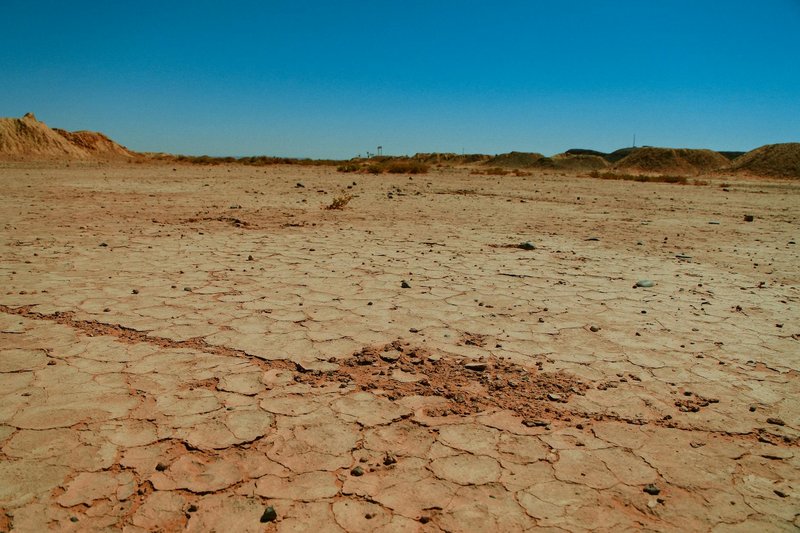
Somalia’s endemic plants face the same old list of problems, just with fewer resources to deal with them.
Overgrazing is a major one. Livestock pressure can wipe out seedlings before they ever get established. Charcoal production is another serious issue, especially where woody shrubs and trees are cut faster than they can recover. Add land clearance, fuelwood collection, and occasional conflict-driven disruption, and you have a recipe for shrinking habitat.
Climate variability makes things worse. In dry regions, one bad sequence of seasons can be enough to push a local plant population from stressed to gone. And because many endemics already have tiny ranges, there’s not much room for recovery.
The conservation picture is also complicated by limited field access. You can’t protect what hasn’t been mapped well, and a lot of Somalia’s botanical records are old, scattered, or incomplete. That’s why organizations working on Horn of Africa biodiversity keep stressing surveys, herbarium work, and local capacity building. Without basic inventory work, conservation becomes guesswork with a logo.
Why the data is patchy
There’s a real reason endemic plant lists for Somalia often look shorter and messier than they should.
Botanical exploration in parts of Somalia has been limited by politics, security, and logistics. Some species were described from a handful of specimens decades ago. Others haven’t been revisited in the field in years. Names change, ranges get revised, and what once looked endemic may later turn out to extend into neighboring countries.
That’s not a flaw in the science. It’s just what plant science looks like when the fieldwork is hard and the region is under-sampled. The best sources to verify records are herbarium-backed databases, regional floras, and conservation assessments from organizations like IUCN and Kew.
For students and researchers, the smart approach is to separate these categories:
- Confirmed endemic: known only from Somalia based on current evidence
- Probable endemic: likely restricted to Somalia, but data is thin
- Near-endemic: mostly in Somalia, with a small range into a neighboring country
- Taxonomically uncertain: a species or variety that may be revised with more study
That distinction keeps you from overstating certainty where the records are still shaky.
Conclusion
The endemic plants of Somalia are a small but important part of the Horn of Africa’s botanical story. They’re shaped by dryland ecology, isolated habitats, and soils that can be far more selective than they look from a distance. Some are succulents built for survival. Others are shrubs or vines tied to very narrow pockets of habitat.
What they all share is vulnerability. Somalia’s endemic flora is scientifically valuable precisely because it is so specialized — and because it has so little margin for error.
If you’re studying Somalia’s plants, start with herbarium records, Kew’s plant database, GBIF occurrence data, and IUCN assessments. The list will never be perfectly tidy. Nature doesn’t do tidy. But it does do remarkable, and Somalia’s endemic plants are a good example of that.