
In 1905 the American Sociological Association was founded to formalize a field some critics dismissed as “common sense with footnotes.” That tension — between everyday intuition and systematic study — still fuels misunderstandings about what sociology does and why it matters.
Public confusion affects policy debates, hiring, and how communities interpret problems. Misconceptions shape who studies social problems, which questions get funding, and whether employers consider sociological skills for roles like UX research or policy analysis. This piece corrects 10 specific myths about sociology, using research findings, concrete examples (from Robert Putnam’s Bowling Alone to major datasets) and career relevance to show the discipline’s rigor and reach.
The examples that follow are grouped into three categories: what sociology studies; methods and evidence; and relevance and careers.
What Sociology Actually Studies
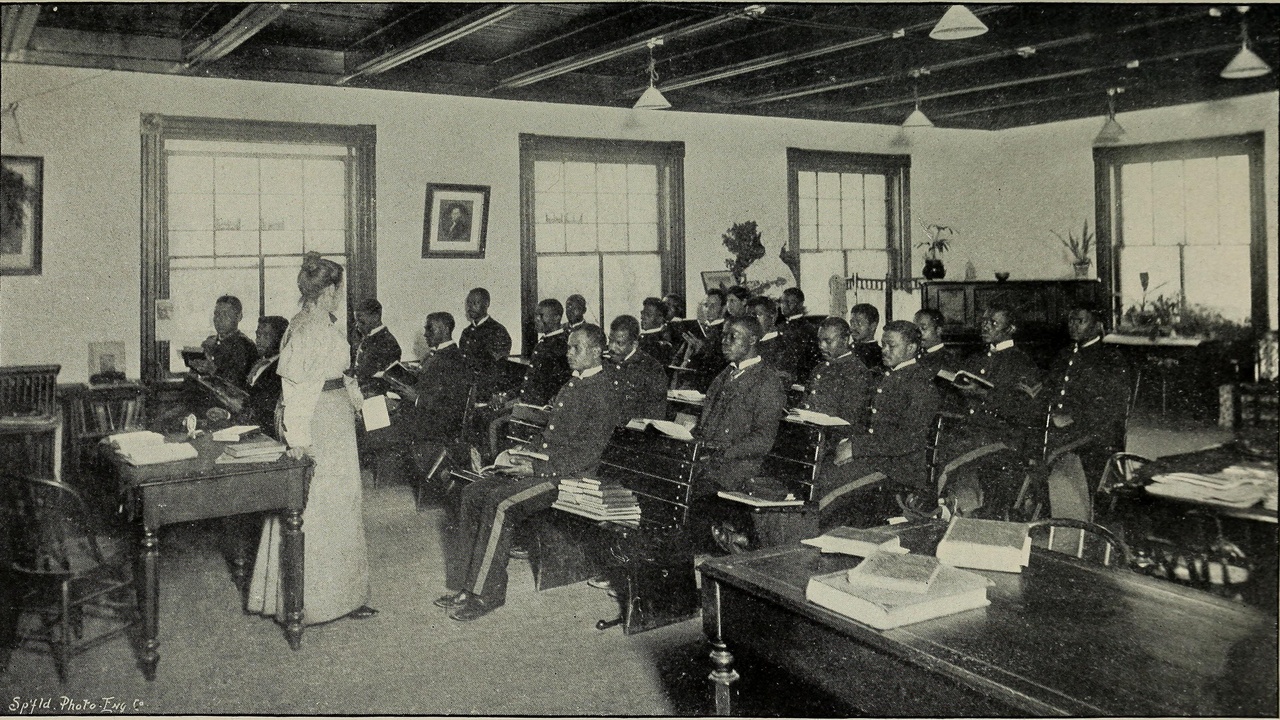
Sociology examines patterns of social life: institutions, cultural norms, networks, and the relationships that shape opportunities and outcomes. It differs from individual psychology by explaining how context, organizations, and history influence behavior across groups.
The next three myths misrepresent the discipline’s scope and methods. Each correction points to empirical work and practical consequences for policy, planning, and everyday decisions.
1. Myth: Sociology Is Just “Common Sense”
The claim: sociological conclusions amount to obvious observations anyone could make. The reality: sociologists test hypotheses, compare cases, and often find results that contradict intuition.
Robert Putnam’s Bowling Alone (2000) offered a striking counterexample by documenting sustained declines in civic participation and associational life across the late 20th century—findings many readers found surprising because everyday impressions over short periods can mask long-term trends.
Sociologists rely on comparative methods and systematic data (surveys, ethnography, archival records) to move beyond anecdote. Organizations such as the American Sociological Association and research centers regularly translate these patterns into policy briefs and community plans.
Takeaway: what seems like “common sense” can be misleading; evidence-based social analysis changes how communities and policymakers respond to problems.
2. Myth: Sociologists Only Study Poverty, Crime, or Marginalized Groups
Many people associate sociology with a narrow set of topics. In truth, the field covers family life, work and organizations, culture, technology, health, the environment, law, education, aging, and more.
Sociologists study workplace culture at major firms, analyze how users interact with products in UX research, evaluate public-health messaging, and run organizational assessments for nonprofits and government agencies. Health sociology contributed to understanding behavior during recent pandemics, while environmental sociologists study community responses to climate risks.
Reducing the discipline to a few visible topics harms recruitment and practical uptake: employers and policymakers may overlook sociological methods that could improve diversity initiatives, market research, or organizational change efforts.
3. Myth: Sociology Is Just Opinion or Armchair Commentary
The stereotype paints sociologists as essayists rather than empirical investigators. The actual toolset includes surveys, longitudinal studies, ethnography, experiments, and statistical modeling.
One central resource is the General Social Survey (GSS), first fielded in 1972, which collects roughly 1,500–2,500 respondents per wave and supports decades of trend analysis on trust, civic engagement, and attitudes.
Those data and methods directly inform policy. For example, longitudinal evidence on family structure and child outcomes has guided education and social-welfare program designs in multiple jurisdictions.
Methods, Evidence, and Objectivity

Many myths stem from not knowing how sociological knowledge is produced. The field uses peer review, replication efforts, pre-registration, and multiple methods to test and refine claims. That process helps reduce bias and improve reliability.
4. Myth: Sociology Isn’t Scientific — It’s Just Soft or Subjective
Scientific work in sociology begins with clear hypotheses, operational definitions, and measurable indicators. Researchers then test those hypotheses using appropriate models and report uncertainty alongside estimates.
For instance, quantitative studies using regression and longitudinal data frequently report effect sizes and confidence intervals; many published sociology articles analyze samples of several thousand observations or repeat measures across years to establish temporal patterns.
That rigor supports evidence-based policy: program evaluations use pre/post measures and comparison groups to show whether interventions achieved intended outcomes.
5. Myth: All Sociological Studies Are Purely Ideological or Agenda-Driven
Scholars bring perspectives to research, but the discipline builds checks to limit bias: peer review, methodological transparency, data sharing, and preregistration of hypotheses.
High-profile debates that initially seemed polarized have often been resolved—or at least clarified—by new data. Journals now publish registered reports and replication studies, and repositories like ICPSR host datasets for independent analysis.
Methodological pluralism—testing the same question with surveys, experiments, and ethnography—strengthens confidence in findings rather than masking ideology.
6. Myth: Surveys and Interviews Are Unreliable — So Findings Don’t Matter
Surveys and interviews vary in quality, but modern survey practice addresses key bias sources through probability sampling, weighting, and careful question design. Organizations such as the Pew Research Center routinely document their methods and sample sizes.
Qualitative interviews add depth by revealing mechanisms and context that numbers alone cannot show. Combined, these approaches triangulate on explanations and suggest effective interventions.
Concrete examples exist where survey or interview findings led to changes: public-health campaigns often adapt messages after community interviews reveal barriers to uptake, and corporations adjust products after user-research interviews uncover unmet needs.
7. Myth: Sociology Can’t Produce Generalizable Findings
Generalizability is addressed through representative sampling, cross-national comparisons, and replication. Large comparative datasets help distinguish local quirks from broader patterns.
The World Values Survey, for example, covers roughly 100 countries across multiple waves, enabling researchers to compare values and social behavior internationally. Replication across contexts builds confidence that certain findings apply beyond a single setting.
Businesses use such insights when launching products in multiple markets, and policymakers use cross-cultural evidence to anticipate how interventions may translate to different communities.
Relevance, Careers, and Real-World Impact

Misconceptions about practicality affect students, employers, and policymakers. Sociology trains people to analyze systems, design evaluations, and interpret social data—skills valued across government, NGOs, and industry.
The following myths address employability, applied work, and what sociology can reasonably predict.
8. Myth: A Sociology Degree Doesn’t Lead to Good Jobs
It’s common to think sociology is a pathway only to academia. In reality, graduates work as social researchers, policy analysts, UX researchers, HR specialists, nonprofit managers, and government analysts.
Employers include government research offices, consulting firms, think tanks like the Pew Research Center, and tech companies that hire social scientists for user research and data teams. UX researchers, for example, often command salaries in the range of roughly $80,000 to $140,000 depending on experience and location.
Practical advice: highlight analytical skills, familiarity with data tools, experience with surveys or interviews, and examples of projects that produced measurable results on résumés.
9. Myth: Sociology Only Produces Theory, Not Practical Solutions
Theoretical work is a major part of the discipline, but applied sociology is widespread. Sociologists conduct program evaluations, design community interventions, and assess organizational change.
For instance, evaluations of community-based interventions—such as education mentoring programs or place-based public-health efforts—report measurable improvements in attendance, test scores, or health indicators over defined periods, and sociological methods guide both design and assessment.
Sociologists commonly partner with policymakers and practitioners to translate findings into scalable programs and to measure outcomes rigorously.
10. Myth: Sociologists Can Predict Individual Behavior Accurately — or That Sociology Has No Policy Value
These two claims stem from misunderstanding scale. Sociology offers probabilistic, population-level insights—not deterministic forecasts for single individuals.
For example, social-norms research has informed nudges that change behavior at the population level; evaluations often report percentage-point changes in behavior after norm-based messaging. Those effects matter for policy design even if they don’t let anyone predict which single person will act one way or another.
Population-level understanding is crucial for allocating resources, designing public programs, and tailoring interventions to groups most likely to benefit.
Summary
- Sociology studies structures, institutions, culture, and relationships using documented methods—not just intuition or opinion (ASA was founded 1905; the GSS began in 1972).
- Research in the field combines surveys, ethnography, experiments, and comparative data (e.g., Putnam’s Bowling Alone, World Values Survey) to generate findings that inform community planning and policy.
- Sociological skills open diverse careers in research, policy, tech (UX), and government; applied work includes program evaluation and measurable interventions.
- Next steps: check a sociological dataset or local study (General Social Survey or a World Values Survey brief), highlight sociological skills on résumés, and question easy assumptions about social life and the myths about sociology.