From sun-baked deserts to coastal reefs and inland wetlands, this list gathers species you might spot across very different habitats and climates. It’s meant to give a quick snapshot you can scan before a trip, a classroom lesson, or a deeper look at local wildlife.
There are 40 Reptiles, ranging from the African spurred tortoise to the Yellow-bellied sea snake. For each species we’ve listed Scientific name,Size (length cm),Range — you’ll find below.
How current and reliable are the size and range data?
The entries use commonly cited field guides and global databases as a baseline, so sizes represent typical adult length and ranges show broad geographic presence; for precise, local or recent changes (e.g., range shifts, taxonomic updates) check regional checklists or primary literature.
How should I use this list in the field or for study?
Use the scientific name to avoid confusion, consult the size as a quick reference for likely candidates, and pair this list with photos or a regional guide—it’s a starting point, not a substitute for detailed field keys or expert confirmation.
Reptiles
| Name | Scientific name | Size (length cm) | Range |
|---|---|---|---|
| Saltwater crocodile | Crocodylus porosus | 400 | Coastal mangroves and rivers from India to Australia |
| Nile crocodile | Crocodylus niloticus | 350 | Rivers, lakes and wetlands across sub-Saharan Africa |
| American alligator | Alligator mississippiensis | 300 | Freshwater wetlands of southeastern United States |
| Gharial | Gavialis gangeticus | 400 | Rivers of India and Nepal |
| Leatherback sea turtle | Dermochelys coriacea | 150 | Tropical and temperate oceans worldwide |
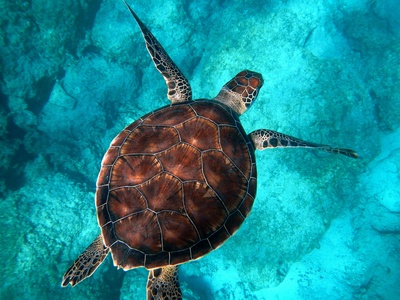
| Green sea turtle | Chelonia mydas | 100 | Tropical and subtropical coastal waters worldwide |
| Hawksbill sea turtle | Eretmochelys imbricata | 80 | Tropical reefs in Atlantic and Indo-Pacific |
| Kemp’s ridley sea turtle | Lepidochelys kempii | 60 | Gulf of Mexico beaches and nearby waters |
| Loggerhead sea turtle | Caretta caretta | 90 | Temperate and tropical oceans worldwide, nesting beaches |
| Galapagos giant tortoise | Chelonoidis nigra | 150 | Galápagos Islands, volcanic highlands and lowlands |
| Aldabra giant tortoise | Aldabrachelys gigantea | 120 | Aldabra Atoll, Seychelles |
| Eastern box turtle | Terrapene carolina | 15 | Forests and meadows eastern United States |
| Painted turtle | Chrysemys picta | 25 | Ponds and slow rivers across North America |
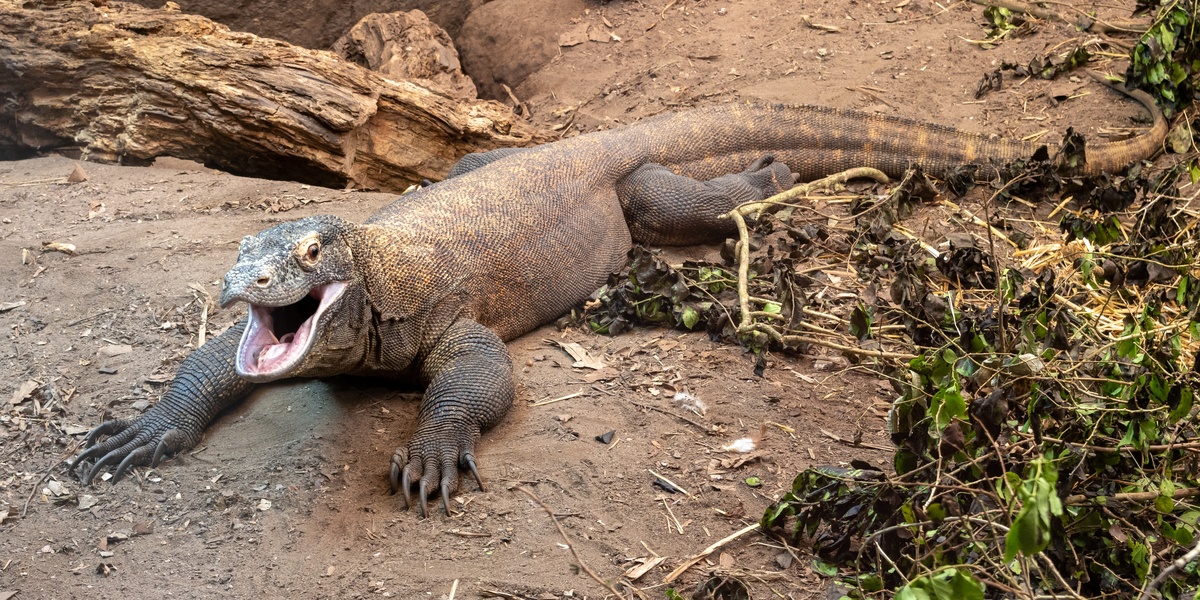
| Komodo dragon | Varanus komodoensis | 250 | Indonesian islands (Komodo, Rinca, Flores) |
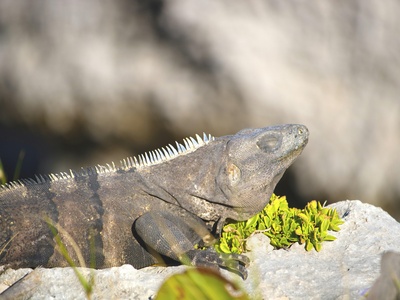
| Green iguana | Iguana iguana | 150 | Tropical forests of Central and South America |
| Bearded dragon | Pogona vitticeps | 60 | Arid zones and woodlands of Australia |
| Asian water monitor | Varanus salvator | 200 | Southeast Asian wetlands and urban areas |
| Blue-tongued skink | Tiliqua scincoides | 40 | Woodlands and grasslands of Australia and New Guinea |
| Veiled chameleon | Chamaeleo calyptratus | 50 | Yemen and Saudi Arabia, dry woodlands |
| Green anole | Anolis carolinensis | 20 | Southeastern United States forests and gardens |
| Gila monster | Heloderma suspectum | 50 | Deserts of southwestern United States and Mexico |
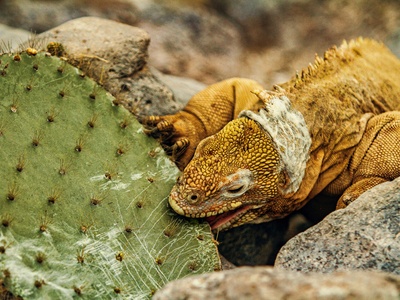
| Mexican beaded lizard | Heloderma horridum | 60 | Pacific slopes of Mexico and Central America |
| Ball python | Python regius | 120 | West and Central African savannas and forests |
| Corn snake | Pantherophis guttatus | 120 | Southeastern United States forests and fields |
| Boa constrictor | Boa constrictor | 250 | Central and South American forests and scrub |
| Reticulated python | Malayopython reticulatus | 400 | Southeast Asian forests and swamps |
| King cobra | Ophiophagus hannah | 350 | South and Southeast Asian forests and plains |
| Black mamba | Dendroaspis polylepis | 250 | Savannas and rocky areas of sub-Saharan Africa |
| Western diamondback rattlesnake | Crotalus atrox | 120 | Deserts and grasslands of southwestern US and Mexico |
| Yellow-bellied sea snake | Pelamis platura | 80 | Tropical oceans worldwide, surface waters |
| Tuatara | Sphenodon punctatus | 60 | Offshore islands of New Zealand |
| Common wall lizard | Podarcis muralis | 20 | Rocky habitats and urban areas across Europe |
| Sidewinder | Crotalus cerastes | 70 | Sand dunes and deserts of SW US and Mexico |
| African spurred tortoise | Centrochelys sulcata | 80 | Sahel and dry grasslands of Africa |
| Desert tortoise | Gopherus agassizii | 40 | Mojave and Sonoran deserts of North America |
| Common garter snake | Thamnophis sirtalis | 60 | Wetlands, meadows and gardens across North America |
| Eastern indigo snake | Drymarchon couperi | 250 | Pine forests and sandhills of southeastern United States |
| Rough green snake | Opheodrys aestivus | 60 | Woodlands and wetlands of eastern North America |
| Horned viper | Cerastes cerastes | 60 | Sand deserts of North Africa and Middle East |
| Marine iguana | Amblyrhynchus cristatus | 100 | Rocky shores of the Galápagos Islands |
Images and Descriptions

Saltwater crocodile
World’s largest crocodilian; adults commonly reach about 400 cm. Found coastal mangroves and rivers from India to Australia. Powerful bite makes them dangerous to people; not a pet. Vulnerable to habitat loss and hunting, conservation varies by region.

Nile crocodile
Large African freshwater crocodile reaching around 350 cm; lives rivers, lakes, and wetlands across sub-Saharan Africa. Aggressive apex predator that can attack humans; not a pet. Faces habitat loss and hunting; some populations protected, others declining.

American alligator
Found in freshwater wetlands of southeastern US; adults about 300 cm. Less aggressive than crocodiles but can be dangerous. Popular in education and regulated captivity; many are common due to conservation and management programs.

Gharial
Fish-eating crocodilian with extremely long snout; adults about 400 cm. Native to South Asian rivers in India and Nepal. Critically endangered due to habitat loss and fishing; not suitable as a pet and rarely seen in wild.

Leatherback sea turtle
Largest sea turtle, shell-less leathery carapace, about 150 cm length. Circumglobal in tropical and temperate oceans. Feeds on jellyfish; not dangerous. Critically endangered from fisheries, plastic ingestion, and egg loss; conservation measures ongoing.
Green sea turtle
Large herbivorous sea turtle reaching about 100 cm; found in tropical and subtropical coastal waters worldwide. Gentle but protected; vulnerable from egg harvesting, habitat loss, and fisheries. Popular in conservation and not suitable as pet.

Hawksbill sea turtle
Colorful reef-associated turtle about 80 cm; tropical Atlantic and Indo-Pacific reefs. Shell prized historically for tortoiseshell, making them critically endangered. Not a pet; conservation focuses on nesting beach protection and illegal trade reduction.

Kemp’s ridley sea turtle
Smallest sea turtle species about 60 cm; nesting primarily in Gulf of Mexico. Critically endangered from egg collection and bycatch but recovery programs help. Not a pet; best known for mass nesting ‘arribada.’

Loggerhead sea turtle
Large-headed sea turtle around 90 cm; temperate and tropical oceans globally, nesting on sandy beaches. Can bite if handled; vulnerable from fisheries and habitat loss. Not suitable as pet; well-studied conservation programs exist.

Galapagos giant tortoise
Iconic giant tortoise reaching about 150 cm; endemic to Galápagos Islands. Slow-moving herbivore with long lifespan. Vulnerable historically from introduced species and exploitation; some subspecies threatened but successful breeding and rewilding programs exist.

Aldabra giant tortoise
Large tortoise up to about 120 cm; native to Aldabra Atoll in Seychelles. Gentle herbivore, long-lived and often kept in conservation collections. Vulnerable historically but stable on remote atoll due to protection.

Eastern box turtle
Terrestrial North American box turtle about 15 cm; forests and meadows east of the Mississippi. Popular pet historically but wild capture and habitat loss threaten populations; requires specialized care and is of conservation concern locally.

Painted turtle
Colorful freshwater turtle about 25 cm; common across North American ponds and slow rivers. Hardy in captivity and frequently kept as pet but needs proper husbandry. Not dangerous; stable populations though local threats exist.

Komodo dragon
Largest living lizard around 250 cm; restricted to Indonesian islands. Powerful predator with bacteria-laced bite and venom, potentially dangerous to humans. Not a pet; vulnerable due to limited range, poaching, and habitat threats.
Green iguana
Arboreal herbivorous lizard up to about 150 cm; native to Central and South American forests. Common pet but needs space and specialized diet. Can become invasive outside native range; face habitat loss and pet-trade pressures.

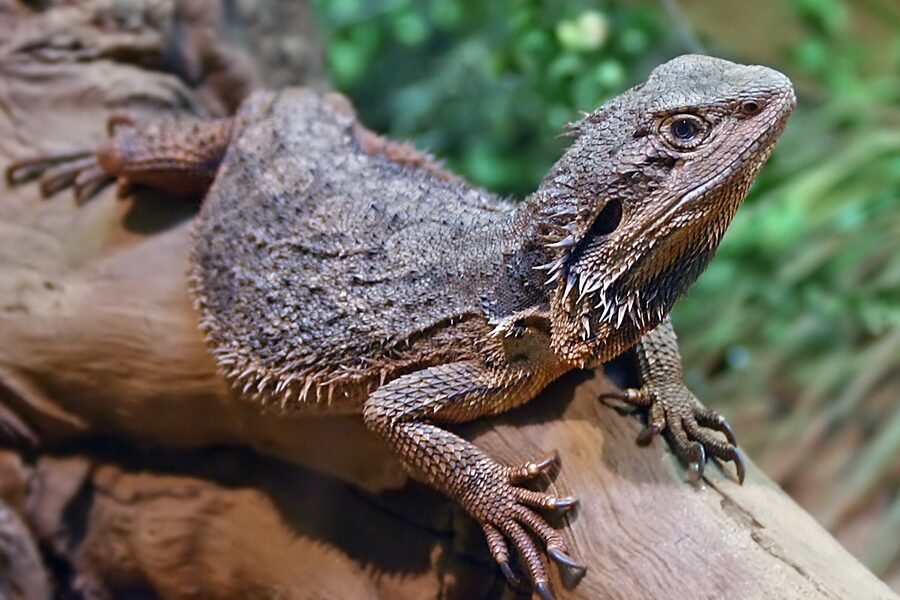
Bearded dragon
Popular pet lizard about 60 cm; native to Australian arid zones and woodlands. Docile, easy to care for relative to many reptiles. Not dangerous; conservation status stable though wild collection and habitat changes are concerns.

Asian water monitor
Large, adaptable monitor often reaching around 200 cm; widespread in Southeast Asian wetlands and urban areas. Opportunistic predator and scavenger; can bite if threatened. Not suitable as casual pet; some populations threatened by skin trade.

Blue-tongued skink
Robust skink about 40 cm with bright blue tongue; woodlands and grasslands of Australia and New Guinea. Docile, commonly kept as pet and easy to handle. Not dangerous; habitat loss and collection affect some local populations.

Veiled chameleon
Arboreal chameleon around 50 cm including tail; native to Yemen and Saudi Arabia. Known for color change and projectile tongue. Kept as pet by experienced keepers; requires specialized care. Wild populations impacted by collection and habitat loss.

Green anole
Small arboreal lizard about 20 cm; native to southeastern United States forests and gardens. Territorial dewlap display; common in captivity and easy to keep. Harmless to humans but can be sensitive to improper care and habitat change affects wild numbers.

Gila monster
Venomous, stout lizard about 50 cm; desert regions of southwestern US and Mexico. Slow-moving but venomous bite requires medical attention; not a common pet but sometimes kept by specialists. Protected in many US states.
Mexican beaded lizard
Close relative of Gila monster around 60 cm; Pacific slopes of Mexico and Central America. Venomous and slow-moving; dangerous if handled. Rare in pet trade, mainly held by licensed specialists; vulnerable to habitat loss and persecution.

Ball python
Popular, docile pet snake around 120 cm; native to West and Central African savannas and grasslands. Nonvenomous constrictor, generally safe for experienced keepers. Wild populations impacted by pet trade but many are captive-bred and conservation varies.

Corn snake
Colorful North American rat snake about 120 cm; found in southeastern US forests and fields. Popular, easy-to-care-for pet for beginners. Nonvenomous and not dangerous; wild populations can be affected by collection and habitat loss.
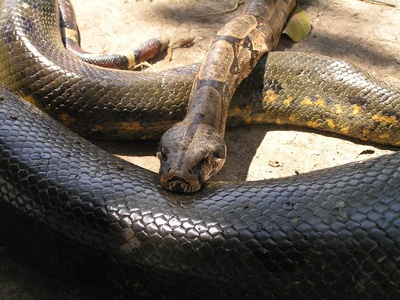
Boa constrictor
Large constricting snake commonly reaching about 250 cm; Central and South American forests and scrub. Powerful but usually not aggressive; sometimes kept as pet by experienced owners. Habitat loss and collection threaten some populations.

Reticulated python
World’s longest snake species, adults commonly around 400 cm though some larger; found in Southeast Asian forests and swamps. Powerful constrictor that can be dangerous to people; kept by experts only. Affected by habitat loss and hunting.

King cobra
Largest venomous snake, often about 350 cm; South and Southeast Asian forests and plains. Highly venomous and dangerous to humans; not a pet. Faces habitat loss and persecution, with localized conservation concerns.

Black mamba
Fast, highly venomous African snake around 250 cm; savannas and rocky areas in sub-Saharan Africa. Extremely dangerous to humans if untreated; not a pet. Faces persecution but overall wide range, though local declines occur.

Western diamondback rattlesnake
Venomous pit viper about 120 cm; deserts and grasslands of southwestern United States and Mexico. Delivers painful, potentially dangerous bite; dangerous to people. Not suitable as casual pet; some are kept by experienced handlers and conservation varies.

Yellow-bellied sea snake
Fully marine venomous sea snake around 80 cm; tropical oceans worldwide on surface waters. Highly venomous but generally not aggressive toward people. Not a pet; threatened by pollution and bycatch in fisheries.

Tuatara
Unique lizard-like reptile (order Rhynchocephalia) about 60 cm; native to offshore New Zealand islands. Slow-growing with a parietal ‘third eye’ and long lifespan. Not a pet; vulnerable due to introduced predators and protected by conservation programs.

Common wall lizard
Small agile lizard around 20 cm; native to Europe in rocky habitats and urban areas. Common in captivity and pet trade in some regions. Harmless to humans; local introductions have made it invasive in parts of North America.

Sidewinder
Small desert rattlesnake about 70 cm; sand dunes and arid regions of Southwestern US and Mexico. Uses sidewinding locomotion; venomous and potentially dangerous. Not a typical pet; adapted to fragile desert ecosystems facing habitat pressures.

African spurred tortoise
Large African tortoise about 80 cm; Sahel and dry grasslands of Africa. Popular but challenging pet due to size and burrowing; requires space. Vulnerable locally from over-collection and drought; conservation depends on habitat protection.
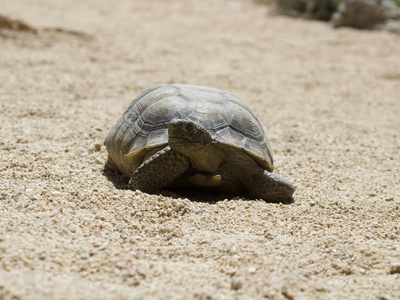
Desert tortoise
North American desert tortoise around 40 cm; Mojave and Sonoran deserts. Slow-moving herbivore that uses burrows. Threatened by disease, habitat loss, and human disturbance; sometimes kept in captivity with permits, but wild collection is restricted.

Common garter snake
Widespread slender snake about 60 cm; North American wetlands, meadows, and gardens. Mildly venomous to amphibian prey but harmless to most humans. Commonly kept by enthusiasts; tolerant species but impacted by habitat pollution.

Eastern indigo snake
Largest native North American snake often reaching about 250 cm; pine forests and sandhills of southeastern US. Nonvenomous constrictor, important predator of venomous snakes. Federally threatened; conservation focuses on habitat protection and reintroduction.

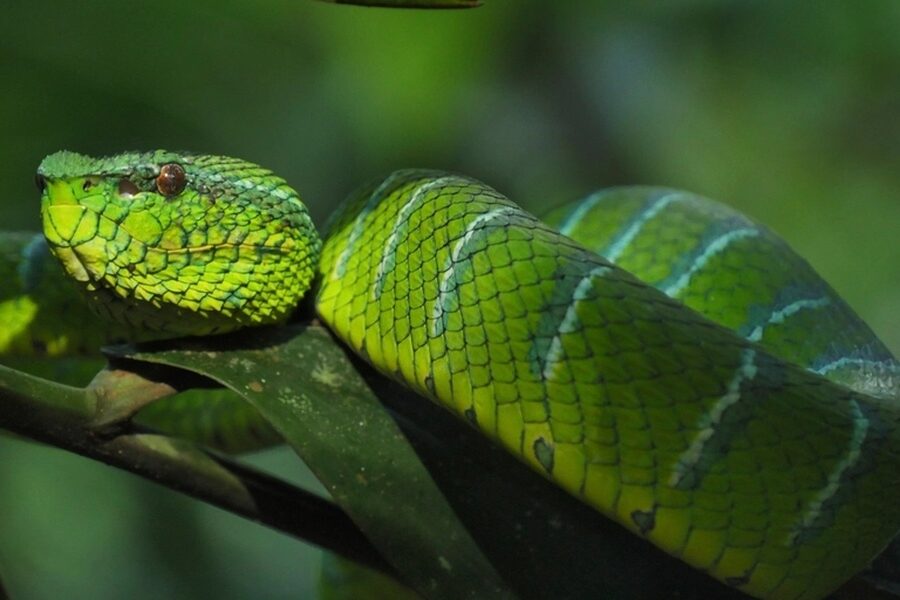
Rough green snake
Slender bright-green arboreal snake around 60 cm; woodlands and wetlands of eastern North America. Harmless to people and sometimes kept by hobbyists. Sensitive to pesticides and habitat loss, making local populations vulnerable.

Horned viper
Small desert viper around 60 cm with horn-like scales; North African and Middle Eastern sand deserts. Venomous and camouflaged, can be dangerous to people. Not a pet for novices; vulnerable to habitat changes in some areas.

Marine iguana
Only sea-going lizard about 100 cm; Galápagos rocky shores and intertidal zones. Feeds on algae and tolerates cold waters. Not dangerous; vulnerable to introduced predators and oil spills; of conservation interest and not a pet.