Rocky outcrops, hydrothermal veins and mine dumps tell a lot about Earth’s ore-forming processes, and sulfide minerals are often the fingerprints geologists look for. Knowing which sulfides appear where helps with mapping deposits, understanding alteration, and recognizing valuable metal sources in the field.
There are 37 Examples of Sulfide Minerals, ranging from Acanthite to Vaesite. For each entry, you’ll find below the columns Formula, Primary metal(s), Common locations, presented so you can compare composition and typical occurrences at a glance.
How can I identify common sulfide minerals in the field?
Look for metallic luster, specific gravity (they’re often heavy), streak color, and association with other ore minerals; simple handheld tests—streak plate, hardness, and a magnet—combined with location context usually narrow candidates before lab confirmation.
Which metals are most commonly found in sulfide minerals?
Copper, iron, lead, zinc and silver are the most frequent, but sulfides also host rarer metals like nickel, cobalt and platinum-group elements; the Formula and Primary metal(s) columns below show the dominant metal for each listed mineral.
Examples of Sulfide Minerals
| Name | Formula | Primary metal(s) | Common locations |
|---|---|---|---|
| Pyrite | FeS2 | Iron | Worldwide; common in hydrothermal veins and sedimentary rocks |
| Marcasite | FeS2 | Iron | Worldwide; notably England, Germany, Czech Republic |
| Pyrrhotite | Fe1-xS | Iron; variable nickel content | Canada, Russia, USA (Sudbury), South Africa |
| Chalcopyrite | CuFeS2 | Copper and iron | Chile, Peru, USA, Zambia |
| Chalcocite | Cu2S | Copper | USA (Arizona), Peru, Chile, Democratic Republic of the Congo |
| Covellite | CuS | Copper | Chile, USA, Italy, Serbia |
| Bornite | Cu5FeS4 | Copper and iron | Chile, Peru, USA (Arizona), Australia |
| Enargite | Cu3AsS4 | Copper and arsenic | Peru, Mexico, Philippines, USA (Nevada) |
| Tetrahedrite | (Cu,Fe)12Sb4S13 | Copper; antimony and iron | Mexico, Peru, Czech Republic, England |
| Tennantite | (Cu,Fe)12As4S13 | Copper; arsenic and iron | Peru, USA, Chile, Mexico |
| Galena | PbS | Lead | USA (Missouri), Peru, Australia, England |
| Sphalerite | ZnS | Zinc | USA, Canada, Mexico, Poland |
| Cinnabar | HgS | Mercury | Spain (Almadén), China, California (USA) |
| Stibnite | Sb2S3 | Antimony | China, Japan, Romania, Peru |
| Arsenopyrite | FeAsS | Iron and arsenic | Germany, Sweden, Peru, USA (Colorado) |
| Pentlandite | (Fe,Ni)9S8 | Nickel and iron | Canada (Sudbury), Russia, Australia, South Africa |
| Millerite | NiS | Nickel | USA (Pennsylvania), Germany, Australia |
| Gersdorffite | NiAsS | Nickel and arsenic | Germany, Canada, USA |
| Ullmannite | NiSbS | Nickel and antimony | Australia, Germany, Sweden |
| Molybdenite | MoS2 | Molybdenum | USA, Chile, China, Peru |
| Vaesite | NiS2 | Nickel | Belgium, Democratic Republic of the Congo, Canada |
| Cattierite | CoS2 | Cobalt | Belgium, Democratic Republic of the Congo, Morocco |
| Realgar | As4S4 | Arsenic | China, Romania, Turkey, Hungary |
| Orpiment | As2S3 | Arsenic | Turkey, Peru, China, Romania |
| Acanthite | Ag2S | Silver | Mexico, Germany, Peru, Bolivia |
| Pyrargyrite | Ag3SbS3 | Silver and antimony | Germany, Mexico, Australia |
| Stephanite | Ag5SbS4 | Silver and antimony | Germany, Mexico, Bolivia |
| Bournonite | PbCuSbS3 | Lead, copper, antimony | Peru, Bolivia, Australia, Mexico |
| Boulangerite | Pb5Sb4S11 | Lead and antimony | Spain, Peru, Germany, UK (Cornwall) |
| Famatinite | Cu3SbS4 | Copper and antimony | Argentina (Famatina), Chile, Bolivia |
| Stannite | Cu2FeSnS4 | Copper, iron, tin | Peru, Bolivia, Namibia |
| Digenite | Cu9S5 | Copper | Chile, USA, Peru, Canada |
| Djurleite | Cu31S16 | Copper | USA (Arizona), Mexico, Chile |
| Alabandite | MnS | Manganese | South Africa, USA, Czech Republic |
| Linnaeite | Co3S4 | Cobalt | Germany, Morocco, USA (Colorado) |
| Andorite | PbAgSb3S6 | Lead, silver, antimony | Romania, Peru, Spain |
| Greigite | Fe3S4 | Iron | Russia, USA, Canada, UK |
Images and Descriptions

Pyrite
Iron sulfide with metallic luster and brassy color, often called “fool’s gold.” Extremely common in hydrothermal, sedimentary, and metamorphic settings; used as a sulfur source and a useful exploration indicator mineral.

Marcasite
Polymorph of pyrite with pale bronze color and different crystal habit. Forms in low-temperature hydrothermal and sedimentary deposits; brittle crystals and twinning make specimens popular with collectors despite being less stable than pyrite.

Pyrrhotite
Nonstoichiometric iron sulfide with variable iron deficiency, magnetic properties, and bronze color. Common in magmatic sulfide deposits and metamorphosed rocks; can cause rock instability and is important in nickel-copper exploration.

Chalcopyrite
Primary copper iron sulfide and the most important copper ore. Brassy yellow color, brass-like tarnish; abundant in porphyry, hydrothermal veins, and massive sulfide deposits; widely mined for copper production.

Chalcocite
High-grade copper sulfide with dark metallic luster; forms in supergene enrichment zones and as primary mineral. Economically valuable because of high copper content; often forms compact, botryoidal masses.

Covellite
Deep indigo-blue to black copper sulfide with distinctive iridescence. Occurs in supergene zones of copper deposits and as an indicator of copper enrichment; attractive specimens are popular with collectors and researchers.
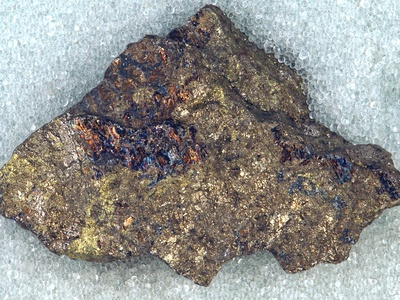
Bornite
Also called “peacock ore” for iridescent tarnish; an important copper ore in porphyry and hydrothermal deposits. Brown-bronze fresh surfaces oxidize to vivid blues and purples, making specimens visually striking.

Enargite
Copper arsenic sulfide found in high-sulfidation hydrothermal veins. Metallic to resinous luster; an important copper ore that contains arsenic, which complicates processing and environmental handling at mines.
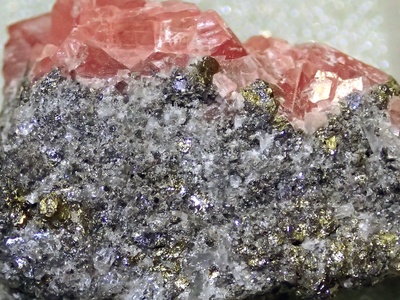
Tetrahedrite
Common copper–antimony sulfosalt with variable metal content. Forms in hydrothermal veins and polymetallic deposits; many specimens are ore minerals for copper and silver, though composition is highly variable.

Tennantite
Arsenic-bearing analogue of tetrahedrite. Occurs in hydrothermal veins and massive sulfide deposits; can carry silver and copper and is important in polymetallic ore bodies.
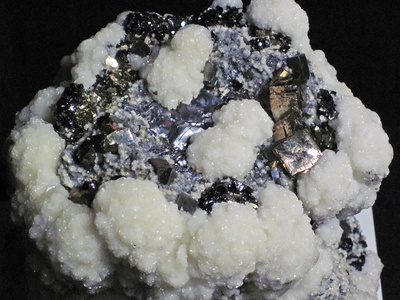
Galena
Primary ore of lead with bright metallic luster and cubic crystals. Common in hydrothermal veins and Mississippi Valley-type deposits; often contains silver as a valuable byproduct and is dense and soft.
Sphalerite
Major zinc ore, crystalline to resinous in appearance. Occurs in many hydrothermal, sedimentary-exhalative, and Mississippi Valley-type deposits; variable iron content affects color and luster.
Cinnabar
Bright red mercury sulfide and the principal ore of mercury. Forms in low-temperature hydrothermal veins and hot-spring deposits; historically used as pigment but toxic due to mercury content.

Stibnite
Silvery-gray acicular crystals of antimony sulfide, the primary ore of antimony. Forms in hydrothermal veins and hot-spring deposits; used in flame retardants, alloys, and some electronic applications.
Arsenopyrite
Iron arsenic sulfide commonly in hydrothermal veins and metamorphic rocks. Metallic and steel-gray; important gold-associated mineral and can be a source of arsenic contamination when mined.
Pentlandite
Primary nickel sulfide in magmatic sulfide deposits. Massive, bronze to metallic; major ore for nickel production and often associated with copper and platinum-group elements.
Millerite
Nickel sulfide with acicular, hair-like crystals and bright metallic luster. Forms in hydrothermal veins and supergene zones; occasionally mined as a nickel ore and prized by collectors for slender crystals.

Gersdorffite
Nickel arsenic sulfide occurring in hydrothermal veins and nickel-bearing deposits. Metallic and often confused with other nickel minerals; collectors value its well-formed crystals and distinctive composition.
Ullmannite
Nickel antimony sulfide found in hydrothermal veins and sulfide-rich deposits. Metallic and brittle; of interest to collectors and mineralogists studying nickel-antimony associations.
Molybdenite
Soft, platy molybdenum sulfide with metallic gray color and graphite-like feel. Main ore of molybdenum, used for steel alloys and high-temperature applications; exhibits strong basal cleavage and lubricating properties.
Vaesite
Nickel disulfide with metallic to submetallic luster, occurs in hydrothermal and magmatic sulfide deposits. Related to pyrite structurally and sometimes associated with pentlandite and other nickel minerals.
Cattierite
Cobalt disulfide resembling pyrite in habit. Found in hydrothermal veins and magmatic sulfide deposits; can be a minor cobalt ore and is of interest for cobalt exploration.

Realgar
Bright red-orange arsenic sulfide forming soft, resinous crystals. Occurs in low-temperature hydrothermal veins and hot-spring deposits; historically used as pigment and in fireworks but is toxic and weathers readily.
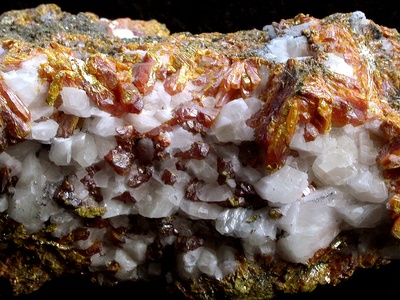
Orpiment
Yellow arsenic sulfide with silky to resinous luster, often associated with realgar and hydrothermal deposits. Historically used as a pigment and ornamental stone but is toxic due to arsenic content.
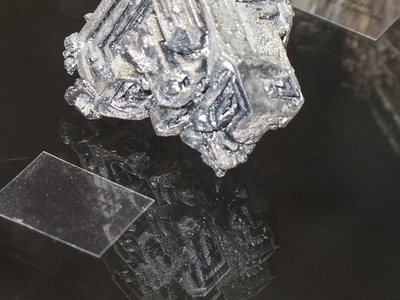
Acanthite
Silver sulfide and an important silver ore with dark metallic appearance. Forms in low-temperature hydrothermal veins and supergene zones; historically mined for native silver and silver compounds.
Pyrargyrite
Ruby silver sulfosalt with deep red to black crystals, valued by collectors. Occurs in silver-rich hydrothermal veins and contributes to silver production where present.
Stephanite
Silver sulfosalt common in silver deposits with elongated metallic crystals. Historically significant in silver mining and attractive to collectors for its luster and crystal habits.
Bournonite
Complex sulfosalt with blocky orthorhombic crystals and metallic luster. Occurs in hydrothermal veins and is associated with other lead–copper sulfosalts; collectors prize well-formed specimens.
Boulangerite
Fibrous lead–antimony sulfosalt often forming silky, needle-like aggregates or rosettes. Occurs in hydrothermal veins; attractive specimens are popular with collectors despite being minor ore mineral.
Famatinite
Copper antimony sulfosalt named for the Famatina district. Found in hydrothermal veins and polymetallic deposits; is an ore mineral for copper and contributes to local mineral diversity.
Stannite
Tin-bearing copper iron sulfide occurring in hydrothermal and polymetallic deposits. Dark metallic crystals and an important indicator of tin and copper mineralization in ore systems.
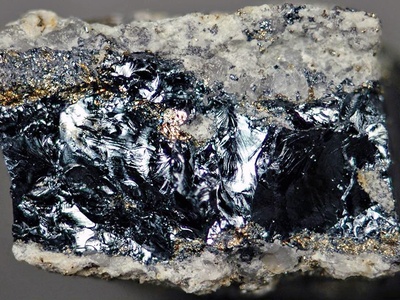
Digenite
Intermediate copper sulfide with deep blue-black color and metallic luster. Common in supergene and hypogene zones; contributes to copper ore grade and forms massive or crystalline aggregates.
Djurleite
Copper sulfide with complex structure, forming in low-sulfur hydrothermal systems and supergene zones. Often intergrown with chalcocite and digenite; significant in understanding copper paragenesis.
Alabandite
Simple manganese sulfide that occurs in hydrothermal deposits and manganese-rich environments. Metallic and black, it is a minor manganese ore and occasionally forms well-shaped crystals for collectors.
Linnaeite
Cobalt sulfide with metallic luster, occurring in hydrothermal veins and some skarn deposits. Of interest for cobalt exploration and as a collector mineral when well-crystallized.
Andorite
Complex sulfosalt containing lead, silver, and antimony. Found in polymetallic hydrothermal veins; rare and prized by collectors for distinctive, often eurhythmic crystals and metallic luster.
Greigite
Iron sulfide structurally similar to magnetite, found in sedimentary and hydrothermal environments and in some biological settings. Magnetic and black; important in geophysical studies and early diagenetic sulfide formation.