Across the Milky Way and into nearby galaxies, groups of stars collect into patterns that reveal how stars form, live and die. Observing these concentrations with amateur scopes or large surveys shows a wide range of ages, densities and environments—useful whether you’re planning an observing session or studying stellar evolution.
There are 40 Star Clusters, ranging from 47 Tucanae (NGC 104) to Westerlund 2; for each entry you’ll find below the Type, Distance (kly), and Age (Myr) so you can compare their classification, scale and evolutionary stage—you’ll find the full table below.
How are the distances and ages of these star clusters determined?
Distances are measured by parallax for nearby clusters and by main-sequence fitting or standard candles (like Cepheids) for farther ones; spectroscopy helps refine distances. Ages come from isochrone fitting to the cluster’s color–magnitude diagram and from stellar evolution models, which compare observed star colors and luminosities to theoretical tracks.
What does the Type, Distance (kly) and Age (Myr) information help me do?
Type (open, globular, association, etc.) indicates typical mass and environment; Distance gives physical scale and observing feasibility; Age shows where the cluster sits in stellar evolution. Together they let you pick targets for observation, compare formation histories, or plan follow-up research.
Star Clusters
| Name | Type | Distance (kly) | Age (Myr) |
|---|---|---|---|
| Pleiades (M45) | Open | 0.44 | 125 |
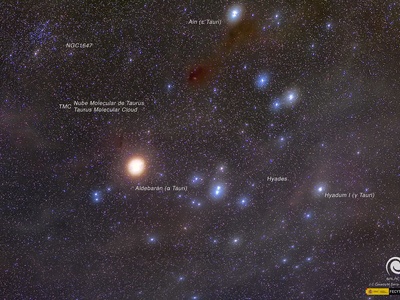
| Hyades | Open | 0.15 | 625 |
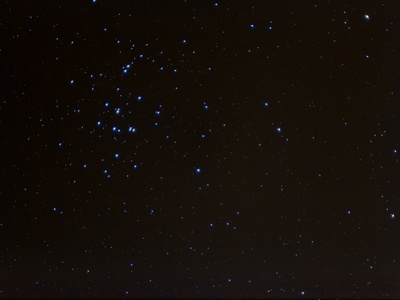
| Beehive (Praesepe, M44) | Open | 0.58 | 600 |
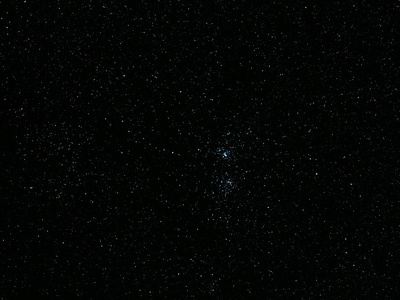
| Double Cluster (h and χ Persei) | Open | 7.50 | 14 |
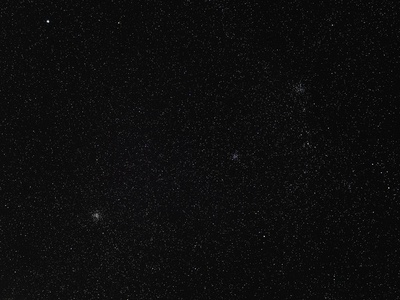
| M35 | Open | 2.80 | 175 |
| M37 | Open | 4.50 | 347 |
| M38 | Open | 3.80 | 220 |
| NGC 2516 | Open | 1.30 | 110 |
| M67 | Open | 2.70 | 4,000 |
| NGC 188 | Open | 5.00 | 6,000 |
| NGC 6231 | Open | 5.20 | 3.20 |
| M11 (Wild Duck) | Open | 6.20 | 220 |
| M7 (Ptolemy) | Open | 0.98 | 220 |
| M6 (Butterfly) | Open | 1.59 | 100 |
| Orion Nebula Cluster (Trapezium) | Embedded | 1.34 | 1.00 |
| NGC 1333 | Embedded | 1.00 | 1.00 |
| NGC 2264 | Embedded | 2.60 | 3.00 |
| NGC 3603 | Super star | 20.00 | 1.00 |
| Westerlund 1 | Super star | 12.70 | 4.00 |
| Westerlund 2 | Super star | 20.00 | 2.00 |
| R136 | Super star | 163.00 | 1.00 |
| Scorpius–Centaurus | Association | 0.47 | 15.00 |
| Orion OB1 | Association | 1.34 | 10.00 |
| Cygnus OB2 | Association | 5.54 | 3.00 |
| Omega Centauri (NGC 5139) | Globular | 17.09 | 12,000 |
| 47 Tucanae (NGC 104) | Globular | 13.00 | 12,000 |
| M13 (NGC 6205) | Globular | 22.20 | 12,000 |
| M3 (NGC 5272) | Globular | 33.90 | 11,500 |
| M5 (NGC 5904) | Globular | 24.50 | 11,500 |
| M15 (NGC 7078) | Globular | 33.60 | 12,500 |
| M92 (NGC 6341) | Globular | 26.70 | 13,000 |
| M4 (NGC 6121) | Globular | 7.20 | 12,200 |
| M22 (NGC 6656) | Globular | 10.60 | 12,000 |
| M54 (NGC 6715) | Globular | 87.40 | 12,000 |
| G1 (Mayall II) | Extragalactic | 2,540.00 | 12,000 |
| NGC 1569-A | Super star | 10,900.00 | 10.00 |
| NGC 1978 | Extragalactic | 163.00 | 1,900 |
| Trumpler 14 | Open | 8.50 | 1.30 |
| IC 348 | Embedded | 0.95 | 2.00 |
| Arches Cluster | Super star | 25.00 | 2.00 |
Images and Descriptions
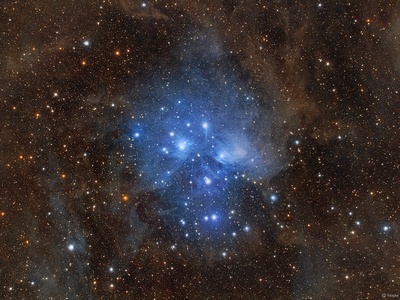
Pleiades (M45)
The Pleiades (M45) in Taurus is the classic naked-eye open cluster of bright blue stars and reflection nebulosity. Easily visible in winter skies, it’s a nearby benchmark for stellar evolution and distance calibration, beloved by amateur observers.
Hyades
The Hyades in Taurus is the nearest open cluster to Earth, forming a V-shaped pattern around Aldebaran. Its well-measured distance and middle age make it a key reference for stellar ages, dynamics, and calibrating the cosmic distance ladder.
Beehive (Praesepe, M44)
The Beehive Cluster (Praesepe, M44) in Cancer is a bright, sprawling open cluster visible to the naked eye. At moderate age, it’s rich in solar-type stars and useful for studying stellar evolution and exoplanet host statistics.
Double Cluster (h and χ Persei)
The Double Cluster in Perseus consists of NGC 869 and NGC 884, two neighboring young open clusters. Their bright blue stars are striking in binoculars and useful for studying early stellar evolution in a crowded environment.

M35
M35 in Gemini is a large, bright open cluster with many stars across a wide magnitude range. Its moderate age and richness make it a popular target for backyard telescopes and studies of stellar rotation and binaries.
M37
M37 in Auriga is the richest open cluster in its constellation, hosting numerous sun-like stars. Its intermediate age and dense population provide a laboratory for stellar evolution and mass segregation in open clusters.
M38
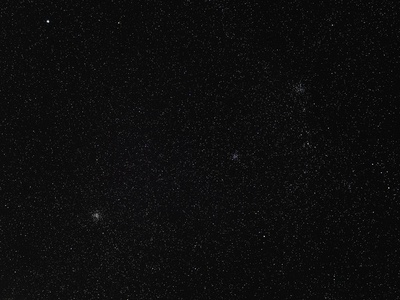
M38 in Auriga is a loose open cluster with bright, blue-white stars and some red giants. Easily seen with small telescopes, it’s a favorite for casual observers exploring rich winter sky fields.
NGC 2516
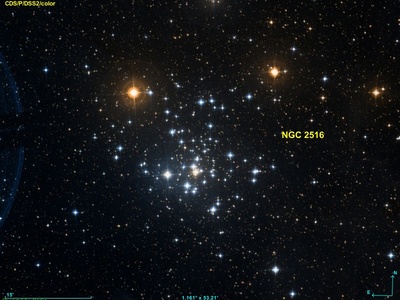
NGC 2516 in the southern sky is often called a southern Pleiades because of its bright, blue stars. It’s a young open cluster useful for studies of stellar rotation, activity, and the southern Milky Way’s structure.
M67
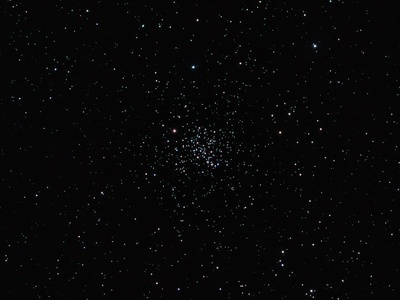
M67 in Cancer is a rare, old open cluster with a solar-like stellar population. At roughly the Sun’s age, it provides insights into long-term stellar and planetary evolution and is a benchmark for open cluster aging.
NGC 188
NGC 188 in Cepheus is one of the Galaxy’s oldest known open clusters, surviving for billions of years above the plane. Its longevity helps astronomers study cluster dissolution and stellar aging in sparse environments.
NGC 6231
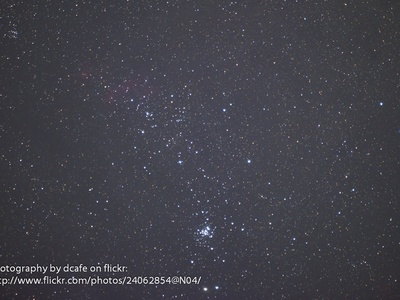
NGC 6231 in Scorpius is a very young, bright open cluster that stands out in southern skies. Packed with massive O and B stars, it’s a laboratory for early massive-star evolution and cluster dynamics.
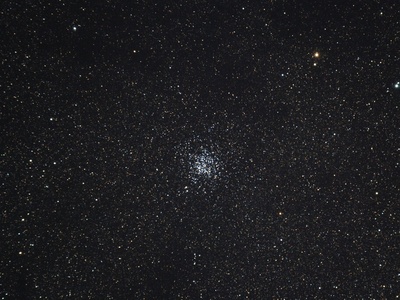
M11 (Wild Duck)
The Wild Duck Cluster (M11) in Scutum is a dense, rich open cluster with many bright stars. Its intermediate age and compactness make it a striking visual object and useful for studying cluster mass functions.
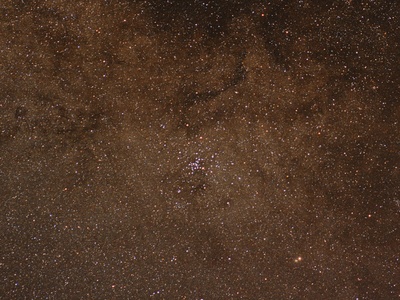
M7 (Ptolemy)
M7 (Ptolemy’s Cluster) in Scorpius is an easy naked-eye cluster low in the summer sky for northern observers. Its bright stars and loose appearance make it a popular summertime target for binoculars and wide-field imaging.
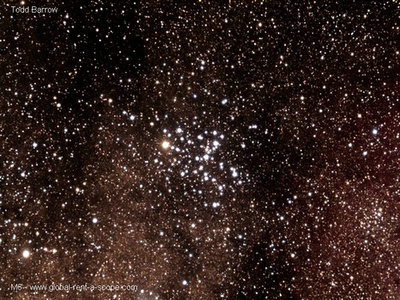
M6 (Butterfly)
The Butterfly Cluster (M6) in Scorpius is a pretty open cluster shaped like a butterfly, with blue stars and a scattering of red giants. It’s bright, nearby, and a common target for small telescopes.
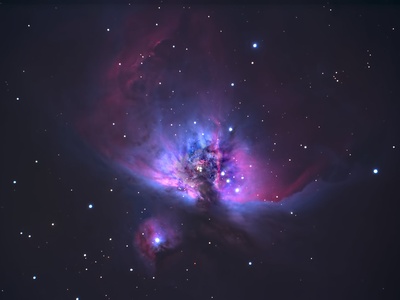
Orion Nebula Cluster (Trapezium)
The Orion Nebula Cluster, centered on the Trapezium in Orion, is the nearest massive star-forming cluster. Filled with protostars, jets, and protoplanetary disks, it’s crucial for studying early stellar and planetary formation.
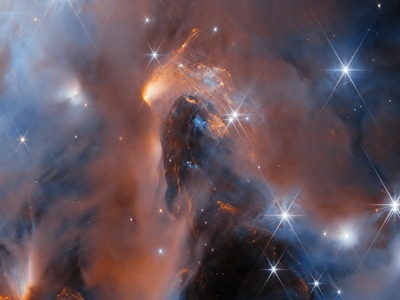
NGC 1333
NGC 1333 in Perseus is an active, nearby embedded cluster full of protostars and reflection nebulosity. It’s a laboratory for very young stellar objects, outflows, and the earliest stages of star formation visible in infrared.
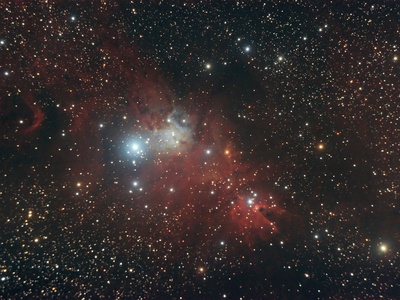
NGC 2264
NGC 2264 in Monoceros includes the Cone and Christmas Tree Nebulae and a young clustered population. At a few million years old, it’s a favorite for studying circumstellar disks, jets, and clustered star formation.
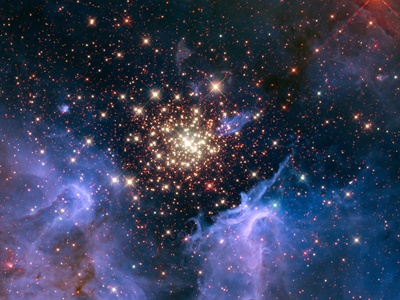
NGC 3603
NGC 3603 in the Carina-Sagittarius arm is a compact, massive young cluster—one of the Milky Way’s super star cluster analogs. It hosts many massive stars, strong winds, and serves as a nearby comparison to extragalactic starbursts.
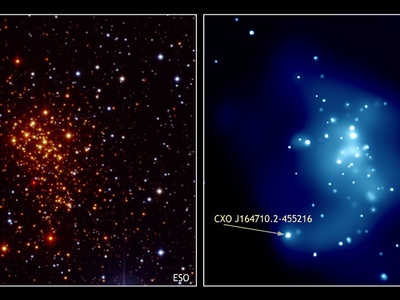
Westerlund 1
Westerlund 1 in Ara is one of the most massive young clusters in the Milky Way, rich in rare evolved massive stars. Highly reddened, it’s best observed in infrared and important for massive-star evolution studies.
Westerlund 2
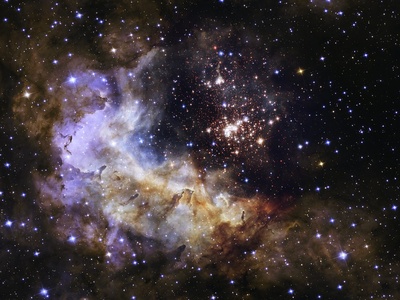
Westerlund 2 in Carina is a compact young cluster that powers the surrounding H II region. With very massive O stars and intense feedback, it illuminates early cluster dynamics and massive-star impact on the ISM.
R136
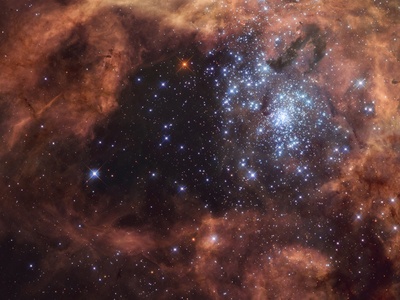
R136 at the heart of 30 Doradus in the Large Magellanic Cloud is a superstar nursery containing some of the most massive known stars. Visible in southern skies’ deep images, it’s pivotal for studying extreme stellar masses.
Scorpius–Centaurus
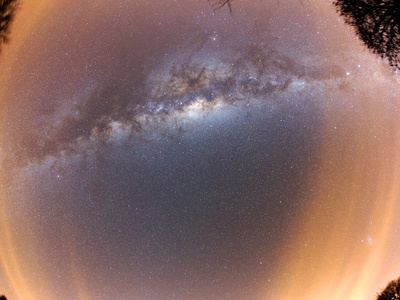
The Scorpius–Centaurus OB association is the nearest OB association, spanning Scorpius and Centaurus. Its subgroups host young massive stars and recent supernovae, shaping local interstellar space and offering nearby star-formation study opportunities.
Orion OB1
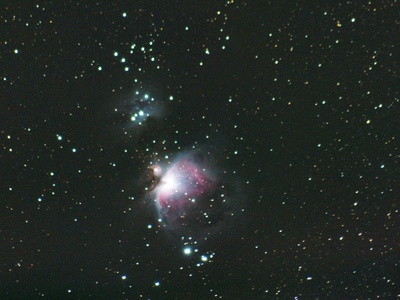
Orion OB1 is the large stellar association that includes Orion’s Belt, Sword, and the Orion Nebula. Spanning several million years of star formation, it showcases clustered and distributed star birth in a single nearby complex.
Cygnus OB2
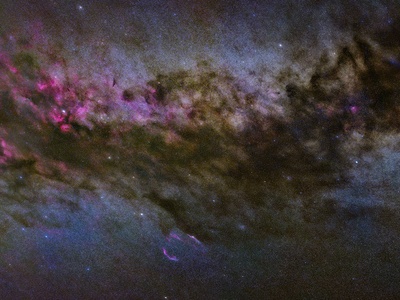
Cygnus OB2 is a massive OB association in Cygnus, notable for its large population of O-type stars and embedded clusters. Though distant and obscured, it’s a key region for understanding massive-star formation in the Galactic plane.
Omega Centauri (NGC 5139)
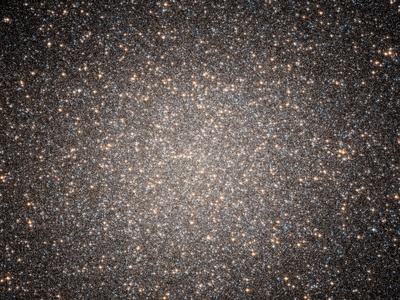
Omega Centauri in Centaurus is the largest and most massive Milky Way globular cluster, possibly the core of a stripped dwarf galaxy. Its multiple stellar populations and richness make it a focal point for galactic archaeology.
47 Tucanae (NGC 104)
47 Tucanae in Tucana is a bright, compact globular cluster visible from the southern hemisphere. Rich in millisecond pulsars and exotic binaries, it’s important for studies of dense stellar dynamics and stellar remnants.
M13 (NGC 6205)
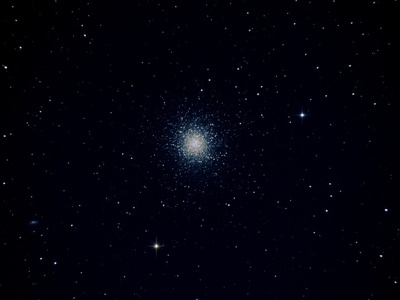
M13 in Hercules is one of the best-known northern globular clusters, bright and resolvable into stars with amateur telescopes. Its compact core and rich population make it a classic target for globular studies.
M3 (NGC 5272)
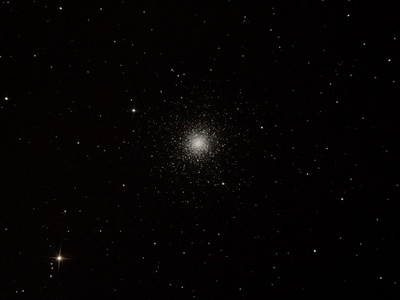
M3 in Canes Venatici is a rich globular cluster with many RR Lyrae variable stars. Its brightness and variable population make it valuable for distance scale work and studying horizontal-branch morphology.
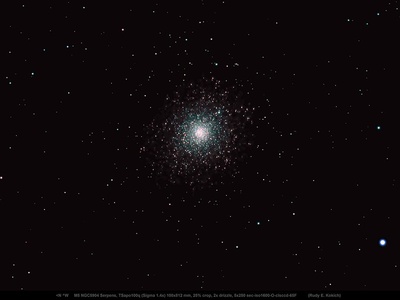
M5 (NGC 5904)
M5 in Serpens is a bright, large globular cluster with a rich population of variable stars and red giants. It’s widely observed for pulsation studies and as a representative ancient stellar system.
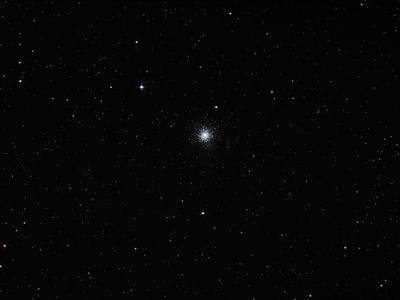
M15 (NGC 7078)
M15 in Pegasus is a dense, compact globular cluster with a collapsed core and many exotic objects like pulsars and X-ray sources. Its extreme central density makes it a laboratory for dense-stellar dynamics.
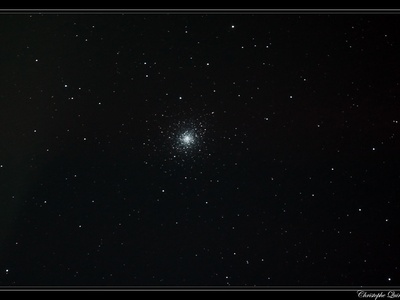
M92 (NGC 6341)
M92 in Hercules is one of the oldest and most metal-poor globular clusters in the Milky Way. Its age and composition provide clues to the earliest epochs of star formation in the Galaxy.
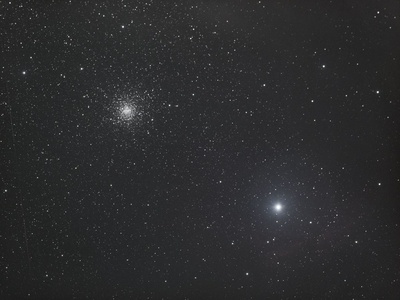
M4 (NGC 6121)
M4 in Scorpius is the nearest globular cluster, allowing detailed studies of individual stars and white dwarfs. It’s a popular target for telescopes studying stellar evolution and the Galactic halo.
M22 (NGC 6656)
M22 in Sagittarius is a bright, easily resolved globular cluster near the Milky Way center. It hosts multiple populations and some chemical peculiarities, making it interesting for formation history studies.
M54 (NGC 6715)
M54 lies toward Sagittarius and is likely associated with the Sagittarius dwarf spheroidal galaxy. As a massive globular, it helps trace interactions between dwarf galaxies and the Milky Way.
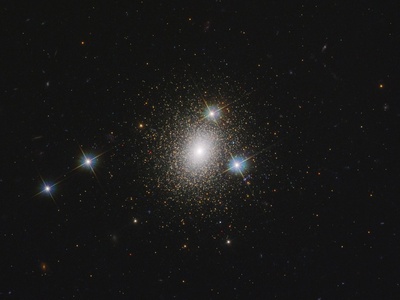
G1 (Mayall II)
G1 (Mayall II) is a massive globular cluster in the Andromeda Galaxy, one of the most massive known. Its size and complex stellar populations raise questions about whether it is a true globular or a remnant galaxy core.
NGC 1569-A
NGC 1569-A is a compact super star cluster in the dwarf galaxy NGC 1569, located in a recent starburst. Its intense young population and winds offer a nearby example of extragalactic cluster formation and feedback.
NGC 1978
NGC 1978 in the Large Magellanic Cloud is an intermediate-age massive cluster, older than typical LMC clusters. Its age and composition make it a key object for studying intermediate-age stellar populations in nearby galaxies.

Trumpler 14
Trumpler 14 in the Carina Nebula is a very young, massive open cluster containing numerous O-type stars. Embedded in a spectacular star-forming region, it’s a cornerstone for studying massive-star feedback and early cluster evolution.
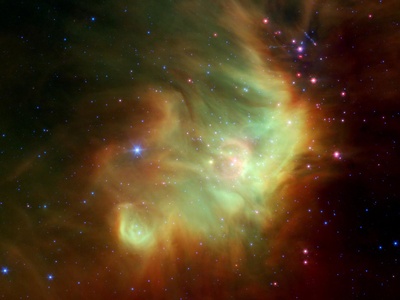
IC 348
IC 348 in Perseus is a nearby young cluster hosting hundreds of low-mass stars and brown dwarfs. Its proximity and moderate extinction make it ideal for studies of early stellar evolution and protoplanetary disks with small instruments.
Arches Cluster
The Arches Cluster lies near the Galactic center and hosts many young, massive stars in an extremely dense environment. Highly reddened and best seen in infrared, it’s crucial for studying massive-star formation under extreme tidal conditions.