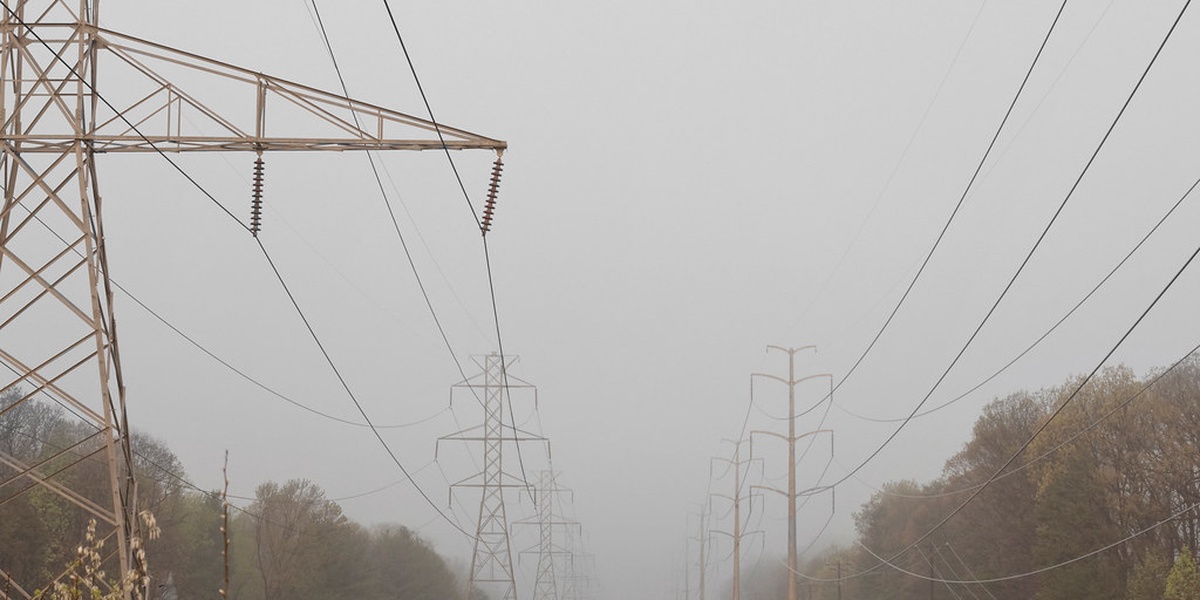
On August 14, 2003, a cascade of failures triggered a blackout that left roughly 50 million people without power across parts of the U.S. and Canada. That event exposed weaknesses in a largely one-way, centralized grid that relied on manual switching and infrequent telemetry.
The differences between smart grid and traditional grid are best seen in how they move power, handle data, interact with customers, and respond to outages. Over the last two decades utilities have layered sensing, communications, and local controls — from smart meters and PMUs to automated sectionalizers and advanced inverters — to make systems more observable and flexible.
Architecture and Power Flow
1. One-way transmission vs. bidirectional power flow
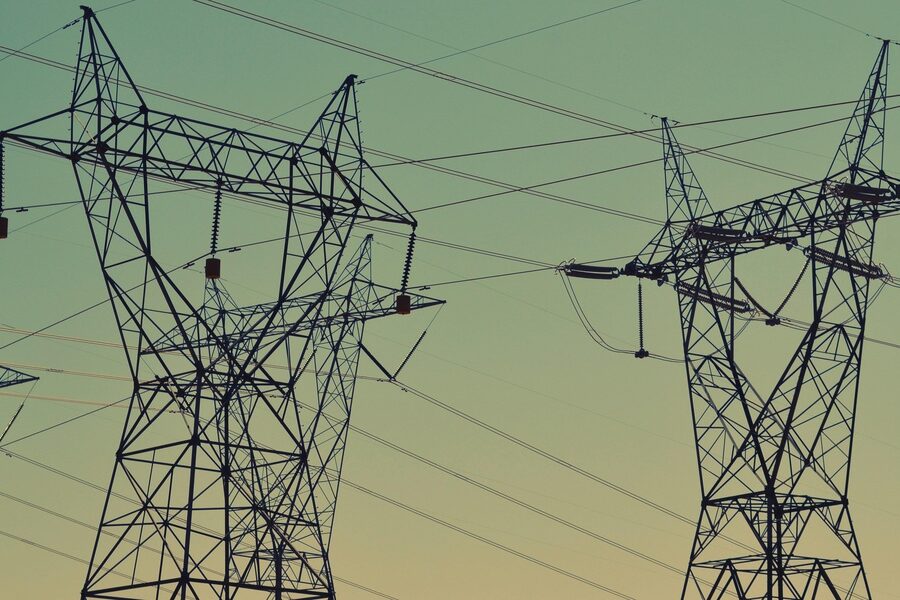
Traditional grids were designed around large, remote thermal and hydro plants feeding long transmission corridors into radial distribution networks; electricity flowed largely one-way from generator to customer. Protection schemes, relay settings, and planning assumptions reflect that directional flow.
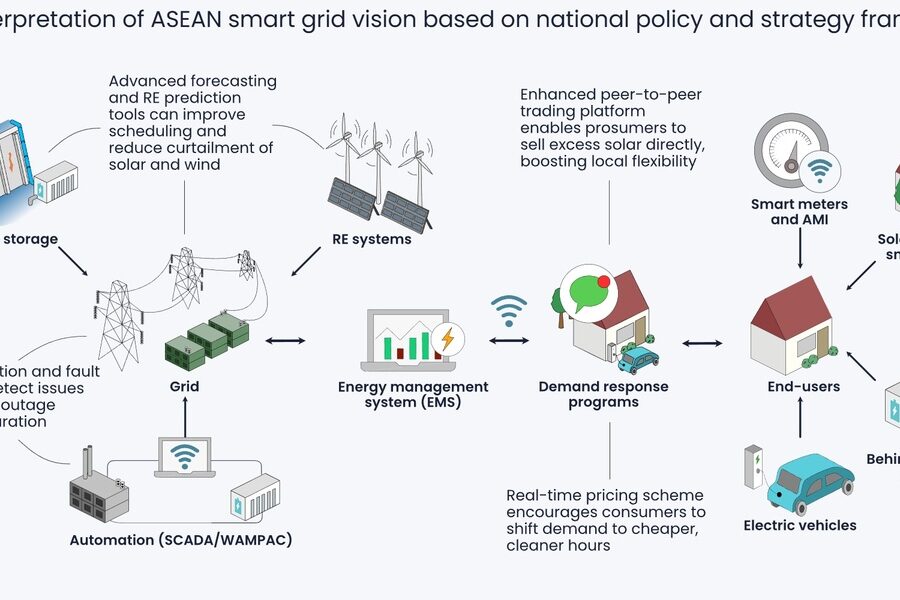
Smart grids accept bidirectional flows: rooftop PV exports, behind-the-meter batteries (for example, Tesla Powerwall), and electric vehicles that may charge or discharge alter how protection and stability are managed. IEEE 1547 (revised in 2018) updated interconnection requirements to mandate inverter functions like ride-through, volt/VAR support, and anti-islanding — technical responses to two-way flow.
Operational implication: utilities need smart inverters, distributed protection schemes, and updated interconnection rules to safely integrate exports and vehicle-to-grid pilots without compromising grid stability.
2. Centralized generation vs. distributed generation and microgrids
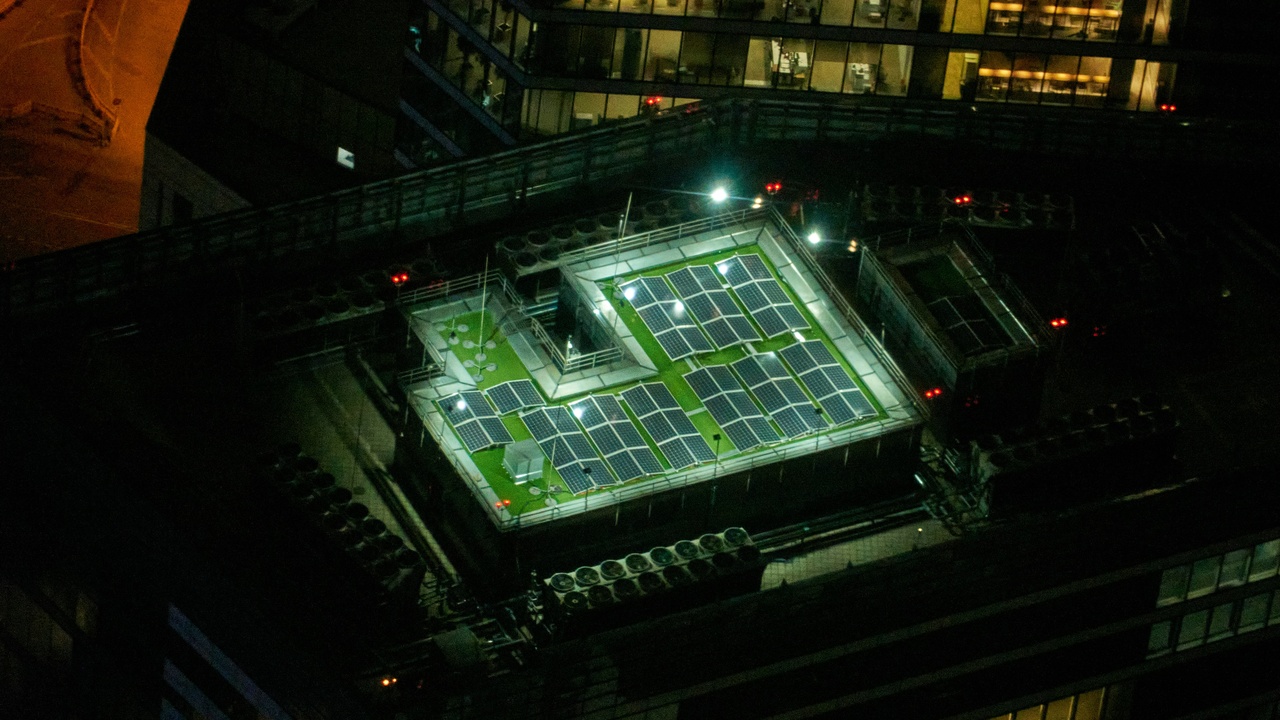
Traditional planning relied on centralized baseload and peaking plants sized to meet system peaks. Smart grids add many small generators — rooftop solar, community arrays, and local storage — that change where and when capacity is delivered.
Microgrids provide a concrete resilience benefit. After the 2017 hurricane season, Puerto Rico’s power islands highlighted the value of localized generation; since 2018 a number of community and campus microgrids (including university and hospital projects) have been deployed to island during outages. Aggregated DERs and virtual power plants (VPPs) can now bid capacity into wholesale markets or provide local peak relief.
Practical benefits include improved local resiliency and reduced transmission losses. Aggregation changes capacity planning: instead of only building new wires and transformers, planners can factor in DERs and storage as alternatives to conventional upgrades.
Monitoring, Communications, and Data
3. Periodic meter reads vs. near-real-time monitoring
Legacy systems often relied on monthly meter reads and sparse SCADA points; customer outage reports were a primary fault indicator. By contrast, smart grids stream near-real-time telemetry from AMI, distribution sensors, and PMUs for wide-area visibility.
According to the U.S. Department of Energy, roughly 80 million smart meters had been deployed in the U.S. by 2020, enabling hourly or sub-hourly customer visibility. PMUs supply synchrophasor data at 30–60 samples per second, allowing transient analysis and wide-area situational awareness that was impossible with older SCADA cycles of several seconds to minutes.
Concrete outcome: near-real-time data shortens detection-to-restoration cycles, enables more accurate demand forecasting, and supports distributed optimization algorithms that reduce peak stress on the system.
4. Basic telemetry vs. advanced communications and cybersecurity
Where older SCADA used point-to-point links, modern grids rely on a mix of fiber, cellular, and RF mesh networks to carry AMI, distribution automation, and substation traffic. Standards such as IEC 61850 support substation automation, while cybersecurity frameworks like NERC CIP (U.S./Canada) and IEC 62351 inform protections.
That richer communications stack improves control but enlarges the attack surface. Utilities therefore combine network segmentation, encryption, and intrusion detection with operational practices to manage risk. The 2015 and later supply-chain incidents and several utility-level cyber events (documented in industry reports) underline why security is now a core design constraint for grid modernization.
Reliability, Resilience, and Operations

5. Slow outage detection vs. fast detection and automated restoration
Historically, outage detection often began with customer calls. The 2003 Northeast blackout — which affected about 50 million people — illustrated how limited visibility and manual procedures can cascade into major failures.
Modern systems use AMI outage flags, line sensors, and feeder automation (remote reclosers and sectionalizers) to detect and isolate faults automatically. Pilot programs and deployments since the mid-2010s report measurable reductions in restoration time; some utilities have reported double-digit percent drops in customer minutes interrupted after rolling out distribution automation.
During extreme weather, fast detection and automated reconfiguration improve resilience: fewer customers experience long-duration outages, and crews can be dispatched to targeted locations rather than searching by phone tree.
6. Static control vs. dynamic demand response and voltage optimization
Traditional networks used fixed transformer taps and manual voltage control. Smart-grid technologies add continuous Volt/VAR optimization (VVO), automated conservation voltage reduction (CVR), and dispatchable demand-response resources to manage voltage, losses, and peak demand dynamically.
Utilities have run time-of-use and critical-peak pricing pilots that dispatch smart thermostats (Nest, Ecobee) or direct load control to shave peaks. Studies from NREL and DOE indicate that VVO and targeted DR can reduce feeder losses and peak demand meaningfully — in some cases deferring the need for costly distribution upgrades.
Net result: smarter controls lower operating costs, improve power quality, and reduce emissions by enabling higher renewable utilization without immediate capital-intensive buildouts.
Markets, Customers, and Economics
7. Limited customer visibility vs. active consumer engagement and pricing options
Customers on legacy grids typically received a monthly bill and had little real-time insight. Smart grids paired with AMI portals and apps give hourly or sub-hourly usage detail and choice: time-of-use rates, demand-response enrollment, and export compensation under net metering policies.
The differences between smart grid and traditional grid are especially clear on the customer-facing side: consumers can now be prosumers, using smart thermostats, home batteries like Sonnen or Powerwall, and EV chargers to lower bills or participate in grid programs. Utilities’ pilots since 2015 show bill savings for enrolled customers and measurable peak reductions where TOU or critical-peak pricing was adopted.
Practical tip: check your utility’s portal for rebate programs, smart-thermostat incentives, or participation in VPP trials — many programs report participation counts in the thousands and begin with simple enrollment steps.
8. Static efficiency vs. improved system efficiency and environmental impact
Smart-grid tools reduce losses (through VVO and better dispatch), enable higher renewable penetration, and let DERs supply capacity at the edge. Coordinated DERs and storage can shave peaks so that less fossil-fueled peaking capacity is needed during critical hours.
For example, post-2017 deployments of microgrids and DERs in hurricane-impacted regions have been explicitly framed as resilience-plus-decarbonization strategies by regulators and DOE-funded projects. Studies from NREL and the IEA suggest that grid modernization coupled with DERs can lower system emissions and lifecycle costs compared with a purely centralized build-out.
Macro-level benefit: over time, smarter operations and customer-enabled flexibility help the system integrate more renewables while keeping costs and outages down.
Summary
- Two-way power flow and DERs replace the old one-way model, requiring new protection, inverters, and interconnection rules (IEEE 1547, 2018).
- Dense, near-real-time telemetry (AMI, PMUs at 30–60 samples/sec) and diverse communications enable faster detection and smarter controls but demand stronger cybersecurity (NERC CIP, IEC 61850/62351).
- Automation — feeder sectionalizers, VVO, and demand-response — shortens outages and reduces peak stress, supporting resilience during events like the 2003 blackout and the 2017 hurricane season.
- Customer-facing changes (time-of-use rates, smart thermostats, home batteries) turn passive customers into active participants and create new economic pathways for deferring infrastructure investment.
- Check your utility’s smart-grid programs, look for rebates on smart thermostats or storage, and consult DOE/NREL resources to learn how local projects might affect reliability, costs, and decarbonization.