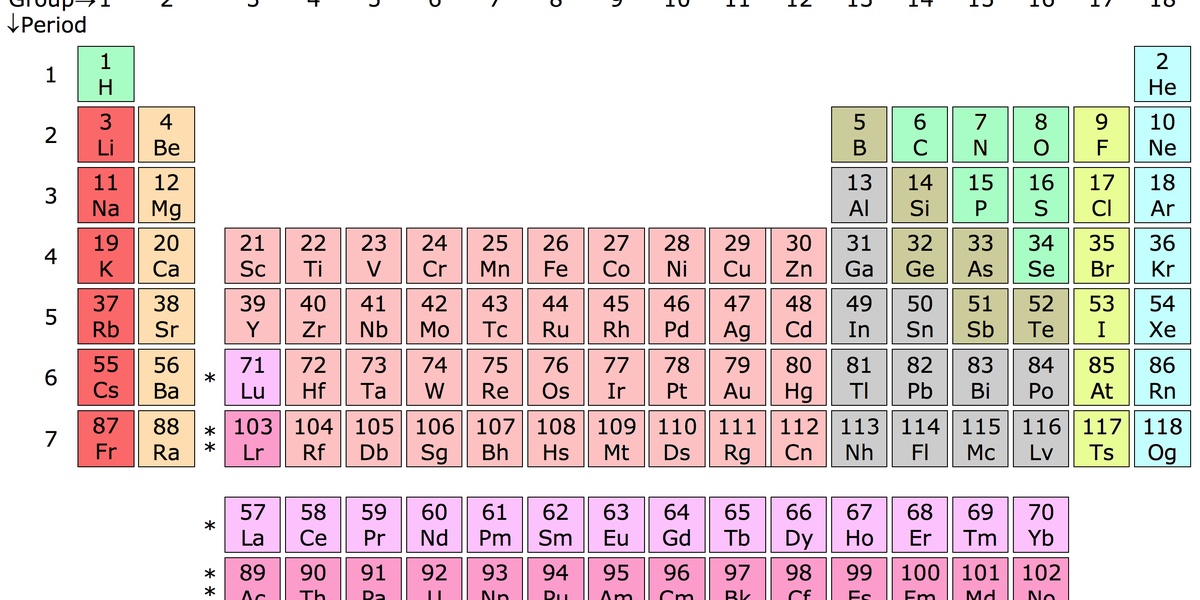
Exploring the chemistry of superheavy elements usually takes place at accelerator labs and in theoretical studies, where researchers piece together how short-lived atoms might bond and behave. Tennessine sits near the end of the periodic table, so every suggested molecule helps sketch its likely chemistry despite extreme radioactivity and fleeting existence.
There are 10 Tennessine Compounds, ranging from Tennessine bromide to Tennessine–astatine diatomic. For each entry, you’ll find below data organized as Formula,Evidence,Stability (half-life s), giving a concise view of what’s observed or predicted and how long those species persist—you’ll find the details below.
How were these tentative Tennessine compounds detected or proposed?
Most identifications come from a mix of single-atom chemistry experiments, decay-chain correlations, and quantum-chemical predictions; experimental signals are often indirect (e.g., characteristic decay products or transient adsorption behavior), while theory helps propose stable geometries and likely reaction partners.
Is it possible to study or isolate any of these compounds in bulk?
Not realistically—half-lives are typically fractions of a second to seconds, so work is limited to single-atom techniques, gas-phase chemistry, and rapid detection methods; the Stability (half-life s) column below indicates which species might be accessible even for brief measurements.
Tennessine Compounds
| Compound | Formula | Evidence | Stability (half-life s) |
|---|---|---|---|
| Tennessine diatomic | Ts2 | Ab initio study | n/a |
| Tennessine hydride | TsH | Theoretical prediction | n/a |
| Tennessine monofluoride | TsF | Theoretical prediction | n/a |
| Tennessine pentafluoride | TsF5 | Theoretical prediction | n/a |
| Tennessine chloride | TsCl | Theoretical prediction | n/a |
| Tennessine bromide | TsBr | Theoretical prediction | n/a |
| Tennessine iodide | TsI | Theoretical prediction | n/a |
| Tennessine–astatine diatomic | TsAt | Ab initio study | n/a |
| Tennessine oxide | TsO | Theoretical prediction | n/a |
| Tennessine hydroxide | TsOH | Theoretical prediction | n/a |
Images and Descriptions

Tennessine diatomic
Predicted diatomic species studied with relativistic quantum chemistry showing a weak Ts–Ts bond and strong relativistic effects; useful as a baseline for Ts bonding trends in theory papers (Pyykkö, 2011)
Tennessine hydride
Predicted hydride analogous to HAt and HI, modeled by relativistic DFT/ab initio methods; notable for predicted weaker H–Ts bonding and insights into acidity and volatility (Pershina, 2015)
Tennessine monofluoride
Calculated as the simplest Ts halide using relativistic electronic-structure methods; predictions focus on bond strength and spectroscopic constants relevant to gas-phase detection (Zaitsevskii, 2013)
Tennessine pentafluoride
Predicted high‑oxidation halide analogous to IF5; relativistic calculations examine geometry, stability and possible volatility for thermochromatography experiments (Pershina, 2014)
Tennessine chloride
Modeled with relativistic DFT and correlated methods as a heavier analog of ICl; considered in studies of adsorption and gas‑phase chemistry on metal surfaces (Borschevsky, 2012)
Tennessine bromide
Studied computationally to probe halogen bonding trends and predicted adsorption energies on gold surfaces—information useful for proposed single‑atom gas‑phase chemistry (Zaitsevskii, 2013)
Tennessine iodide
Predicted heavier iodide analog with calculations addressing volatility and surface interactions; often discussed as a candidate in proposed gas‑phase chemistry experiments (Zaitsevskii, 2013)
Tennessine–astatine diatomic
Diatomic Ts–At studied with relativistic correlated methods, offering insights into heavy–heavy bonding and periodic trends between halogens and superheavy elements (Pyykkö, 2012)
Tennessine oxide
Relativistic studies predict possible oxo‑species and their electronic structure; these models explore whether Ts shows halogen‑like or metalloid behavior toward oxygen (Pershina, 2015)
Tennessine hydroxide
Predicted hydroxide studied by relativistic quantum chemistry to assess aqueous behavior and acidity, relevant to whether Ts might show halogen‑like or metallic chemistry in solution (Borschevsky, 2015)