Libya’s geology reflects its position at the meeting point of the Sahara, Mediterranean coastline, and ancient sedimentary basins, producing a surprising variety of extractable minerals. Historical mining, recent exploration, and local industry all shape how these resources are found and used across the country.
There are 9 Minerals in Libya, ranging from Anhydrite to Quartz. The list is organized with columns Primary locations,Typical uses,Production/Reserves (t), which you’ll find below.
Which minerals drive Libya’s mining sector most strongly?
While hydrocarbons dominate Libya’s economy, industrial minerals such as gypsum/anhydrite and silica (quartz) support construction and manufacturing; phosphates and clays are locally important for agriculture and ceramics. Economic importance depends on local demand, export potential, and infrastructure that connects deposits to markets.
How reliable are the Production/Reserves (t) figures listed?
Production and reserve figures for Libya can vary in accuracy due to limited recent reporting, exploration gaps, and political disruptions; treat numbers as indicative rather than precise and check original survey dates or government/industry reports for updates.
Minerals in Libya
| Name | Primary locations | Typical uses | Production/Reserves (t) |
|---|---|---|---|
| Gypsum | Sirte Basin and northern coastal outcrops (Tripolitania,Cyrenaica) | Cement,plaster,wallboard,soil conditioner | unknown |
| Anhydrite | Evaporite sequences in the Sirte Basin and inland sabkhas | Cement,chemical industry,soil amendment | unknown |
| Calcite | Widespread carbonate outcrops: Jabal Nafusa,Jabal al Akhdar,coastal ranges | Cement,lime,aggregate,industrial fillers | unknown |
| Quartz | Coastal dunes,Sahara sand deposits,Silica-rich sand bodies (Sirte Basin) | Glass,foundry sand,construction,ceramics | unknown |
| Halite | Coastal sabkhas and inland evaporite basins (Sirte coastal plain) | Industrial salt,chemical feedstock,de‑icing | unknown |
| Kaolinite | Weathered clay deposits in Tripolitania and other northern regions | Ceramics,paper filler,pigments | unknown |
| Montmorillonite (Bentonite) | Scattered clay deposits in northwestern Libya (Tripolitania) | Drilling mud,foundry,absorbents,cat litter | unknown |
| Dolomite | Carbonate sequences in northern Libya (Jabal Nafusa,Jabal al Akhdar) | Aggregate,steel flux,filler,cement additives | unknown |
| Hematite | Wadi ash Shati area and scattered iron-bearing horizons | Iron ore,steel feedstock,pigments | unknown |
Images and Descriptions

Gypsum
A common sulfate mineral extensively quarried in Libya for cement and plaster. Found in sedimentary evaporite layers, gypsum supplies local construction markets and is one of the country’s better-documented mined minerals used in building materials.
Anhydrite
An anhydrous calcium sulfate closely associated with gypsum in Libya’s sedimentary basins. Occurs in thick evaporite sequences and is important as a cement component and in some chemical processing, though formal production data are limited.
Calcite
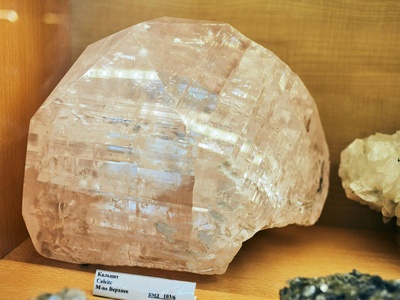
Calcite is the chief mineral of limestone, quarried across northern Libya for cement and lime production. It occurs in extensive sedimentary carbonate units and underpins much of the country’s construction‑grade raw materials industry.
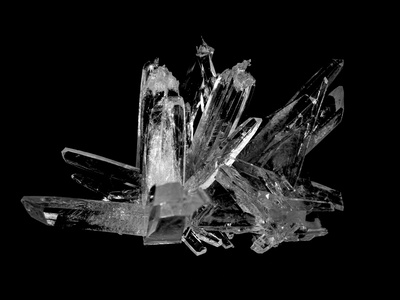
Quartz
Quartz (silica) grains form Libya’s sand resources used in construction and occasionally for glass and foundry sand. Silica occurs both as dune and fluvial sands and in sandstone units across the country.
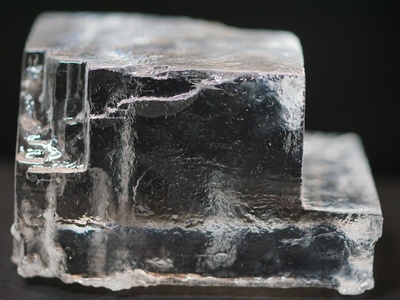
Halite
Rock salt (halite) forms in Libya’s coastal sabkhas and ancient evaporite basins. Historically a local source of salt and industrial chemicals, halite occurrences are present though large-scale modern mining is limited.
Kaolinite
Kaolinite is a white clay mineral found in weathered zones and clay deposits across northern Libya. It’s useful for ceramics and industrial fillers; small deposits are known though commercial production is modest.
Montmorillonite (Bentonite)
Montmorillonite-rich bentonite occurs in clay layers and is valued for its swelling and binding properties. In Libya it’s reported in limited deposits and used locally where available for drilling and industrial applications.
Dolomite
Dolomite is a magnesium-calcium carbonate mineral present in Libyan carbonate rocks. Quarried alongside limestone, it serves in construction aggregates and as a raw material where magnesian carbonate is required.
Hematite
Hematite is an iron oxide mineral reported from central Libyan iron occurrences (Wadi ash Shati) and other oxidized horizons. Small to moderate iron-bearing bodies have been documented, attracting exploration interest though large-scale mining is limited.