In August 2006 the International Astronomical Union reclassified Pluto, sparking headlines and a heated debate about what makes a world a “planet.”
That vote left eight planets and a separate group called dwarf planets—objects that orbit the Sun and can be roughly spherical but that differ in several measurable ways. The public reaction to Pluto’s demotion showed how much people care about simple labels, yet the distinction matters for science, education, and mission planning.
This article lays out ten clear, science-backed points that explain the differences between dwarf planet and planet, grouped into four categories: classification, physical properties, orbital dynamics, and scientific/cultural impact.
Classification and official definitions

Astronomers rely on formal definitions to keep catalogs, textbooks, and mission plans consistent. The International Astronomical Union (IAU) provided that modern baseline in a vote held in August 2006, and agencies like NASA follow the resulting categories when describing targets and designing missions.
Official classifications are about operational criteria rather than feelings: they determine what appears on planet lists, how students learn the Solar System, and how researchers prioritize spacecraft objectives.
1. Official IAU definition (the 2006 decision)
The IAU’s 2006 resolution established three criteria for a body to be a planet: it must orbit the Sun, be in hydrostatic equilibrium (roughly round), and have cleared its orbital neighborhood of other debris. That August 2006 vote is the baseline that reshaped planetary lists worldwide.
As a result, Pluto moved to the dwarf-planet category and textbooks, museum exhibits, and media presentations were updated. The IAU remains the authoritative body for these categories, and its definitions guide everything from classroom lessons to which objects get priority for detailed study.
2. Orbital dominance separates planets from dwarf planets
The core distinction is orbital dominance: planets have cleared their orbital zones, while dwarf planets have not. A simple way astronomers express this is with parameters that measure how much mass a body has swept up compared with remaining neighbors.
There are eight recognized planets in our Solar System, and dwarf planets like Ceres and Pluto coexist with many similar-sized or smaller objects—Ceres in the main asteroid belt, Pluto among the Kuiper belt population—so they don’t meet the clearing criterion despite being round.
Physical properties and internal structure
Size and mass set many of the practical differences between major planets and smaller worlds. The differences between dwarf planet and planet show up in how gravity sculpts interiors, the ability to hold an atmosphere, and long-term geological activity.
3. Size and mass: planets dwarf dwarf planets, typically
Planets are generally much larger and far more massive. For example, Earth’s diameter is about 12,742 km, Pluto measures roughly 2,376 km, and Ceres is around 940 km across. Mass differences are dramatic: Pluto’s mass (~1.3×10^22 kg) is tiny compared with Earth’s ~5.97×10^24 kg.
Those gaps matter: larger mass helps retain thicker atmospheres, drive sustained tectonics, and produce higher internal pressures that lead to more pronounced differentiation. Spacecraft design also changes with size—orbital insertion, communication windows, and propulsion budgets all depend on the target’s mass and gravity.
4. Shape and hydrostatic equilibrium: round but not equal
Both planets and dwarf planets can be in hydrostatic equilibrium, meaning gravity has pulled them into a near-round shape. But the degree and cause differ: planets’ stronger gravity produces more uniform spheres, while some dwarf worlds are only marginally round or are distorted by rotation.
Haumea is a striking example: its rapid rotation (about 3.9 hours) stretches it into an elongated ellipsoid rather than a perfect sphere. Ceres, by contrast, is roughly spherical, while the major planets appear even more uniform because of their greater self-gravity.
5. Composition and internal differentiation
Composition varies systematically: terrestrial planets are rocky and dense (Earth ~5.51 g/cm³), while many dwarf planets are mixtures of ice and rock with lower bulk densities (Ceres ~2.16 g/cm³; Pluto ~1.88 g/cm³). Larger planets also display layered interiors—cores, mantles, and often extensive atmospheres.
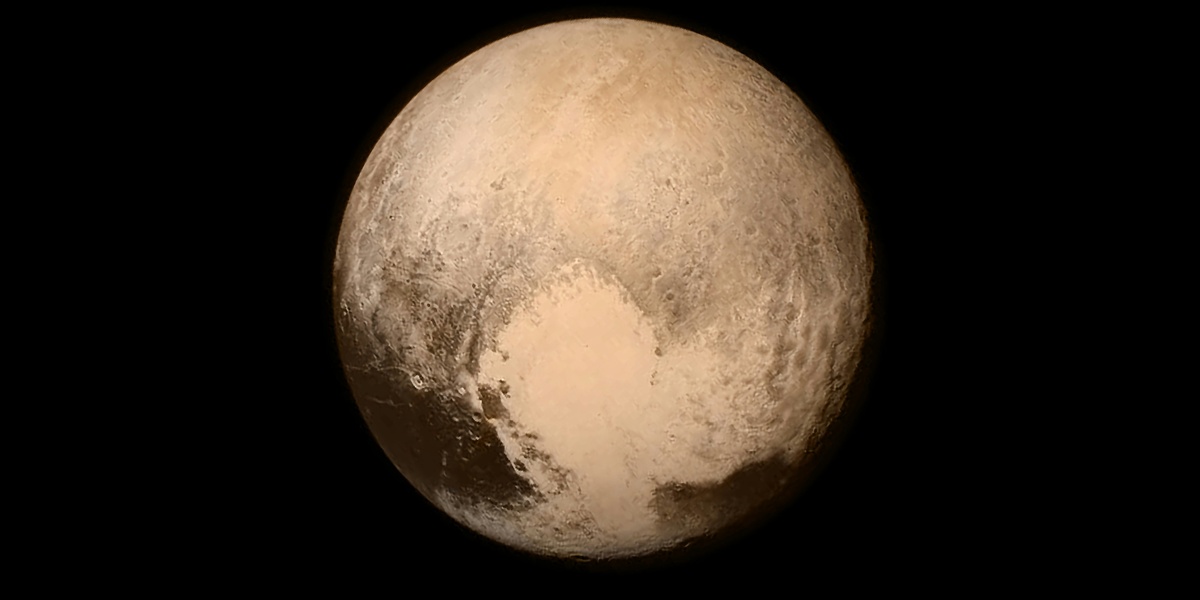
Evidence from missions supports these contrasts. NASA’s New Horizons revealed nitrogen glaciers and complex terrains on Pluto, while Dawn’s study of Ceres showed hydrated minerals and signs of past or present briny activity—indications that even smaller worlds can have active geology, but of a different character than planets.
Orbital dynamics and location
Where an object orbits and how it moves are strong clues about its history and classification. Many dwarf planets live in belts or scattered orbits, while planets tend to occupy dominant, relatively stable paths around the Sun.
6. Typical orbital zones: asteroid belt vs outer Solar System
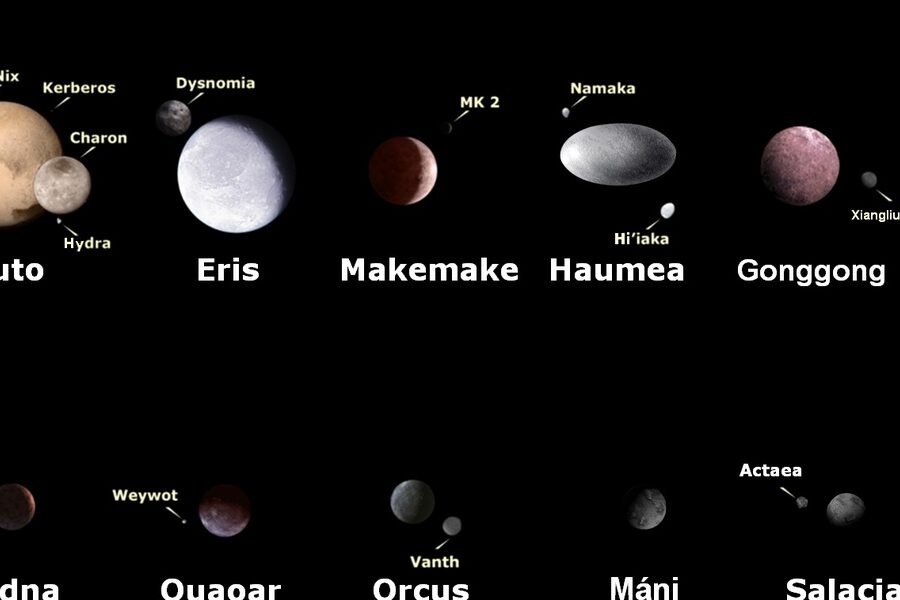
Many dwarf planets are residents of belts rather than lone occupants of a clear orbital zone. Ceres sits in the main asteroid belt between Mars and Jupiter; Pluto, Eris, Haumea, and Makemake are members of the Kuiper belt or scattered disk farther out.
Location affects missions: New Horizons reached Pluto in about 9.5 years after launch, so travel time, power systems, and communication latency shape instrument choices. Remote positions also preserve early Solar System material, which makes these objects attractive science targets despite the engineering challenges.
7. Orbital eccentricity and inclination differences
Dwarf planets often have higher orbital eccentricities and inclinations than major planets. Pluto’s eccentricity is about 0.249 and its orbital period is 248 years, values that contrast with most planets whose eccentricities are generally under 0.1.
Higher eccentricity and tilt change seasonal extremes, how volatiles migrate across the surface, and the geometry of spacecraft encounters. That makes flybys and observations more complex but also scientifically rewarding, since such orbits expose varied surface environments over long timescales.
8. Migration, scattering, and dynamical history
The present orbits of many dwarf planets reflect early Solar System upheaval. Models like the Nice model explain how planetary migration—particularly Neptune’s outward movement—scattered and captured icy bodies into resonant slots, including Pluto’s 2:3 resonance with Neptune.
These rearrangements occurred roughly 4 billion years ago and left a population of objects whose dynamical histories preserve clues about planet formation. Studying them helps test models of how planets migrated and how smaller bodies were redistributed across the system.
Scientific value, exploration, and cultural impact
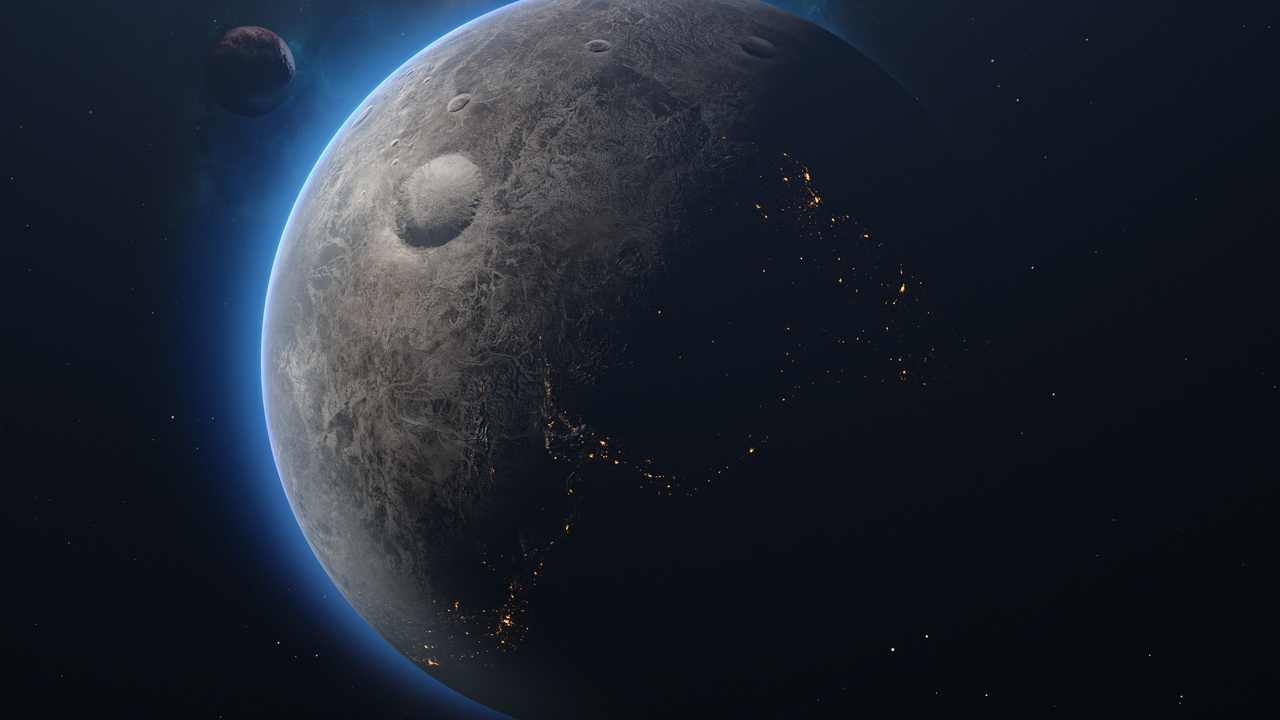
Whether an object is labeled a planet or a dwarf planet changes public perception, but both categories offer distinct scientific returns. Mission design, instrumentation, and the kinds of questions scientists ask differ between major planets and smaller worlds.
9. Exploration differences: missions, instrumentation, and returns
Missions to dwarf planets are engineered for long travel times, low sunlight, and often single-encounter flybys or extended operations around a small body. New Horizons launched in 2006 and performed its Pluto flyby on July 14, 2015; Dawn entered orbit at Ceres in March 2015.
These missions used tailored instrument suites—high-resolution imaging, spectrometers, and radio science—to study geology and composition. The returns were specific: New Horizons revealed Sputnik Planitia and unexpected geology on Pluto, while Dawn identified hydrated minerals and possible brine-related features on Ceres.
10. Cultural and educational impact: why classification matters to people
Classification shapes classroom lessons, museum exhibits, and public conversations. Pluto was taught as the ninth planet until 2006, and the IAU decision prompted wide media coverage, heated debates, and updates to educational materials worldwide.
Those shifts affect how people engage with space science—what gets named, what captures headlines, and sometimes even which proposals win funding. Scientific definitions do more than sort lists; they influence outreach, priorities, and how the next generation learns about the Solar System.
Summary
- The IAU’s 2006 criteria (orbit the Sun, be round, clear the neighborhood) create an operational divide between planets and dwarf planets.
- Physical differences—size, mass, density, and internal layering—mean planets and dwarf planets behave differently geologically and atmospherically.
- Orbital behaviors and histories differ: dwarf planets often live in belts, show higher eccentricities or inclinations, and bear marks of early migration and scattering.
- Exploration priorities and mission designs differ as well—New Horizons (Pluto, flyby 14 July 2015) and Dawn (Ceres, orbit March 2015) produced distinct scientific returns that highlight the value of studying both classes.
- Beyond technicalities, classification influences education, public interest, and how we frame questions about the origins of the Solar System.