From kitchens and coastal cleanups to product development labs, knowing which plastics actually break down helps you make better choices and reduces waste in real settings. A quick, practical list makes it easier to compare options and disposal needs.
There are 15 Examples of Biodegradable Plastics, ranging from Alginate-based bioplastics to Thermoplastic starch (starch-based plastics). For each entry you’ll find below the key facts organized with column headings Abbreviation,Feedstock,Biodegradation conditions — you’ll find below.
How can I tell if a biodegradable plastic will break down in my home compost?
Check the label for “home compostable” or certifications like EN 13432/ASTM D6400 (these typically indicate industrial compostability, not home). Look at the feedstock and biodegradation conditions in the list below: some require high heat or industrial facilities, while others will degrade in backyard compost. When in doubt, contact the manufacturer or keep such items to industrial compost streams.
Are biodegradable plastics always better than conventional plastics for the environment?
Not always—biodegradable plastics can reduce long-term litter if they reach appropriate disposal conditions, but their environmental benefit depends on feedstock, production impacts, and whether proper composting infrastructure exists. Reducing single-use items and choosing materials aligned with local waste systems usually gives the best results.
Examples of Biodegradable Plastics
| Name | Abbreviation | Feedstock | Biodegradation conditions |
|---|---|---|---|
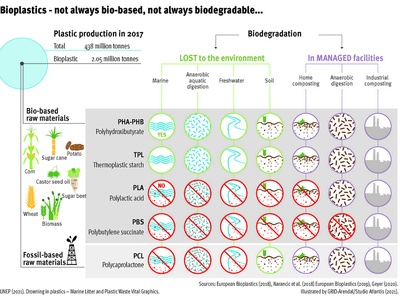
| Polylactic acid | PLA | Corn sugar/sugarcane (fermentation) | Industrial compost (optimal 55–60°C); slow in home compost; limited marine biodegradation |
| Polyhydroxyalkanoates (general) | PHA | Bacterial fermentation of sugars or plant oils | Industrial and home compost, soil and some marine environments (rate varies by monomer mix) |
| Polyhydroxybutyrate | PHB | Bacterial fermentation of sugars/oils | Industrial and home compost, soil and some marine settings |
| Polyhydroxybutyrate-co-valerate | PHBV | Bacterial fermentation of sugars/oils | Industrial and home compost, soil and marine (faster than PHB) |
| Polybutylene adipate terephthalate | PBAT | Petroleum-derived polyester (some bio-based variants exist) | Industrial compost and soil (commonly certified when blended); slower in home compost |
| Polybutylene succinate | PBS | Petroleum or bio-sourced succinic acid and 1,4-butanediol | Industrial compost, soil; some formulations biodegrade in home compost |
| Polybutylene succinate-co-adipate | PBSA | Petroleum-derived polyester copolymer | Industrial compost and soil |
| Thermoplastic starch (starch-based plastics) | TPS | Corn, potato, cassava starch | Industrial and home compost, soil; readily biodegrades under normal environmental conditions |
| Polycaprolactone | PCL | Petroleum-derived caprolactone monomer | Industrial and home compost, soil; biodegrades relatively slowly compared with starch |
| Polyvinyl alcohol | PVOH | Petroleum-derived vinyl acetate (hydrolyzed to PVOH) | Aerobic wastewater treatment and industrial compost with acclimated microbes; variable in home/soil |
| Polypropylene carbonate | PPC | Carbon dioxide + propylene oxide (partly CO2-derived) | Industrial compost and soil (microbial degradation reported) |
| Alginate-based bioplastics | Alginate | Brown seaweed (algae) | Marine, soil and compost; readily biodegradable in natural environments |
| Chitosan-based plastics | Chitosan | Chitin from crustacean shells (shrimp/crab) | Soil, compost and marine; biodegradable with antimicrobial properties |
| Cellulose acetate (low acetylation) | Cellulose acetate (low DS) | Wood or cotton cellulose (acetylated, low degree of substitution) | Industrial and home composting when degree of substitution is low; slower in marine environments |
| Protein-based bioplastics (soy, pea, wheat) | Protein films | Plant proteins such as soy, pea or wheat | Soil and compost; readily biodegrades under normal conditions |
Images and Descriptions

Polylactic acid
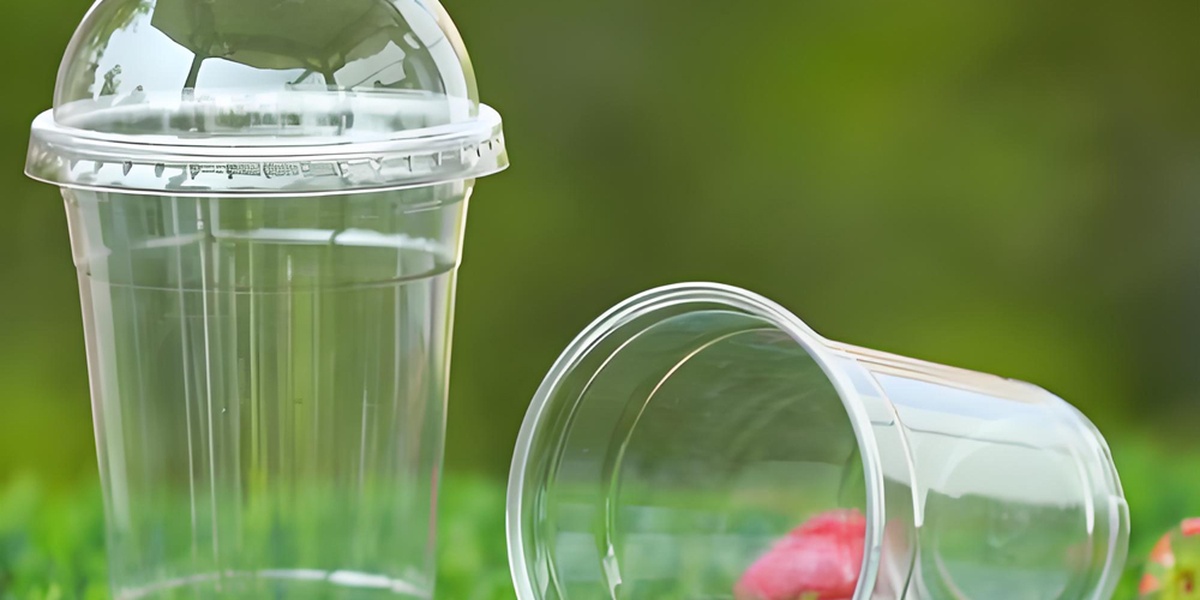
A bio-based polyester made by fermenting sugars to lactic acid then polymerizing. Stiff and clear, used for cups, disposable cutlery, films and compostable packaging; requires industrial composting for reliable breakdown.

Polyhydroxyalkanoates (general)
A family of microbial polyesters (includes PHB, PHBV) that biodegrade in many environments. Tunable mechanical properties make PHAs useful for packaging, agricultural films, medical implants and biodegradable consumer items.
Polyhydroxybutyrate
A naturally produced PHA that is brittle and highly crystalline. Biodegrades biologically in compost and soil; used historically for rigid packaging, coatings and medical devices where full biodegradability is needed.
Polyhydroxybutyrate-co-valerate
A flexible copolymer of PHB that reduces brittleness and improves processing. Used for compostable packaging, films and moulded items; biodegrades in a range of real-world environments.
Polybutylene adipate terephthalate
A flexible, fossil-derived biodegradable polyester often blended with starch or PLA to make compostable bags and films. Good ductility and compostability under certified conditions.
Polybutylene succinate
An aliphatic polyester with good thermal properties and biodegradability. Used for disposable cutlery, trays, agricultural films and compostable packaging; can be produced from renewable succinic acid.
Polybutylene succinate-co-adipate
A softer, more flexible copolymer related to PBS. Used in films, bags and injection-molded compostable items where enhanced toughness and biodegradability are required.
Thermoplastic starch (starch-based plastics)
Made by plasticizing native starch, often blended with other polymers for performance. Widely used for loose-fill, compostable bags, disposable tableware and packaging where rapid biodegradation is desired.
Polycaprolactone
A soft, low-melting aliphatic polyester often blended to boost flexibility and biodegradability. Used in compostable blends, medical devices and 3D printing filaments; breaks down microbially in compost and soil.
Polyvinyl alcohol
A water-soluble polymer used for soluble packaging (e.g., detergent pods) and films. Biodegradation strongly depends on degree of hydrolysis and microbial exposure; performs well in activated sludge systems.
Polypropylene carbonate
A carbonate polymer partly made from CO2; offers reasonable barrier properties and biodegrades under composting or soil conditions. Used experimentally for disposable cups, packaging films and biodegradable composites.
Alginate-based bioplastics
A natural polysaccharide processed into films and coatings from seaweed. Biodegrades quickly in marine and terrestrial environments, useful for edible films, single-use packaging and water-soluble capsules.
Chitosan-based plastics
Derived from chitin, chitosan forms films and coatings with natural biodegradability and some antimicrobial action. Used for food coatings, agricultural mulch films and biodegradable packaging when blended for strength and water resistance.
Cellulose acetate (low acetylation)
A cellulose derivative used for films and coatings; low-acetyl versions (lower degree of substitution) can biodegrade in compost and soil. Common in film applications where biodegradability is required.
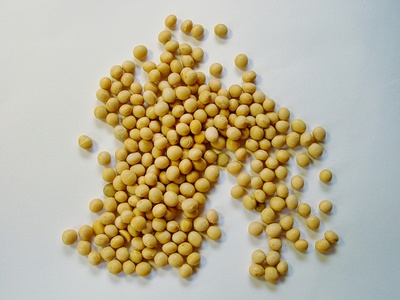
Protein-based bioplastics (soy, pea, wheat)
Bioplastic films made from plant proteins that biodegrade readily. Used for coatings, compostable packaging and edible films; typically blended or coated to improve moisture resistance and mechanical strength.