
Max Planck’s 1900 solution to the blackbody problem—introducing quantized energy—shocked physicists and launched a century of discoveries that still feel stranger than fiction.
Those discoveries matter beyond philosophy: they underpin devices from transistors in smartphones to MRI scanners in hospitals, and they let labs test deep questions about reality. The experiments and inventions that followed have measurable, everyday consequences.
Quantum physics may seem abstract and counterintuitive, but its core ideas are both empirically proven and responsible for technologies we use every day; this article walks through seven striking facts that explain why. Below are seven interesting facts about quantum physics, with dates, experiments, and concrete examples to make the ideas tangible.
Core principles and paradoxes

Foundational quantum concepts feel paradoxical—systems can behave like particles and waves, or occupy multiple states at once—but these oddities are testable and supported by historic experiments. Milestones from Young’s 1801 double-slit to Planck in 1900 and Davisson–Germer in 1927 built the empirical base for quantum theory. The two ideas below capture why intuition often fails but data does not.
1. Wave–particle duality
Particles such as electrons and photons can exhibit both wave-like and particle-like behavior depending on the experiment.
Thomas Young’s double-slit experiment (1801) showed that light produces interference fringes, a hallmark of waves. In 1927 Davisson and Germer observed electron diffraction patterns that matched wave predictions, confirming matter waves. Interference means overlapping waves add or cancel, producing bright and dark bands.
Practical uses follow directly: transmission electron microscopes exploit electron wave behavior to resolve structures down to sub-nanometer scales, and optical interferometers serve in precision metrology and sensors.
2. Superposition and Schrödinger’s cat
Quantum systems can exist in a superposition—holding multiple possible states at once—until a measurement selects one outcome.
Erwin Schrödinger’s 1935 thought experiment (the “cat”) illustrates this oddity by imagining a macroscopic object linked to a quantum event, highlighting the gap between microscopic theory and everyday experience. Decoherence explains why macroscopic superpositions vanish quickly when a system interacts with its environment.
Laboratory demonstrations manage superposition directly: superconducting qubits (used by Google and IBM) often show coherence times from microseconds to milliseconds, while trapped-ion qubits have demonstrated coherence measured in seconds in specialized setups. Controlling superposition is central to quantum computing.
Quantum technologies and real-world applications
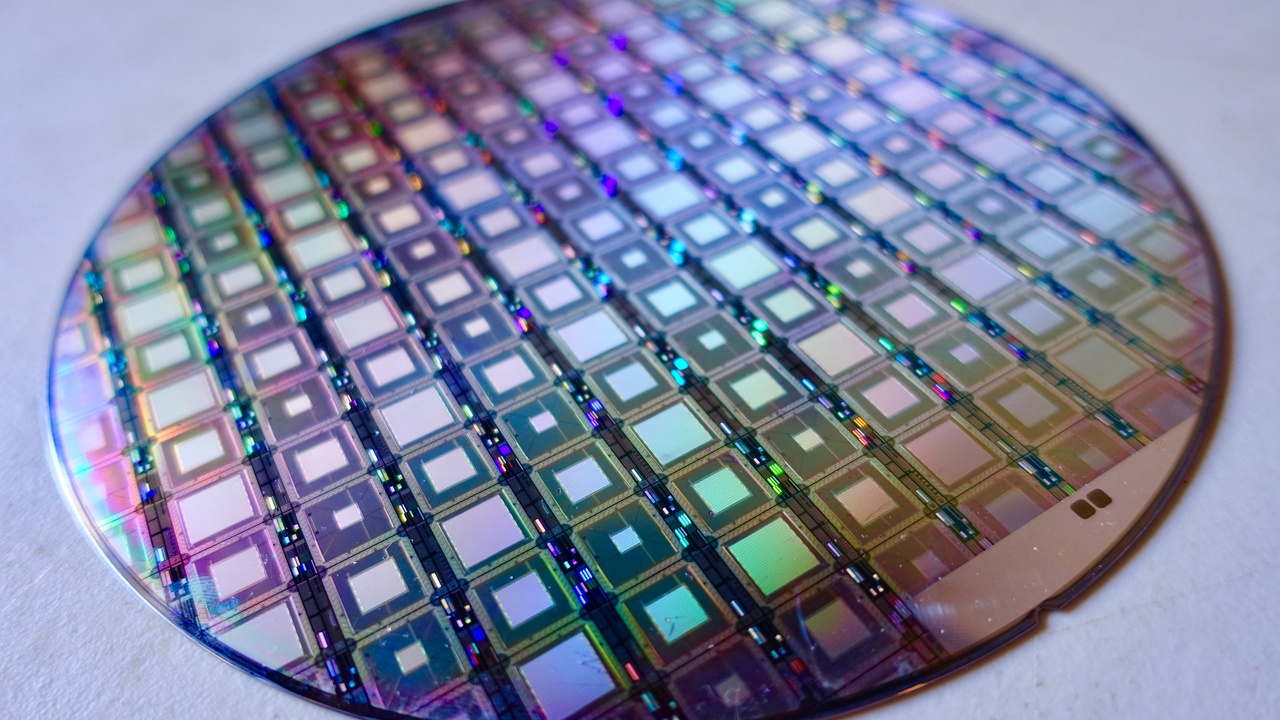
Quantum ideas are not just theory; they’re the foundation for many technologies and a growing engineering field. From semiconductors to enterprise quantum machines, companies and national labs have translated quantum principles into products and demonstrations.
The following facts summarize how quantum research became practical and commercially relevant, and they highlight key milestones and players involved in building those applications.
3. Quantum computing achieves specialized advantage
Quantum processors have demonstrated tasks that classical supercomputers find challenging, signalling early forms of quantum advantage.
Google’s Sycamore experiment in 2019 (53 qubits) reported sampling a task faster than a certain classical algorithm could at the time, a notable milestone. IBM has scaled devices as well—the 127‑qubit “Eagle” was announced in 2021—and offers cloud access to its processors via Qiskit.
Quantum advantage refers to solving a problem more efficiently than classical hardware. Promising applications include molecular simulation for chemistry, optimization problems for logistics, and probabilistic sampling for machine learning. D‑Wave’s annealers focus on optimization, while gate‑based machines target broader simulation tasks.
4. Quantum entanglement enables secure communication
Entanglement links particles so measurements on one correlate with the other in ways that defy classical explanation, and this property underpins emerging secure-communication protocols.
Bell’s theorem framed a testable difference between quantum predictions and local hidden-variable ideas, and experiments since have confirmed quantum correlations. China’s Micius satellite demonstrated entanglement distribution to ground stations around 2017, showing quantum links over hundreds of kilometres. Commercial quantum key distribution (QKD) trials and networks have followed in several countries.
Entanglement-based protocols can detect eavesdropping and form the basis for next‑generation encryption services being developed by startups and national labs.
5. Quantum effects power everyday tech: semiconductors and MRI
Several technologies people use daily depend directly on quantum mechanics rather than classical approximations.
The transistor, invented at Bell Labs in 1947, relies on quantum behavior of electrons in solids and enabled modern electronics and computers. Nuclear magnetic resonance (NMR) was developed in the 1940s and earned Bloch and Purcell the Nobel Prize in 1952; that work led to MRI scanners developed in the 1970s.
Lasers, LEDs, flash memory, and modern semiconductors all use quantum concepts. Transistors in smartphones and MRI scanners in hospitals are direct examples of quantum theory applied at scale.
Surprising experiments and implications

Quantum experiments probe philosophical questions about reality and yield unexpected technological tools. Two striking examples are tests of Bell’s inequality and quantum tunneling, each with both conceptual and practical consequences.
6. Bell’s inequality and tests of reality
Bell’s 1964 inequality provided an experimental route to decide whether local hidden-variable theories could reproduce quantum predictions.
Experiments over decades increasingly closed loopholes; a landmark loophole-free Bell test by Hensen et al. in 2015 reported violations consistent with quantum mechanics and incompatible with local realism. Those results matter beyond physics because they validate entanglement as a resource and strengthen the theoretical foundations of entanglement-based encryption.
7. Quantum tunneling and its counterintuitive consequences
Particles can pass through energy barriers that classical physics forbids, a phenomenon called quantum tunneling.
George Gamow explained alpha decay via tunneling in 1928, giving quantum mechanics explanatory reach into nuclear processes. The scanning tunneling microscope, invented by Binnig and Rohrer in 1981 (Nobel Prize 1986), uses tunneling to image and manipulate surfaces at the atomic scale.
Tunneling also enables tunnel diodes and plays a role in flash memory cells, making it both a conceptual oddity and a practical mechanism in electronics and instrumentation.
Summary
- Quantum ideas once surprising—Planck 1900, Young 1801, Davisson–Germer 1927—now power tools like transistors and MRI scanners in everyday life.
- Wave–particle duality and superposition (Schrödinger’s cat, 1935) are experimentally real; labs control coherence from microseconds to seconds for qubits.
- Milestones such as Google Sycamore (2019), IBM’s 127‑qubit announcement (2021), and China’s Micius (circa 2017) show active development in computing and secure communication.
- Authoritative sources like Nobel Prize pages and national lab summaries track these advances—follow major labs and companies to stay current on quantum technology.