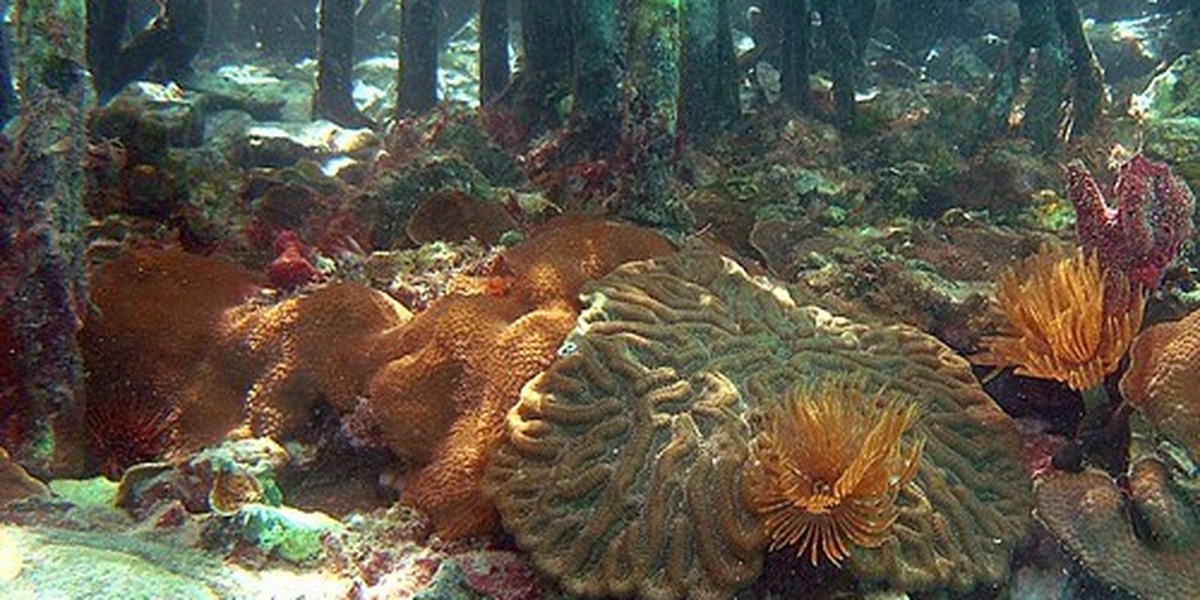
Although coral reefs cover less than 0.1% of the ocean floor, they support roughly 25% of all marine species — a startling contrast that helps explain why myths about coral reefs matter.
Early mariners often described reefs as barren, tooth‑like rocks; that impression stuck and helped seed a lot of misunderstandings. Those myths misdirect conservation priorities, undercut public support for effective measures, and can lull policymakers into easy fixes that don’t work.
This piece debunks eight widespread misconceptions, grouped into three areas — biology and ecology, threats and recovery, and human interaction and policy — and shows what science says, why the myths persist, and what practical actions actually help. Ready to separate fact from fiction?
Biology and Ecology Myths

Many coral misconceptions arise because reefs look like rock or plants at a glance. In reality, reef systems are built by living animals and complex ecological relationships documented by NOAA, UNESCO, and peer‑reviewed studies. Remember: reefs cover under 0.1% of the seafloor yet support about one quarter of marine species, which helps explain their outsized ecological and economic role on reefs such as the Great Barrier Reef and in Caribbean systems.
1. Myth: Corals are plants
False — corals are animals. They belong to the phylum Cnidaria and are colonies of polyps, tiny individual animals that have tentacles and stinging cells (nematocysts) to capture plankton, especially at night.
Most reef‑building corals host photosynthetic algae called zooxanthellae inside their tissues; those algae supply much of the coral’s daytime energy, but they are separate organisms. Because corals are animals they have growth rates, sexual reproduction (notably the mass broadcast spawning seen on the Great Barrier Reef each November–December), and temperature‑sensitive physiology — all factors that shape conservation strategies (NOAA explains the coral–algae symbiosis in detail).
2. Myth: Coral reefs are small and unimportant
Small in area, huge in value. Although reefs occupy under 0.1% of the ocean surface, they provide fisheries, coastal defense, and tourism that together are commonly valued at roughly $300–$375 billion each year in many assessments (World Resources Institute, UNEP, NOAA summaries).
Reefs buffer waves and reduce erosion for coastal cities and islands, support commercial and subsistence fisheries for millions of people, and underpin tourism economies from Australia to Southeast Asia and the Caribbean. That combination of biodiversity and services makes even small reef tracts like those off coastal communities critically important.
Threats, Bleaching, and Recovery Misconceptions
Misunderstanding how reefs respond to stress leads to weak management. Global threats such as ocean warming and acidification interact with local pressures like pollution and overfishing to worsen outcomes. Mass bleaching events — notably in 1998 and again in 2016 — show how widespread heat stress has become, and monitoring by NOAA and researchers documents that such events are now more frequent than they were before the 1980s.
3. Myth: Bleached corals are dead
Bleaching is a stress response — corals expel their zooxanthellae and turn white — and it can be reversible. Loss of the algae cuts a coral’s energy supply, so prolonged heat or repeated stress often leads to mortality.
Evidence from the 1998 and 2016 mass bleaching events shows a range of outcomes: some reefs experienced high mortality while others partially recovered when temperatures fell and local pressures were low. NOAA and peer‑reviewed studies note that when elevated temperatures persist for weeks, mortality rises; in extreme local cases managers documented losses exceeding 50% of shallow corals. That variability means managers should reduce local stressors and protect refugia to improve recovery odds.
4. Myth: Reefs will bounce back quickly if we just stop fishing
Stopping overfishing helps — it can restore herbivore populations that keep algae in check — but recovery rarely follows a single action. Coral recovery depends on water quality, disease dynamics, larval supply, reef structure, and climate trends.
Examples show that fishing restrictions can increase fish biomass yet reefs still decline where warming or disease persist. Large‑scale coral gardening and outplanting projects (for instance by Coral Restoration Foundation and Mote Marine Lab) are promising but currently restore only a tiny fraction of degraded reef area — typically orders of magnitude smaller than the area lost — so integrated management (MPAs, watershed controls, targeted restoration) is essential.
Human Interaction, Policy, and Value Misconceptions
Myths about human roles and policy choices can pull funding and attention away from effective measures. Misplaced focus on relatively small threats, or overreliance on a single tool like MPAs, can limit outcomes unless policies are designed with evidence, enforcement, and local communities in mind.
5. Myth: Only climate change harms reefs
Climate change is the dominant global threat, but local stressors matter a lot. Pollution, nutrient runoff, coastal development, destructive fishing, and disease outbreaks have caused severe regional declines.
For example, Stony Coral Tissue Loss Disease has devastated parts of Florida’s reefs since it was first noticed in 2014 (NOAA tracking shows rapid spread and significant species losses). Likewise, nutrient runoff in the Caribbean and parts of Southeast Asia exacerbates bleaching and disease, so reducing local pressures is an actionable complement to global mitigation.
6. Myth: Marine protected areas (MPAs) always fix reef decline
MPAs can be highly effective, but they are not a guaranteed cure. Success depends on size, connectivity, enforcement, and community support, plus actions to control land‑based sources of pollution.
Well‑managed MPAs such as those supported by strong local governance in Palau or the community‑run reserve at Apo Island have shown large gains in fish biomass and reef condition; some studies report fish biomass increases of two‑ to seven‑fold inside well enforced reserves. But poorly enforced or poorly located MPAs show little benefit, so protected areas must be part of an integrated coastal management strategy.
7. Myth: The aquarium trade is the main threat to reefs
The aquarium and souvenir trades can damage reefs locally where collection is unmanaged, but they are not the primary global driver of reef loss. Bleaching, coastal development, and destructive fishing account for much larger shares of observed decline.
Trade‑volume studies and management reviews show that responsible collection, captive breeding, and aquaculture now supply an increasing share of the market. Commercial efforts such as Coral Vita and other coral farms produce nursery‑reared corals for restoration and the aquarium trade, reducing pressure on wild reefs.
8. Myth: Coral reefs are only beautiful — no practical value
Reefs are visually striking, but their value is practical and measurable. An estimated nearly half a billion people depend on reefs for food, income, or coastal protection, and global assessments commonly place annual reef goods and services in the hundreds of billions of U.S. dollars.
Biodiversity from reefs has also led to biomedical advances: ziconotide (Prialt), a pain treatment, is derived from cone‑snail toxins, and trabectedin (Yondelis), a cancer drug, comes from compounds first isolated in sea squirts. Protecting reef diversity protects potential future medical discoveries as well as livelihoods and shorelines.
Summary
- Reefs occupy a sliver of the seafloor yet sustain roughly a quarter of marine life and deliver large economic and protective benefits.
- Corals are animals in partnership with algae; bleaching signals stress and can be reversible if conditions improve.
- Recovery is rarely instant — local actions (better water quality, fisheries management, and disease control) greatly improve a reef’s chance to rebound alongside global climate action.
- Policy tools like MPAs and sustainable trade work when well designed, enforced, and paired with community engagement and watershed measures.
- Debunking myths about coral reefs helps target resources to evidence‑based conservation; learn more from NOAA, UNESCO, or Coral Reef Alliance and support measures that reduce runoff, back strong protections, and favor sustainable seafood.