West Virginia’s ridges, river valleys, and wetlands host a wide variety of birdlife across changing seasons, making it a rewarding place to watch species that prefer forest, field, and water. Whether you visit a high-elevation forest or a lowland marsh, there’s almost always something to spot and identify.
There are 100 Birds of West Virginia, ranging from American Black Duck to Yellow-billed Cuckoo. For each entry you’ll find below the data organized with Scientific name,Size (cm),Occurrence & habitat to help with identification and planning, and brief notes on where and when to expect each species — you’ll find below.
How can I use this list while birdwatching in West Virginia?
Use the list to narrow targets by habitat and size: consult the Occurrence & habitat column to choose likely species for a location and the Size (cm) and Scientific name columns to confirm IDs; pair the list with a local field guide or app and check recent eBird reports for up-to-date sightings.
Does the list cover migrants, residents, and rare visitors?
Yes — the compilation includes regular residents, seasonal migrants, and less-common visitors; check the Occurrence & habitat details for seasonality and typical locations, and consult local birding resources if you need current rarity reports.
Birds of West Virginia
| Name | Scientific name | Size (cm) | Occurrence & habitat |
|---|---|---|---|
| Canada Goose | Branta canadensis | 75–110 | Statewide; lakes, fields, rivers; year-round |
| Wood Duck | Aix sponsa | 47–54 | Wooded wetlands, ponds; spring-summer breeder |
| Mallard | Anas platyrhynchos | 50–65 | Statewide; ponds, rivers, marshes; year-round |
| American Black Duck | Anas rubripes | 50–62 | Wetlands, tidal marshes, reservoirs; winter-spring migrant |
| Northern Pintail | Anas acuta | 60–76 | Marshes, reservoirs; migrants and winter |
| Green-winged Teal | Anas crecca | 34–40 | Marsh edges, wetlands; migrants and winter |
| American Wigeon | Mareca americana | 40–56 | Lakes, marshes; migrants and winter |
| Gadwall | Mareca strepera | 45–55 | Shallow wetlands, ponds; migrants and winter |
| Ring-necked Duck | Aythya collaris | 35–46 | Reservoirs, ponds; migrants and winter |
| Lesser Scaup | Aythya affinis | 36–43 | Lakes, reservoirs; migrants and winter |
| Bufflehead | Bucephala albeola | 26–36 | Small lakes, ponds; migrants and winter |
| Common Goldeneye | Bucephala clangula | 44–51 | Lakes, rivers; winter migrant |
| Hooded Merganser | Lophodytes cucullatus | 38–43 | Wooded ponds, rivers; year-round locally |
| Red-breasted Merganser | Mergus serrator | 51–64 | Reservoirs, rivers; migrants and winter |
| Ruddy Duck | Oxyura jamaicensis | 26–36 | Marshes, ponds; summer and migration |
| Pied-billed Grebe | Podilymbus podiceps | 24–35 | Ponds, marshes; statewide in suitable wetlands |
| Horned Grebe | Podiceps auritus | 28–34 | Lakes, reservoirs; migrants and rare winter |
| Great Blue Heron | Ardea herodias | 97–137 | Wetlands, rivers, shores; year-round |
| Great Egret | Ardea alba | 94–102 | Marshes, shorelines; spring-summer |
| Snowy Egret | Egretta thula | 56–66 | Marsh edges, wetlands; occasional summer visitor |
| Green Heron | Butorides virescens | 40–49 | Wooded wetlands, streams; spring-fall |
| Black-crowned Night-Heron | Nycticorax nycticorax | 55–65 | Marshes, lakes; dusk and night forager |
| Double-crested Cormorant | Phalacrocorax auritus | 70–90 | Lakes, rivers; spring-fall common |
| Turkey Vulture | Cathartes aura | 64–83 | Open country, ridges; statewide year-round |
| Osprey | Pandion haliaetus | 50–66 | Rivers, reservoirs; spring-fall breeder |
| Bald Eagle | Haliaeetus leucocephalus | 70–102 | Large reservoirs, rivers; year-round increasing |
| Northern Harrier | Circus hudsonius | 43–52 | Marshes, fields; migrants and winter |
| Sharp-shinned Hawk | Accipiter striatus | 23–35 | Woodlands, edges; spring-fall migrant |
| Cooper’s Hawk | Accipiter cooperii | 38–50 | Forests, suburbs; year-round breeder |
| Red-tailed Hawk | Buteo jamaicensis | 45–65 | Open country, ridges, fields; year-round |
| Broad-winged Hawk | Buteo platypterus | 32–44 | Forests; spring-summer breeder and migration |
| Red-shouldered Hawk | Buteo lineatus | 45–60 | Riparian woods, forested valleys; year-round |
| American Kestrel | Falco sparverius | 27–36 | Open fields, towns; year-round to seasonal |
| Peregrine Falcon | Falco peregrinus | 39–49 | Cliffs, cities; migrants and nesting present |
| Ruffed Grouse | Bonasa umbellus | 40–53 | Deciduous forests, hills; statewide in woods |
| Wild Turkey | Meleagris gallopavo | 100–125 | Forests, fields; statewide breeder |
| American Coot | Fulica americana | 32–40 | Ponds, marshes, lakes; summer and migration |
| Killdeer | Charadrius vociferus | 20–26 | Fields, shorelines, mudflats; spring-fall |
| Spotted Sandpiper | Actitis macularius | 18–22 | Stream edges, lakeshores; spring-summer breeder |
| Semipalmated Sandpiper | Calidris pusilla | 14–17 | Mudflats, shorelines; migration stopover |
| Least Sandpiper | Calidris minutilla | 12–15 | Wet mudflats, marsh edges; migration |
| Sanderling | Calidris alba | 18–22 | Shorelines, beaches, reservoirs; migrants |
| Bonaparte’s Gull | Chroicocephalus philadelphia | 25–33 | Lakes, rivers; migration and winter |
| Ring-billed Gull | Larus delawarensis | 40–54 | Lakes, landfills, rivers; year-round increasing |
| Herring Gull | Larus argentatus | 54–64 | Lakes, rivers; winter and migration |
| Rock Pigeon | Columba livia | 31–36 | Urban areas, towns; year-round |
| Mourning Dove | Zenaida macroura | 23–34 | Open woods, fields, suburbs; year-round |
| Eurasian Collared-Dove | Streptopelia decaocto | 32–36 | Suburbs, farmlands; expanding resident |
| Yellow-billed Cuckoo | Coccyzus americanus | 25–33 | Woodlands, riparian thickets; summer breeder |
| Black-billed Cuckoo | Coccyzus erythropthalmus | 26–33 | Woodlands, shrublands; summer breeder |
| Barn Owl | Tyto alba | 33–39 | Barns, grasslands; rare breeder |
| Eastern Screech-Owl | Megascops asio | 16–25 | Woodlands, suburbs; year-round resident |
| Great Horned Owl | Bubo virginianus | 46–64 | Forests, suburbs; year-round |
| Barred Owl | Strix varia | 43–61 | Mature forests, swamps; year-round |
| Ruby-throated Hummingbird | Archilochus colubris | 7–9 | Gardens, wood edges; spring-summer breeder |
| Belted Kingfisher | Megaceryle alcyon | 28–35 | Rivers, lakes; year-round near water |
| Downy Woodpecker | Picoides pubescens | 14–18 | Woodlands, suburbs; year-round |
| Hairy Woodpecker | Leuconotopicus villosus | 18–26 | Mature woods, parks; year-round |
| Pileated Woodpecker | Dryocopus pileatus | 40–49 | Mature forests, large woods; year-round |
| Red-headed Woodpecker | Melanerpes erythrocephalus | 20–28 | Open woodlands, orchards; summer breeder |
| Northern Flicker | Colaptes auratus | 30–38 | Woodlands, edges, lawns; year-round |
| Eastern Phoebe | Sayornis phoebe | 14–18 | Near streams, bridges, farms; spring-summer breeder |
| Great Crested Flycatcher | Myiarchus crinitus | 18–23 | Deciduous woods, edges; summer breeder |
| Eastern Kingbird | Tyrannus tyrannus | 20–24 | Open habitats, fields, edges; summer breeder |
| Tree Swallow | Tachycineta bicolor | 12–15 | Open wetlands, meadows; spring-summer breeder |
| Barn Swallow | Hirundo rustica | 15–20 | Open areas, barns, bridges; summer breeder |
| Carolina Chickadee | Poecile carolinensis | 10–12 | Deciduous woods, suburbs; year-round |
| Tufted Titmouse | Baeolophus bicolor | 12–15 | Deciduous woods, parks; year-round |
| White-breasted Nuthatch | Sitta carolinensis | 12–18 | Mature woods, suburban trees; year-round |
| Brown Creeper | Certhia americana | 12–14 | Mature forests; year-round resident |
| Carolina Wren | Thryothorus ludovicianus | 13–17 | Dense shrubs, woodlands, suburbs; year-round |
| House Wren | Troglodytes aedon | 10–12 | Shrubby edges, woodlots; spring-summer breeder |
| Winter Wren | Troglodytes hiemalis | 9–11 | Dense conifer and montane woods; winter and breeder |
| Marsh Wren | Cistothorus palustris | 11–13 | Emergent marshes, cattails; spring-summer |
| Golden-crowned Kinglet | Regulus satrapa | 8–10 | Coniferous and mixed woods; migrants and winter |
| Ruby-crowned Kinglet | Corthylio calendula | 8–11 | Forests, brush; migration and winter |
| Blue-gray Gnatcatcher | Polioptila caerulea | 10–12 | Deciduous woods, scrub; spring-summer breeder |
| Veery | Catharus fuscescens | 17–21 | Moist deciduous forests, ravines; spring-summer |
| Swainson’s Thrush | Catharus ustulatus | 17–21 | Forests, riparian woods; migration breeder |
| Wood Thrush | Hylocichla mustelina | 19–24 | Mature deciduous woods; spring-summer breeder |
| American Robin | Turdus migratorius | 23–28 | Yards, forests, lawns; year-round |
| Gray Catbird | Dumetella carolinensis | 20–23 | Thickets, edges, suburbs; spring-summer breeder |
| Northern Mockingbird | Mimus polyglottos | 20–25 | Open areas, suburbs; year-round |
| Brown Thrasher | Toxostoma rufum | 26–30 | Brushy fields, edges; spring-summer breeder |
| European Starling | Sturnus vulgaris | 19–23 | Urban, farmlands; year-round |
| Cedar Waxwing | Bombycilla cedrorum | 14–20 | Fruiting trees, woodlands; summer breeder |
| House Sparrow | Passer domesticus | 14–17 | Urban, farms; year-round |
| House Finch | Haemorhous mexicanus | 13–16 | Suburbs, parks; year-round |
| Purple Finch | Haemorhous purpureus | 14–18 | Forests, feeders; winter and migration |
| Pine Siskin | Spinus pinus | 10–13 | Conifers, feeders; irruptive winters |
| American Goldfinch | Spinus tristis | 11–14 | Fields, gardens; summer breeder and winter resident |
| Eastern Towhee | Pipilo erythrophthalmus | 18–22 | Brushy edges, fields, woodland edges; breeding |
| Chipping Sparrow | Spizella passerina | 11–14 | Open woods, yards; spring-summer breeder |
| Field Sparrow | Spizella pusilla | 13–16 | Open fields, shrubby edges; summer breeder |
| Song Sparrow | Melospiza melodia | 13–17 | Marsh edges, shrubs, yards; year-round |
| White-throated Sparrow | Zonotrichia albicollis | 15–19 | Woodland edges, thickets; winter and migration |
| Dark-eyed Junco | Junco hyemalis | 14–17 | Forests, yards; winter and migration |
| Red-winged Blackbird | Agelaius phoeniceus | 16–21 | Marshes, fields; spring-summer breeder |
| Common Grackle | Quiscalus quiscula | 28–35 | Fields, woods, towns; year-round |
| Baltimore Oriole | Icterus galbula | 16–19 | Deciduous woodlands, parks; spring-summer breeder |
Images and Descriptions
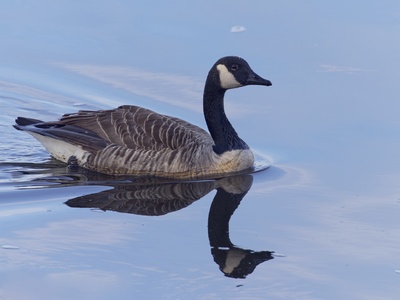
Canada Goose
Large goose with black head and neck, white cheek patch; forms V-shaped flocks. Common on reservoirs and fields, nests in varied habitats. Populations stable though local management and hunting influence numbers.
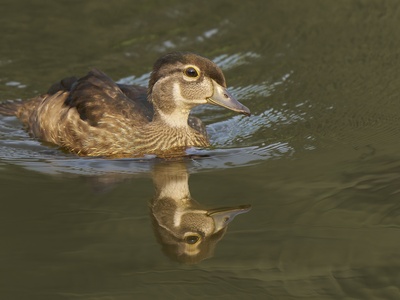
Wood Duck
Colorful male with iridescent green head and crested profile; ornate patterned sides. Sits high on water, nests in tree cavities. Often found in riparian woods and beaver ponds; cavity availability limits local densities.
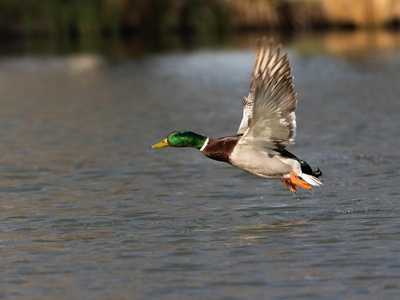
Mallard
Familiar dabbling duck with glossy green-headed male, brown female. Versatile in urban and wild wetlands, often the commonest duck. Hybridizes with other ducks; resilient and adaptable to human landscapes.
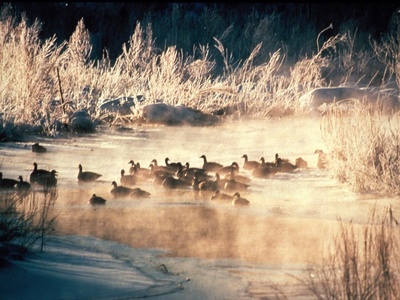
American Black Duck
Dark, large dabbling duck with dusky plumage and paler underparts. Prefers shaded marshes and forested ponds. Populations declined historically due to hybridization and habitat loss but still regularly seen.
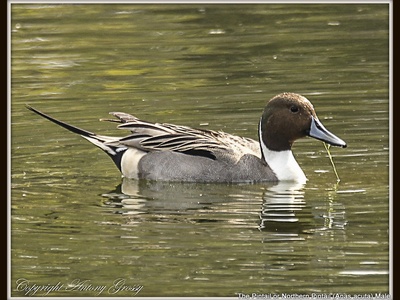
Northern Pintail
Elegant duck with long neck and male’s long central tail feathers. Slim body and striking profile in flight. Occurs on shallow wetlands during migration and mild winters.
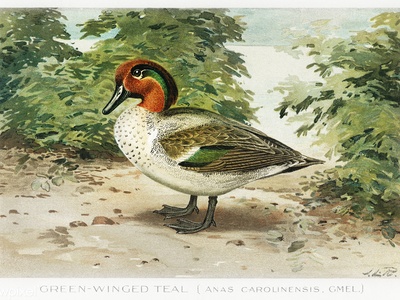
Green-winged Teal
Small dabbling teal; male has chestnut head and green eye stripe in breeding plumage. Quick, wary flocks on shallow marshes and flooded fields during migration and winter.
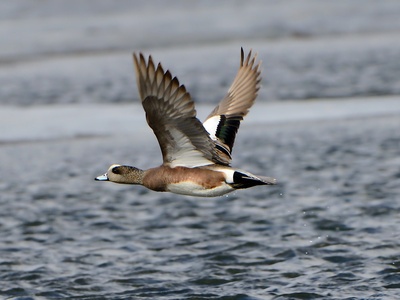
American Wigeon
Rounded-headed dabbling duck with white forehead on male and green eye patch. Feeds on aquatic vegetation, often grazes on grass. Occurs on reservoirs and marshes during migration and winter.
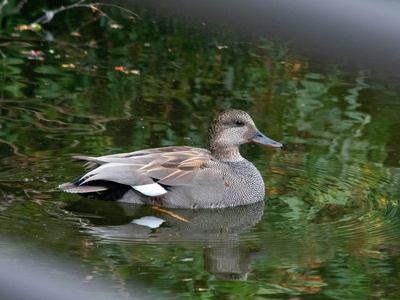
Gadwall
Relatively plain gray-brown dabbling duck with patterned flanks. Subtle but graceful in flight and on water. Favors grassy marshes and shallow ponds; typically in mixed dabbling flocks.
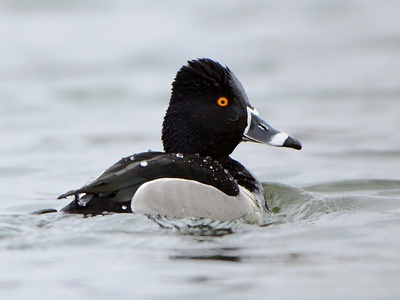
Ring-necked Duck
Diving duck with peaked head; male has glossy black head and distinctive white ring on bill. Common on deeper lakes and reservoirs during migration and winter months.
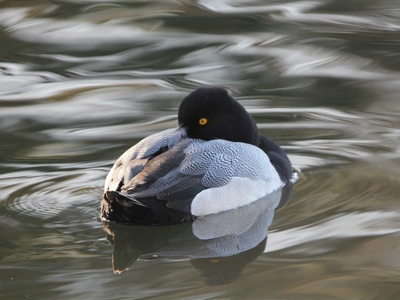
Lesser Scaup
Compact diving duck with rounded head and nape bump; male often purple sheen. Occurs on larger lakes and reservoirs in fall and winter, sometimes in large rafts.
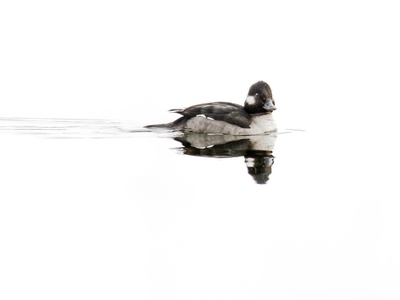
Bufflehead
Tiny diving duck with large, peaked head; male sports glossy purple-green head with white cheek patch. Nests in tree cavities; shows up on small lakes and ponds during migration and winter.
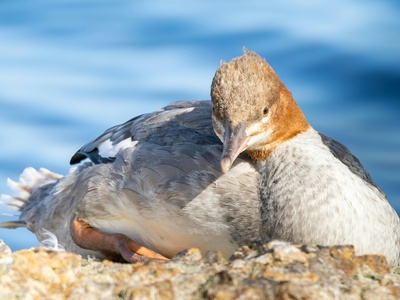
Common Goldeneye
Medium diving duck with steep forehead; male has round white cheek patch and triangular head. Prefers open water and river stretches in winter.
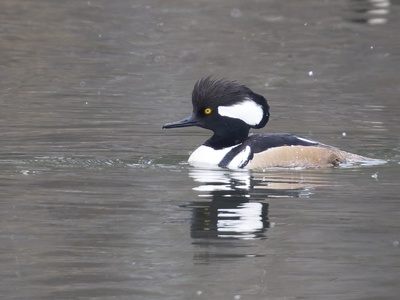
Hooded Merganser
Small crested merganser; male shows fan-shaped crest and bold black-and-white pattern. Nests in cavities, favors forested ponds and slow rivers. Often seen diving for fish.
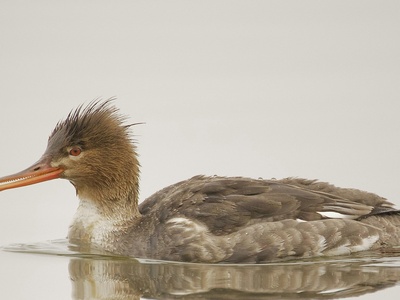
Red-breasted Merganser
Slender, fish-eating merganser with shaggy crest and thin serrated bill. Commoner on larger open waters during migration and cold months; agile diver that chases fish.
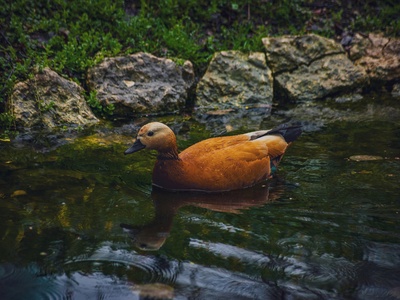
Ruddy Duck
Stiff-tailed diving duck with bright breeding male sky-blue bill and compact body. Favors dense emergent vegetation in marshes and quiet bays of reservoirs.
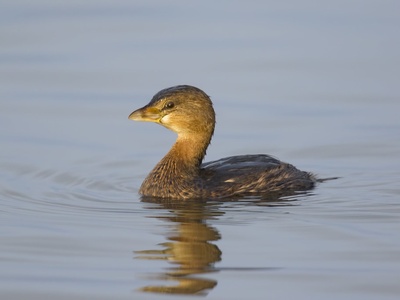
Pied-billed Grebe
Small brown grebe with chunky bill; dives frequently and is secretive. Builds floating nests among cattails. Readily seen on small, vegetated ponds.
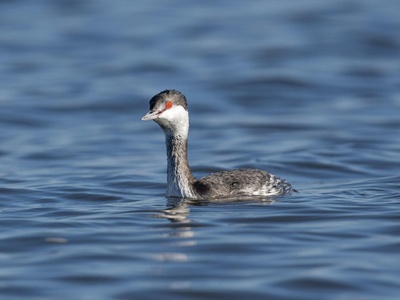
Horned Grebe
Compact grebe with dramatic breeding plumage; red neck and golden ear tufts. Occurs on larger open waters during migration and cold months.
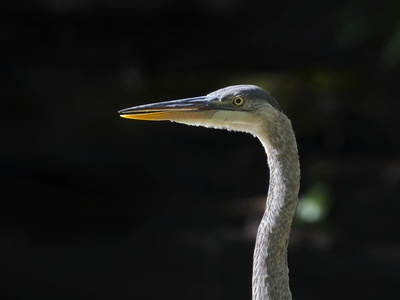
Great Blue Heron
Tall, long-necked heron with slate-blue body and dagger bill. Stands still for fishing in marshes, riverbanks and reservoirs. Breeds in colonies; tolerant of human-altered wetlands.
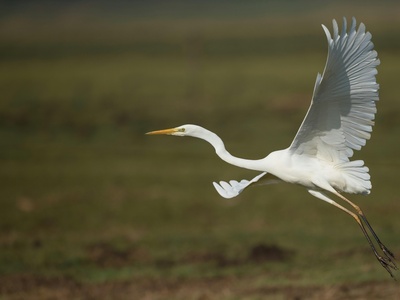
Great Egret
Large white heron with yellow bill and black legs. Graceful wader of marsh edges and ponds, often singly or in groups. Populations recovered after historical plume-driven decline.
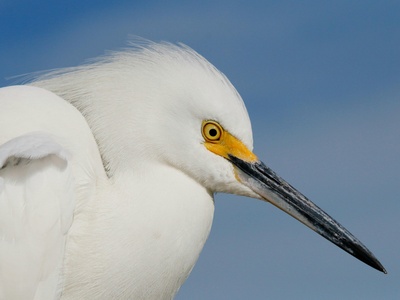
Snowy Egret
Smaller white egret with black bill and yellow feet; active feeder. Seen in marshes and large reservoirs during warm months; less common than Great Egret.
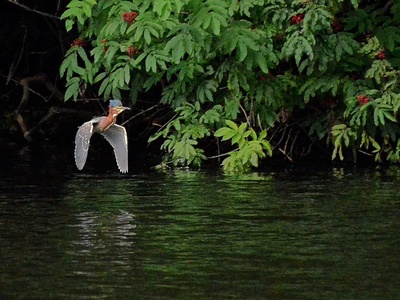
Green Heron
Small, stocky heron with greenish back and chestnut neck. Often forages from perches and uses baiting behavior. Prefers shaded stream edges and small ponds.
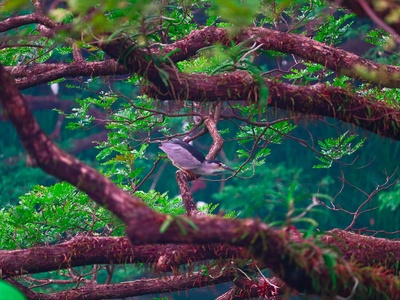
Black-crowned Night-Heron
Chunky, nocturnal heron with black crown and back; stout bill. Rests in trees by day, feeds in shallow water at dusk. Local colonies on larger wetlands.
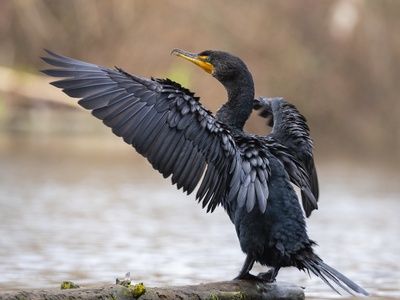
Double-crested Cormorant
Long-bodied dark waterbird that dives for fish; spreads wings to dry. Frequently nests on islands or cliffs near large lakes and reservoirs.
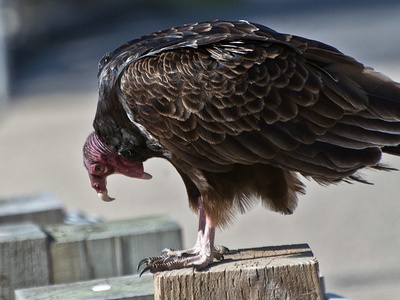
Turkey Vulture
Large black vulture with featherless red head and soaring habit. Soars on thermals along ridgelines and valleys, often seen in groups. Important scavenger with stable populations.
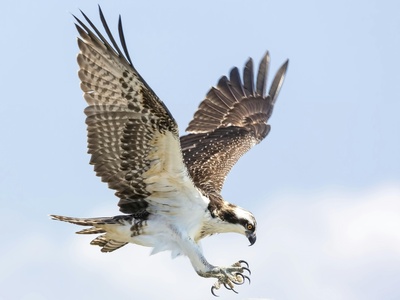
Osprey
Fish-eating raptor with white underparts and dark eye stripe. Hunts by plunging into water from hover. Nests on platforms, channel markers, and dead trees along major waters.
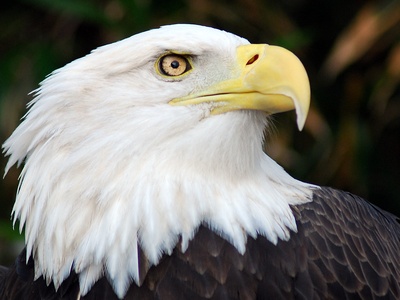
Bald Eagle
Massive raptor with white head and tail in adults, powerful bill. Uses large trees and cliffs for nests near open water. Populations recovering from conservation actions.
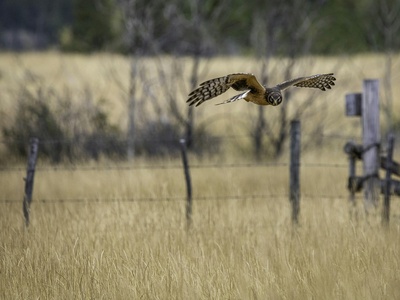
Northern Harrier
Slim hawk with owl-like face and low, quartering flight over marshes. Male gray, female brown; hunts small mammals and birds across open wetlands and grasslands.
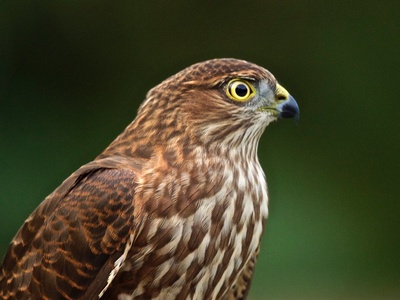
Sharp-shinned Hawk
Small accipiter with long tail and short rounded wings; agile through trees. Hunts small birds at feeders and forest edges; secretive and fast.
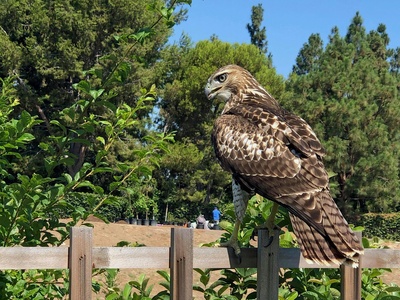
Cooper’s Hawk
Medium accipiter with rounded tail and banded underparts. Frequent predator around bird feeders, adept at ambushing birds in woodland edges and suburbs.
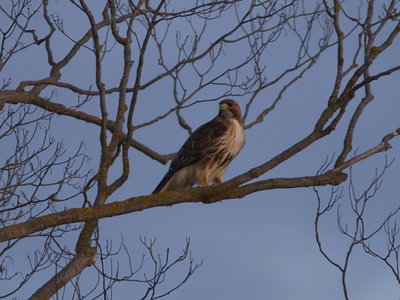
Red-tailed Hawk
Large broad-winged hawk with rusty tail; variable plumage but bulky flight silhouette. Perches on poles and tree tops, common across varied habitats statewide.
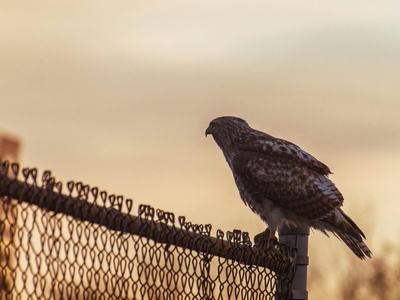
Broad-winged Hawk
Short-winged, stocky buteo that migrates in kettles during fall. Breeds in mature deciduous forests, favors upland woods and riparian corridors.
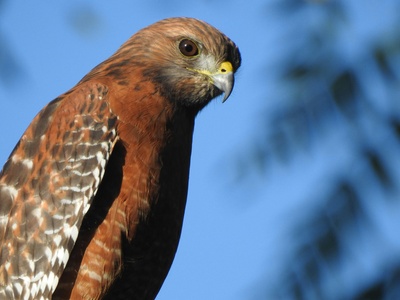
Red-shouldered Hawk
Distinctive barred reddish underparts and black-and-white checkered wings. Prefers wooded streams and bottomlands, vocal and often visible from perches.
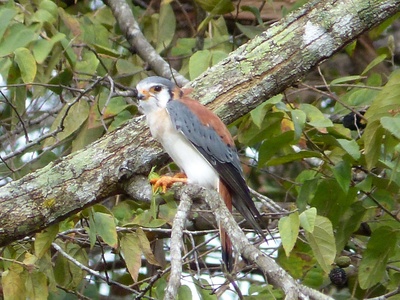
American Kestrel
Small colorful falcon with rufous back and male’s blue-gray wings. Hunts insects and small vertebrates from wires and poles. Declining in some areas due to habitat loss.
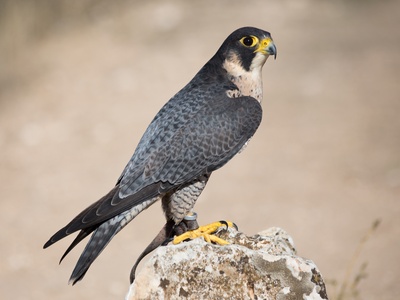
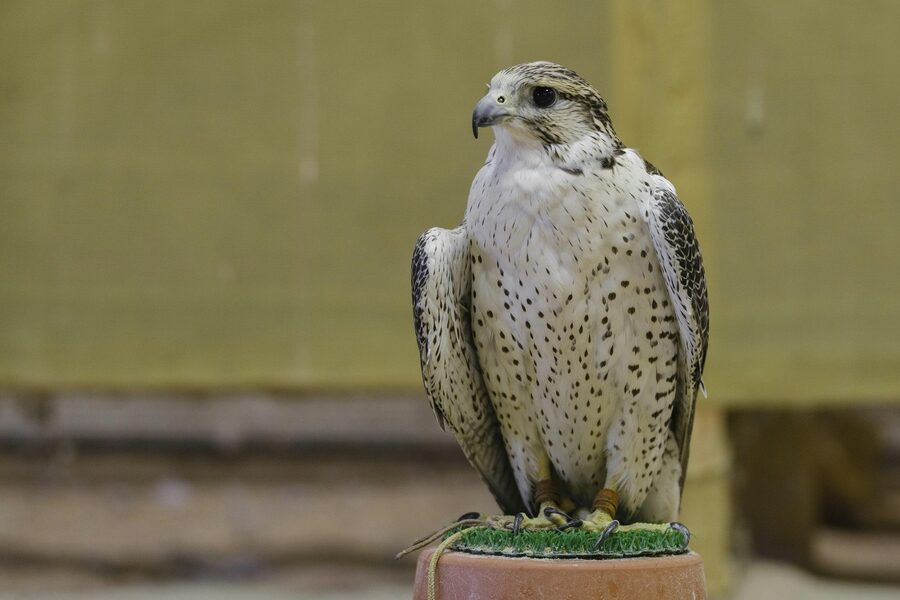
Peregrine Falcon
Powerful falcon with pointed wings and barred underparts; stoops at high speed to catch birds. Recovered from severe declines; nests on cliffs and tall buildings.
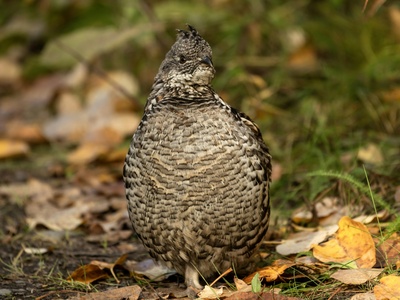
Ruffed Grouse
Cryptic, mottled ground-dwelling gamebird that drums on logs. Prefers mixed hardwoods and dense understory; populations fluctuate with habitat and predator cycles.
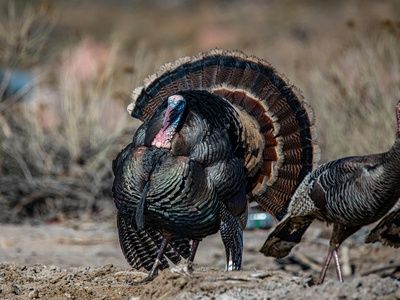
Wild Turkey
Large, turkey with iridescent body, fan tail in males. Forages in woods and fields, uses roost trees. Popular game species with expanding populations.
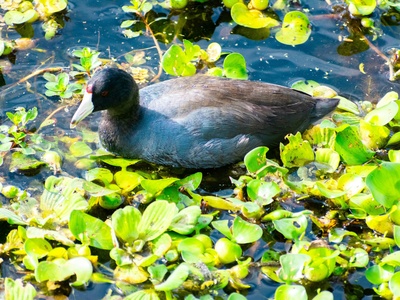
American Coot
Dark, chicken-like waterbird with white bill and lobed toes. Common on vegetated lakes and marshes, often in flocks. Not a true duck but frequent waterbody resident.
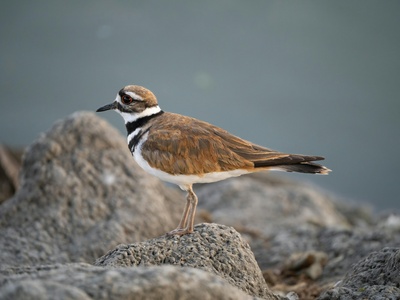
Killdeer
Distinctive plover with double breast bands and loud call. Runs and stops on mudflats, lawns, and gravel roofs. Nest on ground, performs broken-wing distraction display.
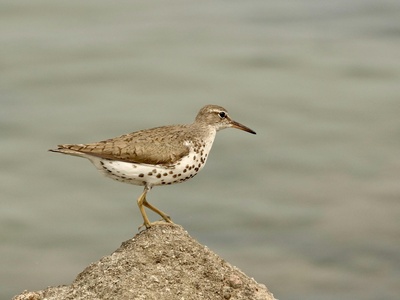
Spotted Sandpiper
Brown-backed shorebird with teetering walk and white belly spotted in breeding season. Likes rocky streams, pond edges and shorelines; constantly bobbing tip of tail.
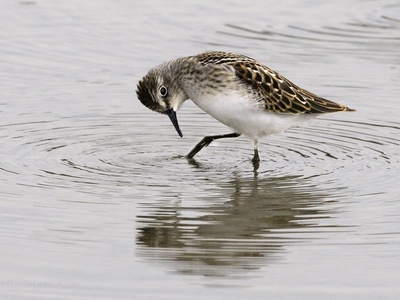
Semipalmated Sandpiper
Small peep shorebird with short bill and partially webbed toes. Occurs during migration on muddy shorelines and reservoir drawdowns in flocks with other small sandpipers.
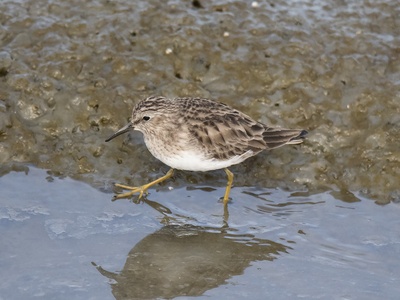
Least Sandpiper
Tiny sandpiper with yellowish legs and slightly decurved bill. Forages in shallow mud and vegetated edges during migration, often in mixed peep flocks.
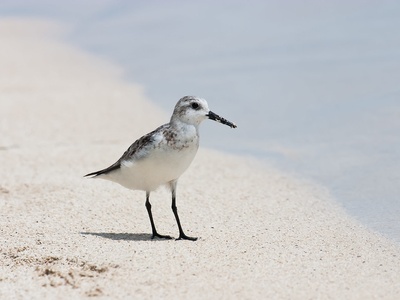
Sanderling
Pale, round sandpiper that runs with waves chasing exposed prey. Found on large reservoir beaches and shorelines during migration; very active and mobile.
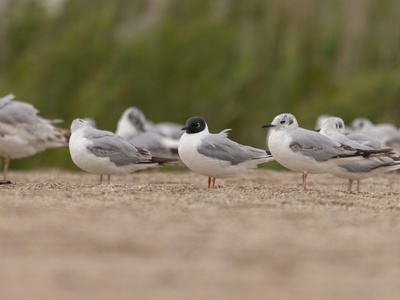
Bonaparte’s Gull
Small, delicate gull with black hood in breeding season and distinctive flight. Occurs on inland lakes and rivers during migration and winter in small flocks.
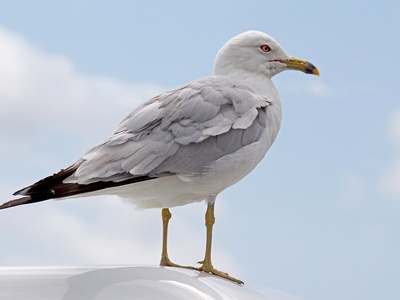
Ring-billed Gull
Medium gull with ringed bill and gray mantle. Common at reservoirs, riverbanks and urban areas; opportunistic feeder that exploits human food sources.
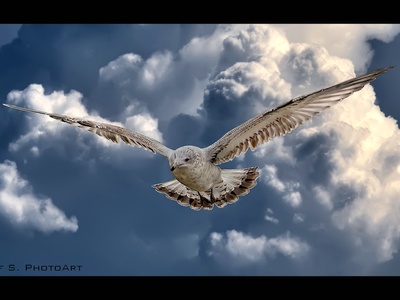
Herring Gull
Large pale-backed gull with robust bill and varied plumage. More common near large water bodies and occasionally inland during migration and winter.
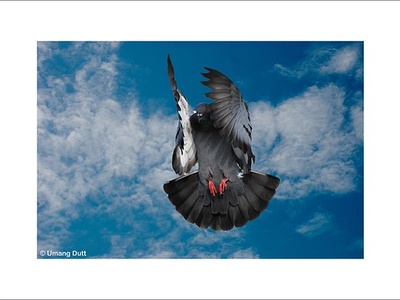
Rock Pigeon
Introduced city dweller with variable plumage; chunky body and broad tail. Common in towns and ledges, often in flocks around food sources.
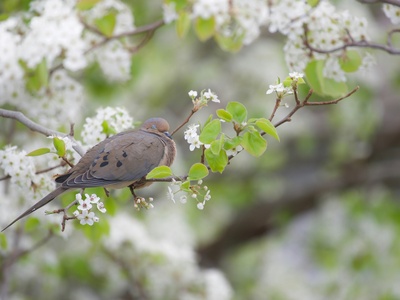
Mourning Dove
Slender gray-brown dove with mournful cooing. Ground feeder on seeds, nests in shrubs and trees. Common and widespread across all regions.
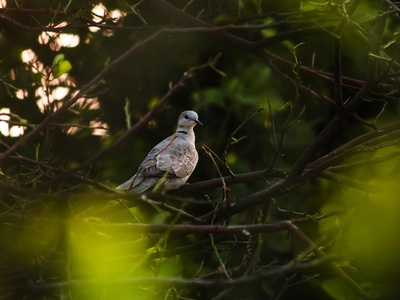
Eurasian Collared-Dove
Pale dove with black neck collar and long tail. Rapidly expanded range into WV; common in towns and agricultural edges.
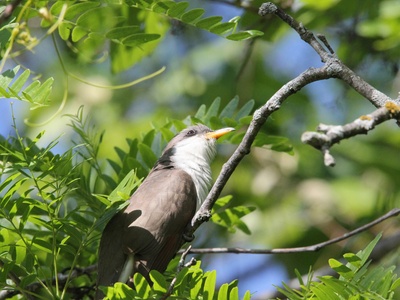
Yellow-billed Cuckoo
Long-tailed, plain brown cuckoo with large yellow bill. Secretive in dense deciduous woods and streamsides; specializes on cicadas and caterpillars when abundant.
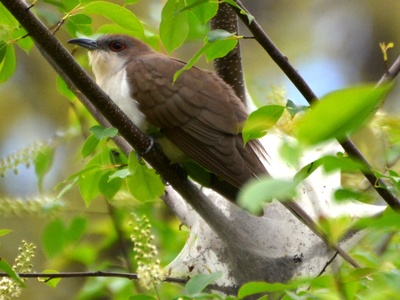
Black-billed Cuckoo
Sleeker cuckoo with dark bill and red eye-ring; secretive in dense brush. Irruptive migrants linked to caterpillar outbreaks; nests in trees and shrubs.
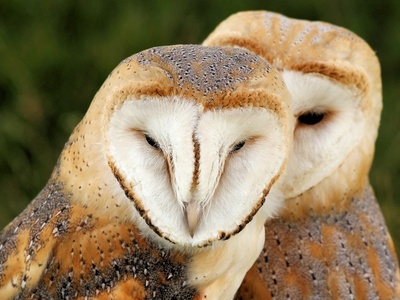
Barn Owl
Medium pale owl with heart-shaped face and silent flight. Hunts rodents over fields and open habitats at night. Local and patchy; dependent on open hunting areas and roost sites.
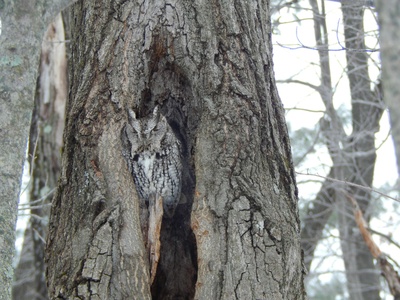
Eastern Screech-Owl
Small, cryptic owl with ear tufts and variable gray or rufous morphs. Uses tree cavities and nest boxes, common in woodlands and parks.
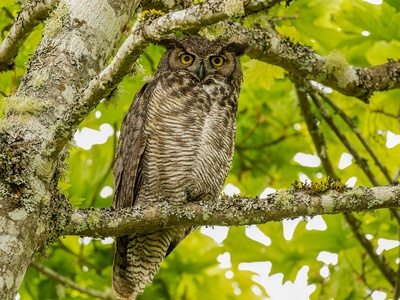
Great Horned Owl
Powerful large owl with ear tufts and deep hooting voice. Apex nocturnal predator using diverse habitats, nests in trees and on ledges; adaptable and widespread.
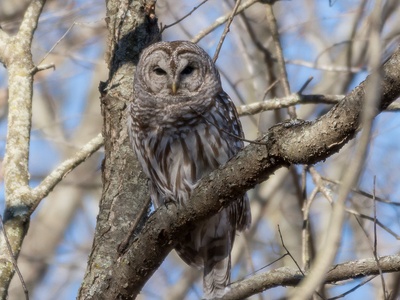
Barred Owl
Large brown-and-white barred owl with round head and hooting call. Prefers mature deciduous and mixed woods near water; often vocal at dawn and night.
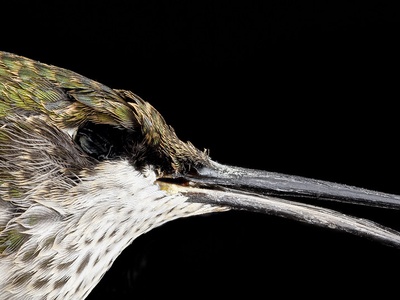
Ruby-throated Hummingbird
Tiny migratory hummingbird with iridescent green back and male’s ruby throat. Feeds on nectar and small insects in woodland edges and gardens during breeding season.
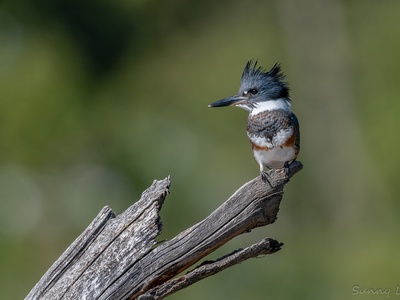
Belted Kingfisher
Stocky kingfisher with blue-gray crest and white collar; dives headfirst for fish. Nests in burrows in banks along water; vocal and often perched above water.
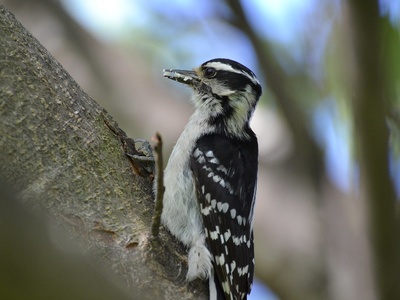
Downy Woodpecker
Small, black-and-white woodpecker with short bill; male has red nape patch. Common at feeders and forests, uses small twig gleaning to find insects.
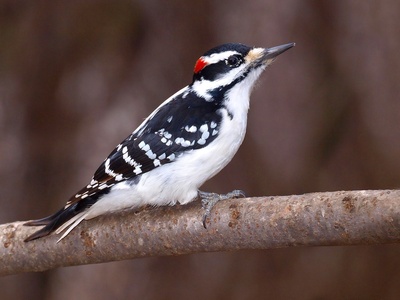
Hairy Woodpecker
Larger black-and-white woodpecker with longer bill than Downy; male with red nape. Prefers mature trees, excavates cavities and is a frequent drumming presence.
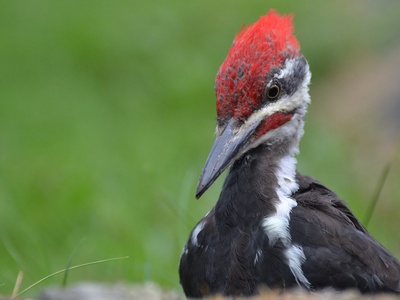
Pileated Woodpecker
Huge black woodpecker with red crest and white neck stripes. Excavates large rectangular holes, often heard drumming; indicator of extensive mature forests.
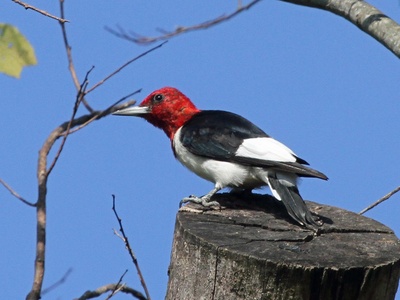
Red-headed Woodpecker
Striking tri-colored woodpecker with solid red head, white belly and black back. Catches insects and caches food; populations have declined due to habitat loss.
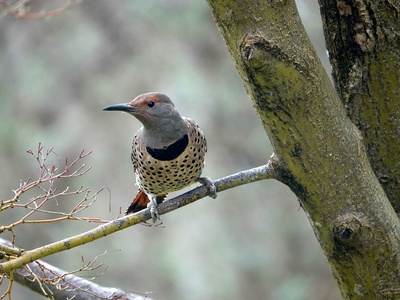
Northern Flicker
Large brown woodpecker with barred back and spotted underparts; often on ground feeding on ants. Two forms regionally; common in open wooded landscapes and parks.
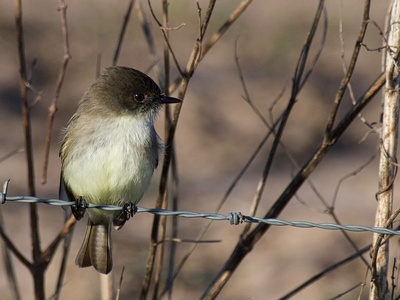
Eastern Phoebe
Plain gray-brown flycatcher that pumps tail and perches low. Early spring arrival to nest under bridges and eaves, hawks insects from exposed perches.
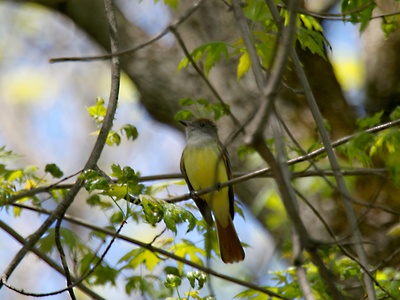
Great Crested Flycatcher
Larger brown flycatcher with yellow belly and crest; loud burry call. Nest in cavities, hunts from perch for flying insects in woodlands and clearings.
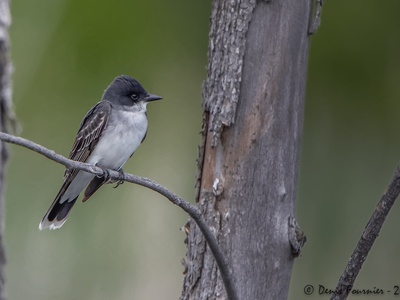
Eastern Kingbird
Bold black-and-white flycatcher with white terminal tail band. Aggressively defends territory, hawks insects over fields, common in open areas and edges.
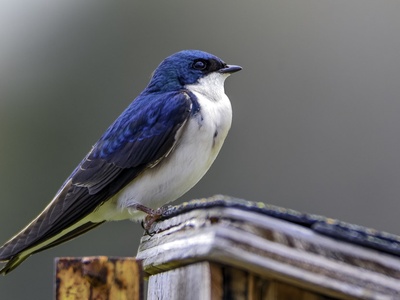
Tree Swallow
Iridescent blue-green back and white underparts; nests in cavities and boxes near water. Aerial insectivore often seen in groups over wetlands and fields.
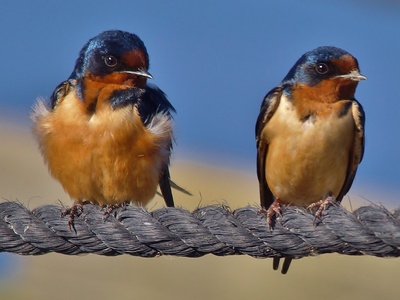
Barn Swallow
Sleek swallow with deeply forked tail and glossy blue back. Builds mud nests on structures, common over fields and water catching insects.
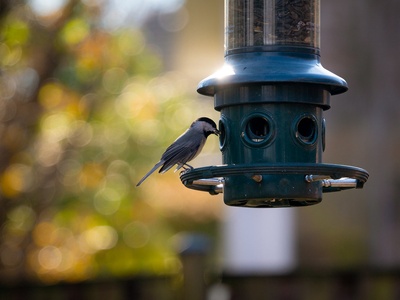
Carolina Chickadee
Small, black-capped chickadee with clear “chick-a-dee” call. Active feeder at suet and seed feeders, prefers deciduous woodlands and suburban yards.
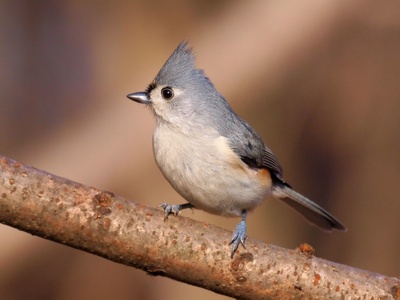
Tufted Titmouse
Gray crest and big black eyes; energetic and conspicuous at feeders. Prefers oak-hickory woodlands and suburban yards, often in mixed winter flocks.
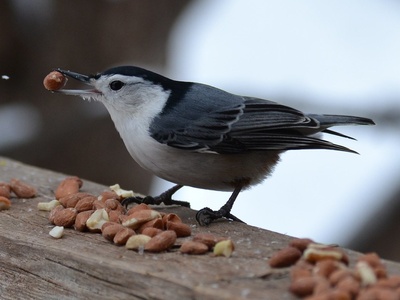
White-breasted Nuthatch
Small stocky bird that climbs trunks head-first; white face and black cap. Extracts insects from bark and eats seeds; common at feeders.
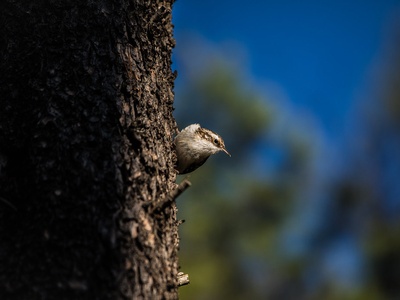
Brown Creeper
Tiny brown streaked bird that spirals up trunks probing bark with thin curved bill. Prefers large trees and mature forest patches, often secretive.
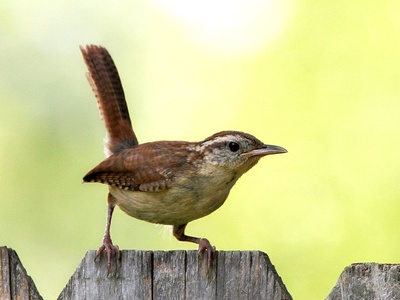
Carolina Wren
Loud, bold wren with rich chestnut upperparts and white eyebrow. Active in brushy areas and around homes, nests in cavities and unusual sites.
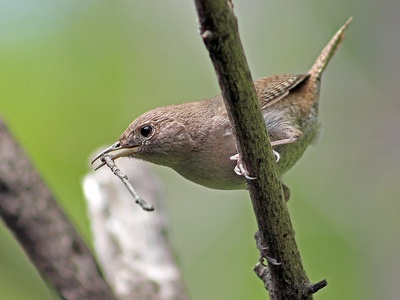
House Wren
Energetic brown wren with bubbly song and habit of nest in cavities and boxes. Common in brushy, edge habitats and gardens.
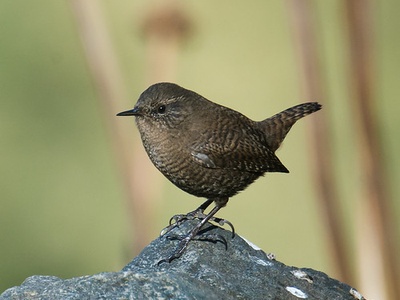
Winter Wren
Tiny, dark brown wren with short tail and loud cascading song. Prefers dense tangled understory in cool forests and ravines.
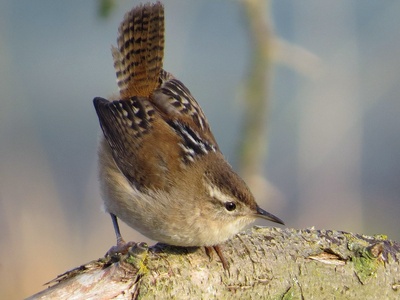
Marsh Wren
Small secretive wren with streaked upperparts and loud bubbling song. Active in dense cattail marshes, builds multiple nests, territorial in breeding season.
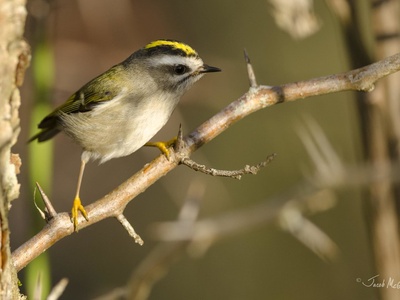
Golden-crowned Kinglet
Tiny olive-gray bird with bright yellow crown stripe in males. Flits in treetops gleaning insects, often in mixed flocks during migration and winter.
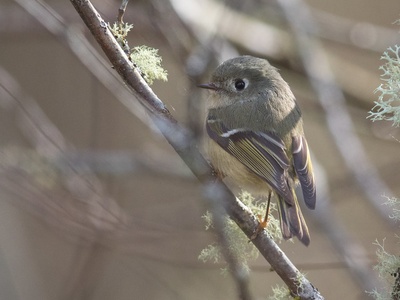
Ruby-crowned Kinglet
Small active bird with olive-green plumage and flashy ruby crown in males. Energetic gleaner in shrubs and trees, especially during migration.
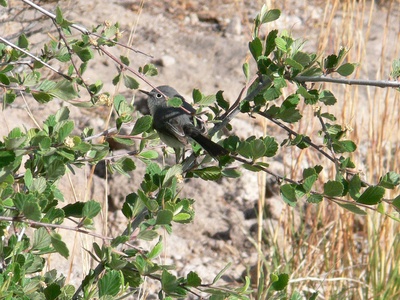
Blue-gray Gnatcatcher
Tiny blue-gray insectivore with long tail and thin bill. Flits through foliage catching small insects, common in wood edges and thickets.
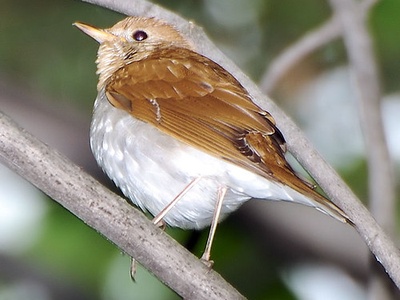
Veery
Medium brown thrush with spotted breast and downward eye line. Sings ethereal, descending flute-like song; prefers damp, leafy understory and streamside woods.
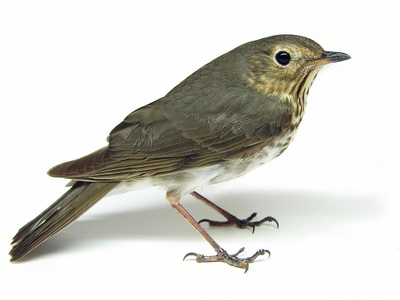
Swainson’s Thrush
Olive-brown thrush with buff eye ring; fluty upward-spiraling song. Secretive in dense woods during migration and breeding in mature forests.
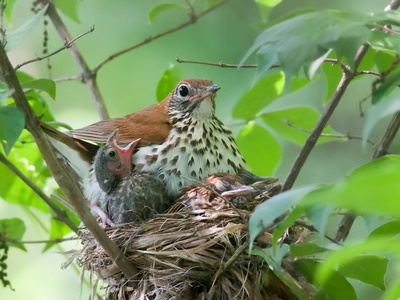
Wood Thrush
Reddish-brown back with bold chest spots and beautiful flute-like song. Prefers moist, mature forests with dense leaf litter for foraging.
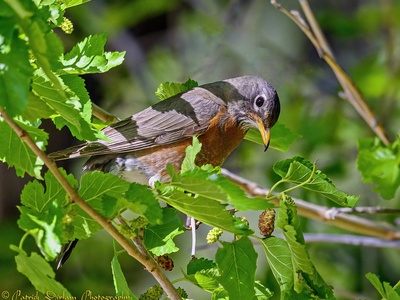
American Robin
Familiar orange-breasted thrush with melodious song. Eats fruit and worms, common in lawns, parks and woods, an early spring marker.
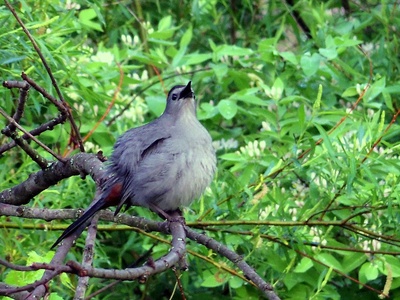
Gray Catbird
Slate-gray songster with black cap and rusty undertail; mimics many sounds. Prefers dense shrubby tangles and woodland edges.
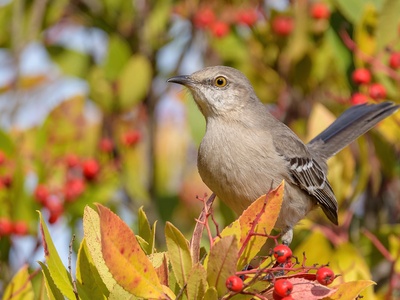
Northern Mockingbird
Pale gray songster with long tail and white wing patches. Mimics many species and sings large repertoires; defends territory aggressively.
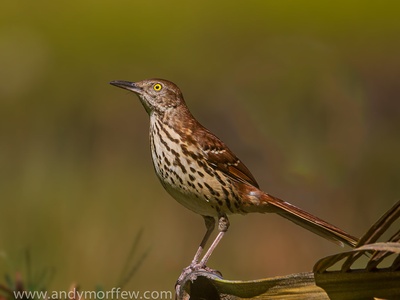
Brown Thrasher
Reddish-brown back, streaked underside and long curved bill. Rich variable song often in series; forages on ground in leaf litter for insects and berries.
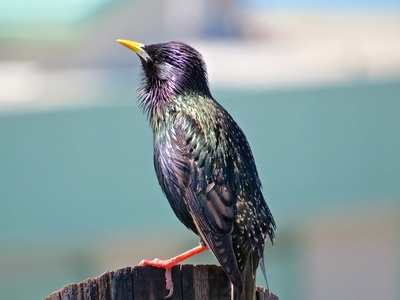
European Starling
Introduced glossy black iridescent bird with pointed bill and varied song. Forms large flocks and competes for cavities; abundant in towns and agricultural areas.
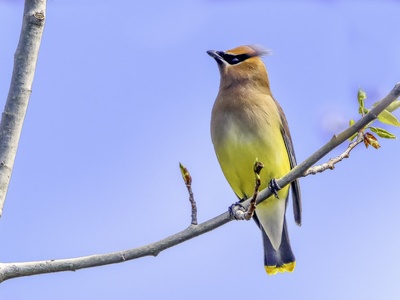
Cedar Waxwing
Sleek brownish-gray bird with crest and yellow-tipped tail. Feeds on fruits and berries in flocks; nests in trees and shrubs in orchards and wood edges.
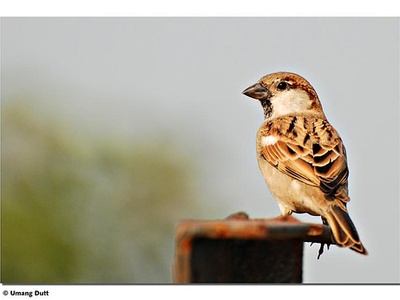
House Sparrow
Introduced chunky sparrow with gray crown in males and streaked back. Common in towns, feeds around buildings and farms, nests in cavities and eaves.
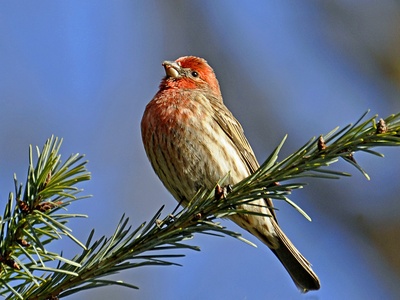
House Finch
Small finch with red forehead and throat in males. Common at feeders, prefers shrubs and open woods. Expanded eastward as an introduced/introduced-range species.
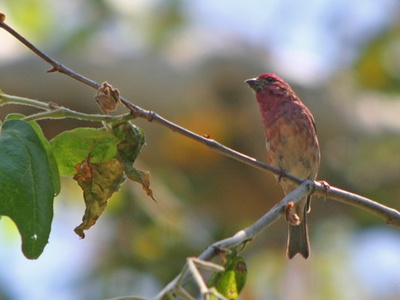
Purple Finch
Rufous-streaked finch with raspberry wash in males; prefers coniferous and mixed woods. Visits feeders in winter and is less common than House Finch.
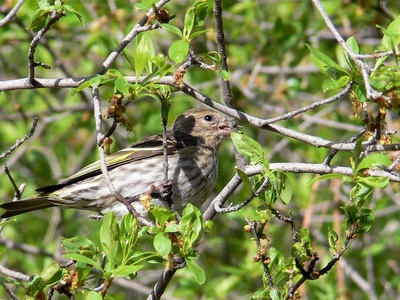
Pine Siskin
Small brown-streaked finch with notched tail and yellow wing edges. Erratic winter movements linked to cone crops; visits thistle and nyjer feeders when present.
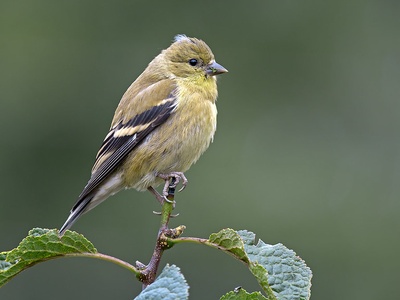
American Goldfinch
Bright yellow male in summer with black cap; feeds on seeds of asters and thistles. Late-nesting finch that molts into duller winter plumage.
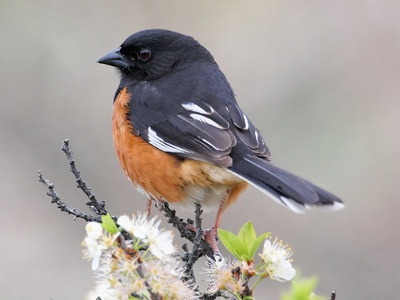
Eastern Towhee
Large sparrow-like songster with rufous sides and white belly in male. Forages on ground scratching leaf litter; common in shrubby habitats and edges.
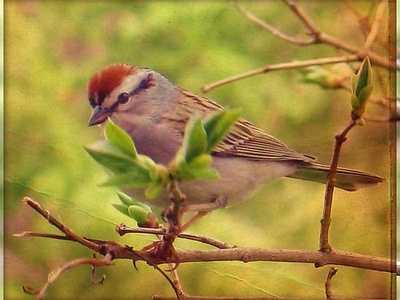
Chipping Sparrow
Small rufous-capped sparrow with crisp trilling song. Common in lawns and open woodlands during breeding; migrates through in flocks.
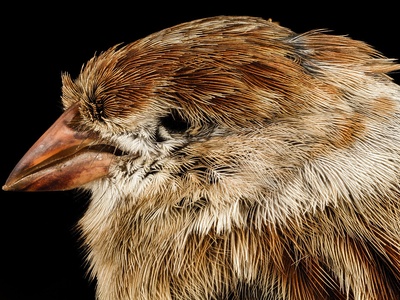
Field Sparrow
Plain soft-colored sparrow with pink bill and thin song. Prefers grassy fields with scattered shrubs and edges; often sings from exposed perches.
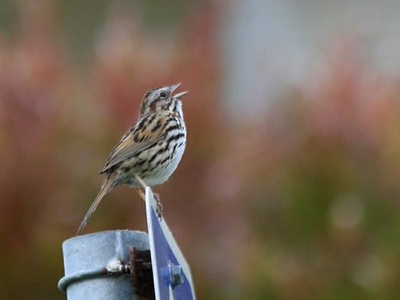
Song Sparrow
Streaked brown sparrow with central spot on breast and varied, musical song. Occupies a wide range of habitats from marshes to backyard brush.
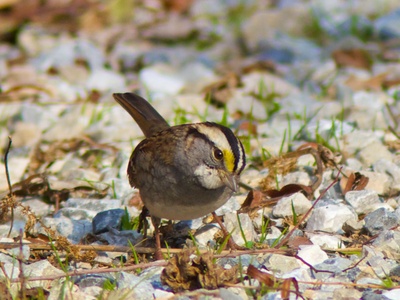
White-throated Sparrow
Bold white throat and yellow lores; sings clear whistle “Old Sam Peabody.” Common at feeders and in brushy woods during migration and winter.
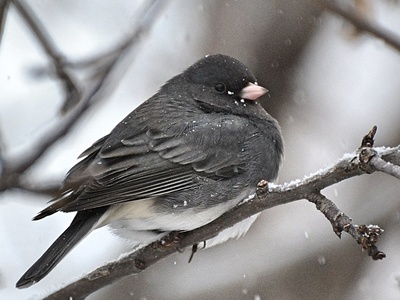
Dark-eyed Junco
Gray-backed sparrow with pink bill and habit of hopping on ground in flocks. Winters commonly at feeders and on wooded edges in colder months.
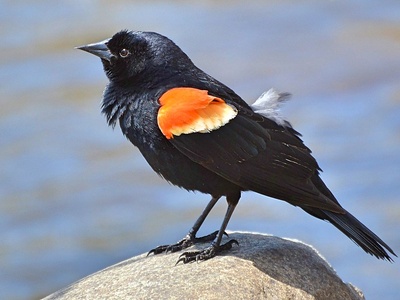
Red-winged Blackbird
Male black bird with red and yellow shoulder patches; often perched on cattails. Abundant in marshes and wet meadows, nests in reedbeds.
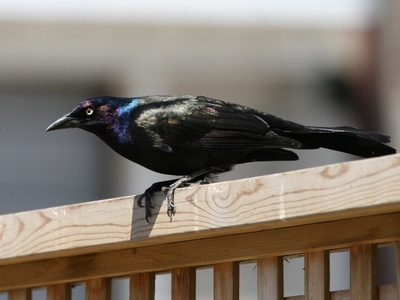
Common Grackle
Large glossy blackbird with iridescent sheen and long tail. Loud and gregarious, forages on lawns and agricultural fields in flocks.

Baltimore Oriole
Striking orange and black songbird with hanging woven nest. Feeds on insects and fruit, often visits nectar feeders in suburban treelines.