Mid-1970s breakthroughs reshaped science, literature and international affairs, and the Nobel selections from 1975 reflect that mix of theoretical insight and real-world impact. This list aims to give a compact snapshot of the people and ideas the committee honored that year.
There are 12 1975 Nobel Prize Winners, ranging from Aage N. Bohr,Vladimir Prelog to laureates across disciplines. For each person, entries are organized with Category,Nationality,Citation so you can see the field, country and the committee wording at a glance — you’ll find below.
How are the entries organized and how should I read the columns?
Each entry shows the laureate’s Category (the prize field), Nationality (country associated with the winner) and the official Citation (the committee’s reason for the award). Use Category to group similar fields, Nationality to note geographic distribution, and Citation for the precise contribution recognized.
Where do the citation details come from and are they reliable?
Citations reproduce the committee’s official wording as published by the Nobel authorities; for primary verification or fuller context consult the Nobel Prize website and original press releases linked in the list below.
1975 Nobel Prize Winners
| Name | Category | Nationality | Citation |
|---|---|---|---|
| Aage N. Bohr | Physics | Denmark | for the discovery of the connection between collective and particle motion in atomic nuclei |
| Ben Mottelson | Physics | Denmark | for the discovery of the connection between collective and particle motion in atomic nuclei |
| James Rainwater | Physics | United States | for the discovery of the connection between collective and particle motion in atomic nuclei |
| John Cornforth | Chemistry | United Kingdom | for their work on stereochemistry of enzyme-catalyzed reactions |
| Vladimir Prelog | Chemistry | Switzerland | for their work on stereochemistry of enzyme-catalyzed reactions |
| David Baltimore | Physiology or Medicine | United States | for discoveries concerning interaction between tumour viruses and the genetic material |
| Renato Dulbecco | Physiology or Medicine | Italy | for discoveries concerning interaction between tumour viruses and the genetic material |
| Howard M. Temin | Physiology or Medicine | United States | for discoveries concerning interaction between tumour viruses and the genetic material |
| Eugenio Montale | Literature | Italy | for his distinctive lyrical poetry interpreting human values |
| Andrei Sakharov | Peace | Soviet Union | for his struggle for human rights and civil liberties in the USSR |
| Leonid Kantorovich | Economic Sciences | Soviet Union | for their contributions to the theory of optimum allocation of resources |
| Tjalling C. Koopmans | Economic Sciences | United States | for their contributions to the theory of optimum allocation of resources |
Images and Descriptions

Aage N. Bohr
Danish nuclear physicist Aage Bohr helped show how individual nucleon motion and collective behaviors produce nuclear structure, working with Mottelson and Rainwater to explain atomic nuclei shapes and spectra. Their models transformed theoretical nuclear physics.
Ben Mottelson
Ben Roy Mottelson, Danish-born theoretical physicist, collaborated with Aage Bohr and James Rainwater to link particle motion and collective effects in nuclei. His work clarified nuclear deformation and symmetry breaking, reshaping modern models of atomic structure.
James Rainwater
American physicist James Rainwater proposed models where single-particle motion influences overall nuclear shape; experimental and theoretical follow-up confirmed connections between particles and collective nuclear behavior, providing a unifying framework for understanding nuclear spectra.
John Cornforth
John Cornforth British chemist specialized in stereochemistry of enzyme-catalyzed reactions, mapping how enzymes control three-dimensional arrangements in molecules. His meticulous structural and mechanistic studies illuminated biochemical synthesis and reaction specificity.
Vladimir Prelog
Vladimir Prelog, Swiss organic chemist born in Croatia, advanced stereochemistry and conformational analysis of organic molecules. He developed methods to determine absolute configuration and reaction mechanisms, impacting synthetic organic chemistry and pharmaceuticals.
David Baltimore
David Baltimore, American molecular biologist, co-discovered reverse transcriptase in tumor viruses, revealing how viral RNA can be reverse-transcribed into DNA. This finding revolutionized virology and molecular biology, influencing cancer research and biotechnology.
Renato Dulbecco
Italian virologist Renato Dulbecco showed how tumor viruses integrate their genetic material into host DNA, clarifying viral causes of cancer. His experimental approaches linked virology with genetics and helped lay groundwork for cancer molecular biology.
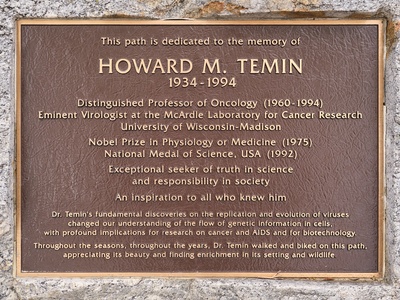
Howard M. Temin
Howard Temin, American geneticist, independently discovered reverse transcription and its role in tumor viruses, demonstrating RNA-to-DNA information flow. His insights challenged central dogma assumptions and guided research into viral oncogenesis.
Eugenio Montale
Eugenio Montale, Italian poet and critic, wrote dense, introspective lyric poetry grappling with history, memory and human values. His evocative imagery and precise language made him a leading voice in postwar European literature.
Andrei Sakharov
Andrei Sakharov, Soviet physicist turned dissident, campaigned for human rights, civil liberties and political reform in the USSR. His outspoken criticism of repression and advocacy for civil freedoms led to international recognition and state retaliation.
Leonid Kantorovich
Leonid Kantorovich, Soviet mathematician and economist, developed linear programming and mathematical methods for optimal resource allocation. His theoretical work provided tools for planning, operations research, industrial optimization, and modern economic analysis.
Tjalling C. Koopmans
Tjalling Koopmans, Dutch-American economist, advanced activity analysis and optimal resource allocation theory, applying mathematical economics to transportation, production, and growth models. His work influenced economic planning and quantitative methods in policy-making.