In labs, clinics and drug-development teams, a compact reference of common reagents helps people compare options quickly and avoid duplicate purchases. A short, organized list makes it easier to scan formats, sources and typical uses when planning experiments or drafting protocols.
There are 21 Antibodies, ranging from Adalimumab to scFv (single-chain variable fragment). For each entry you’ll find below the fields Type, Source, Common uses so you can spot therapeutic classes, recombinant formats and standard applications at a glance.
How do I choose the right antibody for my experiment?
Start by matching the antibody to your application (WB, IHC, flow, ELISA), then check clonality, host species and validated reactivity. Look for citations or validation images, confirm whether a recombinant or monoclonal format is preferable for consistency, and plan appropriate controls; vendor technical notes and lot-to-lot data are especially helpful for critical assays.
Are therapeutic products like Adalimumab the same as research-grade reagents?
Not necessarily—therapeutic-grade molecules may be formulated, modified or produced under different quality systems and aren’t intended for typical lab assays. For research use, choose reagents explicitly sold and validated for experimental applications and review datasheets for purity, concentration and recommended protocols.
Antibodies
| Name | Type | Source | Common uses |
|---|---|---|---|
| IgG | Isotype (major antibody class) | Human (produced by B cells) | Therapy, diagnostics, long-term immunity, research |
| IgM | Isotype (major antibody class) | Human (produced by B cells) | Early infection diagnostics, complement activation, research |
| IgA | Isotype (major antibody class) | Human (produced by B cells) | Mucosal immunity, secretions (breast milk, saliva), diagnostics |
| IgD | Isotype (minor antibody class) | Human (produced by B cells) | B cell receptor function, research |
| IgE | Isotype (major antibody class) | Human (produced by B cells) | Allergy diagnosis, parasite defense, research |
| IgG subclasses (IgG1, IgG2, IgG3, IgG4) | Isotype subclasses | Human (produced by B cells) | Differential pathogen defense, therapeutic engineering, diagnostics |
| Monoclonal antibody (mAb) | Format (single-specificity antibody) | Various (mouse, chimeric, humanized, fully human) | Therapy, diagnostics, research, imaging |
| Polyclonal antibody | Format (mixed-specificity antibody) | Animal (rabbit, goat, sheep, others) | Research, diagnostics, antigen detection |
| Humanized antibody | Format (engineered antibody) | Engineered (non-human variable regions grafted into human frameworks) | Therapy, reduced immunogenicity, diagnostics |
| Chimeric antibody | Format (engineered antibody) | Engineered (non-human variable regions + human constant regions) | Therapy, research, diagnostics |
| Fully human antibody | Format (engineered antibody) | Human (isolated from human libraries or transgenic animals) | Therapy, diagnostics, lowest immunogenicity |
| Fab fragment | Format (antibody fragment) | Derived from antibodies (enzymatic cleavage or recombinant) | Therapeutic fragments, crystallography, diagnostics |
| F(ab’)2 fragment | Format (antibody fragment) | Derived from antibodies (enzymatic cleavage) | Neutralization studies, diagnostics, reduced effector activity |
| scFv (single-chain variable fragment) | Format (recombinant antibody fragment) | Recombinant (linked VH and VL domains) | Research, CAR-T design, diagnostic sensors |
| Nanobody (VHH) | Format (single-domain antibody fragment) | Camelid-derived VHH, recombinant | Therapeutics, imaging, diagnostics, research |
| Rituximab | Therapeutic monoclonal antibody | Chimeric (mouse-human) | Therapy (B cell cancers, autoimmune diseases), research |
| Trastuzumab | Therapeutic monoclonal antibody | Humanized (mouse-derived variable regions) | Therapy (HER2-positive breast, gastric cancer), diagnostics |
| Adalimumab | Therapeutic monoclonal antibody | Fully human | Therapy (rheumatoid arthritis, inflammatory diseases), research |
| Pembrolizumab | Therapeutic monoclonal antibody (checkpoint inhibitor) | Humanized (IgG4) | Therapy (cancer immunotherapy), research |
| Bevacizumab | Therapeutic monoclonal antibody | Humanized | Therapy (anti-angiogenesis in cancers, eye disease research) |
| Horseradish peroxidase (HRP)-conjugated secondary antibody | Antibody reagent (conjugated detection antibody) | Various (goat, rabbit, mouse sources; enzymatically linked) | Diagnostics, western blots, ELISA, immunohistochemistry |
Images and Descriptions
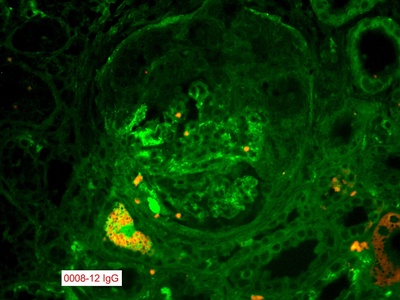
IgG
IgG is the most abundant blood antibody class in humans, important for long-term immunity and microbial neutralization. It crosses the placenta, activates complement variably, and is the backbone for many therapeutic monoclonal antibodies used in clinics and labs.

IgM
IgM is the first antibody class produced after infection, typically a pentamer that potently activates complement. It’s useful for diagnosing recent infections and provides early-stage protection while other antibody types mature.
IgA
IgA predominates at mucosal surfaces and in secretions, protecting airways and gut. Present as dimers in secretions, it helps prevent pathogen attachment and is central to understanding mucosal vaccines and breastfeeding immunity.
IgD
IgD is a less abundant isotype found mainly on naive B cells as a membrane-bound receptor. Its exact roles are still being studied, but it participates in B cell activation and immune regulation.
IgE
IgE binds allergens with high affinity and triggers mast cell and basophil degranulation, driving allergic reactions. It also contributes to defense against parasites and is measured in allergy testing.
IgG subclasses (IgG1, IgG2, IgG3, IgG4)
IgG subclasses differ in structure and function: IgG1 and IgG3 are strong at activating complement and opsonization, IgG2 targets polysaccharide antigens, and IgG4 is less inflammatory; subclass choice matters for therapeutic antibody design.
Monoclonal antibody (mAb)
Monoclonal antibodies are identical molecules from a single B cell clone engineered or produced to bind one epitope. Widely used as drugs, diagnostic reagents, and research tools because of their specificity and reproducibility.
Polyclonal antibody
Polyclonal antibodies are mixtures from multiple B cells in immunized animals; they recognize several epitopes on an antigen, offering strong detection sensitivity and tolerance for minor antigen changes but more batch variability.
Humanized antibody
Humanized antibodies replace most non-human protein sequences with human sequences while keeping antigen-binding regions intact. This lowers immune reactions in patients and is a common strategy for converting mouse antibodies into safer therapeutics.
Chimeric antibody
Chimeric antibodies combine non-human variable (antigen-binding) domains with human constant regions to reduce immunogenicity relative to murine antibodies while retaining target specificity; classic example used in several early therapeutic drugs.
Fully human antibody
Fully human antibodies are derived entirely from human sequences using human B cells, phage libraries, or transgenic animals. They minimize anti-drug immune responses and are preferred for long-term therapeutic use.
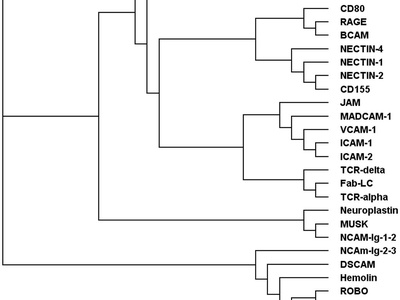
Fab fragment
Fab fragments contain one antigen-binding arm without the Fc portion, offering smaller size and reduced effector functions. They penetrate tissues more readily and are used in certain therapies, structural studies, and diagnostic assays.
F(ab’)2 fragment
F(ab’)2 fragments consist of two antigen-binding arms linked together but lack the Fc region, giving strong bivalent binding without Fc-mediated effector functions; useful for neutralization assays and some therapeutic strategies.
scFv (single-chain variable fragment)
scFv molecules fuse variable heavy and light domains with a short linker to create a small, single-chain binding unit. They are versatile for engineering (CARs, bispecifics), easy to produce, and useful in diagnostics and targeted therapies.
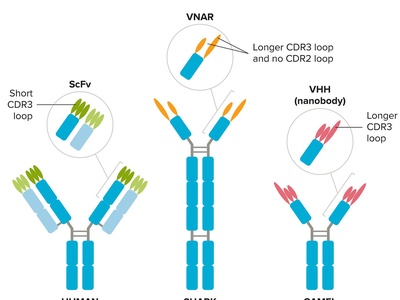
Nanobody (VHH)
Nanobodies are single heavy-chain variable domains from camelids that bind antigens with high affinity despite small size. Their stability and tissue penetration make them attractive for diagnostics, imaging, and as therapeutics like caplacizumab.
Rituximab
Rituximab targets CD20 on B cells and is used to treat non-Hodgkin lymphoma, chronic lymphocytic leukemia, and autoimmune disorders. It depletes B cells through complement and cellular mechanisms and changed modern immunotherapy practice.
Trastuzumab
Trastuzumab binds the HER2 receptor on certain breast and gastric cancers, blocking growth signals and recruiting immune attack. It dramatically improved outcomes in HER2-positive cancer and highlights targeted antibody therapy success.
Adalimumab
Adalimumab targets tumor necrosis factor-alpha (TNF-α) and treats various inflammatory diseases like rheumatoid arthritis and Crohn’s disease. As a fully human antibody, it reduced immune reactions compared with earlier non-human biologics.
Pembrolizumab
Pembrolizumab blocks PD-1 on T cells to release immune inhibition, enabling durable anti-tumor responses across multiple cancers. It exemplifies how antibodies can modulate immune checkpoints to treat malignancy.
Bevacizumab
Bevacizumab targets vascular endothelial growth factor (VEGF) to inhibit blood vessel growth in tumors and certain eye diseases. It’s used in oncology and off-label ophthalmology, demonstrating antibodies’ role in blocking soluble growth factors.
Horseradish peroxidase (HRP)-conjugated secondary antibody
HRP-conjugated secondary antibodies recognize primary antibodies and carry an enzyme reporter for colorimetric detection in lab assays. Widely used in research and diagnostics for sensitive, visible signal generation in ELISA and blots.