Ukraine’s geology reflects a long history of sedimentation, tectonics and mineral-rich belts that stretch across the country. From industrial basins in the east to metallic and non-metallic deposits farther west and south, these resources have shaped local economies and industry for decades.
There are 32 Minerals in Ukraine, ranging from Barite to Zinc (ore). For each entry, the data are organized as Type,Main regions (oblasts),Reserves / grade (t or %); you’ll find below.
Which regions in Ukraine hold the largest mineral deposits?
Major concentrations are in the eastern and central oblasts—Donetsk and Dnipropetrovsk (including the Kryvyi Rih iron ore district) are notable for coal, iron and manganese—while southern and western regions host other metals and non-metallic minerals. The list below links each mineral to the main oblasts so you can see regional patterns at a glance.
How current and reliable are the reserves and grades listed?
Most figures come from official geological surveys and published reserve estimates, but reporting years and assessment methods vary; some entries rely on older Soviet-era data while others use modern reassessments. Check the source notes in the list below for dates and confidence levels before using the numbers for planning.
Minerals in Ukraine
| Name | Type | Main regions (oblasts) | Reserves / grade (t or %) |
|---|---|---|---|
| Iron ore | Metallic | Kryvyi Rih (Dnipropetrovsk), Kirovohrad | 30,000,000,000 t;30–60% Fe |
| Manganese ore | Metallic | Nikopol Basin (Dnipropetrovsk), Zaporizhia | 500,000,000 t;20–40% Mn |
| Hard coal (bituminous) | Energy | Donetsk, Lviv-Volyn, Dnipropetrovsk | 34,000,000,000 t (in-situ);varied calorific value |
| Lignite (brown coal) | Energy | Lviv-Volyn, Dnipro-Donetsk basins | 6,000,000,000 t (approx.) |
| Natural gas | Energy | Dnieper-Donets Basin, Carpathians, Black Sea shelf | 1,100,000,000,000 m3 (proven, approx.) |
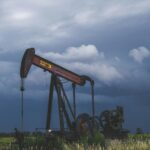
| Crude oil | Energy | Dnieper-Donets Basin, Carpathians, Black Sea | 200,000,000 bbl (proven, approx.) |
| Peat | Energy/Industrial | Polissia (Zhytomyr, Volyn), Kyiv oblasts | 5,000,000,000 t (resource estimate) |
| Uranium | Strategic/Critical | Kirovohrad, Dnipropetrovsk, Zhytomyr regions | 100,000 t U (resources, approx.) |
| Titanium (ilmenite/titanomagnetite) | Strategic/Critical | Kirovohrad, Mykolaiv, Zhytomyr | 1,000,000,000 t ore;TiO2 3–8% (approx.) |
| Graphite | Industrial/Strategic | Zhytomyr, Kirovohrad, Donetsk regions | 500,000 t (crystalline graphite resources) |
| Elemental sulfur (byproduct) | Industrial | Gas-processing sites across country | 1,000,000 t (stockpiles/byproduct approx.) |
| Phosphate rock | Industrial | Kirovohrad, Mykolaiv regions | 2,000,000,000 t (resource estimate) |
| Potash (potassium salts) | Industrial/Strategic | Poltava, Dnipro-Donets region (exploration) | 4,000,000,000 t KCl-equivalent (resources, approx.) |
| Rock salt (halite) | Industrial | Solotvyno (Zakarpattia), Donetsk, Dnipro regions | 500,000,000 t (approx.) |
| Limestone (cement-grade) | Industrial | Many oblasts (Dnipropetrovsk, Donetsk, Lviv) | 50,000,000,000 t (estimate) |
| Dolomite | Industrial | Dnipropetrovsk, Poltava, Kirovohrad | 20,000,000,000 t (estimate) |
| Gypsum and anhydrite | Industrial | Central and southern oblasts | 200,000,000 t (estimate) |
| Kaolin (china clay) | Industrial | Zhytomyr, Mykolaiv, Dnipropetrovsk | 50,000,000 t (resources approx.) |
| Bentonite | Industrial | Volyn, Lviv, Donetsk regions | 10,000,000 t (resources approx.) |
| Silica sand (glass/industrial) | Industrial | Dnipropetrovsk, Donetsk, Odesa regions | 5,000,000,000 t (estimate) |
| Barite | Industrial | Donetsk, Lviv regions | 10,000,000 t (resources approx.) |
| Lead (ore) | Metallic | Western Ukraine, Donbas | 50,000,000 t ore (resources approx.);Zn-Pb ores |
| Zinc (ore) | Metallic | Western Ukraine (Carpathians), Donbas | 40,000,000 t ore (resources approx.) |
| Copper | Metallic | Carpathians (Zakarpattia), Donetsk region | 100,000,000 t ore (resources approx.) |
| Gold | Precious/Strategic | Carpathians, Donbas placers and veins | 20 t Au (identified resources, approx.) |
| Silver | Precious | Associated with Pb–Zn and Au deposits across regions | 200 t Ag (identified resources approx.) |
| Rare earth elements (REE) | Strategic/Critical | Kirovohrad (Zhovti Vody) and scattered occurrences | Resources under evaluation;occurrences documented |
| Helium (associated gas) | Strategic/Critical | Dnieper-Donets Basin and other gas fields | Reserves modest;produced as byproduct from gas |
| Diatomite | Industrial | Sumy, Poltava regions | 5,000,000 t (resources approx.) |
| Refractory clays | Industrial | Donetsk, Dnipropetrovsk, Lviv regions | 50,000,000 t (resources approx.) |
| Phosphorites (secondary) | Industrial | Scattered occurrences (central regions) | Resources under assessment;occurrences known |
| Bauxite (aluminum ore) | Metallic | Small occurrences in north-central Ukraine | Resources small;commercially limited |
Images and Descriptions
Iron ore
Ukraine’s flagship mineral: huge banded iron formations around Kryvyi Rih supply steel feedstock. Reserves are among Europe’s largest, supporting domestic metallurgy; production slowed by conflict but remains strategically vital for steel and exports.
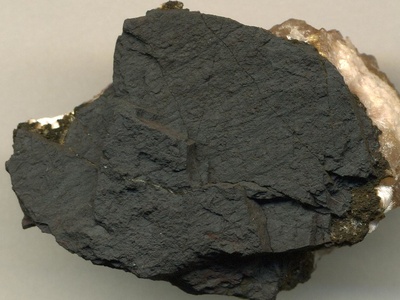
Manganese ore
Major manganese deposits in the Nikopol Basin supply alloy and battery industries. High-grade ores have historically supported domestic ferroalloy plants; deposits are strategically important for steelmaking and emerging battery uses.
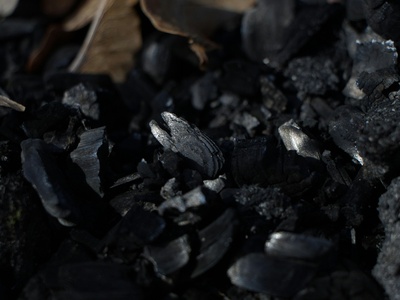
Hard coal (bituminous)
Donbas and western basins hold vast hard coal resources used for power generation and industry. Large in-situ reserves but recoverable volumes and production have been impacted by geology, economics and armed conflict.
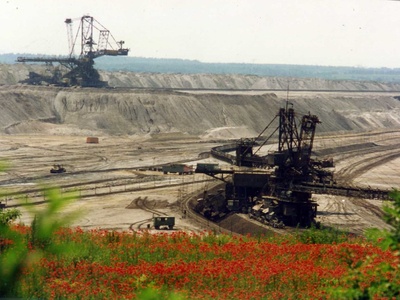
Lignite (brown coal)
Lignite supports regional power plants and local heating. Lower energy density than hard coal, it’s mined in several basins for electricity and district heating; environmental concerns and modernization affect future use.
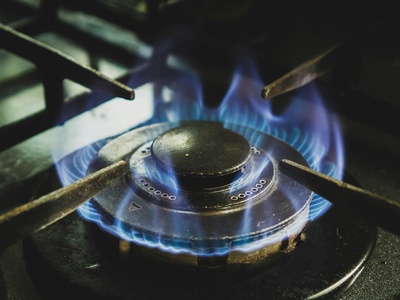
Natural gas
Ukraine has significant conventional gas fields onshore and offshore. Domestic gas fuels industry and households; proven reserves and new offshore potential are strategically important for energy security and reduced imports.
Crude oil
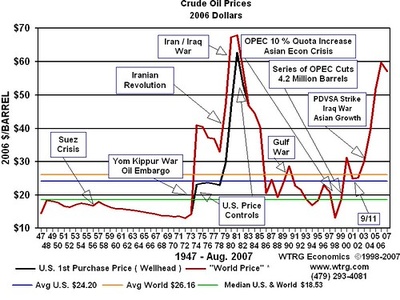
Onshore and some offshore oil fields provide modest domestic production compared with imports. Fields are mature; exploration in the Carpathians and Black Sea offers potential but development is capital-intensive and geopolitically sensitive.
Peat
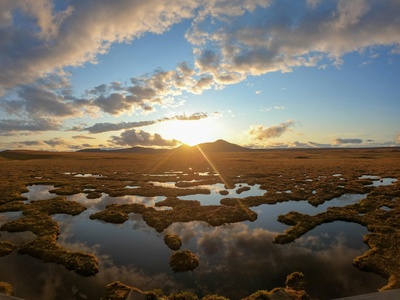
Abundant peat bogs are used for fuel, horticulture and soil amendments. Low energy compared with coal, peat has regional importance for heating and agriculture; environmental protection and land use limit expansion.

Uranium
Ukraine has uranium deposits linked to Central Ukrainian deposits; uranium supplies nuclear fuel for power plants. Mining and processing have strategic value, though much fuel is imported or processed abroad.
Titanium (ilmenite/titanomagnetite)
Titanium-bearing ores feed pigment, aerospace and chemical industries. Ukraine’s large resources could be strategic for titanium metal and pigment production; many deposits are at exploration or development stage.

Graphite
Natural graphite occurs in several regions and is used in refractory, battery anodes and lubricants. Demand for battery-grade graphite makes Ukrainian deposits strategically interesting though production is limited.
Elemental sulfur (byproduct)
Mostly recovered from oil and gas processing rather than mined, sulfur is used in fertilizers and chemicals. Ukraine has significant sulfur as byproduct stockpiles; marketability depends on processing and export logistics.
Phosphate rock
Phosphate deposits supply raw material for fertilizers. Large phosphate resources could support domestic fertilizer manufacture; development faces investment and environmental hurdles.
Potash (potassium salts)
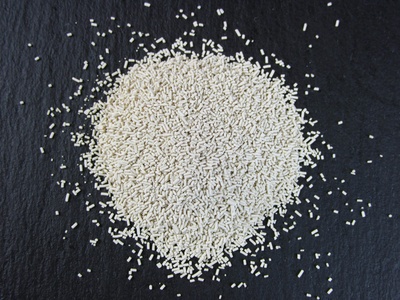
Ukraine has potash-bearing evaporites and salts with potential for fertilizer production. Resources are underexploited; potash is a strategic agricultural input and reduces import dependence.
Rock salt (halite)
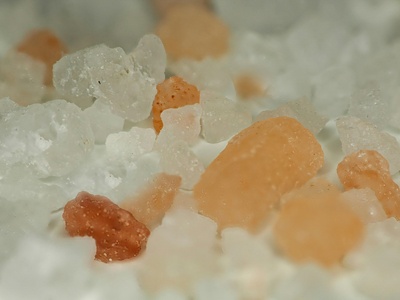
Extensive rock-salt deposits supply table salt, chemical and industrial uses, and winter road maintenance. Salt mining is regionally important with long-established mines and solution-mining operations.
Limestone (cement-grade)
Widespread limestones feed cement, construction and steel flux industries. Huge, accessible reserves make limestone a backbone industrial mineral for domestic construction materials.
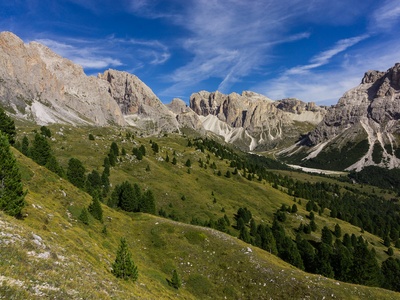
Dolomite
Dolomite is used in steelmaking, construction and agriculture. Ukraine’s large dolomite reserves supply metallurgical flux and building stone, supporting heavy industry and infrastructure projects.
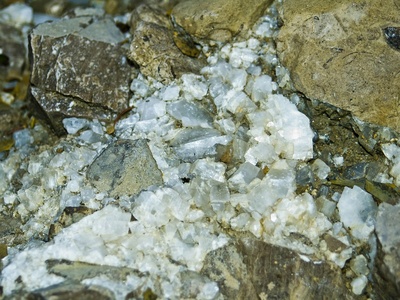
Gypsum and anhydrite
Gypsum is used for cement, plasterboard and building materials. Ukraine’s deposits support domestic construction markets; many mines supply local plants.
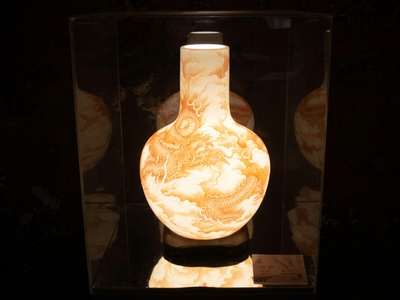
Kaolin (china clay)
Kaolin is a white clay used in ceramics, paper and coatings. Ukrainian deposits are exploited for ceramics and industry; quality varies and higher-grade material is valuable for export or specialty uses.
Bentonite
Bentonite clays are used for drilling muds, foundry sand binders and sealants. Ukrainian deposits supply local industries and environmental sealing projects; grades vary by deposit.
Silica sand (glass/industrial)
High-purity quartz sands are used in glassmaking, foundries and silicon industries. Ukraine has large silica sand resources; higher-purity deposits are economically important for glass and silicon applications.
Barite
Barite is used as a weighting agent in drilling fluids and in paints and radiology. Ukraine’s barite occurrences are modest but useful regionally for oilfield services and industrial minerals.
Lead (ore)
Lead occurs with zinc-silver vein and carbonate deposits in western and eastern regions. Historically mined for batteries and alloys; small-scale production and exploration continue.
Zinc (ore)
Zinc deposits occur with lead and silver in carbonate-hosted veins. Zinc is important for galvanizing and alloys; Ukrainian occurrences are modest and under development or small-scale mining.
Copper
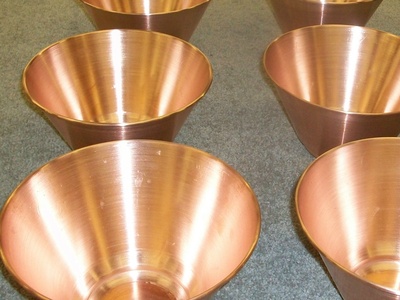
Copper occurrences range from Carpathian polymetallic veins to eastern deposits. Copper is essential for electrification; domestic deposits are modest but strategically useful for base-metal supply.
Gold
Ukraine has small gold occurrences and historic placer workings. Not a major producer, gold is extracted episodically; deposits are of localized economic interest and exploration target.
Silver
Silver commonly accompanies lead-zinc and gold mineralization. Ukraine’s silver is mostly a byproduct of other base-metal mines; quantities are modest but commercially relevant.
Rare earth elements (REE)
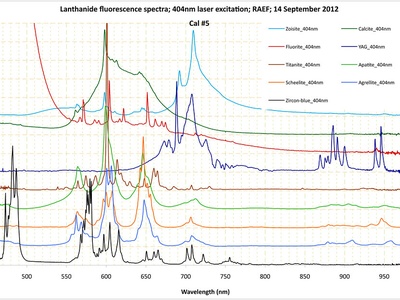
REE occur in several central Ukrainian deposits and tailings; potential for critical materials used in magnets, electronics and clean-tech exists, but commercial development remains limited.
Helium (associated gas)
Helium is found in some natural gas fields and recovered as a byproduct. Domestic helium volumes are small but strategically valuable for medical and scientific uses.
Diatomite
Diatomaceous earth is used in filtration, abrasives and insulation. Ukraine’s diatomite deposits are moderate in size and supply local industrial and environmental filtration needs.
Refractory clays
High-alumina and refractory clays support brick, furnace linings and steel plants. Ukraine’s refractory raw materials underpin heavy industry; high-quality deposits are economically valuable for domestic steelmaking.
Phosphorites (secondary)
Secondary phosphorite occurrences and phosphate-bearing rocks have been identified in central Ukraine. They represent potential fertilizer feedstocks pending further evaluation and investment.
Bauxite (aluminum ore)
Ukraine has minor bauxite occurrences but lacks large, mineable deposits; aluminum production depends on imports, though small deposits have been documented for local use.