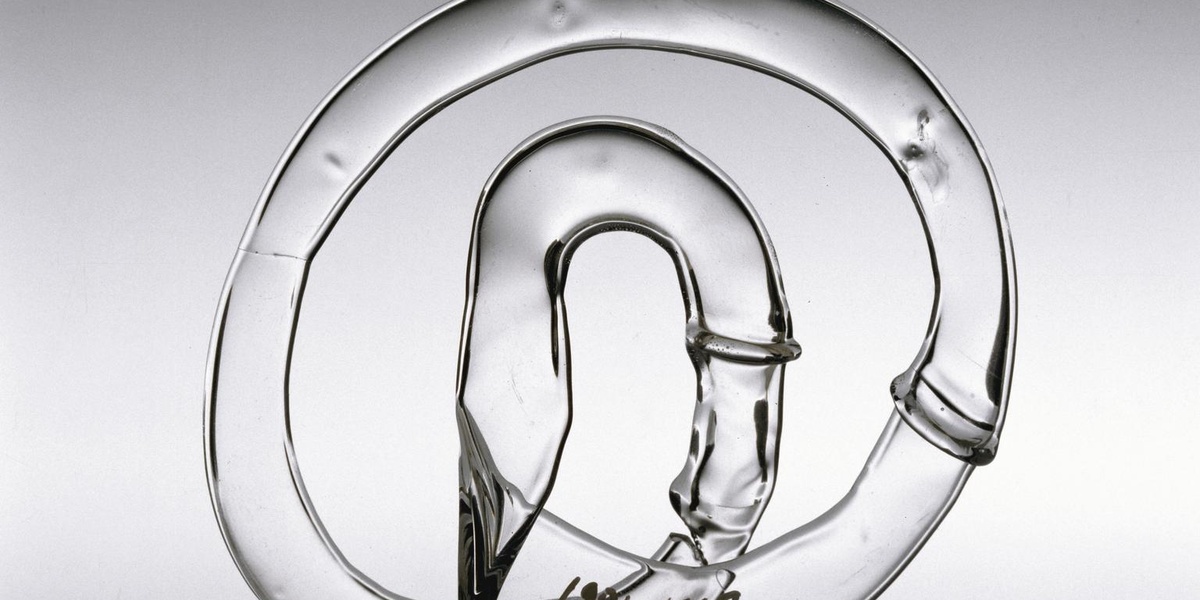
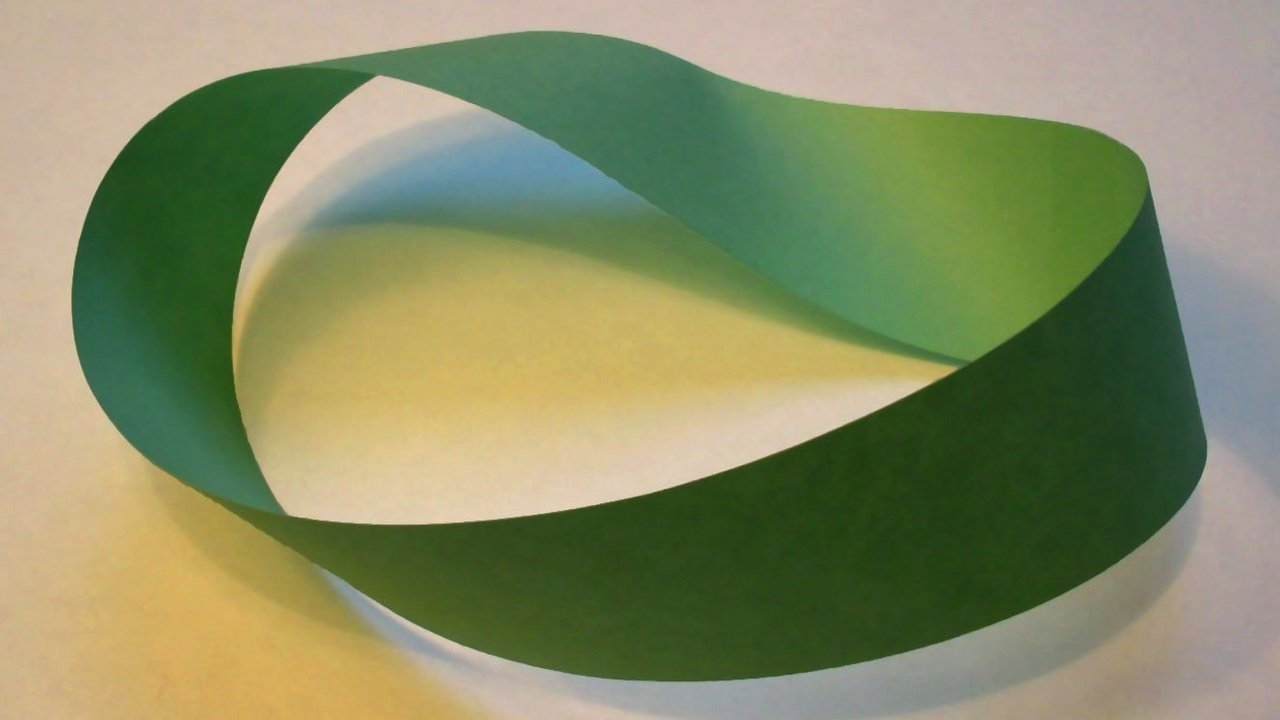
In 1858, August Möbius and Johann Listing independently described a curious surface now called the Möbius strip — a loop with only one side and one edge.
Topology turns everyday shapes and abstract spaces into stories about continuity, holes, and connectivity. You should care because those stories underlie how we model noisy data, check 3D prints for hidden errors, and even classify new materials with surprising electronic properties.
Many people assume topology is purely abstract, confined to chalkboard puzzles. The reality is different: simple experiments (folded paper, rubber bands) reveal concepts that power algorithms in computer graphics, techniques in data science, and discoveries in condensed-matter physics.
This piece presents seven accessible, concrete facts about topology that link historical ideas to present-day tools and technologies.
Core Concepts in Topology
Topology studies properties preserved under continuous deformation — stretching or bending but not tearing or gluing. Its basic language names connectedness, holes (genus), orientability, and invariants like the Euler characteristic. These ideas let mathematicians classify surfaces and reason about shape without measuring distances.
Try a tiny experiment: a coffee mug and a doughnut (torus) are the same in topology because one can be deformed into the other without cutting. Or make a paper Möbius strip and see how a half-twist changes orientability — simple physical objects expose deep principles behind later theorems and applications.
1. Topological equivalence: shape without measuring
Topological equivalence, or a homeomorphism, means two shapes can be morphed into one another continuously, with no ripping or gluing. The classic classroom example: a coffee mug and a torus share the same topology because each has one handle-like hole.
Topology ignores distances; it cares about continuity. That perspective helps in computational geometry and mesh processing: recognizing when two surface meshes are topologically equivalent can let game engines simplify 3D models while preserving essential connectivity.
Try it with a rubber band loop and a clay donut: deform, but don’t tear. The invariants remain the same even when measurements change.
2. The Möbius strip: one-sided surprises
The Möbius strip, described by Möbius and Listing in 1858, is non-orientable: it has only one side and one edge. Make one at home with a paper strip, give it a half-twist, and tape the ends together — then trace a finger along the surface and watch it return to the start without crossing an edge.
Cutting a Möbius strip down its centerline produces one longer loop rather than two separate strips, a counterintuitive result that delights students. Engineers have used Möbius twists in conveyor belts to equalize wear, and architects sometimes invoke the shape for striking, continuous surfaces.
3. Euler characteristic and genus: counting holes
The Euler characteristic is a simple numeric invariant that helps classify surfaces. For objects topologically equivalent to a sphere the formula V − E + F = 2 holds. For a cube: V=8, E=12, F=6, so 8 − 12 + 6 = 2.
Genus counts holes: a torus has genus 1, a double-torus genus 2, and so on. These invariants matter in practice; mesh-validation tools in 3D printing and graphics use Euler checks to detect unintended holes or topology errors before manufacturing or rendering.
Milestones and Theorems
Topology evolved from playful puzzles to a rigorous field through landmark results. Work by Euler in the 18th century set the tone for invariants; Henri Poincaré’s late-19th-century investigations established new foundational questions; and 20th-century theorems like Brouwer’s fixed-point result connected topology to analysis and applications.
4. Fundamental group and the Poincaré conjecture
The fundamental group encodes classes of loops up to deformation and detects holes that simple counting misses. For example, every loop on a sphere can shrink to a point, so its fundamental group is trivial; loops on a torus can wrap around a hole and are nontrivial.
Henri Poincaré posed a deep conjecture in the 1890s about simply connected 3-dimensional spaces. Grigori Perelman posted a proof in 2002–2003 (widely accepted mid-2000s) and notably declined the 2006 Fields Medal and the 2010 Clay Millennium Prize. The result reshaped 3-manifold classification and influenced geometric analysis and aspects of cosmology.
5. Fixed-point theorems and practical insight
Imagine stirring your coffee: Brouwer’s fixed-point theorem (early 20th century) guarantees that, under continuous motion of the cup’s surface, some point ends up where it started. Formally, any continuous map from a disk to itself has a fixed point.
Fixed-point results have concrete consequences: proofs of existence for Nash equilibria in economics rely on fixed-point theorems, and numerical analysis uses related ideas to guarantee that iterative methods converge to solutions under certain conditions.
Modern Applications
Once a branch of pure thought, topology now informs industry and lab research. Persistent homology and related tools turned up in the 2000s as practical methods for high-dimensional data. In materials science, topological phases changed how physicists classify electronic behavior, producing experimentally observed effects in the mid-2000s.
6. Topological data analysis: geometry of data
Topology provides methods to find shape in high-dimensional data. Persistent homology tracks features — connected components and holes — across scale and summarizes them as persistence diagrams or barcodes. These signatures help distinguish signal from noise.
Interest in TDA grew in the 2000s, and companies like Ayasdi (founded around 2008) commercialized these ideas for finance and healthcare. Applications include cancer gene-expression clustering, sensor-network coverage analysis, and anomaly detection in complex systems.
7. Topological phases of matter: a new kind of material
Topology classifies phases of matter by global properties of electron wavefunctions rather than conventional symmetry breaking. The quantum Hall effect in the 1980s foreshadowed this view; theoretical work in the mid-2000s (notably by Charles Kane and collaborators) predicted topological insulators, which were observed experimentally around 2007.
Such materials host robust edge states that resist certain defects, making them promising for low-power electronics and potential platforms for quantum computing. The topological perspective shifted how researchers search for and design novel materials.
Summary
- Simple hands-on examples — the Möbius strip (1858) and the coffee mug ↔ torus — reveal core ideas like orientability and homeomorphism that guide topology.
- Numerical invariants such as the Euler characteristic (V − E + F = 2 for sphere-like shapes; e.g., 8 − 12 + 6 = 2) and the fundamental group help classify surfaces and 3‑manifolds; Poincaré’s conjecture saw a modern proof in 2002–2003 by Grigori Perelman.
- Fixed-point theorems (Brouwer) and persistent homology turned abstract results into practical tools used in economics, numerical methods, and data science; companies like Ayasdi began applying TDA commercially around 2008.
- Topology also reshaped materials research: the quantum Hall effect (1980s) led to topological insulators predicted in the mid-2000s and observed circa 2007, opening paths toward resilient electronic and quantum devices.
- Try one small next step: make a Möbius strip, run a visual persistence-diagram demo, or read a short piece on Perelman’s 2002–2003 proof to see how these facts about topology connect play, proof, and practical impact.