In 1926, Erwin Schrödinger published his wave equation and, within a few years, quantum theory reshaped our view of matter and energy. Picture a single electron behaving like a wave and a particle at once: that odd image captures why the subject still feels both familiar and strange.
These ideas matter because they power everyday tech — MRI scanners, semiconductors, lasers — and emerging tools such as quantum processors and ultra-precise sensors. The story begins with Planck in 1900 and runs through modern milestones; the scientific foundations set limits and possibilities for engineers and theorists alike.
Below I explain eight distinct areas within the field and show what each studies, why it’s useful, and concrete examples you can point to. The article groups them into three broad categories: Foundations & Theory, Applications & Technologies, and Interdisciplinary & Emerging Areas — and it touches on key dates and players along the way. You’ll also see how these branches connect to real products and big open questions in physics.
Foundations & Theory
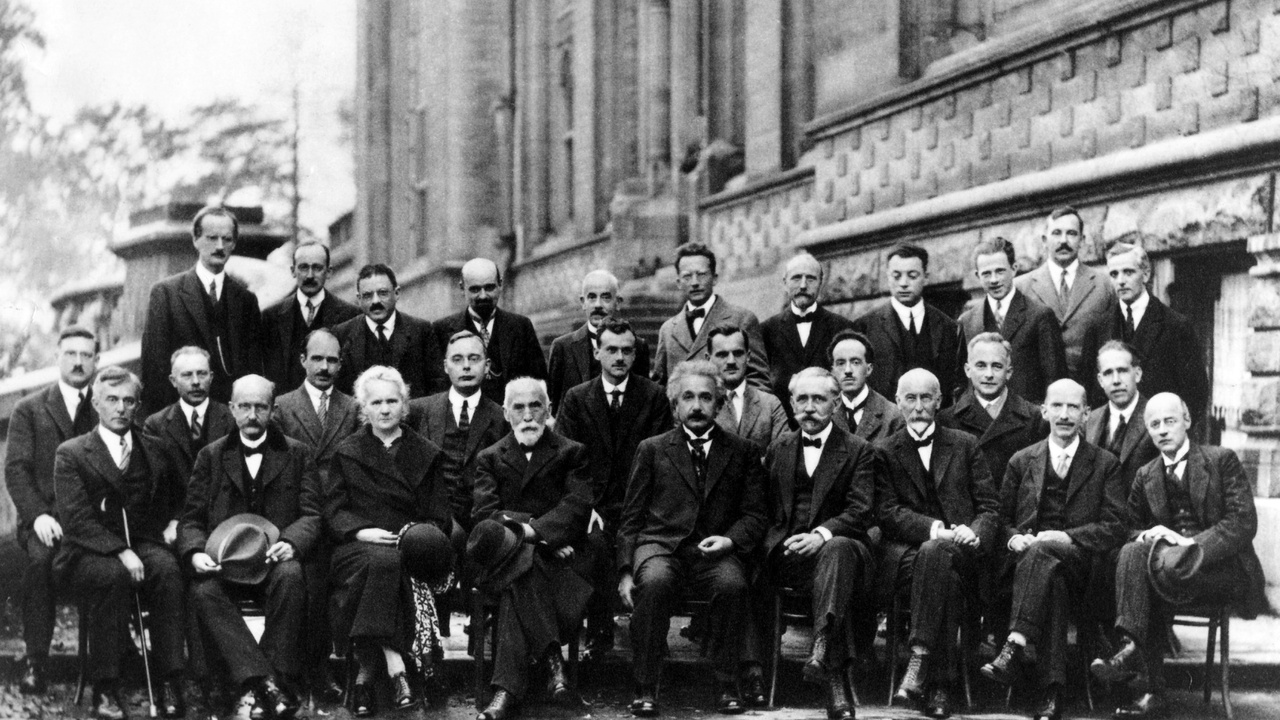
This category is the conceptual bedrock where rules are set and interpreted. Starting with Max Planck’s quantization of energy in 1900, then Heisenberg’s matrix mechanics in 1925 and Schrödinger’s wave equation in 1926, researchers built the core formalism that experimentalists and engineers use today.
Those ideas eventually fed into quantum field theory and the Standard Model, which organizes 17 elementary particles and the forces between them. Foundational work tells us what experiments should show and what devices can, in principle, do — so the theory directly shapes both lab tests and commercial technologies.
1. Quantum Mechanics (Foundations)
Quantum mechanics studies the behavior of particles at atomic scales using wavefunctions and operators. Core concepts include wave–particle duality, superposition, and the Heisenberg uncertainty principle (1927).
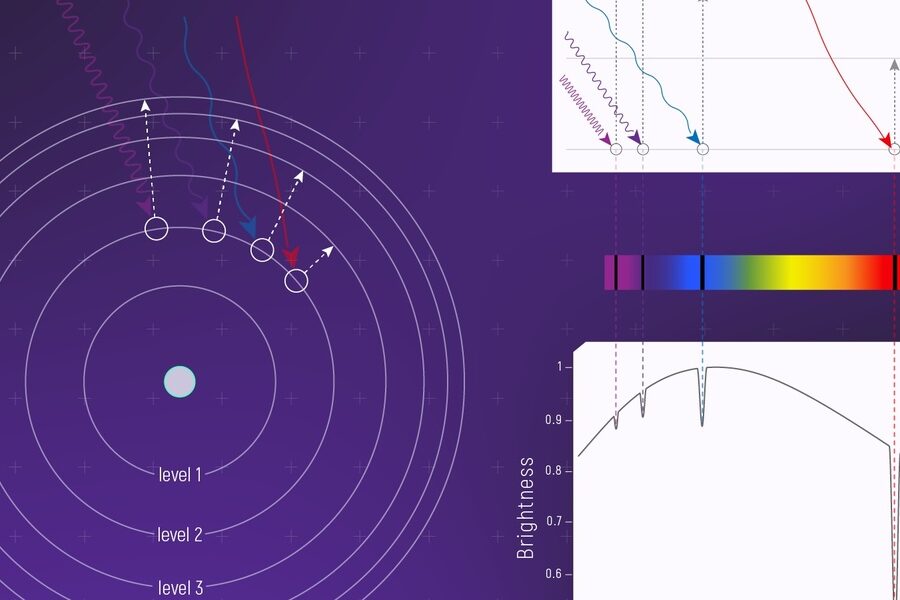
Practically, this branch explains atomic orbitals — for example, Schrödinger’s equation predicts hydrogen’s spectral lines — and underpins semiconductor physics and chemical bonding. Transistors and LEDs are direct technological descendants of quantum-mechanical understanding.
2. Quantum Field Theory (QFT)
Quantum field theory treats particles as excitations of underlying fields and merges quantum ideas with special relativity. QED (quantum electrodynamics) and QCD (quantum chromodynamics) are landmark QFTs that describe electromagnetic and strong interactions.
QFT is the language of high-energy experiments: the Large Hadron Collider began operation in 2008 and famously confirmed the Higgs boson in 2012, a result that matched QFT-based predictions. Beyond particle discovery, QFT helps us model materials under extreme conditions and informs precision tests of fundamental symmetries.
3. Quantum Statistical Mechanics
This branch applies quantum rules to ensembles of many particles. It distinguishes Bose–Einstein and Fermi–Dirac statistics, which control how identical particles occupy energy levels.
One milestone: Bose–Einstein condensates were first produced in 1995 by Eric Cornell and Carl Wieman at temperatures on the order of nanokelvin. Quantum statistical mechanics explains electron behavior in metals, the structure of white dwarfs and neutron stars, and enables quantum simulators built from ultra-cold atoms.
Applications & Technologies

Where theory meets products. Among the branches of quantum physics are areas that translate equations into working devices: MRI machines, optical communications, and the first commercial quantum systems.
Companies and milestones anchor this progress — IBM, Google (Sycamore’s 53-qubit run in 2019), D-Wave, and others — and steady advances in materials and control systems keep moving research toward practical applications. The following sections highlight key applied fields and real-world outcomes.
4. Quantum Optics
Quantum optics studies light’s quantum properties and how photons interact with matter. It grew out of the laser era (first laser in 1960) and early tests of entanglement and Bell inequalities starting in the 1960s and into the 1970s.
Applications include atomic clocks used by GPS, precision sensors, and secure communications like quantum key distribution (QKD). Recent loophole-free Bell tests in 2015 strengthened the experimental basis for entanglement, and companies such as ID Quantique sell QKD systems for niche secure links.
5. Quantum Information and Computing
This field studies how quantum systems encode and process information using qubits, entanglement, and quantum gates. It’s both theoretical (algorithms like Shor’s factoring and Grover’s search) and practical (hardware development).
Notable milestones include Google’s Sycamore experiment in 2019 (53 qubits) and IBM’s Eagle 127-qubit processor announced in 2021. Industry players — IBM, Google, IonQ, Rigetti, Quantinuum and D-Wave (annealers) — pursue different hardware approaches. Near-term uses focus on quantum simulation and optimization rather than immediate cryptographic upheavals.
6. Condensed Matter (Quantum Many-Body Physics)
Condensed matter studies quantum effects in solids and materials where many particles interact. Many surprising phenomena emerge from collective behavior rather than single-particle rules.
Superconductivity was discovered by Kamerlingh Onnes in 1911; the 1986 discovery of cuprate high-temperature superconductors opened a new chapter. Today research into topological insulators and quantum materials fuels spintronics, superconducting magnets in MRI machines, and qubit circuits (Josephson junctions), with historical industry interest in topological qubits from groups like Microsoft Research.
Interdisciplinary & Emerging Areas
These fields reach outward, applying quantum ideas across chemistry, materials science, astrophysics and probing where current theory may break down. Some areas are already mature; others are speculative but potentially transformative.
Examples include quantum simulations for drug discovery, efforts to build practical quantum materials, and ambitious projects aiming to unify quantum mechanics with gravity. Progress here often requires collaboration across disciplines and long-term investment.
7. Quantum Chemistry
Quantum chemistry applies quantum mechanics to molecules and chemical bonding. Classical computational methods such as Hartree–Fock and density functional theory (DFT) remain workhorses for predicting molecular structure and reactions.
Quantum computers promise more accurate simulations of catalysts, excited states, and reaction pathways for small-to-medium molecules. Startups and firms like Zapata and QC Ware are already experimenting with chemistry workloads on noisy quantum hardware to identify near-term advantages.
8. Quantum Gravity and High-Energy Interfaces
This branch tries to reconcile quantum mechanics with general relativity. Two well-known research programs are string theory and loop quantum gravity, both primarily theoretical but rich in mathematical structure.
Why it matters: resolving these problems would change our understanding of black holes, the Big Bang, and spacetime singularities. Researchers often point to the Planck scale — roughly 1×10⁻³⁵ meters — as the regime where new physics is expected, though experimental tests remain extremely challenging.
Summary
- Quantum physics is not one monolith but a collection of specialized branches, each focused on different scales and problems.
- Foundational work (Planck 1900; Heisenberg 1925; Schrödinger 1926) underlies everyday technologies such as transistors, lasers, and MRI machines.
- Applied fields — quantum optics, condensed matter, and quantum information — have led to commercial products and ongoing milestones (1995 BEC, 2019 Sycamore, 2021 Eagle).
- Interdisciplinary areas like quantum chemistry are already affecting industry workflows, while quantum gravity tackles the deepest theoretical puzzles at the Planck scale.
- Watch for steady engineering gains (hardware, control, materials) and major theoretical updates; these will be the places where advances most quickly touch everyday tech.