In 1969, Stanley Kubrick’s films and Hollywood blockbusters popularized cavernous, thunderous space battles with booming explosions—soundtracks that made space feel noisy and immediate.
Those cinematic moments are memorable, but many everyday beliefs about sound—from how it travels to what damages hearing—are oversimplified or plain wrong. Misconceptions matter: they affect safety decisions, acoustic design, listening habits, and what we expect from technology.
This article corrects eight common myths about sound, grouped into three categories: physics, perception, and technology/health. WHO estimates roughly 1.1 billion young people are at risk from unsafe listening, and NIOSH gives an 85 dB exposure limit for eight hours—facts that show why getting the basics right can protect hearing.
Physics and the nature of sound
Sound is mechanical: it’s a longitudinal pressure wave that needs a material medium—air, water, or a solid—to move. The particles of that medium oscillate and pass energy along; without particles, there’s nothing to vibrate.
Speed varies with the medium and temperature: in dry air at 20°C sound travels about 343 m/s, in freshwater at 20°C about 1,482 m/s, and in many solids (steel, for example) speeds can exceed 5,900 m/s. Those numbers come from basic acoustics references and introductory physics texts.
Resonance matters too: when a structure is driven at a natural frequency energy concentrates and motion grows, which is why engineers worry about vibration modes in bridges, buildings, and machines. These physical facts explain why intuition or movie soundtracks often mislead.
1. Myth: You can hear explosions in space
The claim that you can hear bangs and booms in open space is cinematic fiction. Interplanetary and interstellar regions are effectively vacuum—the particle density is so low that pressure waves cannot propagate audibly.
Interplanetary space pressures are often below about 10−9 bar (order of magnitude), which is far too tenuous to carry audible pressure waves. Space agencies including NASA use radio and other electromagnetic signals for communication because those waves don’t require a material medium.
So while a film can mix rocket visuals with explosive sound for drama, the real interaction between spacecraft and their environment is silent except for vibrations transmitted through hulls or inside cabins.
2. Myth: Sound travels faster in air than in water
That intuition is backwards: sound generally travels faster in liquids and solids than in gases. The key is a medium’s elasticity and density—how quickly a pressure disturbance can be restored and how closely packed the particles are.
Concrete speed comparisons at 20°C: air ≈ 343 m/s, freshwater ≈ 1,482 m/s, and steel around 5,960 m/s. These are standard values from physics and acoustics sources.
Practical consequence: underwater acoustics and sonar exploit faster, long-range propagation in water—whales and submarines can communicate or detect signals over kilometers because water carries sound efficiently compared with air.
3. Myth: A single singer can shatter glass just by hitting the right note (commonly portrayed)
Singing the exact pitch that matches a glass’s resonance can amplify motion, but breaking glass requires far more than hitting the right note; it requires enough vibrational energy to exceed the material’s fracture stress.
Real constraints include glass composition, flaws or microcracks, damping, and the achievable sound-pressure level. Typical human vocal power is orders of magnitude too low to reach the sound-pressure thresholds used in controlled lab fracture tests.
There are laboratory demonstrations and engineered failures that use resonant excitation to fracture materials, and engineers watch resonance closely because sustained forcing can damage structures (bridges, turbines). But casual singing breaking ordinary glass is highly improbable.
Human hearing and perception
Psychoacoustics studies how ears and brains turn pressure waves into perceived sound: attributes like loudness, pitch, masking, and localization arise from both physical input and neural processing.
Measured ranges: textbook human hearing spans roughly 20 Hz–20 kHz, though upper limits decline with age and exposure. Decibels (dB) are logarithmic: a 10 dB increase is perceived roughly as twice as loud while a 3 dB increase represents a doubling of acoustic energy.
Public health organizations give actionable thresholds: WHO estimates about 1.1 billion young people are at risk from unsafe listening, and NIOSH recommends a limit of 85 dB for an 8-hour exposure. Masking and frequency sensitivity mean that two sounds with identical dB can affect perception and risk differently.
4. Myth: Louder always means a higher decibel reading in a linear way (perceived loudness equals decibels)
Decibels are logarithmic, so equal numeric steps do not mean equal perceptual or energy changes. Adding 3 dB doubles sound energy; a 10 dB rise is usually heard as about twice as loud.
Examples help: normal conversation sits near 60 dB, a busy street around 75 dB, and a lawnmower about 90 dB. NIOSH bases hearing guidance on those scales—85 dB is the recommended eight-hour limit, and most standards use an exchange rate (often 3 dB) to cut permissible time as levels rise.
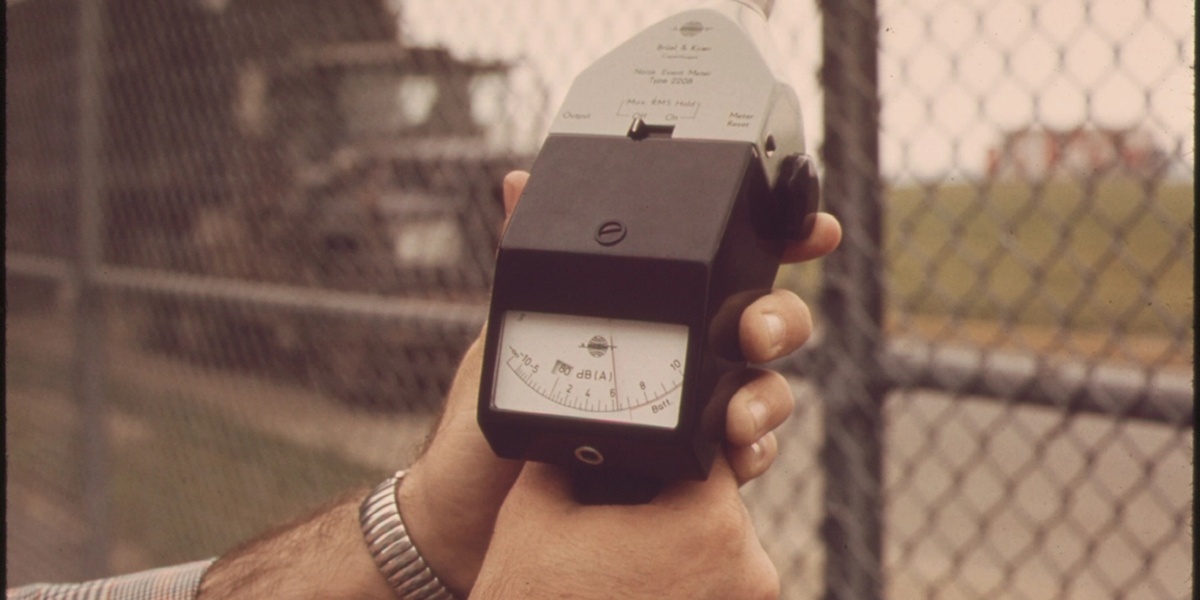
Also note A-weighting (dB(A)) adjusts measurements toward human sensitivity, so two measurements in dB may not be directly comparable unless weighting and measurement setup are the same.
5. Myth: Adults can hear up to 20 kHz (and that limit is universal)
While 20 Hz–20 kHz is the idealized range for young, healthy ears, most adults—especially with typical lifetime noise exposure—lose sensitivity to the highest frequencies.
In practice many adults top out around 12–15 kHz; age-related sensorineural loss (presbycusis) and noise damage shift the upper limit downward. That loss can affect speech clarity, consonant recognition, and the perception of high-frequency cues in music.
Regular hearing checks can detect changes early, and designers of alarms, notifications, and consumer audio should account for reduced high-frequency hearing in older populations.
6. Myth: If your hearing isn’t failing yet, loud music or noise won’t harm you
That complacent view ignores cumulative damage. Brief exposures can cause temporary threshold shifts that, if repeated, lead to permanent sensorineural loss even when you don’t notice immediate symptoms.
WHO’s estimate of ~1.1 billion young people at risk and NIOSH’s 85 dB/8-hour standard reflect that hazard. For a practical example, sustained 100 dB exposure—typical of loud concerts—can produce measurable damage in 15–30 minutes under common exchange-rate assumptions.
Practical steps: measure sound levels with a reliable app or meter, use earplugs or electronic protection at loud events, and limit cumulative exposure time to reduce long-term risk.
Technology, safety, and everyday audio myths
Consumer tech and medical tools have their own myths. Active noise cancellation, ultrasound, and device volume limits all have physics-based strengths and limits—and understanding them helps set realistic expectations and safer habits.
ANC (active noise cancellation) uses a microphone to sense incoming sound and generates an inverse-phase signal to reduce it, working best on steady low-frequency noise. Ultrasound used in medicine is at megahertz frequencies and is non-ionizing; it’s safe at diagnostic intensities when used under professional guidelines.
Finally, hearing loss isn’t only an age issue: occupational and recreational noise are major contributors. Know your devices’ limits, and combine passive and active measures for the best protection and listening experience.
7. Myth: Noise-cancelling headphones eliminate all sound
ANC is powerful but limited. The electronics detect ambient noise and produce an inverse waveform to cancel it, which is most effective for steady, low-frequency sounds like aircraft engine hum or air-conditioning.
ANC struggles with impulsive or high-frequency sounds—speech, clattering, or sudden bangs—because those signals are broadband and less predictable. Popular products that use ANC include Bose QuietComfort, Sony WH-1000XM series, and Apple AirPods Pro; they reduce a lot of background noise but don’t create total silence.
For the best result, combine ANC with good passive isolation (well-sealing ear cups or tips); that pairing reduces both low-frequency and high-frequency intrusions more effectively than either approach alone.
8. Myth: Ultrasound is dangerous to people in routine medical use (and dog whistles are harmless to humans)
Ultrasound simply means frequencies above human hearing (>20 kHz). Medical diagnostic ultrasound typically operates in the 2–15 MHz range—far above audition—and uses non-ionizing mechanical energy at regulated intensities.
Clinicians follow ALARA-like safety principles (as low as reasonably achievable) to limit output and exposure time, and diagnostic ultrasound is generally considered safe when used appropriately. By contrast, dog whistles use very high frequencies or near-ultrasound that many adults cannot hear—though animals such as dogs can detect those pitches easily.
So medical ultrasound is safe in routine use, and “inaudible” animal devices may be inaudible to many humans but still audible to pets, depending on the frequency and the listener’s hearing.
Summary
- Sound needs a medium—space is effectively silent; vibrations travel through structures and interiors only.
- Speed and behavior depend on medium: air ≈ 343 m/s, water ≈ 1,482 m/s, solids often much faster.
- Decibels are logarithmic: +3 dB doubles energy; +10 dB sounds about twice as loud. Follow NIOSH/WHO guidance (85 dB/8 hours; ~1.1 billion young people at risk).
- Noise-cancelling headphones reduce steady low-frequency noise but don’t eliminate all sounds; combine ANC with passive isolation for best results.
- Medical ultrasound (MHz) is different from audible sound and is generally safe at diagnostic levels; protect your hearing by monitoring exposure and using protection when needed.