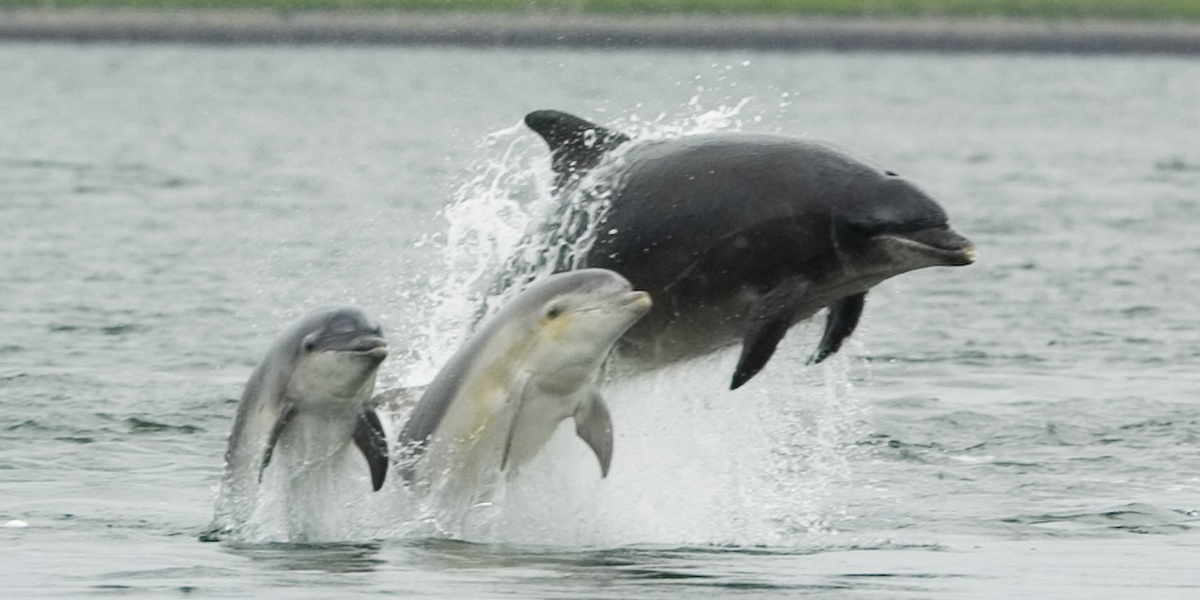
In the 1960s the U.S. Navy began formal research and training programs with dolphins — a period that helped cement both scientific fascination and popular myths about these animals. Those programs, plus movies and seaside encounters, left many people with a tidy set of beliefs about what dolphins are and how they behave.
Separating myth from fact matters. Public perception shapes tourism, policy and how people treat wild animals. And misunderstanding dolphin biology can put both humans and animals at risk. There are roughly 40 recognized dolphin species worldwide, each adapted to different habitats and social systems, so blanket statements rarely hold.
This piece debunks eight widespread ideas — from friendliness and language to captivity and conservation — using peer-reviewed work and authoritative sources such as NOAA and IUCN. Expect concrete examples (Shark Bay tool users, signature whistles, the Baiji) and practical tips for safe, ethical encounters with wild dolphins.
Behavior and Biology Myths
Across about 40 species, dolphins vary from coastal bottlenose groups to oceanic spinner dolphins and river dolphins adapted to freshwater. They form social bonds, use acoustic sensing, and show behavioral specializations that people often oversimplify. Below are three common behavior-and-biology myths and what the science actually shows.
1. Dolphins Are Always Friendly to Humans
It’s tempting to assume dolphins are uniformly friendly, but that’s an overgeneralization. Many interactions are positive, yet dolphins sometimes show aggression toward people.
Reports documented by NOAA and in peer-reviewed literature include bites, ramming, and trainer injuries in captive settings, and occasional aggressive encounters in the wild. Causes range from dominance displays and mating-season competition to maternal defense when calves are threatened.
Playful behavior — leaping, nudging or riding bow waves — can be misread as invitation. Often it’s social play that happens to involve people. When humans feed or approach dolphins, animals may change their behavior, escalating competition or causing dependency. NOAA advises observing from a distance and never feeding wild marine mammals.
2. Dolphins Are Playful, Not Predatory
Play is a big part of dolphin lives, but it exists alongside efficient predation. Dolphins are skilled hunters that use a variety of tactics to catch fish and squid.
Hunting strategies include coordinated herding, corralling in shallow water, and specialized techniques such as strand-feeding. In Shark Bay, Western Australia, some bottlenose dolphins use marine sponges as foraging tools to probe the seafloor — a culturally transmitted behavior documented in long-term studies.
Researchers have cataloged dozens of cooperative hunting behaviors across populations. Those tactics affect fisheries interactions and can lead to conflict when dolphins target the same catches as people. Understanding predatory ecology helps managers design bycatch mitigation and coexistence measures.
3. Dolphins Sleep with One Eye Open — But Not Always
Unihemispheric slow-wave sleep is real: one cerebral hemisphere shows sleep-like activity while the other remains awake. That allows dolphins to surface to breathe and maintain some vigilance.
Sleep patterns vary by species, life stage and circumstance. Calves sleep differently than adults and may rest while riding alongside a mother. Migrating or distressed animals may alter sleep timing. Some studies report unihemispheric episodes lasting minutes to hours, but simplified phrases like “always one eye open” miss the nuance.
Physiology matters here: dolphins evolved this sleep strategy because they must breathe voluntarily and often maintain social cohesion or predator awareness. Peer-reviewed marine-mammal sleep research explains the mechanisms without the folklore.
Intelligence and Communication Myths
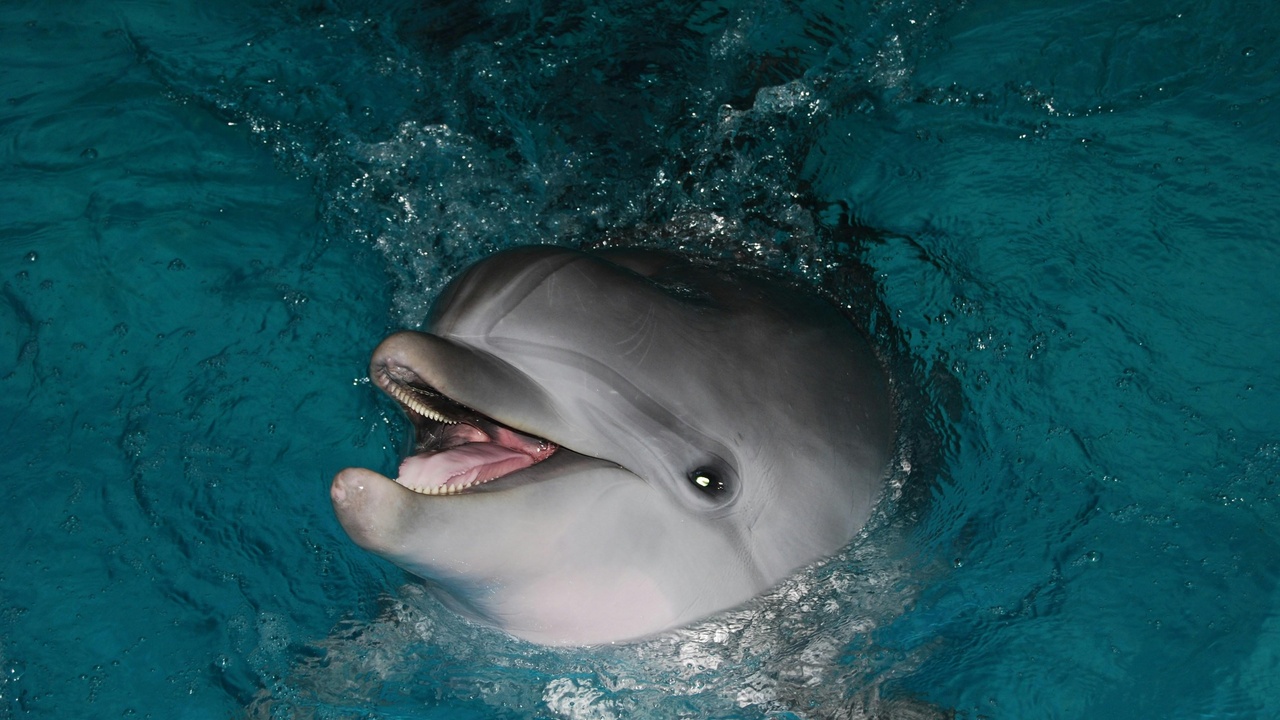
Dolphins show remarkable cognitive skills, but interpreting those skills requires careful methods. Scientists use mirror tests, playback experiments, and problem-solving tasks to probe self-awareness and communication. Results point to domain-specific intelligence: exceptional auditory processing and social cognition rather than a direct human analog.
Below are three myths about dolphin minds and speech, each grounded in empirical work from labs and long-term field studies. Where appropriate, researchers such as S. Janik and teams who studied signature whistles or Reiss and Marino on mirror responses are referenced to clarify what the evidence supports.
4. Dolphins Speak a Language Like Humans
Dolphins communicate using clicks, burst-pulse sounds and whistles. Some whistle types — called “signature whistles” — function like individual labels, and playback experiments show dolphins respond to those specific calls.
Research by S. Janik and colleagues demonstrated that signature whistles are learned and used for individual identification. Echolocation clicks serve a different role: active sensing and object discrimination. That division of labor means dolphin acoustic systems combine social signaling and biosonar, but they lack clear evidence for human-like syntax and grammar.
Practical implications are strong. Passive acoustic monitoring uses vocal signatures to detect presence and estimate abundance, helping conservationists track populations without intrusive methods.
5. Dolphins Have Human-Like Self-Awareness
Mirror tests yielded behaviors in several bottlenose dolphins that researchers interpreted as self-directed inspection, such as repetitive body-turning to view marked areas. The landmark work by Reiss and Marino is often cited for this evidence.
Interpretation varies. Some animals clearly use mirrors to inspect their bodies; others show curiosity without sustained self-directed behavior. Self-recognition suggests a capacity for self-other discrimination, but it doesn’t prove human-like introspective thought. Self-awareness appears to exist on a spectrum across species.
Scientists recommend combining behavioral tests with neuroanatomical and developmental data to build a fuller picture rather than relying on one experimental paradigm.
6. Dolphins Are Smarter Than Primates (as a General Rule)
Ranking intelligence across major taxa is misleading because cognition is domain-specific. Dolphins excel at acoustic discrimination, echolocation-based problem solving and social coordination. Primates excel in manipulative tasks and certain forms of visual reasoning.
Brain metrics such as encephalization quotient or neuron counts provide pieces of the puzzle but don’t settle a simple “smarter” label. Comparative cognition reviews show that performance depends on the task, the sensory world of the animal, and the experimental design.
Put another way: dolphins are exceptionally well adapted to their environments and sensory demands. That makes them highly intelligent in ways relevant to life in the sea, not necessarily superior on every cognitive test humans or primates might devise.
Human Interaction, Captivity, and Conservation Myths

Public beliefs about captive care and population security shape tourism, policy and funding. Some common claims are dangerously complacent or overly rosy. Below are two myths that have direct consequences for whales’ and dolphins’ futures.
7. Captive Dolphins Thrive in Marine Parks
Some facilities provide strong veterinary care and enrichment programs, but outcomes vary widely by species, facility standards and individual history. Welfare is not uniform across the industry.
Scientific comparisons of health and lifespan between wild and captive dolphins show mixed results. Some captive individuals live long lives with attentive care; others show stress-related problems, abnormal behaviors, or social disruption when kept in unsuitable groups or small tanks. Peer-reviewed welfare studies and veterinary reviews document these variations.
Public pressure has changed policy in many places: controversies over swim-with-dolphin attractions and media coverage prompted reforms and stricter oversight in some jurisdictions. If you plan a dolphin encounter, favor programs run by accredited institutions that prioritize research, rehabilitation or conservation over entertainment.
8. All Dolphin Populations Are Secure
That belief is dangerous. Some species and populations are critically imperiled or already functionally extinct. Conservation status varies dramatically around the globe.
The Yangtze River dolphin, the Baiji, was declared functionally extinct in the early 2000s after decades of habitat loss, pollution and crippling river traffic. Other populations remain at high risk: several coastal and riverine groups face severe declines from bycatch, habitat degradation, noise and contamination.
For example, certain subpopulations have official estimates well under 100 mature individuals (see IUCN or regional agency assessments). Threats such as gillnet bycatch, coastal development, and offshore noise require targeted policy responses. Supporting fisheries reforms, reducing plastic pollution, and backing reputable conservation organizations are practical ways to help.
Summary
- Many widely held beliefs are partial truths: dolphins are social and smart, but not uniformly friendly or equivalent to humans in motivation or cognition.
- Specialized traits — signature whistles, echolocation and unihemispheric sleep — reflect adaptations to an aquatic life and require nuanced interpretation.
- Captivity and conservation status are mixed: some facilities and populations do well, while others face welfare problems or extinction risk (the Baiji was declared functionally extinct in the early 2000s).
- Practical steps: observe dolphins from a distance, avoid feeding or approaching wild animals, support evidence-based conservation, and consult NOAA or the IUCN for species status and guidance.
Understanding myths about dolphins helps us protect wild populations and make better choices when encountering these animals. Small, informed actions add up.