Indiana’s mix of lakeshore, farmland, wetlands, and hardwood forest makes it a great place to watch birds year-round. From quick backyard visits to longer field trips, knowing which species occur here helps you pick the right spots and seasons.
There are 100 Birds of Indiana, ranging from American Crow to Yellow-rumped Warbler. For each species the list shows Scientific name,Status,Seasonality (months) to help you confirm IDs, understand conservation notes, and plan when to look—you’ll find it below.
How can I use this list to improve birdwatching in Indiana?
Start by filtering species by Seasonality (months) to narrow what’s likely where and when, then use the Scientific name to avoid confusion with similar common names. Pair the list with local habitat info and check Status to prioritize rare or declining species for focused searches.
Are any of these species rare or protected in Indiana?
Yes—several entries note conservation Status indicating rarity or protection; use those markers to guide reporting and ethical viewing. For legal protections or permits, consult state wildlife authorities and report uncommon sightings to platforms like eBird.
Birds of Indiana
| Common name | Scientific name | Status | Seasonality (months) |
|---|---|---|---|
| American Robin | Turdus migratorius | Breeding/resident | Year-round |
| Northern Cardinal | Cardinalis cardinalis | Breeding/resident | Year-round |
| Mourning Dove | Zenaida macroura | Breeding/resident | Year-round |
| Blue Jay | Cyanocitta cristata | Breeding/resident | Year-round |
| American Crow | Corvus brachyrhynchos | Breeding/resident | Year-round |
| European Starling | Sturnus vulgaris | Introduced | Year-round |
| House Sparrow | Passer domesticus | Introduced | Year-round |
| House Finch | Haemorhous mexicanus | Breeding/resident | Year-round |
| Song Sparrow | Melospiza melodia | Breeding/resident | Year-round |
| Dark-eyed Junco | Junco hyemalis | Winter migrant | Nov–Mar |
| American Goldfinch | Spinus tristis | Breeding/resident | Year-round |
| Red-winged Blackbird | Agelaius phoeniceus | Breeding/resident | Mar–Sep |
| Common Grackle | Quiscalus quiscula | Breeding/resident | Year-round |
| Brown-headed Cowbird | Molothrus ater | Breeding/resident | Mar–Sep |
| Carolina Wren | Thryothorus ludovicianus | Breeding/resident | Year-round |
| Ruby-throated Hummingbird | Archilochus colubris | Breeding/migrant | May–Sep |
| Belted Kingfisher | Megaceryle alcyon | Breeding/resident | Year-round |
| Downy Woodpecker | Dryobates pubescens | Breeding/resident | Year-round |
| Hairy Woodpecker | Dryobates villosus | Breeding/resident | Year-round |
| Red-bellied Woodpecker | Melanerpes carolinus | Breeding/resident | Year-round |
| Pileated Woodpecker | Dryocopus pileatus | Breeding/resident | Year-round |
| Eastern Phoebe | Sayornis phoebe | Breeding/resident | Mar–Sep |
| Great Crested Flycatcher | Myiarchus crinitus | Breeding/resident | May–Aug |
| Eastern Kingbird | Tyrannus tyrannus | Breeding/migrant | May–Aug |
| Tree Swallow | Tachycineta bicolor | Breeding/migrant | Mar–Aug |
| Barn Swallow | Hirundo rustica | Breeding/migrant | Apr–Sep |
| Cliff Swallow | Petrochelidon pyrrhonota | Breeding/migrant | Apr–Sep |
| Purple Martin | Progne subis | Breeding/migrant | Apr–Aug |
| Eastern Bluebird | Sialia sialis | Breeding/resident | Year-round |
| Yellow-rumped Warbler | Setophaga coronata | Migration/winter | Mar–May, Oct–Apr |
| Common Yellowthroat | Geothlypis trichas | Breeding/migrant | Apr–Sep |
| Black-and-white Warbler | Mniotilta varia | Breeding/migrant | Apr–Sep |
| Ovenbird | Seiurus aurocapilla | Breeding/migrant | Apr–Sep |
| American Redstart | Setophaga ruticilla | Breeding/migrant | May–Sep |
| Magnolia Warbler | Setophaga magnolia | Migrant | Apr–May, Sep–Oct |
| Northern Parula | Setophaga americana | Migrant | Apr–May, Sep–Oct |
| Baltimore Oriole | Icterus galbula | Breeding/resident | May–Aug |
| Orchard Oriole | Icterus spurius | Breeding/resident | May–Aug |
| Scarlet Tanager | Piranga olivacea | Breeding/resident | May–Aug |
| Rose-breasted Grosbeak | Pheucticus ludovicianus | Breeding/resident | May–Aug |
| Indigo Bunting | Passerina cyanea | Breeding/resident | May–Aug |
| Eastern Towhee | Pipilo erythrophthalmus | Breeding/resident | Apr–Sep |
| Chipping Sparrow | Spizella passerina | Breeding/resident | Apr–Oct |
| Field Sparrow | Spizella pusilla | Breeding/resident | Apr–Sep |
| White-throated Sparrow | Zonotrichia albicollis | Winter migrant | Oct–Apr |
| White-crowned Sparrow | Zonotrichia leucophrys | Winter/migrant | Oct–Apr |
| Swamp Sparrow | Melospiza georgiana | Breeding/resident | Apr–Sep |
| Savannah Sparrow | Passerculus sandwichensis | Breeding/resident | Apr–Sep |
| Lincoln’s Sparrow | Melospiza lincolnii | Migrant | Apr–May, Sep–Oct |
| House Wren | Troglodytes aedon | Breeding/resident | Apr–Sep |
| Marsh Wren | Cistothorus palustris | Breeding/resident | Apr–Sep |
| Sedge Wren | Cistothorus stellaris | Rare/vagrant | May–Aug |
| Carolina Chickadee | Poecile carolinensis | Breeding/resident | Year-round |
| Black-capped Chickadee | Poecile atricapillus | Rare/vagrant | Dec–Mar |
| Tufted Titmouse | Baeolophus bicolor | Breeding/resident | Year-round |
| Red-breasted Nuthatch | Sitta canadensis | Winter irruptive | Nov–Mar |
| White-breasted Nuthatch | Sitta carolinensis | Breeding/resident | Year-round |
| Brown Creeper | Certhia americana | Breeding/resident | Year-round |
| Golden-crowned Kinglet | Regulus satrapa | Winter/migrant | Oct–Apr |
| Ruby-crowned Kinglet | Corthylio calendula | Migration/winter | Apr–May, Sep–Nov |
| Cedar Waxwing | Bombycilla cedrorum | Breeding/resident | Year-round |
| Eastern Meadowlark | Sturnella magna | Breeding/resident | Apr–Sep |
| Western Meadowlark | Sturnella neglecta | Rare/vagrant | Mar–Oct |
| Killdeer | Charadrius vociferus | Breeding/resident | Year-round |
| Semipalmated Plover | Charadrius semipalmatus | Migrant | Apr–May, Jul–Sep |
| Piping Plover | Charadrius melodus | Rare/vagrant | Apr–Aug |
| Greater Yellowlegs | Tringa melanoleuca | Migrant | Mar–May, Jul–Oct |
| Lesser Yellowlegs | Tringa flavipes | Migrant | Mar–May, Jul–Sep |
| Solitary Sandpiper | Tringa solitaria | Migrant | Apr–May, Aug–Oct |
| Spotted Sandpiper | Actitis macularius | Breeding/migrant | Apr–Sep |
| Least Sandpiper | Calidris minutilla | Migrant | Apr–May, Jul–Sep |
| Dunlin | Calidris alpina | Winter/migrant | Oct–Apr |
| Sanderling | Calidris alba | Rare/migrant | Apr–Sep |
| Wilson’s Snipe | Gallinago delicata | Breeding/resident | Year-round |
| American Woodcock | Scolopax minor | Breeding/resident | Mar–Nov |
| Sandhill Crane | Antigone canadensis | Breeding/resident | Mar–Nov |
| Great Blue Heron | Ardea herodias | Breeding/resident | Year-round |
| Great Egret | Ardea alba | Breeding/migrant | Mar–Oct |
| Snowy Egret | Egretta thula | Rare/vagrant | May–Sep |
| Green Heron | Butorides virescens | Breeding/resident | Apr–Sep |
| Black-crowned Night-Heron | Nycticorax nycticorax | Breeding/migrant | Apr–Sep |
| Turkey Vulture | Cathartes aura | Breeding/resident | Year-round |
| Osprey | Pandion haliaetus | Migrant/breeding | Mar–Nov |
| Bald Eagle | Haliaeetus leucocephalus | Breeding/resident | Year-round |
| Cooper’s Hawk | Accipiter cooperii | Breeding/resident | Year-round |
| Sharp-shinned Hawk | Accipiter striatus | Migrant/breeding | Mar–Nov |
| Red-shouldered Hawk | Buteo lineatus | Breeding/resident | Year-round |
| Red-tailed Hawk | Buteo jamaicensis | Breeding/resident | Year-round |
| Rough-legged Hawk | Buteo lagopus | Winter | Dec–Mar |
| Northern Harrier | Circus hudsonius | Migrant/winter | Oct–Apr |
| Broad-winged Hawk | Buteo platypterus | Migrant/breeding | Apr–Sep |
| Peregrine Falcon | Falco peregrinus | Breeding/migrant | Year-round |
| Merlin | Falco columbarius | Migrant/winter | Oct–Apr |
| American Kestrel | Falco sparverius | Breeding/resident | Year-round |
| Ring-necked Pheasant | Phasianus colchicus | Introduced | Year-round |
| Wild Turkey | Meleagris gallopavo | Breeding/resident | Year-round |
| Mute Swan | Cygnus olor | Introduced | Year-round |
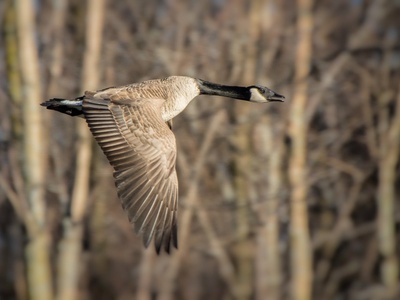
| Canada Goose | Branta canadensis | Breeding/resident | Year-round |
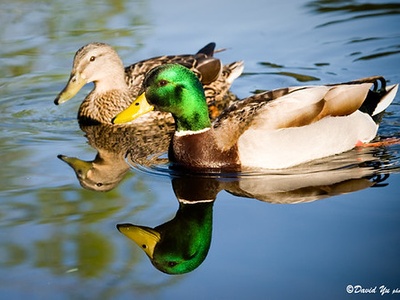
| Mallard | Anas platyrhynchos | Breeding/resident | Year-round |
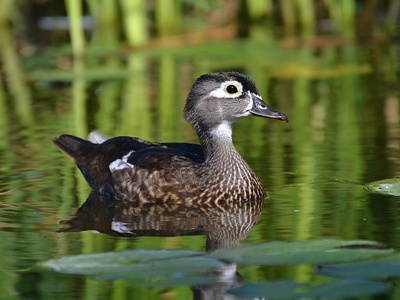
| Wood Duck | Aix sponsa | Breeding/resident | Year-round |
Images and Descriptions
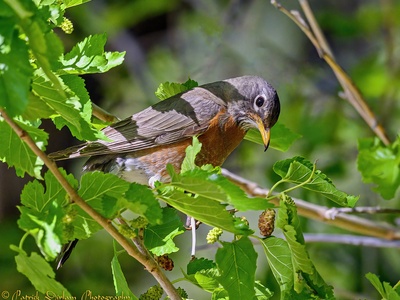
American Robin
Familiar, plump thrush with orange belly frequently seen in lawns, parks and wood edges. Feeds on worms and berries. Common spring singer and early migrant; easy to spot during nesting and as flocks in winter fruiting trees.
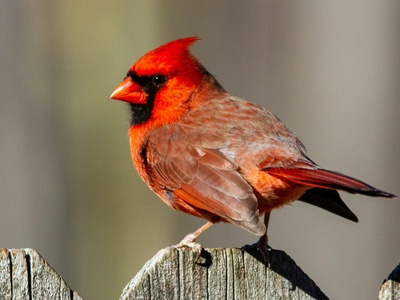
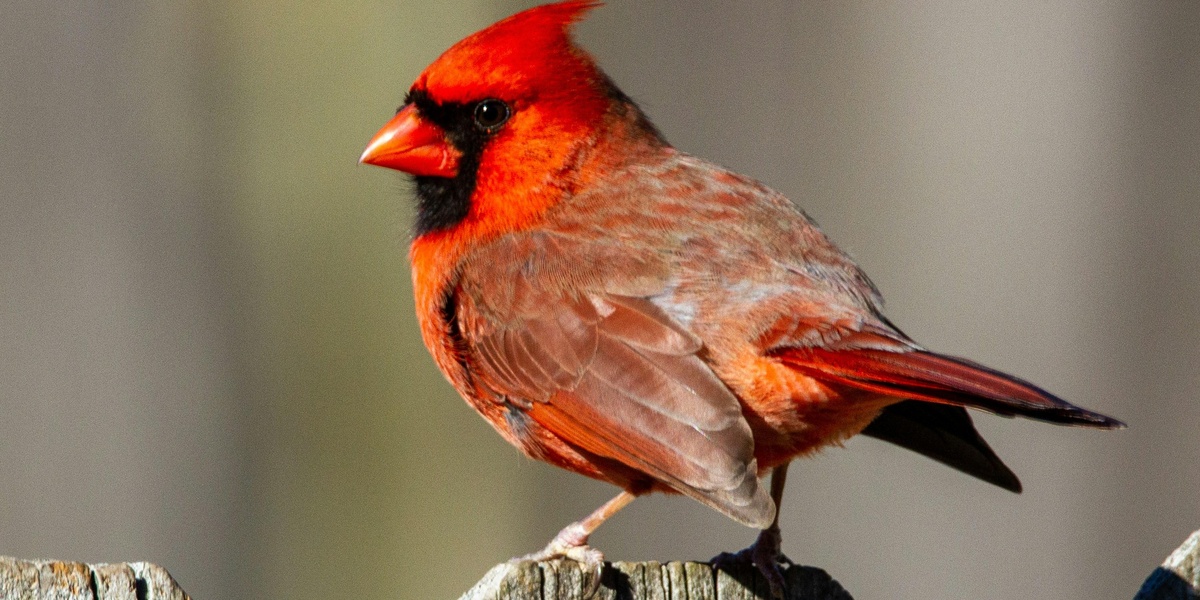
Northern Cardinal
Bright red male and warm-brown female are iconic backyard birds. Found in yards, wood edges and shrubby fields. Loud, clear songs year-round. Highly visible and common, especially at feeders where they’re easy to identify by color and crest.
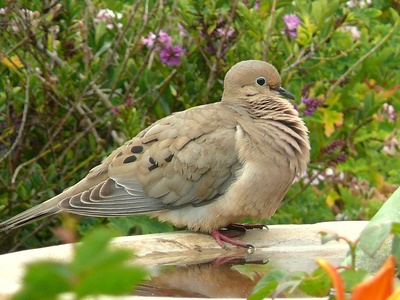
Mourning Dove
Slim, long-tailed dove with soft gray-brown plumage and mournful coo. Common in fields, suburbs and roadsides. Ground feeder that nests on small platforms; widespread and often seen perched on wires and foraging on seeds.
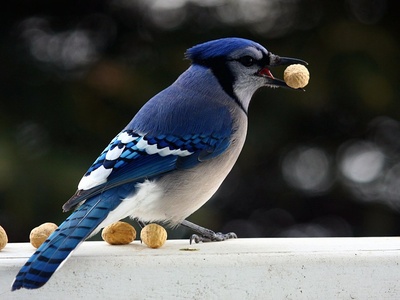
Blue Jay
Loud, blue crested corvid frequenting forests, suburbs and feeders. Bold and noisy, with white and black patterning. Omnivorous—eats seeds, nuts and invertebrates—and notorious for mobbing predators and caching food.
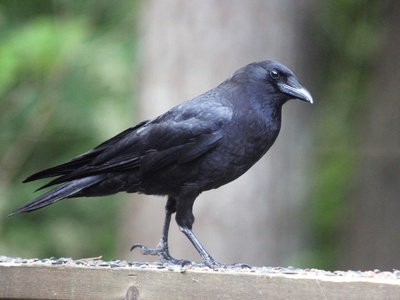
American Crow
Large, all-black, highly intelligent bird common in towns, farms and forests. Social and noisy, often in flocks. Opportunistic feeder on carrion, crops and garbage; noticeable year-round and forms large communal roosts in winter.
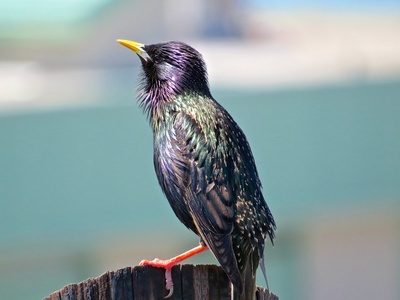
European Starling
Glossy, iridescent black bird introduced from Europe; now abundant in cities, farms and fields. Gleans insects and seeds, nests in cavities and forms huge roosts and murmurations. Widespread and often outcompetes native cavity nesters.
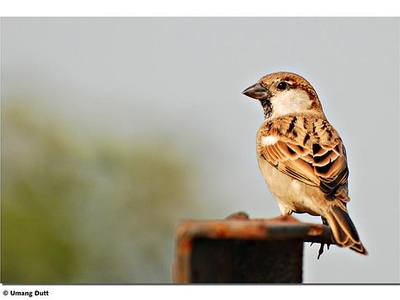
House Sparrow
Small, chunky, sociable brown-and-gray bird tied to human settlements. Common around buildings, feeders and farms. Feeds on seeds and scraps; males show chestnut and black bib. One of the most common urban birds in Indiana.
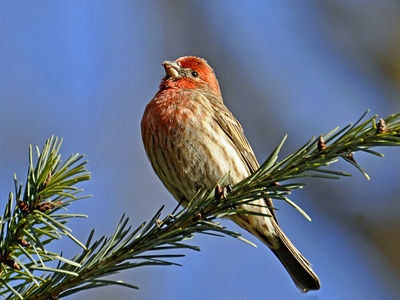
House Finch
Small finch with streaked brown plumage; males have red on head and breast. Common at feeders, parks and suburbs. Eats seeds and buds; expanded eastward and now widespread in towns and wood edges.
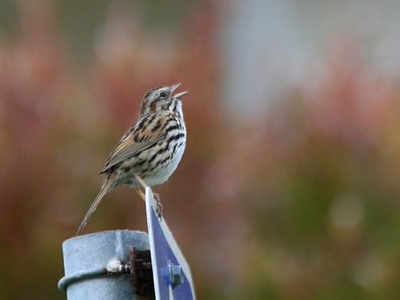
Song Sparrow
Streaky, medium-sized sparrow with a plain face and central breast spot. Prefers brushy edges, wetlands and yards. Distinctive melodic song; common and often the first sparrow to learn by ear for beginners.
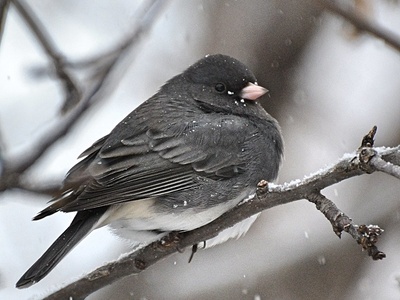
Dark-eyed Junco
Small, slate-gray-and-white sparrow often called “snowbird.” Abundant on the ground under feeders in winter, favoring wood edges and weedy fields. Highly mobile flocks; common winter visitor across Indiana.
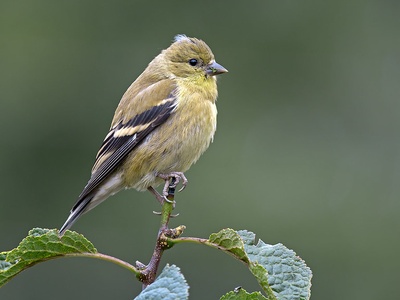
American Goldfinch
Tiny, bright yellow male in summer and olive-brown in winter. Favors thistle, sunflower patches, weedy fields and feeders. Energetic flight and bouncing song; breeds mid-summer when thistle seeds are abundant.
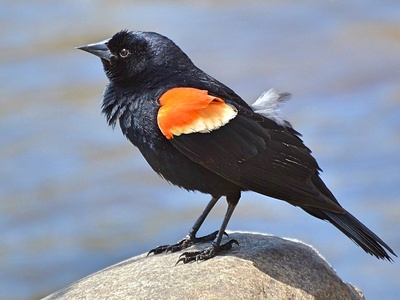
Red-winged Blackbird
Males with glossy black bodies and red shoulder patches, females streaked and secretive. Ubiquitous in marshes, wet fields and roadside ditches. Loud conk-la-ree calls signal territories; very common breeding species.
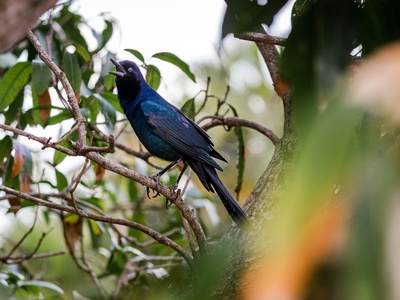
Common Grackle
Long-tailed, iridescent blackbird often in large flocks in fields, parks and suburbs. Loud, harsh calls and opportunistic feeding on insects, grain and garbage. Common summer breeder and winter flocks near open water or roost sites.
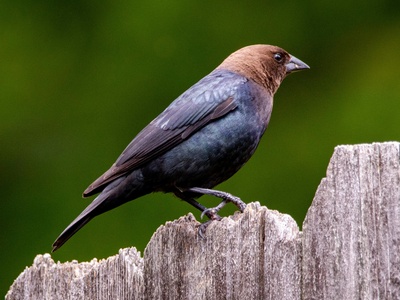
Brown-headed Cowbird
Stocky brood parasite with glossy black male and brown-headed female. Found in fields, pastures and edges. Lays eggs in other species’ nests; common and influential on host species’ nesting success.
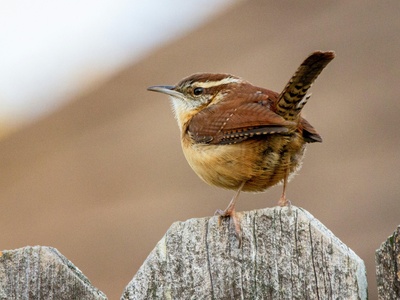
Carolina Wren
Small, energetic brown wren with white eyebrow and loud, repetitive song. Prefers dense shrubs, brush piles and human structures. A year-round singer and bold yard visitor; frequently nests in odd cavities.
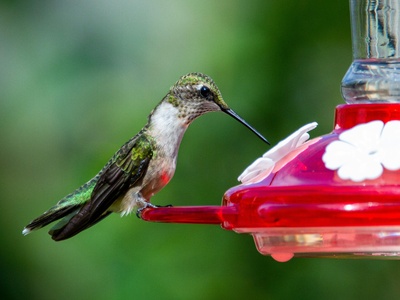
Ruby-throated Hummingbird
Tiny, iridescent hummingbird that breeds statewide in woodlands and gardens. Males show ruby throat; nectar feeder attracted to tubular flowers and feeders. Fast migrants—arrive in spring and depart in autumn.
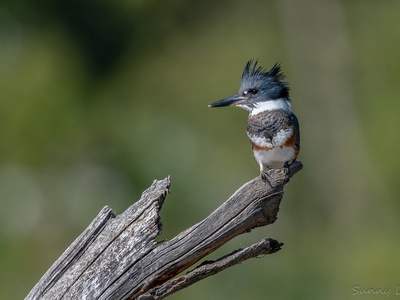
Belted Kingfisher
Stocky, blue-gray fishing bird with shaggy crest and rattling call. Perches on wires over water, dives for fish in rivers, lakes and marshes. Both sexes defend nesting burrows in banks; conspicuous near open water.
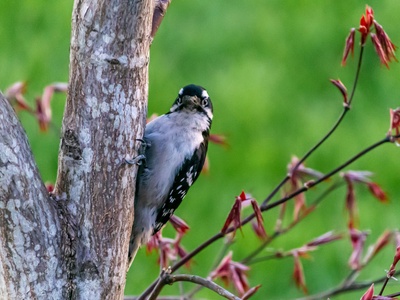
Downy Woodpecker
Small, black-and-white woodpecker common in woodlots, parks and yards. Drills for insects in dead branches and trunks; males have small red nape spot. Often at suet feeders and easily confused with larger hairy woodpecker.
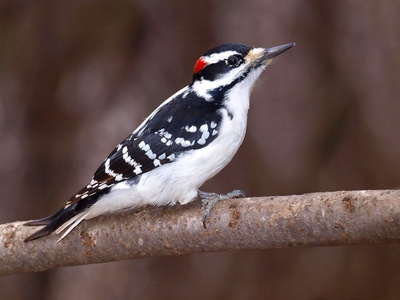
Hairy Woodpecker
Larger, black-and-white woodpecker similar to downy but with bigger bill. Prefers mature woods and riparian forests. Drums and chisels for insects in trunks; less common at feeders than downy but widespread.
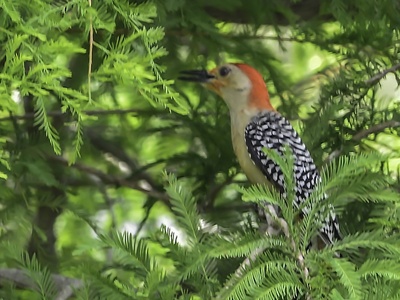
Red-bellied Woodpecker
Bold zebra-backed woodpecker with red nape and pale belly tint. Common in suburban trees and woodlands; uses cavities for nesting and eats insects, fruit and seeds. Vocal and often seen on trunks.
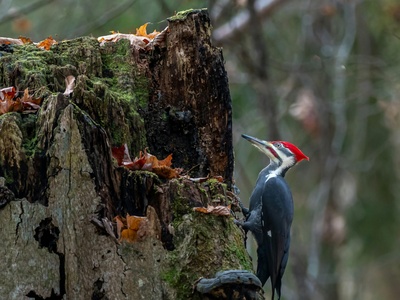
Pileated Woodpecker
Largest Indiana woodpecker, striking with black body and red crest. Excavates large rectangular cavities in mature forests. Noisy drumming and distinctive calls make it conspicuous; indicator of mature woodland.
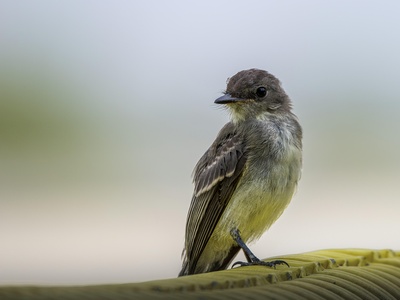
Eastern Phoebe
Small, plain flycatcher that often nests on buildings and bridges. Quick tail-wag, peeps and insect-catching sallies from perches. One of the earliest returning flycatchers and common in yards and riparian edges.
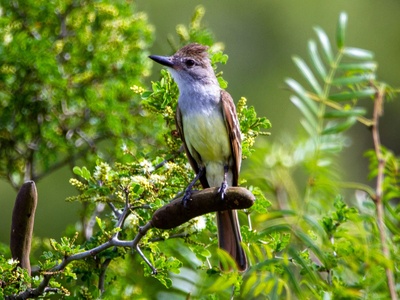
Great Crested Flycatcher
Large, brownish flycatcher with a yellowish belly and rattling call. Nests in tree cavities and boxes in wood edges and orchards. Bold, persistent singer and common summer breeder in wooded landscapes.
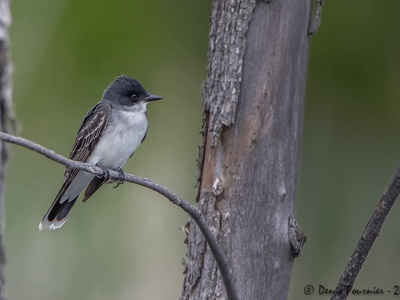
Eastern Kingbird
Bold black-and-white flycatcher with white-tipped tail and aggressive territorial behavior. Found in open fields, shorelines and pastures perched on wires. Chases much larger birds; common summer breeder and late migrant.
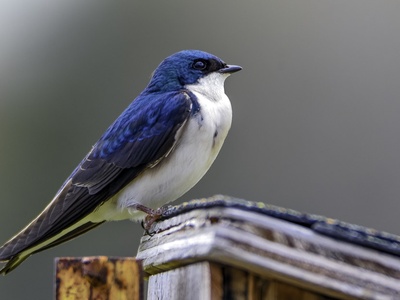
Tree Swallow
Iridescent blue-green back and white underparts; sleek aerial insectivore that nests in cavities and nest boxes near wetlands. Forms large nesting colonies and flocks during migration; common in spring and summer.
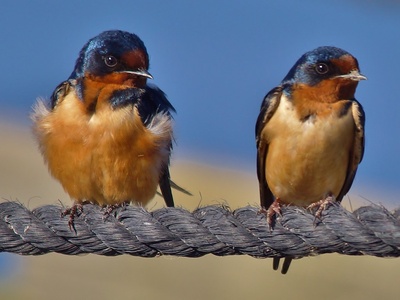
Barn Swallow
Glossy blue back with rusty throat and deeply forked tail. Builds mud cup nests on structures and under bridges. Common over fields and water foraging for insects; widespread summer visitor and familiar barnyard resident.
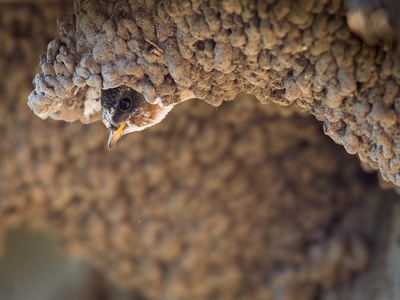
Cliff Swallow
Colonial mud-nest builder with chunky body and pale forehead. Nests on cliffs or man-made structures in large colonies near water and fields. Flies fast and feeds on insects; common migrant and summer breeder.
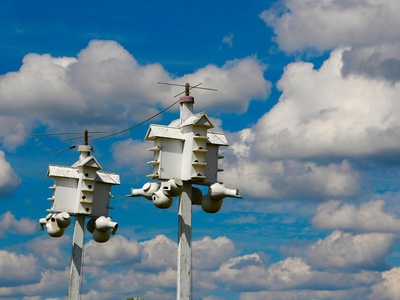
Purple Martin
Large swallow that nests in colonies in houses or gourds provided by people. Glossy purple males, brownish females. Prefers open habitat near water; widely appreciated by birders and commonly monitored at nest sites.
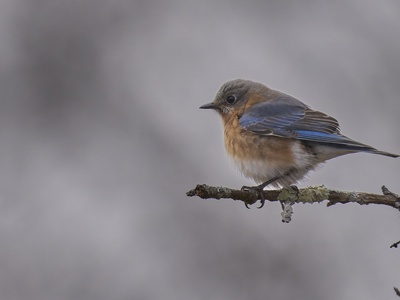
Eastern Bluebird
Small, bright blue and rusty-breasted thrush of open fields, orchards and suburban lawns. Nests in nest boxes and cavities; eats insects and berries. Cheerful song and year-round presence where nest sites are available.
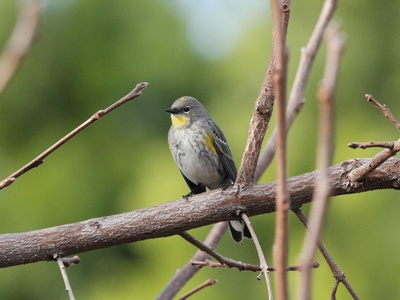
Yellow-rumped Warbler
Boldly patterned warbler that winters/ migrates through Indiana and often forages in flocks. Tolerant of colder weather thanks to waxy berry digestion; common in woodlots, parks and berry-bearing shrubs.
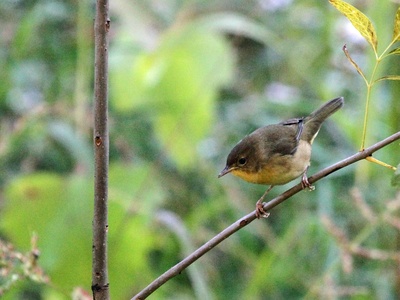
Common Yellowthroat
Small, olive warbler with black mask on males; sings loud “witchety-witchety.” Prefers marshes, tangles and wet meadows. Often skulking but audible; very common breeder in wetlands.
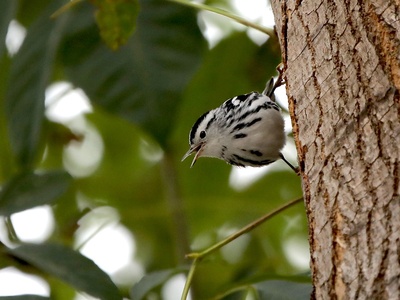
Black-and-white Warbler
Zebra-striped warbler that creeps along trunks and branches like a nuthatch. Prefers mature woods and forest edges for breeding and migration. Unusual feeding style makes it easy to spot despite small size.
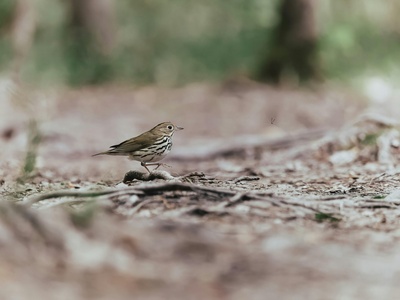
Ovenbird
Ground-dwelling warbler of forests with loud “teacher-teacher” song and olive-brown back. Nests at forest floor in leaf litter, preferring mature deciduous woods. Common spring and summer breeder in woodland interior.
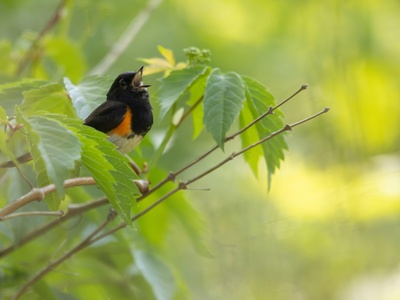
American Redstart
Flashy black-and-orange (males) warbler that flicks tail to reveal bright patches while gleaning insects in shrubby woodlots. Common spring and summer migrant and breeder in riparian and second-growth habitats.
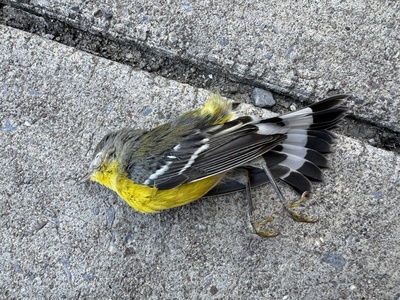
Magnolia Warbler
Striking black-and-yellow spring and fall migrant that favors spruce-fir and mixed woodlots during migration. Often seen in dense foliage gleaning insects; more common on migration than as a breeder in Indiana.
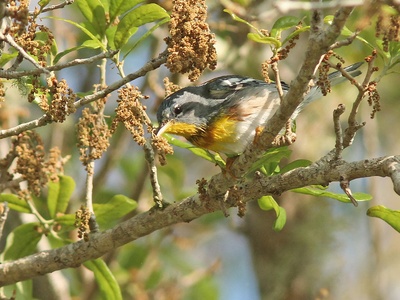
Northern Parula
Small blue-gray warbler with yellow throat that migrates through Indiana and breeds rarely in swampy forests and mature woodlands. Often associated with mossy, humid habitats; striking in spring migration.
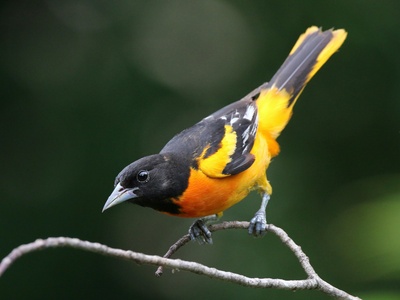
Baltimore Oriole
Vibrant orange-and-black songbird that nests in hanging woven nests in tall trees. Visits orange halves and nectar feeders; common in parks, edges and open woodlands during breeding season.
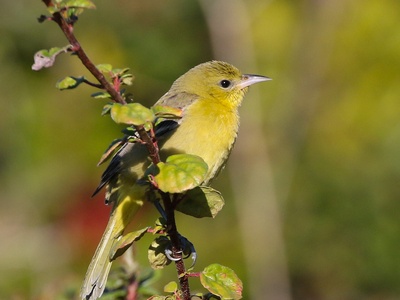
Orchard Oriole
Smaller oriole with chestnut belly in males and olive-brown females. Favors orchards, edge habitats and riparian thickets. Less flashy than Baltimore Oriole but a familiar summer songster and insectivore.
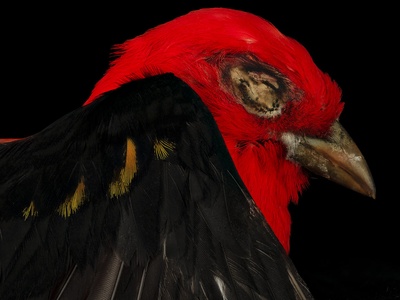
Scarlet Tanager
Brilliant red male perched high in deciduous canopy, with black wings. Prefers mature woods and avoids open edges. Secretive nesters but conspicuous by song in late spring and summer; migrant through Indiana.
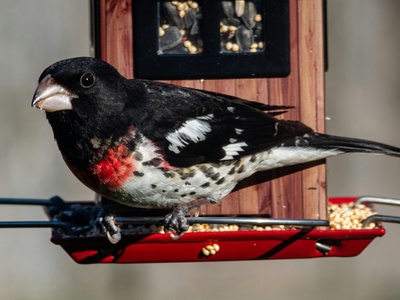
Rose-breasted Grosbeak
Large, stout-billed seed-eating songbird; males sport bold rose patch on white chest. Found in deciduous wood edges, gardens and suburbs. Melodic song and attracted to feeders with sunflower seeds.
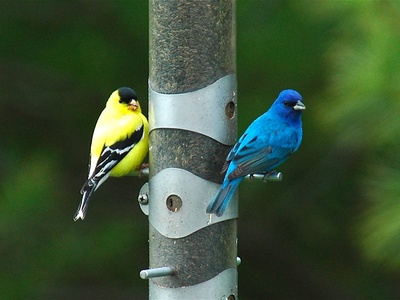
Indigo Bunting
Brilliant cobalt-blue male in summer, brown female and streaked juveniles. Prefers brushy fields, roadsides and edges for breeding. Sings from perches; a colorful and common summer presence in open habitats.
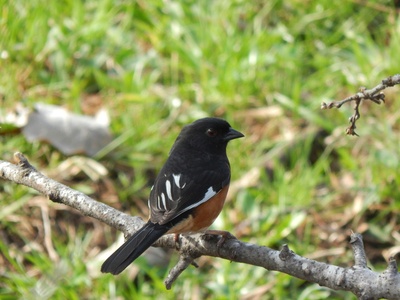
Eastern Towhee
Large, rufous-and-black sparrow that scratches in leaf litter with distinctive “drink-your-tea” call. Prefers brushy tangles, forest edges and thickets. Common breeder in much of Indiana’s shrubby habitats.
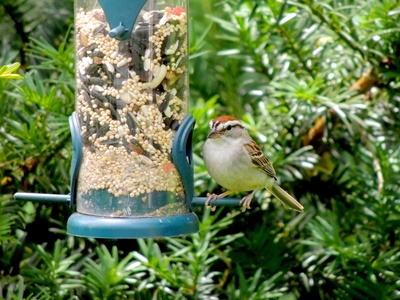
Chipping Sparrow
Slim, rufous-capped sparrow of lawns, parks and open woodlands. Distinct trilling song in warm months. Often nest near human habitations and frequent at feeders during migration and summer.
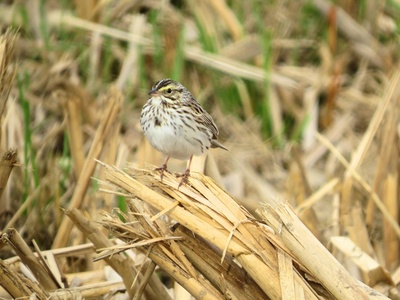
Field Sparrow
Small, plain sparrow with soft pink bill and clear, whistled song. Prefers old fields, shrubby grasslands and fencerows. Delicate and often perched on low shrubs, common in early successional habitats.
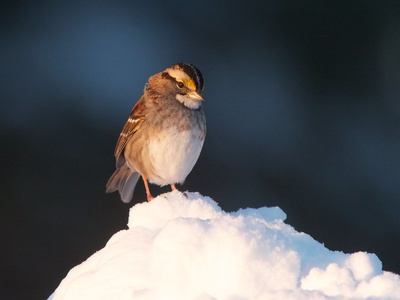
White-throated Sparrow
Boldly streaked sparrow with white throat and yellow lores; sings “Oh-sweet-Canada-Canada.” Common winter visitor to thickets, yards and woodland edges; visits feeders for seed and fruit.
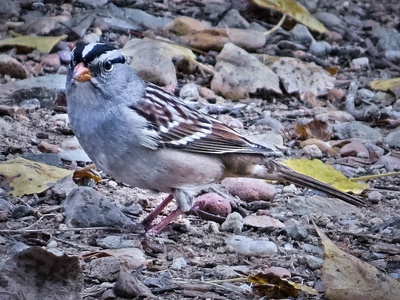
White-crowned Sparrow
Distinct black-and-white striped head; streaked body. Common during migration and winter in brushy fields and roadside tangles. Solitary ground forager and noticeable by its clear, whistled song.
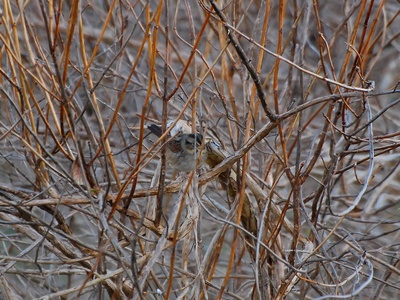
Swamp Sparrow
Rusty-capped, gray-faced sparrow of cattail marshes and wet thickets. Secretive and more often heard than seen, with bubbly, high-pitched song. Common breeder in marshy, sedge-dominated habitats.
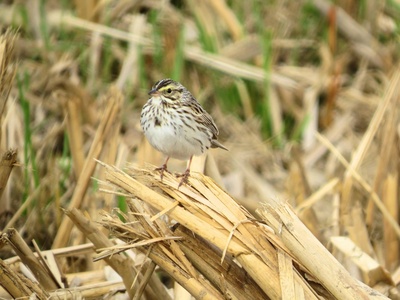
Savannah Sparrow
Streaky, short-tailed sparrow with yellowish eyebrow stripe. Prefers grasslands, airports, and fields. Ground nester and insectivore-seed eater; common during migration and in remnant grassland breeding sites.
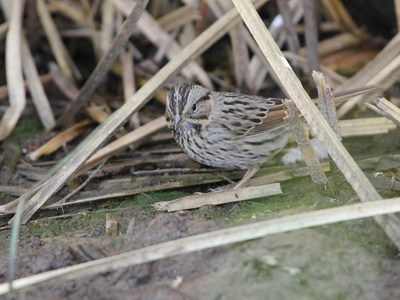
Lincoln’s Sparrow
Shy, finely streaked sparrow with buffy face and crisp central breast spot. Prefers dense tangles and moist thickets during migration. Secretive and often found low in shrubs on spring and fall passage.
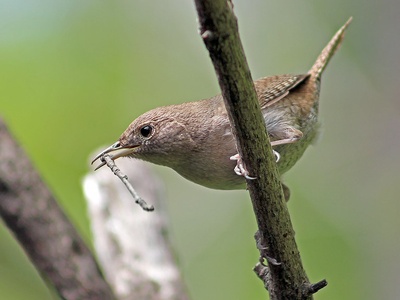
House Wren
Small, rufous-brown wren that readily uses nest boxes and cavities. Loud, bubbly song from small perches and fence posts. Common in yards, brushy edges and orchards; active and territorial when nesting.
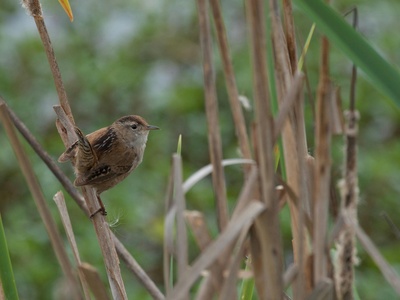
Marsh Wren
Tiny, streaky brown wren of cattail marshes with bubbling, emphatic song. Skulks in dense reeds and builds multiple nest structures. Common in large marshes where reeds provide breeding cover.
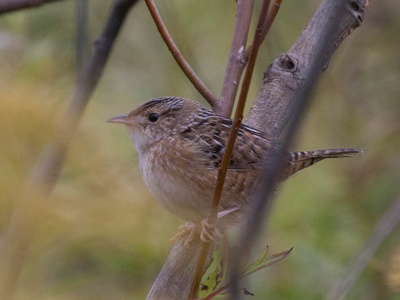
Sedge Wren
Tiny, secretive marsh wren preferring wet meadows and tall grasses. Irregular breeder in Indiana; populations fluctuate with habitat. Not often seen—listen for buzzy, insect-like song in open sedge marshes.
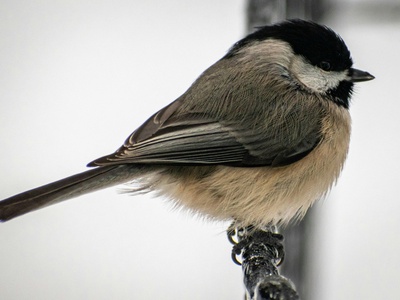
Carolina Chickadee
Small, stocky chickadee with black cap and white cheeks. Bold at feeders and in suburban forests, with curious, energetic behavior. Forages in small flocks and caches seeds for winter.
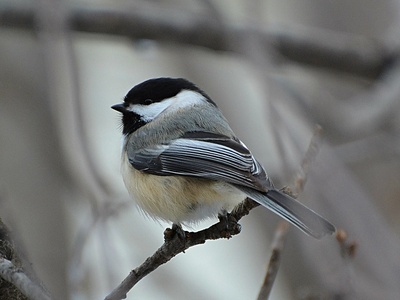
Black-capped Chickadee
Northern chickadee that occurs irregularly in Indiana, mostly during cold winters. Similar to Carolina chickadee but slightly different songs and range. Look for small mixed-species flocks in conifer stands.
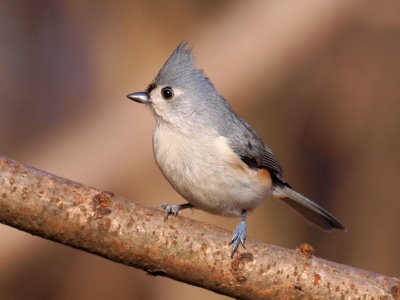
Tufted Titmouse
Gray, crested songbird with white face and black forehead patch. Friendly feeder visitor in woodlands and suburbs, eating seeds, insects and suet. Vocal and conspicuous year-round in appropriate habitat.
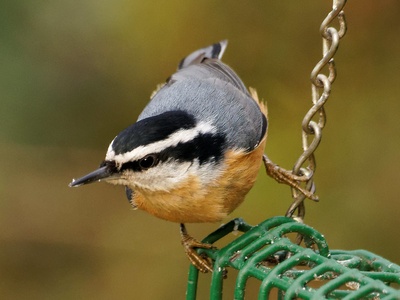
Red-breasted Nuthatch
Tiny, compact bird with blue-gray back and rufous underparts. Winters irregularly in Indiana during cone crop failures farther north. Creeps down tree trunks, probing bark for insects and seeds.
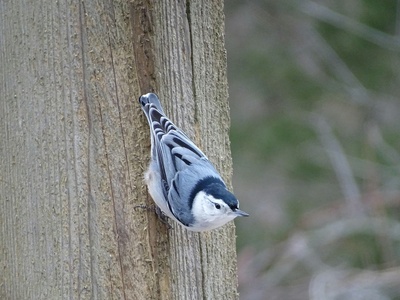
White-breasted Nuthatch
Large white-faced nuthatch that travels headfirst down trunks. Common in mature woods and suburbs; nests in cavities and visits feeders for sunflower seeds. Distinct nasal call and bold behavior.
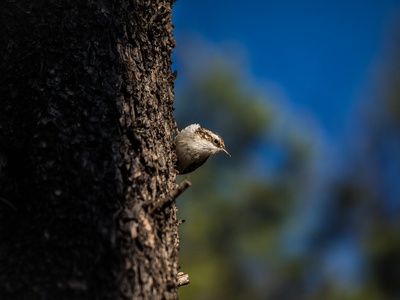
Brown Creeper
Slender, brown streaked bird that spirals up tree trunks searching for insects in bark crevices. Very cryptic and often overlooked; prefers mature woods. Small stiff-tailed creeping motion distinguishes it from nuthatches.
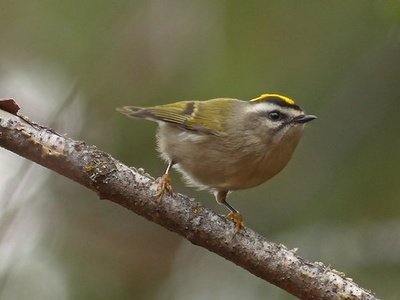
Golden-crowned Kinglet
Tiny, hyperactive bird with bright crown stripe seen in conifers and mixed woods during winter and migration. Flits through foliage gleaning tiny insects; surprisingly loud trilling song from a minute body.
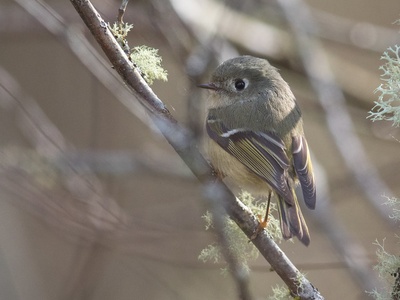
Ruby-crowned Kinglet
Small, olive-gray warbler-like bird with concealed red crown in males. Active gleaner in brush and trees during migration and winter. High-pitched call and restless movements make it distinctive in mixed flocks.
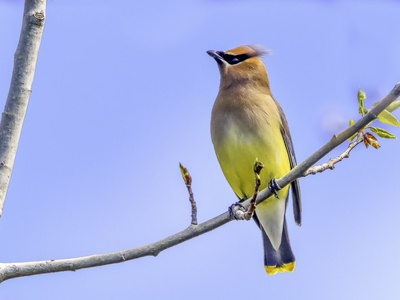
Cedar Waxwing
Sleek, brown-and-gray fruit-eater with silky plumage and a yellow-tipped tail. Forms nomadic flocks following berry crops in towns, orchards and parks. Breeds in open woodlands and is famous for social feeding.
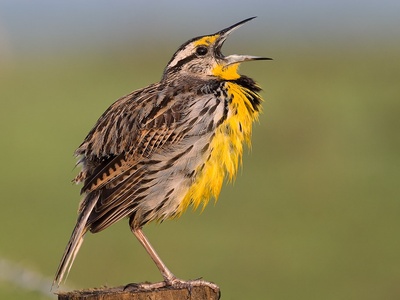
Eastern Meadowlark
Bright yellow throat with black “V” and melodic flute-like song from fence posts and field perches. Prefers pastures, hayfields and grasslands. Ground nester sensitive to mowing but still found across rural Indiana.
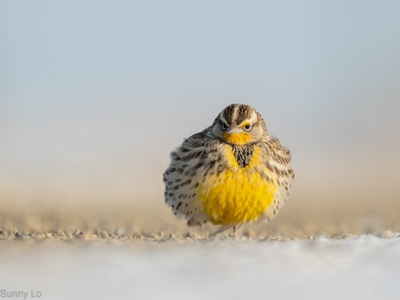
Western Meadowlark
Yellow-bellied, long-winged grassland bird occasionally recorded in Indiana. Distinctive flute-like song and bold pattern; most records are vagrants to open fields and prairies. Watch for when grassland birds appear unexpectedly.
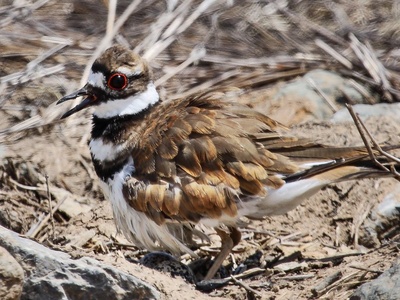
Killdeer
Large, noisy plover with broken-wing distraction display to protect nests. Found on mudflats, gravel rooftops, lawns and road edges. Feeds on invertebrates and common across many open habitats, especially near water.
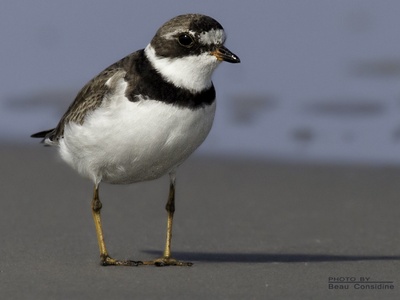
Semipalmated Plover
Small plover with partial webbing between toes; frequents mudflats, shorelines and flooded fields during migration. Forages on exposed mud for insects and crustaceans; common on spring and fall passage.
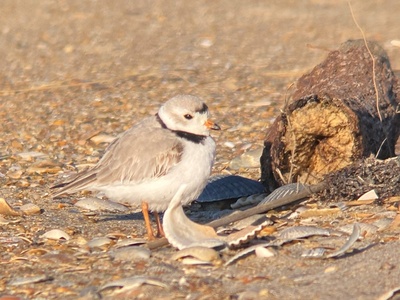
Piping Plover
Tiny, sandy-colored plover with black neck band; federally threatened and rare in Indiana. Occasional records on lake beaches and reservoir shorelines. Highly notable when present; protected and closely monitored.
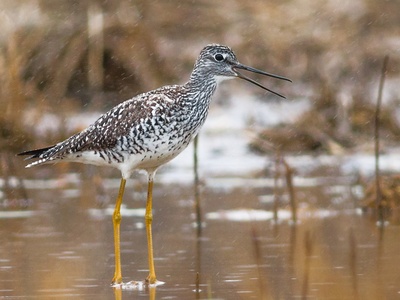
Greater Yellowlegs
Tall, long-legged shorebird with loud piercing calls. Probes muddy edges and flooded fields for invertebrates. Common during migration on wetlands and mudflats across the state.
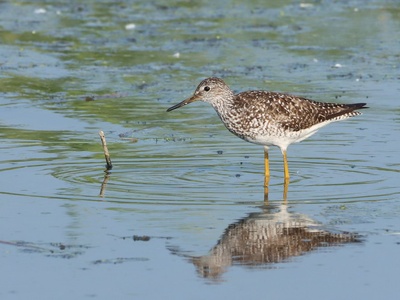
Lesser Yellowlegs
Slightly smaller, slim-legged migrant found on freshly exposed mudflats and flooded fields. Active forager often in mixed shorebird flocks during spring and fall migration.
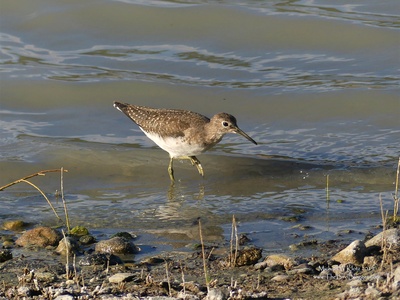
Solitary Sandpiper
Distinctive solitary shorebird that uses freshwater marsh edges and flooded fields. Flies with slow wingbeats and shows white eye-ring; forages alone rather than in flocks. Regular migrant through Indiana.
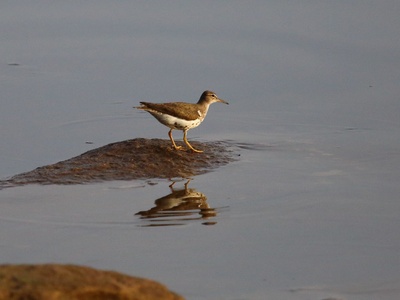
Spotted Sandpiper
Teetering plover-like shorebird with spotted breast in summer and characteristic bobbing motion. Favors rocky shores, streams and pond edges. Common breeder and migrant in open watery habitats.
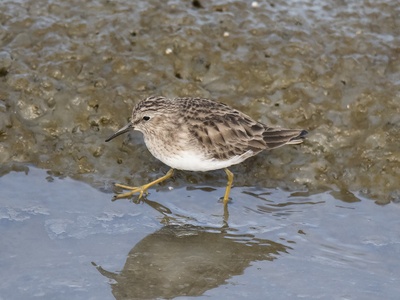
Least Sandpiper
Very small peep with fine bill and yellowish legs, often in flocks on mudflats and muddy shorelines. Eats tiny invertebrates; abundant during migration and easy to overlook among peeps.
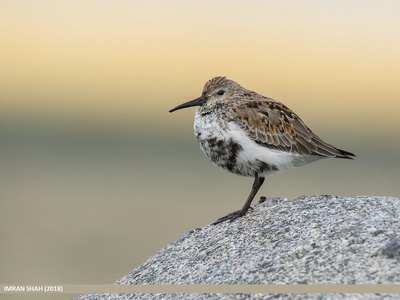
Dunlin
Medium-sized sandpiper that sometimes winters on Indiana lakeshores and mudflats. In breeding plumage shows black belly patch; common on migration in wet mudflat habitats and lakeshores in colder months.
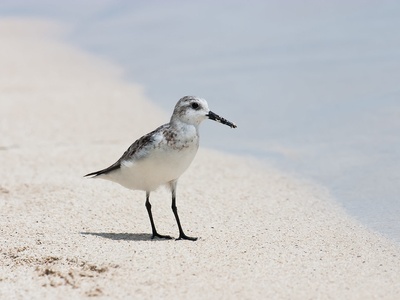
Sanderling
Sturdy, pale sandpiper usually associated with ocean beaches but occasional on Indiana lake beaches and reservoirs during migration. Runs with waves probing for small invertebrates; notable vagrant when inland beaches host coastal species.
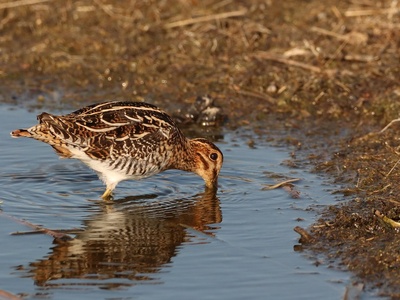
Wilson’s Snipe
Stocky, cryptically patterned shorebird with long straight bill used to probe marshes and wet meadows. Camouflaged and secretive; performs winnowing flight displays. Common breeder in suitable wetland habitat.
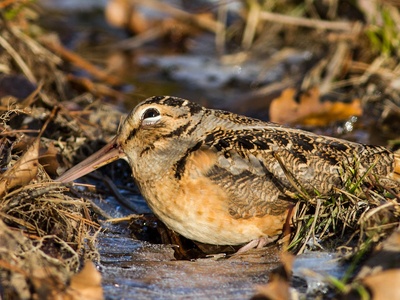
American Woodcock
Plump, cryptic, short-legged shorebird that favors young forests and brushy fields for dramatic dusk courtship flights. Nocturnal feeders probe soft soil with long bill; unique behavior makes it a favorite for springwatching.
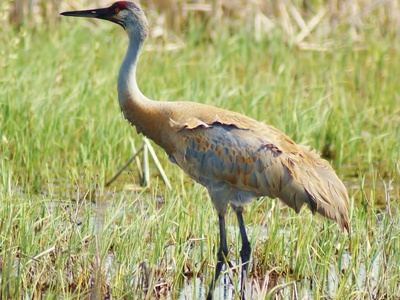
Sandhill Crane
Large, gray, long-legged crane with trumpeting calls and elaborate dances. Once rare but now increasing as breeder and migrant in wetlands and agricultural fields. Spectacular flocks during migration and breeding pairs in marshes.
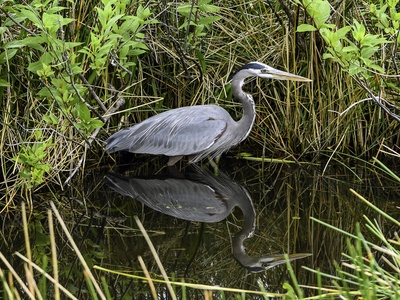
Great Blue Heron
Huge, slate-blue heron common along rivers, marshes and lake edges. Slow, deliberate stalking of fish; nests colonially in trees. A conspicuous wetland presence and one of the most commonly seen herons in Indiana.
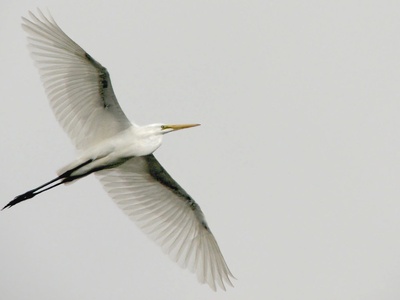
Great Egret
Large elegant white heron with black legs and yellow bill; forages in shallow water and marshes. More common during migration and summer; nests in colonies with other herons and egrets.
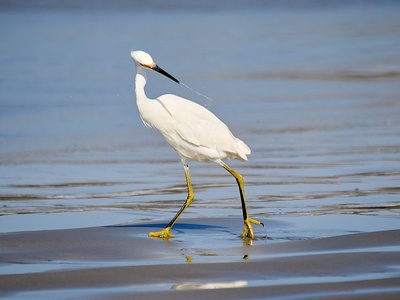
Snowy Egret
Small, delicate white egret with black bill and yellow feet; rare but occasionally recorded in Indiana wetlands and reservoir shorelines. Striking when present; sought after by birders during warm months.
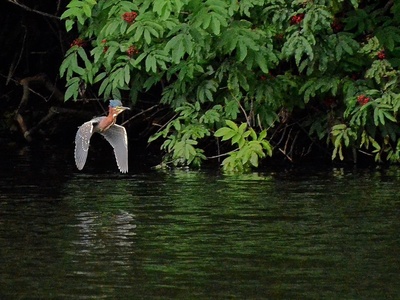
Green Heron
Compact, dusky heron often seen at pond edges and streamside brush. Uses bait-fishing behavior to lure prey and has a hunched posture. Common and secretive in small wetlands and riparian zones.
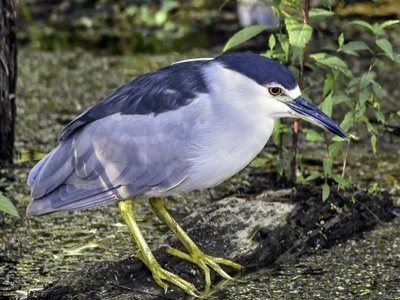
Black-crowned Night-Heron
Chunky, nocturnal heron with black crown and back; roosts in colonies and feeds at dusk and night in marshes and ponds. Seen at rookery sites and wetlands during breeding season.
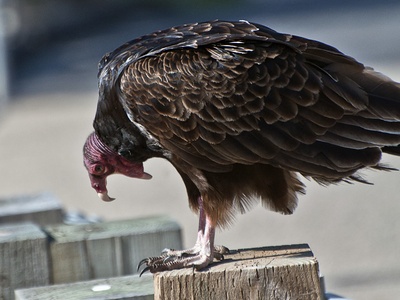
Turkey Vulture
Large scavenging raptor with bare red head and broad wings that soar on thermals. Widespread in open country, roadsides and landfills. Often first to find carcasses and easy to identify in flight.

Osprey
Fish-eating raptor that nests on platforms, poles and treetops near water. Dives feet-first to catch fish and shows long wings with crook. Increasingly common breeder and summer resident at lakes and rivers.
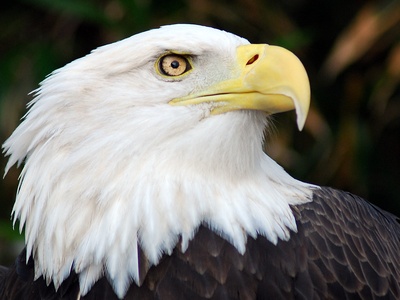
Bald Eagle
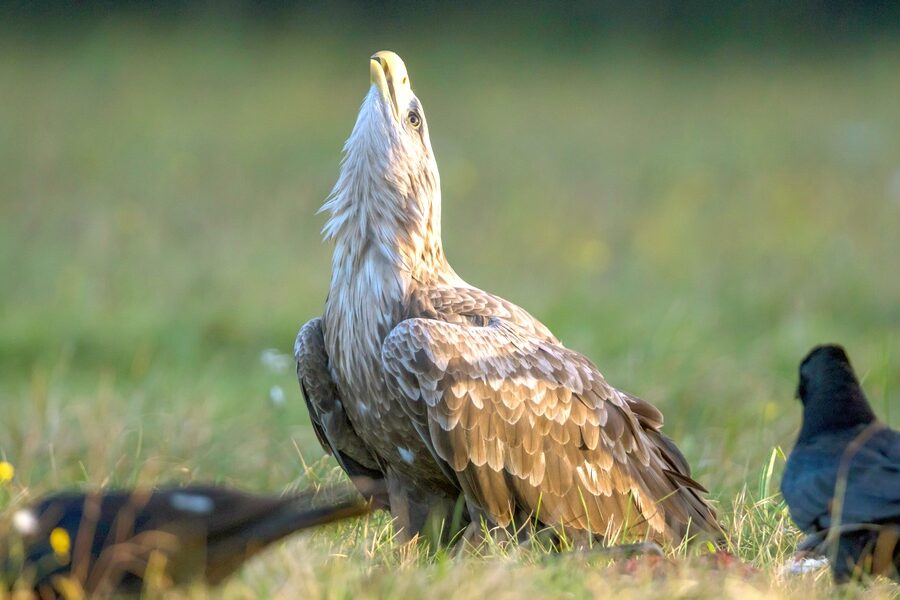
Iconic large raptor with white head and tail when adult. Nests near large water bodies and hunts fish and waterfowl. Populations have rebounded and breeders are now widespread across Indiana’s large lakes and rivers.
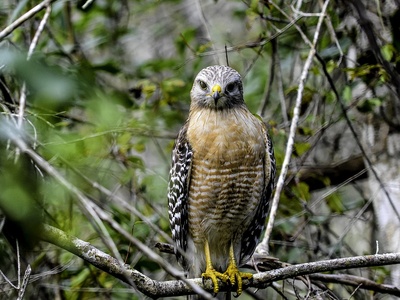
Cooper’s Hawk
Sharp, agile woodland hawk that preys on medium-sized birds. Long tail and rounded wings help maneuver through trees and suburbs. Increasingly common in towns where it hunts feeder birds.
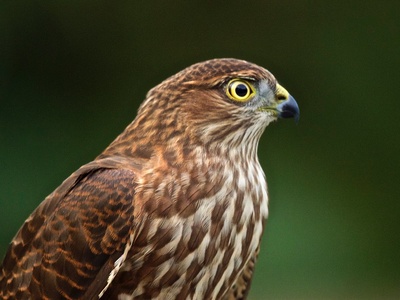
Sharp-shinned Hawk
Small, fast accipiter that preys on small songbirds. Often seen darting through woodlots and backyard patches, especially during migration when they pass through in numbers.
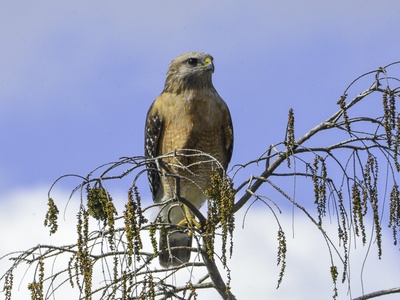
Red-shouldered Hawk
Medium-sized raptor with distinctive reddish shoulders and barred underparts. Prefers riparian woodlands and forested swamps. Vocal, territorial and more common in eastern Indiana’s lowland woodlands.
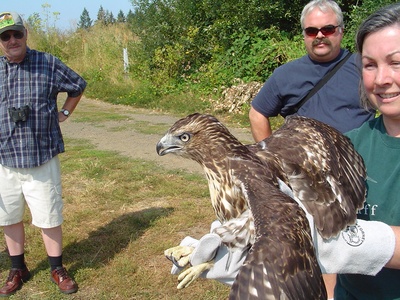
Red-tailed Hawk
Large, broad-winged hawk with red tail in adults. Perches along roads and fields hunting rodents; ubiquitous across open country, suburbs and wood edges. One of the most commonly observed raptors statewide.
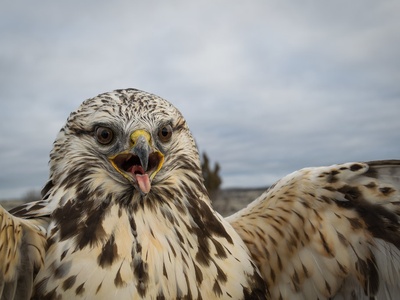
Rough-legged Hawk
Winter specialist from the Arctic that visits Indiana during cold months to hunt open fields. Shows feathered legs and hovering hunting behavior. Look for them in rural grasslands and agricultural regions in winter.
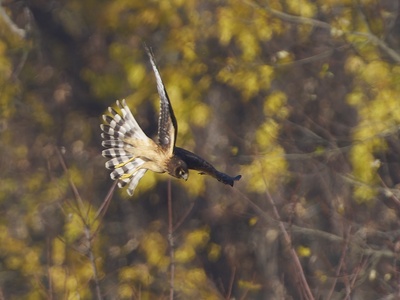
Northern Harrier
Low-flying raptor with owl-like face and long wings that quarter marshes and fields for small mammals and birds. Males gray, females brown. More visible in open wetlands during migration and winter.
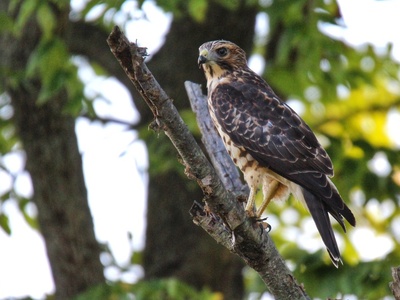
Broad-winged Hawk
Small, short-winged buteo famous for massive migration kettles in fall. Prefers mature deciduous forests for breeding but visible in migration over ridges and river corridors. Distinctive crowded flocks on passage.
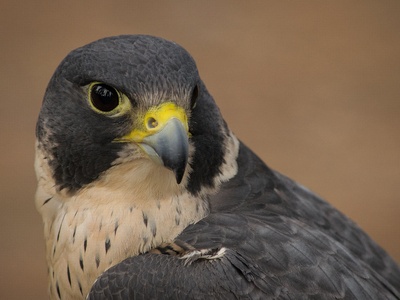
Peregrine Falcon
Powerful fast falcon that nests on cliffs and tall buildings; preys on medium-sized birds in flight. Recovered from decline and now breeds in some Indiana cities. Spectacular stoops make it a prized sighting.
Merlin
Small, fierce falcon that hunts small birds in open habitats and shorelines. Quick and direct flight with rapid wingbeats; occurs on migration and in winter, often near wetlands and fields.
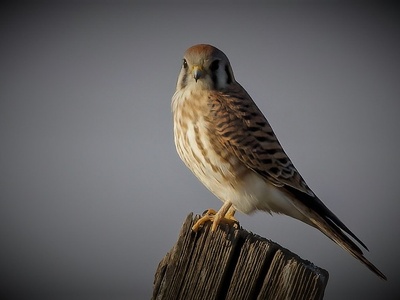
American Kestrel
Colorful small falcon that hovers while hunting insects and small rodents. Found on fenceposts, powerlines and open fields. Declining in parts of its range but still a familiar presence in Indiana’s rural landscapes.
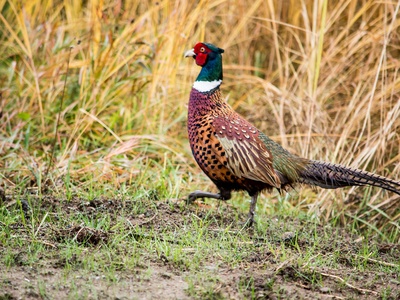
Ring-necked Pheasant
Large, gamebird introduced from Eurasia; colorful male with white neck ring and long tail. Found in agricultural landscapes and grasslands where planted for hunting. Established in many rural counties.
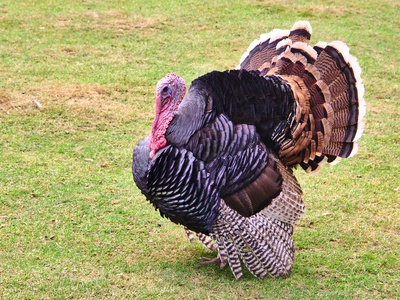
Wild Turkey
Large ground-dwelling bird restored to Indiana by reintroduction; roams forests and agricultural edges. Males display fan tails and gobble in spring; an iconic game and wildlife species seen across the state.
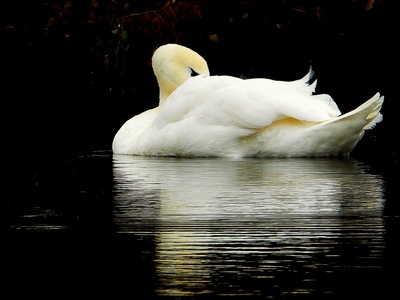
Mute Swan
Large, white, long-necked swan introduced and now feral on many Indiana lakes and reservoirs. Often territorial and conspicuous; feeds on submerged vegetation and sometimes conflicts with native waterfowl.
Canada Goose
Large, familiar goose with black head and neck. Nests in wetlands and urban ponds; flocks migrate and many populations are now resident year-round. Abundant in parks, fields and waterways.
Mallard
Widespread dabbling duck with iridescent green-headed males and mottled females. Found on almost any pond, marsh or stream. Common breeder and frequent at urban and rural wetlands.
Wood Duck
Spectacularly patterned, colorful duck that nests in tree cavities and nest boxes near wooded wetlands. Males show crested head and bright colors; common in forested ponds and streams and a conservation success story.