From the warmth of your morning coffee to the hum of a city grid, different kinds of energy are at work in every corner of life and place. Noticing how they move and change helps make sense of machines, weather, and the fuels we choose.
There are 14 Forms of Energy, ranging from Chemical energy to Thermal energy. For each entry the list is organized with Category,Typical units (J),Common sources (max 15 words) so you can quickly compare what each form is, how it’s measured, and where it comes from — you’ll find below.
How do these different forms of energy affect everyday appliances and devices?
Different forms show up as the inputs and outputs of devices: Chemical energy in batteries or fuel becomes electrical or mechanical energy in phones and cars; thermal energy drives ovens and heating systems; kinetic and potential energies govern moving parts. Knowing which form dominates helps choose the right device, fuel, or safety measure.
Which forms of energy are most practical to convert into electricity?
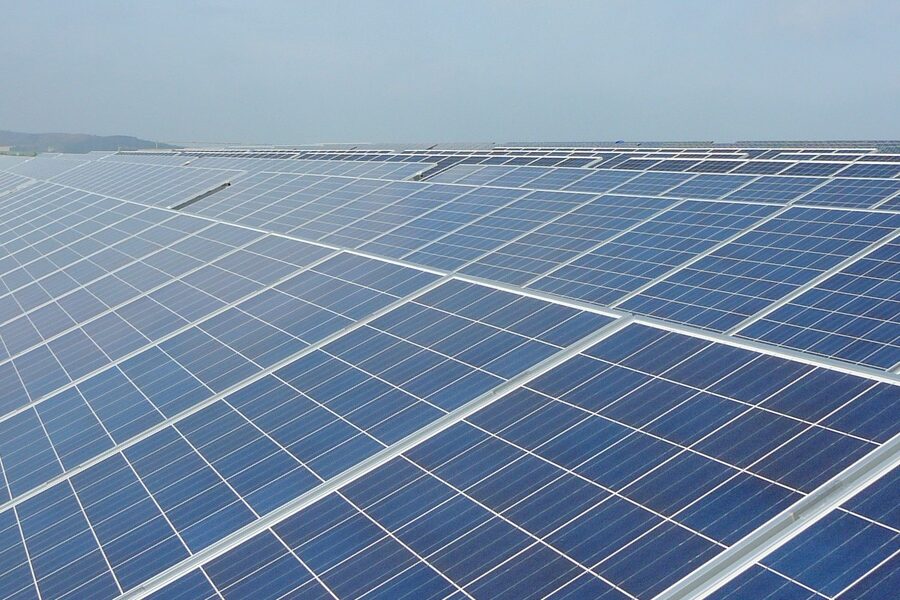
Mechanical (kinetic), chemical (via batteries or fuels), and radiant (solar) energies are the most commonly converted to electricity because we have mature, efficient technologies—generators, fuel cells, and solar panels—that capture and transform those forms at useful scales.
Forms of Energy
| Name | Category | Typical units (J) | Common sources (max 15 words) |
|---|---|---|---|
| Kinetic energy | Mechanical | J; eV (particle scale) | Moving vehicles, flowing water, wind, moving objects |
| Gravitational potential energy | Mechanical (Potential) | J | Raised objects, mountains, reservoirs, satellites, planets |
| Elastic potential energy | Mechanical (Potential) | J | Springs, stretched rubber bands, bent beams, compressed materials |
| Thermal energy | Thermal | J; cal | Sun, combustion, friction, hot surfaces, Earth’s interior |
| Chemical energy | Chemical | J; eV per bond | Food, fuels, batteries (as conversion example), living cells |
| Electrical energy | Electrical | J; eV (particle scale) | Power plants, generators, lightning, batteries (as conversion) |
| Magnetic energy | Electromagnetic (Magnetic) | J | Permanent magnets, electromagnets, inductors, Earth’s magnetic field |
| Radiant (Electromagnetic) energy | Electromagnetic | J; eV; W·s | Sunlight, light bulbs, radio transmitters, thermal emitters |
| Sound (Acoustic) energy | Mechanical (Acoustic) | J; Pa; dB (level) | Speakers, voices, engines, earthquakes, machinery |
| Nuclear energy (binding) | Nuclear | J; MeV per nucleus | Atomic nuclei, radioactive decay, fission and fusion reactions |
| Rest mass energy (mass–energy) | Relativistic/Nuclear | J; E=mc² (J) | Matter itself, particle annihilation, nuclear reactions |
| Electrostatic potential energy | Electrical | J; eV | Charged plates, static charges, ionic crystals, capacitors |
| Surface (Interfacial) energy | Chemical/Surface | J; J/m² | Liquid droplets, bubbles, wetting surfaces, material interfaces |
| Flow (Pressure/Enthalpy) energy | Mechanical/Thermal | J; J/kg (specific enthalpy) | Pipelines, turbines, pumps, flowing fluids, compressors |
Images and Descriptions
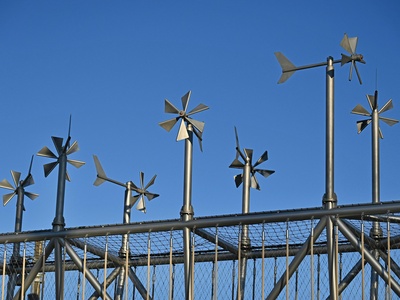
Kinetic energy
Kinetic energy is the energy of motion. Anything moving—cars, wind, flowing water, or molecules—has kinetic energy proportional to mass and speed squared. Measured in joules, it’s used in turbines, brakes, sports analysis, and many engineering calculations.

Gravitational potential energy
Gravitational potential energy is stored by objects due to their height in a gravity field. Lifted weights, dammed water, and orbiting satellites hold this energy proportional to mass, gravity, and elevation. It powers hydropower, falling objects, and orbital maneuvers.
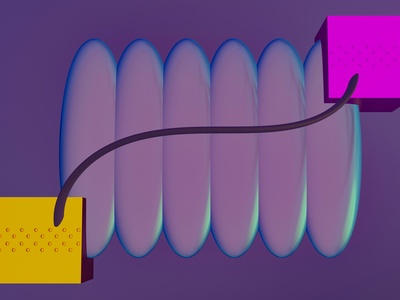
Elastic potential energy
Elastic potential energy is stored when materials are stretched, compressed, or bent. Springs, rubber bands, and deformed structures hold it and release it to do work—used in catapults, watch springs, vehicle suspensions, and many mechanical systems.
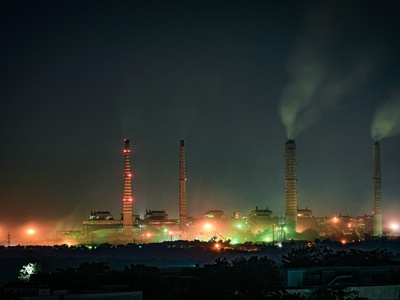
Thermal energy
Thermal energy is the internal energy of particles that we perceive as temperature and heat. From stoves and engines to geothermal sources, it drives weather, cooking, and power plants. Transfers by conduction, convection, and radiation change temperatures and perform work.
Chemical energy
Chemical energy is stored in atomic and molecular bonds and released during reactions. Food, fuels, and battery chemistry release it for motion, heat, or electricity. It’s measured in joules and powers metabolism, engines, and many industrial processes.
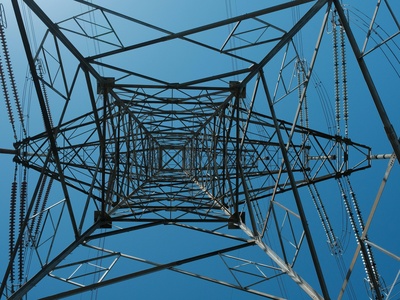
Electrical energy
Electrical energy comes from moving charges or electric potential differences. Found in power lines, lightning, and circuits, it powers homes, motors, and electronics and is valuable because it’s easily converted to other energy forms with high efficiency.
Magnetic energy
Magnetic energy is stored in magnetic fields around magnets and currents. Permanent magnets and electromagnets store field energy used in motors, transformers, magnetic storage, and MRI machines; it’s closely linked with electrical and electromagnetic phenomena.
Radiant (Electromagnetic) energy
Radiant energy travels as electromagnetic waves—visible light, infrared, radio, X-rays, and gamma rays. Emitted by the sun, lamps, and transmitters, it’s used for illumination, communication, heating, remote sensing, and medical imaging.
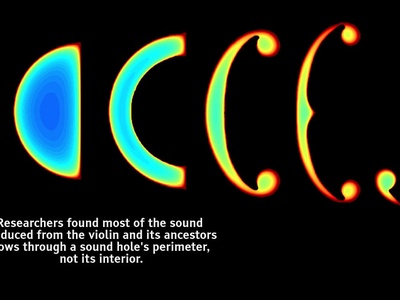
Sound (Acoustic) energy
Sound energy is mechanical energy transmitted as pressure waves in air, water, or solids. Voices, speakers, and engines produce it; it’s used in sonar, diagnostics, music, and communication but often dissipates quickly as heat.
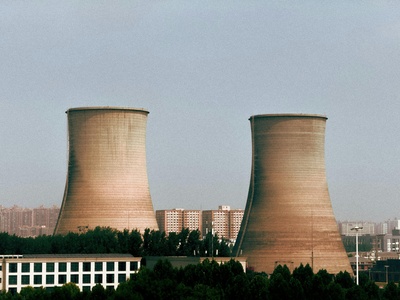
Nuclear energy (binding)
Nuclear energy is stored in atomic nuclei and released by radioactive decay, fission, or fusion. It yields enormous energy per reaction used in power plants and medical isotopes and powers stars; typically measured in millions of electronvolts per nucleus.
Rest mass energy (mass–energy)
Mass–energy equivalence means mass itself is energy (E=mc²). Matter contains huge potential energy that becomes apparent in nuclear reactions or particle–antiparticle annihilation. It’s foundational in relativity and explains large energy releases from small mass changes.
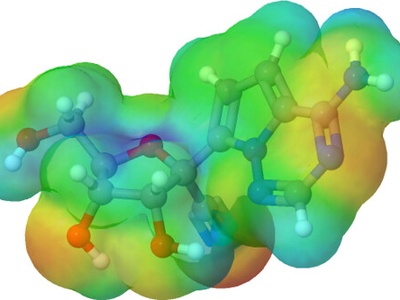
Electrostatic potential energy
Electrostatic potential energy is stored by separated electric charges. Present in capacitors, charged objects, and ionic lattices, releasing it moves charges to do work in circuits, discharge events, or to influence molecular interactions in chemistry.

Surface (Interfacial) energy
Surface energy is stored at interfaces where molecules experience unbalanced forces, like droplets, bubbles, and wetting surfaces. It drives capillarity, droplet formation, and coating behavior, and is important in materials science, biology, and printing technologies.

Flow (Pressure/Enthalpy) energy
Flow or pressure energy is the work associated with moving fluids and pressure-volume processes, often expressed as enthalpy in engines and piping. It’s central to pumps, turbines, HVAC systems, and any application where fluids carry and deliver usable energy.