Every motion you notice — a rolling ball, a droplet sticking to glass, particles in a collider — comes down to specific interactions that push and pull matter. A clear, compact list makes it easier to relate classroom ideas to experiments and everyday phenomena.
There are 34 Forces in Physics, ranging from adhesion (van der Waals) to weak nuclear. For each entry the data are organized as Category,Equation (symbol),Typical magnitude (N), and you’ll find the full list below.
How were these 34 forces chosen?
The list groups forces that are commonly referenced in physics literature and teaching: fundamental interactions, effective forces that emerge in materials, and named forces used in applied contexts. Selection favors forces with clear definitions or widely used models so you can compare Category,Equation (symbol),Typical magnitude (N) directly.
Which of these forces affect everyday life the most?
On human scales, gravity and electromagnetic-origin forces (contact, friction, adhesion like van der Waals) dominate most behavior; nuclear forces matter only inside atoms or nuclei. The table below helps you see which forces matter at different scales by comparing their typical magnitudes and categories.
Forces in Physics
| Force | Category | Equation (symbol) | Typical magnitude (N) |
|---|---|---|---|
| gravity | Fundamental | F=Gm1m2/r^2 | 9.8 N per kg |
| coulomb (electrostatic) | Fundamental | F=kq1q2/r^2 | 8.22e-08 N |
| lorentz (EM on moving charge) | Fundamental | F=q(E+v×B) | 1.60e-13 N |
| strong nuclear | Fundamental | no simple macroscopic F; short-range | 10,000 N |
| weak nuclear | Fundamental | mediated by W,Z bosons (nonclassical) | 0.001 N (effective) |
| normal | Contact | N≈mg cosθ | 9.8 N |
| static friction | Contact | F≤μ_sN | up to ≈5 N |
| kinetic friction | Contact | F=μ_kN | ≈3 N |
| tension | Contact | T (along rope, cable) | ≈98 N |
| drag (air resistance) | Contact | F_d=½ρC_dAv^2 | ≈100 N |
| lift | Contact | L=½ρv^2SC_L | ≈10,000 N |
| buoyant | Contact | F_b=ρ_fluidVg | 9,800 N |
| elastic (spring) | Contact | F=-kx | ≈10 N |
| viscous (Stokes drag) | Contact | F=6π η r v | 1.90e-11 N |
| surface tension | Contact | F=γL (force per length) | 7.20e-04 N |
| adhesion (van der Waals) | Contact | no simple universal formula | 1e-05 N |
| magnetic dipole | Fundamental | complex; dipole approx ∝1/r^4 | ≈5 N |
| radiation pressure | Fundamental | P=I/c, F=(I A)/c | 4.50e-06 N |
| centripetal (required net) | Reactive | F=mv^2/r | ≈1,000 N |
| centrifugal (fictitious) | Fictitious | F=mω^2r (outward) | ≈3,900 N |
| coriolis (fictitious) | Fictitious | F=-2mω×v | ≈0.0015 N |
| euler (fictitious) | Fictitious | F=-mα×r | ≈1 N |
| inertial (fictitious) | Fictitious | F_inertial=-ma | ≈1 N |
| reaction | Reactive | F_reaction=-F_action | ≈9.8 N |
| constraint force | Reactive | no single formula (depends on constraint) | varies widely |
| capillary | Contact | approx F≈2πrγ cosθ | 4.00e-04 N |
| ponderomotive | Fundamental | F∝-∇E^2 (averaged) | 1.00e-12 N |
| dielectrophoretic | Fundamental | F∝(p·∇)E (induced dipole) | 1.00e-09 N |
| shear force | Contact | F_shear (parallel to surface) | thousands N |
| brownian (stochastic) | Contact | stochastic force from molecular impacts | 1.00e-12 N |
| impact (contact impulse) | Contact | impulsive F(t) (time dependent) | tens to thousands N |
| rolling resistance | Contact | F_r≈C_rrN (phenomenological) | ≈1 N |
| casimir | Fundamental | F≈-π^2ħcA/(240a^4) | 1.00e-07 N |
| thermophoretic | Contact | F_thermo ∝∇T (phenomenological) | 1.00e-12 N |
Images and Descriptions

gravity
Attractive force between masses, acting over long range. Near Earth’s surface equals about 9.8 N per kilogram; governs planetary orbits, tides, and free fall. Formula: F=Gm1m2/r^2. It is always attractive and dominates on large scales.
coulomb (electrostatic)
Electrostatic force between charged particles, inverse-square law. For electron–proton at Bohr radius ~8.2e-08 N. Formula F=kq1q2/r^2. Can attract or repel, underlies chemistry, solids, and everyday static electricity effects.
lorentz (EM on moving charge)
Force on moving charge from electric and magnetic fields, F=q(E+v×B). Typical microscopic scale: electron in 1 tesla with 10^6 m/s feels ~1.6e-13 N. Crucial for motors, plasmas, cyclotrons and electromagnetic phenomena.
strong nuclear
Strong nuclear force binds protons and neutrons inside atomic nuclei. Extremely short-range (~1 femtometer) but very strong; between nucleons can reach about 10,000 N at 1 fm separation. Responsible for nuclear binding and release in fission and fusion.
weak nuclear
Weak nuclear interaction causes radioactive decay and flavor change in particles. Extremely short-range and weaker than the strong and electromagnetic forces; not normally a classical force. It governs beta decay and neutrino interactions, playing critical roles in nuclear processes and particle physics.
normal
Contact force perpendicular to surfaces that prevents interpenetration. For an object on a flat surface N≈mg cosθ; equals weight on horizontal surfaces. Reactive in nature, varies with surface orientation and constraints, and is central to everyday support and equilibrium problems.
static friction
Frictional force opposing motion start at contact surfaces; adjusts up to a maximum F≤μ_sN. For a 1 kg object with μ≈0.5, static friction can be up to about 5 N. Keeps objects at rest until threshold exceeded.
kinetic friction
Kinetic friction acts during sliding contact and usually has lower magnitude than static friction: F=μ_kN. For a 1 kg object with μ_k≈0.3, kinetic friction is about 3 N. It dissipates energy as heat and opposes sustained motion.
tension
Pulling force transmitted along a string, rope or cable, directed along the element. Magnitude depends on load and acceleration; for 10 kg supporting weight T≈98 N. Central in pulleys, structures, and dynamics problems.
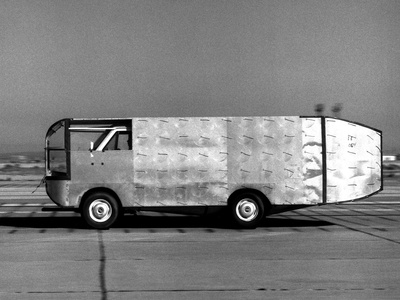
drag (air resistance)
Fluid resistance opposing motion through air or liquid, often approximated F_d=½ρC_dAv^2 at higher speeds. A falling human reaches terminal drag of order 100 N. Important in transport, sports, and aerodynamics; depends on speed and shape.

lift
Aerodynamic force perpendicular to flow that supports aircraft; approximated L=½ρv^2SC_L. A small airplane wing produces lift on the order of 10,000 N. Lift arises from pressure differences and flow circulation, vital for flight and wing design.

buoyant
Upward force from fluid pressure that supports submerged objects: F_b=ρfluidVg. Displacing 1 m^3 of water yields about 9,800 N upward. Explains floating, submarines, and why objects feel lighter in water; depends on displaced volume.
elastic (spring)
Restorative force in deformed elastic objects, F=-kx for springs. A spring with k=100 N/m compressed 0.1 m exerts about 10 N. Linear within limit; fundamental in oscillations, engineering, and materials behavior.
viscous (Stokes drag)
Viscous drag on small spherical particles at low Reynolds numbers given by Stokes’ law F=6π η r v. For a micron-sized particle moving at mm/s in water the force is about 1.9e-11 N. Dominates microfluidics and suspensions.

surface tension
Force along a liquid surface per unit length, characterized by surface tension γ. For water γ≈0.072 N/m giving about 7.2e-04 N for a 1 cm contact line. Responsible for droplets, capillarity, wetting, and insect walking on water.

adhesion (van der Waals)
Short-range attractive forces between molecules (van der Waals, chemical bonds) causing adhesion between surfaces. Magnitudes vary widely; contact patches can produce ~10^-05 N to several newtons. Important in colloids, gecko adhesion, and surface science.
magnetic dipole
Force between magnetic dipoles and magnets, arising from magnetic fields. Formula is complex, often approximated for dipoles as varying with 1/r^4. Refrigerator magnets exert a few newtons. Central to motors, sensors, and magnetic materials.
radiation pressure
Force from momentum carried by electromagnetic radiation; pressure P=I/c and F=(I A)/c for absorbing surfaces. Sunlight on 1 m^2 produces about 4.5e-06 N. Significant for solar sails, precision experiments, and astrophysical processes.
centripetal (required net)
Centripetal force is the net inward force required to keep an object moving in a circle, F=mv^2/r. For a 1,000 kg car going around a curve it can be thousands of newtons. It’s a role, not a separate interaction.
centrifugal (fictitious)
Fictitious outward force experienced in a rotating reference frame, F=mω^2r, opposing centripetal acceleration. For a 100 kg mass at 1 m radius rotating at 1 rev/s the centrifugal force is about 3,900 N. Useful for analysis in noninertial frames.
coriolis (fictitious)
Fictitious force in rotating frames that deflects moving objects, F=-2mω×v. For a 1 kg parcel moving at 10 m/s on Earth, the Coriolis force is about 0.0015 N. It shapes weather patterns and ocean currents on planetary scales.
euler (fictitious)
Fictitious force appearing in nonuniformly rotating frames when rotation rate changes, F=-mα×r. For a 1 kg object at 1 m radius with angular acceleration 1 rad/s^2, the Euler force is ≈1 N. Important in rapidly accelerating rotors and dynamics analysis.
inertial (fictitious)
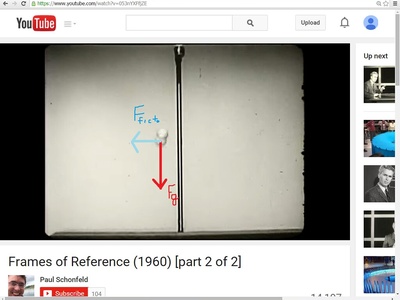
Inertial (fictitious) force is an apparent force experienced in accelerating frames equal to -ma, appearing to oppose acceleration. For a 1 kg object in a car accelerating at 1 m/s^2 it equals about 1 N. Useful for dynamics in non-inertial frames.
reaction
Force equal and opposite to an applied action per Newton’s third law: F_reaction=-F_action. Its magnitude matches the action; for a 1 kg resting on a table the reaction is about 9.8 N upward. Fundamental in collisions, support, and interactions.
constraint force
General force enforcing geometric constraints (e.g., contact, hinge) that prevents forbidden motion. Magnitude varies widely; could be thousands of newtons in structures. Appears as normal, tension, or other contact forces in rigid-body mechanics and multibody systems.
capillary
Capillary force arises when liquid bridges form between solids, drawing them together due to surface tension. For a 1 mm contact radius with water the capillary pull is roughly 4e-04 N. Influences wet granular materials, printing, and small-scale adhesion.
ponderomotive
Nonlinear average force on charged particles in oscillating electromagnetic fields, proportional to the gradient of field intensity. It pushes particles from high to low intensity; typical microscopic magnitudes are tiny (~10^-12 N) but important in laser-plasma and ion trapping contexts.
dielectrophoretic
Dielectrophoretic force acts on neutral but polarizable particles in nonuniform electric fields, drawing them to stronger or weaker field regions. Expressed via induced dipole interactions; typical forces in microfluidic chips are on the order of 10^-9 N. Widely used in sorting and lab-on-chip devices.
shear force
Force that acts parallel to a surface causing layers to slide, often called shear. In structures shear forces can reach thousands of newtons. Central to material failure, fluid viscosity produces shear stresses, and shear controls mixing and deformation.
brownian (stochastic)
Random fluctuating force on microscopic particles from collisions with fluid molecules, driving Brownian motion. Magnitudes are tiny and stochastic—roughly 10^-12 N for micron particles—yet they dominate diffusion, colloidal stability, and noise in small-scale measurements.
impact (contact impulse)
Large, short-duration contact forces occurring during collisions and impacts. Peak magnitudes vary widely—ranging from tens to thousands of newtons (e.g., car crash forces in kilonewtons). They depend on relative speed, mass, and deformation, and are central to safety design.

rolling resistance
Resisting force opposing rolling motion, generally smaller than sliding friction and arising from deformation and hysteresis. Rolling resistance for a shopping cart wheel might be about 1 N. Important in vehicle efficiency, bearings, and wheel design.
casimir
Quantum Casimir force arises between neutral conducting plates due to vacuum fluctuations; F≈-(π^2ħcA)/(240a^4). For 1 cm^2 plates separated by 100 nm the force is about 1e-07 N. Significant in micro- and nano-scale devices and fundamental quantum studies.
thermophoretic
Thermophoretic force drives particles from hot to cold regions in a gas or liquid due to temperature gradients and asymmetric molecular collisions. Magnitudes are tiny (~10^-12 N for micron particles) but important in aerosol science, particle deposition, and microfluidics.