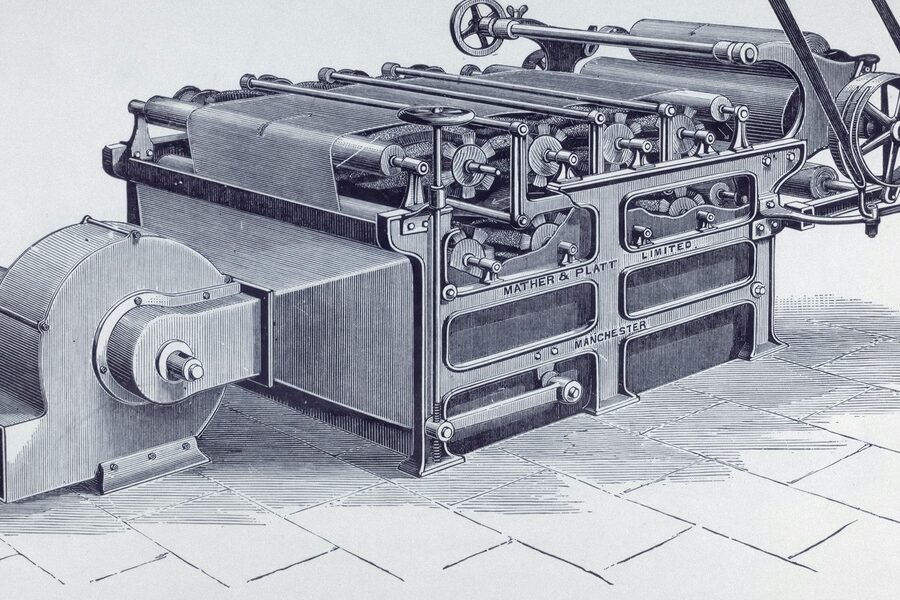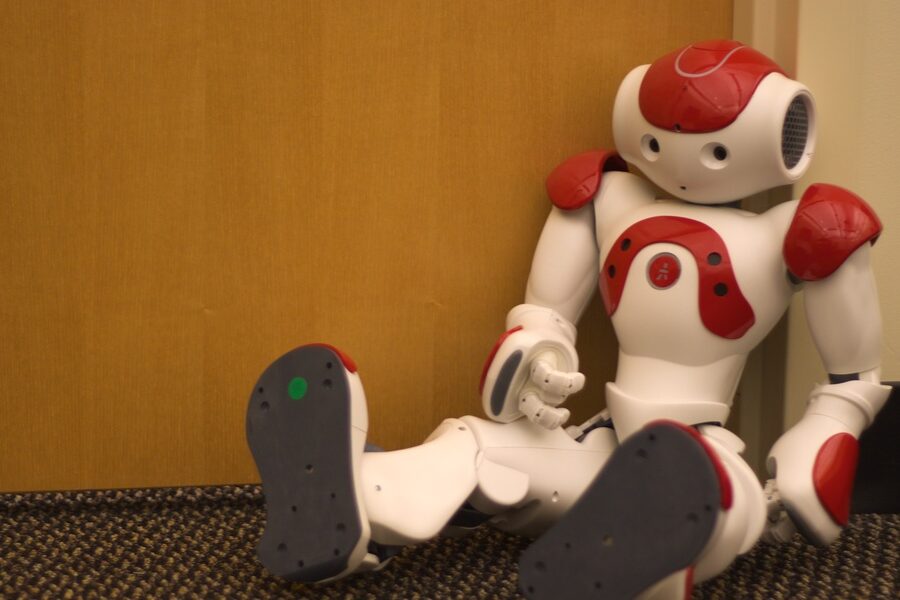
In 1961 the first industrial robot, Unimate, was installed at a General Motors plant; it promised huge productivity gains and a new era of factory efficiency. Early automation delivered on that promise, but it also produced side effects—displaced jobs, new safety questions, and unexpected costs.
Understanding the disadvantages of robotics matters because these technologies reshape who works, how decisions are made, and what societies must regulate and repair. Robots bring efficiency and capability, but they also create economic, social, technical, legal, and environmental challenges that deserve clear attention.
Below I group eight concrete disadvantages into four categories—economic and labor impacts; safety, reliability and security; social and ethical concerns; and legal, regulatory and environmental challenges—and show real examples and numbers that matter.
Economic and Labor Impacts
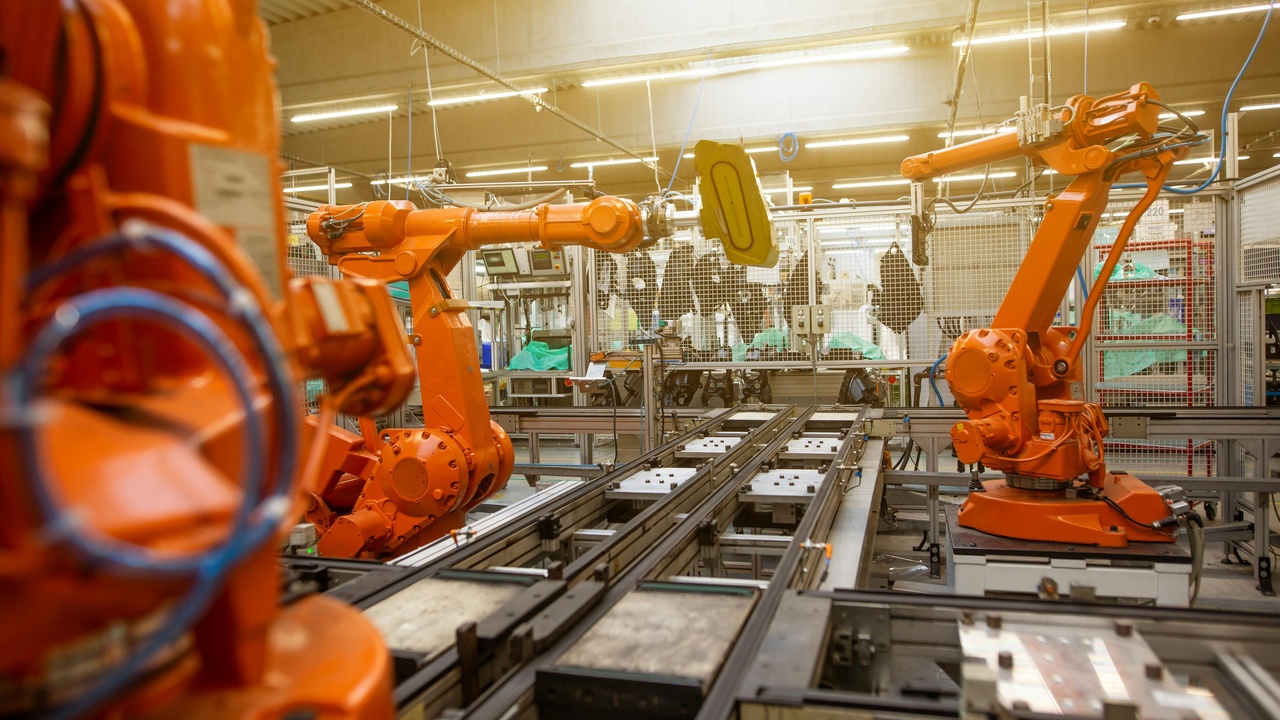
Robotics changes which tasks humans perform, who captures productivity gains, and how firms allocate capital. The shifts are uneven: some regions and industries gain efficiency while others see large-scale disruptions that can last for years.
1. Job displacement and workforce disruption
Automation can replace workers across manufacturing, retail, and back-office roles. A McKinsey Global Institute analysis (2017) estimated that between roughly 400 million and 800 million workers globally could be displaced by automation by 2030 if current trends continue, while OECD work suggests about 14% of jobs are highly automatable and another 32% will face significant task changes.
Those numbers translate into local shocks. Manufacturing towns that once relied on assembly-line employment face steep transitions; routine white-collar work—data entry, basic accounting, simple claims processing—also sees pressure from software robots. Amazon’s acquisition of Kiva Systems and the subsequent rollout of mobile warehouse robots shows how a single firm’s investment (and scale) can change job mixes: fewer pickers on the floor, more technicians and supervisors.
Unimate is the historical anchor: early automation created productivity and displaced certain repetitive tasks—and the pattern repeats today. Retraining helps but is often patchy and underfunded, leaving many workers exposed during transitions.
2. High upfront and maintenance costs concentrate advantages
Robotic systems demand significant capital. Basic industrial robotic arms can range from tens of thousands to several hundred thousand dollars, while complex systems cost more: surgical suites based on the Da Vinci platform sell for roughly $1.5 million to $2 million up front, plus annual service contracts and consumables.
Those sticker prices understate total cost of ownership: integration, software licensing, training, spare parts, and recurring calibration add up. Small manufacturers and clinics often find the payback period too long, while larger firms scale faster and reduce per-unit costs.
Hospitals weigh whether surgical robots improve outcomes enough to justify capital and maintenance expenses; small manufacturers weigh cobot deployments against hiring temporary labor. The result: automation can concentrate productivity gains in better-capitalized organizations.
Safety, Reliability, and Security Risks
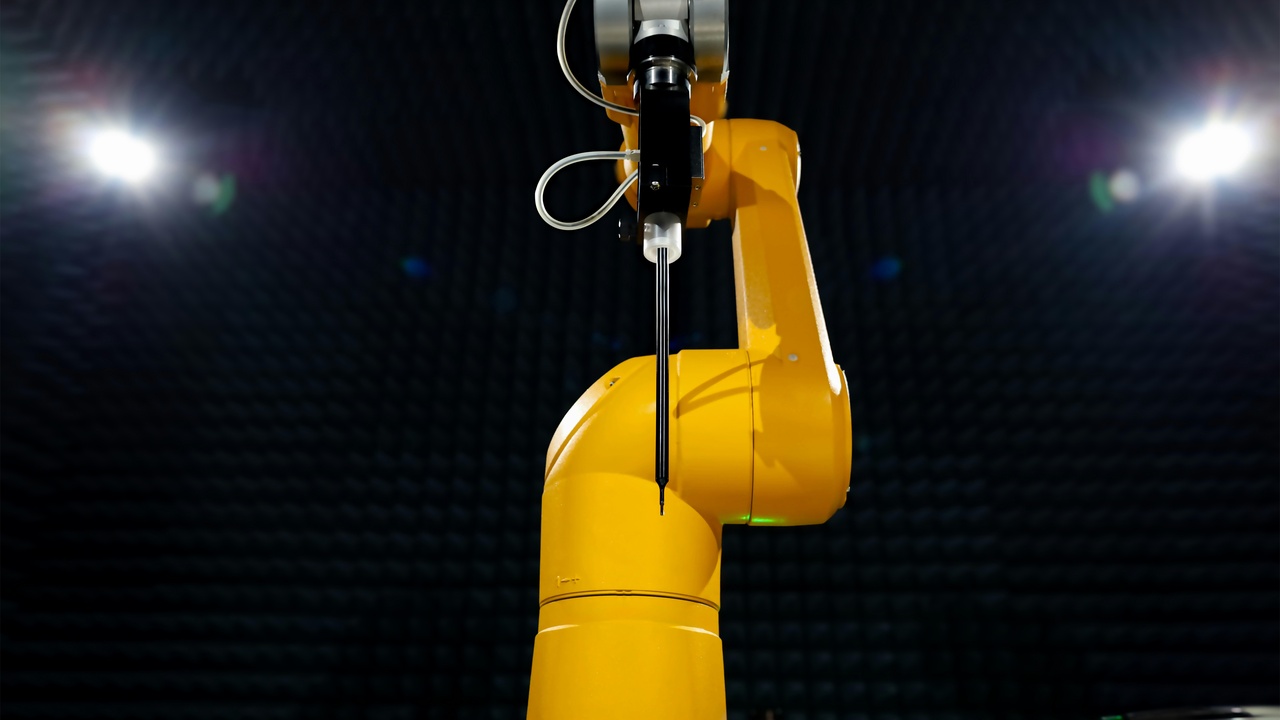
Robots introduce new failure modes that can cause physical harm, cascade through systems, or be exploited by attackers. Safety, reliability, and security must be designed for from day one, yet incidents show gaps between lab performance and messy real-world environments.
3. Safety risks and accidents
When robots fail, people can be injured or killed. A prominent example is the 2018 pedestrian fatality involving an autonomous Uber test vehicle in Tempe, Arizona; that incident highlighted how edge-case behavior and sensor-software mismatches can have tragic outcomes.
Industrial settings have a longer history of robot-related accidents—collisions with robotic arms, crush injuries when human work zones overlap, and failures during maintenance. Standards such as ISO 10218 for industrial robot safety and ISO/TS 15066 for collaborative robots reduce risk but can’t anticipate every unusual on-the-floor situation.
Complex sensor fusion, software updates that change behavior, and ambiguous human-robot interaction zones create persistent failure points, so human oversight and conservative operational rules often remain necessary.
4. Cybersecurity vulnerabilities and malicious misuse
Networked robots extend the attack surface for adversaries. Compromised devices can leak data, enable physical sabotage, or become nodes in distributed attacks. The Mirai botnet (2016) showed how insecure IoT devices can be conscripted for large-scale attacks; robots present similarly attractive targets.
Academic research has demonstrated vulnerabilities in telepresence robots, industrial controllers, and medical devices—remote control, data exfiltration, and manipulation of motion commands are real risks. In hospitals, a hacked device can endanger patients; in factories, it can stop production or damage equipment.
Mitigations—regular patching, secure-by-design practices, network segmentation, and threat monitoring—help, but security often lags behind deployment speed, especially in smaller organizations with limited IT resources.
Social and Ethical Concerns

Beyond economics and safety, robots affect dignity, decision-making, and social bonds. These effects show up in biased outcomes, moral ambiguity when machines make consequential choices, and the erosion of skills and contact when people defer tasks to machines.
5. Ethical dilemmas and algorithmic bias
Robotic systems often embed algorithms trained on historical data, and those data can carry bias. Facial recognition systems, for instance, have been shown in multiple studies to misidentify women and people with darker skin at higher rates, producing unequal outcomes when used in policing, hiring, or access control.
At the other extreme, debates over lethal autonomous weapons systems (LAWS) ask whether machines should ever decide to take human life. International NGOs and several states have argued for limits or bans, citing accountability and moral agency concerns.
Practical scenarios are closer to hand: an algorithmic triage tool could prioritize some patients over others based on biased inputs. Governance, auditability, and human-in-the-loop controls help, but they don’t eliminate the underlying ethical trade-offs.
6. Skill erosion and social isolation
When people stop practicing tasks, their skills can atrophy. Pilots relying heavily on autopilot have less recent manual flying experience; surgeons using assistance systems still need to maintain manual dexterity for rare, difficult cases.
Care robots deployed in eldercare pilot programs can be useful for reminders or mobility assistance, but social scientists warn that substituting human contact with machines risks loneliness and reduced emotional support—important determinants of health for many older adults.
Over-reliance creates fragility: when automation fails, humans may be unprepared to step in effectively, which raises operational and ethical concerns in safety-critical contexts.
Legal, Regulatory, and Environmental Challenges
Fast deployment often outpaces legal and environmental systems. Regulators wrestle with liability attribution, while the materials and energy used in robots add to e-waste and resource-extraction concerns.
7. Legal liability and regulatory gaps
When an autonomous system harms someone, who is responsible: the manufacturer, the operator, the software vendor, or the data provider? The 2018 Uber autonomous vehicle fatality spurred investigations and illustrated that attributing fault in complex, multi-vendor stacks is legally messy.
Different jurisdictions are experimenting with frameworks—some adapt product liability law, others introduce operator obligations or certification regimes. Insurance markets are adapting too, but legal uncertainty raises costs and slows deployment of beneficial systems that people might otherwise trust.
8. Environmental footprint and electronic waste
Robotics manufacture, operation, and disposal have measurable environmental costs. The UN estimated about 53.6 million metric tons of e-waste in 2019, and robotics add to that burden through batteries, circuit boards, and short hardware lifecycles.
Advanced robotics also rely on rare-earth elements and batteries with challenging end-of-life handling. Energy demands—on-device compute, cloud services, and data centers that train models—contribute additional emissions. Practical mitigation includes modular design, extended producer responsibility, and take-back recycling programs, which can reduce but not eliminate impact.
Summary
- Disadvantages of robotics extend beyond headlines: large estimates (McKinsey’s 400M–800M range) show potential scale for job disruption, and history (Unimate) shows the pattern repeats as automation spreads.
- Safety and reliability failures have real human costs—the 2018 Uber fatality and multiple factory incidents demonstrate that testing and standards help but don’t remove all risk.
- Security, ethics, and legal gaps complicate deployment: networked robots invite cyberattacks, algorithms can encode bias, and liability in multi-party systems remains unclear.
- Environmental and economic factors concentrate benefits: high upfront costs favor large players and robotics add to e-waste and resource pressures, requiring design and policy fixes like modularity and producer take-back.
- Policymakers, companies, and communities should balance adoption with stronger regulation, funded retraining programs, robust security practices, and design-for-repair and recycling initiatives to capture benefits while managing risks.