Radon (atomic number 86) is an invisible, odorless noble gas linked to roughly 21,000 lung cancer deaths in the U.S. each year and stands as the second leading cause of lung cancer after smoking. That grim statistic matters because radon’s danger comes less from the inert gas itself and more from the way it behaves in homes, water and the body—adsorbing to materials, dissolving into liquids, and decaying into chemically active, radioactive elements. Radon may seem chemically faint compared with other elements, but it still interacts in important, measurable ways — forming at least one confirmed compound, showing transient or predicted chemistry with other highly electronegative elements, adsorbing to surfaces and aerosols, and transforming into active decay products. Below are eight distinct interactions—chemical, physical and radiochemical—that illustrate how radon interacts with other elements and materials.
Chemical Reactions and Compounds
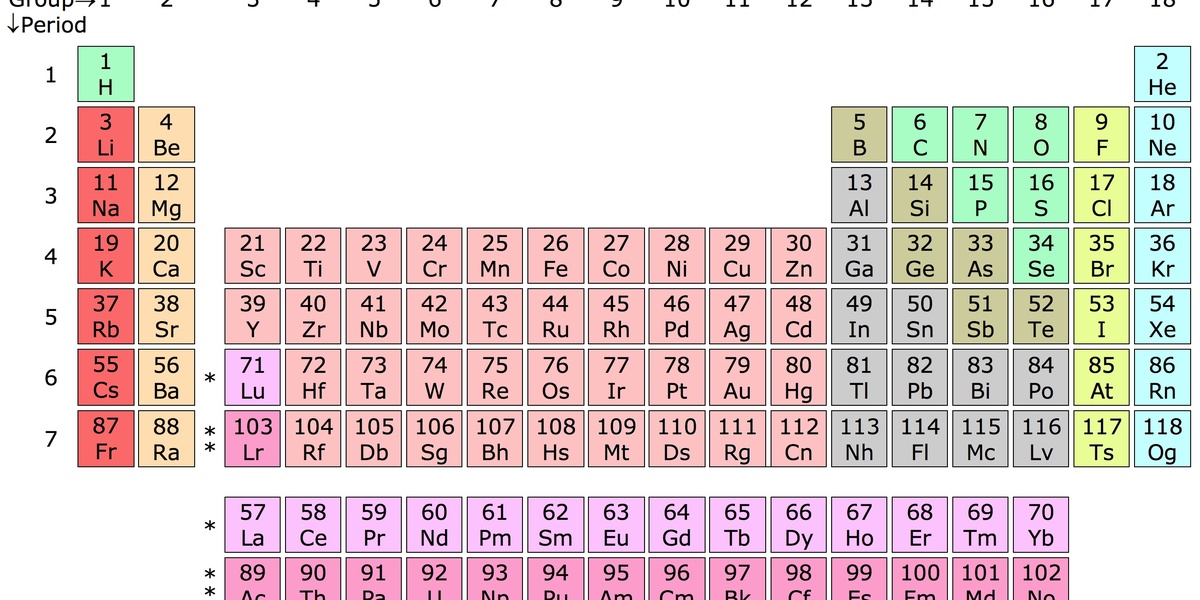
Radon sits in Group 18 as a heavy noble gas, so classical reactivity is limited: closed-shell electronic structure makes it reluctant to form bonds under ordinary conditions. Still, heavy noble gases are more polarizable than lighter ones, and under extreme lab conditions a small set of interactions has been observed or predicted. The examples below distinguish experimentally confirmed chemistry from matrix-isolation or computational work that hints at possible, but often transient, species.
1. Fluorine — Radon difluoride (RnF2) (confirmed)
Fluorine is the only element with which radon has a well-characterized stable compound: radon difluoride, RnF2. First spectroscopic reports appeared in the 1960s, when researchers used reactive fluorine species and cryogenic or matrix conditions to synthesize and identify RnF2 from Rn-222 (half-life 3.82 days) in tiny, short-lived batches.
Fluorine’s extreme electronegativity and the ability to stabilize high oxidation or polarized states make it uniquely suited to pull some electron density toward itself, allowing heavy noble-gas bonding that lighter congeners don’t readily show. Experimental evidence comes mainly from low-temperature matrix-isolation spectroscopy and careful radiochemical studies rather than room-temperature bulk samples.
Why it matters: RnF2 proves that radial expansion and relativistic effects in heavy elements can enable bonding beyond what simple periodic trends predict, offering insight into heavy-element electronic structure and guiding theoretical models for other late actinide and noble-gas compounds.
2. Chlorine, Bromine and Iodine — Halogens (predicted or transient interactions)
Stable radon halides beyond RnF2 aren’t firmly established, but heavier halogens have been predicted to interact with radon and fleeting signals for Rn–Cl, Rn–Br and Rn–I complexes have appeared in matrix-isolation experiments and calculations. These species are usually weakly bound charge-transfer complexes rather than robust ionic salts.
Matrix spectroscopy and quantum-chemical studies show shallow potential wells for Rn–Cl and Rn–Br, consistent with weak bonding; for context, Pauling electronegativities drop from fluorine’s ~3.98 to chlorine’s ~3.16, which helps explain why only fluorine reliably forms the well-characterized binary.
Mapping these interactions helps chemists test trends across the noble gases and halogens, revealing how polarizability and relativistic stabilization shape the chemistry of heavy, otherwise inert elements.
3. Oxygen — Weak oxidation and surface reactions (theoretical and observed in matrices)
Oxygen chemistry with radon is limited: no stable radon oxide has been isolated under normal conditions. Theoretical work and low-temperature matrix studies sometimes predict weakly bound Rn–O species or short-lived signatures consistent with marginal oxidation under extreme conditions.
Separately, surface interactions matter: radon and its progeny interact with oxide surfaces such as silica or metal oxides, affecting adsorption, retention and release. Computational studies over recent decades have explored possible Rn–O bonding scenarios, but practical evidence points to adsorption and physisorption rather than true oxide formation.
From an experimental perspective, those surface interactions influence how radon is trapped or delayed in geological samples and building materials, which in turn affects measurements and mitigation strategies.
Environmental and Physical Interactions
Much of radon’s real-world “interaction” is physical rather than chemical: adsorption, solubility and attachment to particles determine where radon goes and how people are exposed. In many settings, asking elements radon reacts with matters less than understanding how it adsorbs to surfaces, dissolves in water, or hands off its radioactivity to charged decay products that stick to dust and tissues. These behaviors drive mitigation, monitoring and public-health risk.
4. Materials and Surfaces — Adsorption to building materials and activated carbon
Radon gas and, importantly, its decay products readily stick to surfaces and porous materials. Activated carbon, certain zeolites and aerogels are widely used to trap radon in both mitigation systems and laboratory sampling. Short-term test methods often use activated-charcoal canisters that adsorb radon for later gamma counting.
The EPA action level of 4 pCi/L (about 148 Bq/m3) provides a regulatory trigger for mitigation in many U.S. jurisdictions, so trapping and removing radon from indoor air is a practical priority. Common residential mitigation approaches include sub-slab depressurization to prevent soil gas entry, while lab analysis may use Lucas cells or gamma spectroscopy after charcoal adsorption.
In plain terms: adsorption slows and localizes radon and its progeny, making some materials sinks for radioactivity and affecting measurement accuracy and remediation choices.
5. Water and Organics — Solubility and partitioning into liquids and fats
Radon is moderately soluble in water and is significantly more soluble in nonpolar organic solvents and lipid phases because it’s a large, nonpolar atom. That means radon dissolved in well water can be released into indoor air during showering, washing or cooking, creating an inhalation pathway distinct from soil-gas entry.
Practically, private wells with elevated radon can raise household airborne concentrations unless treated. Water treatment and aeration strip radon; labs often use gas-stripping or solvent extraction (bubblers with organic traps) to concentrate radon for analysis. Biologically, radon’s affinity for lipids suggests limited partitioning into fatty tissues, but the main exposure route remains inhalation of airborne decay products.
6. Aerosols and Particles — Attachment of radon progeny to dust and droplets
Radon gas itself is chemically inert, but its short-lived progeny (charged polonium and lead isotopes) quickly attach to aerosols, dust and respiratory droplets. Those attached progeny deposit in the bronchial tree, delivering concentrated alpha doses to small areas of tissue and markedly increasing lung cancer risk compared with exposure to external gamma rays.
Factors that change particle concentrations—ventilation, cigarette smoke, cooking, indoor activities—alter the attached versus unattached fraction and thus the dose per Bq/m3. Measurement approaches sometimes focus on progeny activity (alpha spectrometry or working-level meters) rather than gas concentration alone to better estimate health risk.
In short: particles are the delivery vehicles for radon’s most harmful emissions, so indoor air quality directly modulates risk.
Radioactive Decay and Elemental Transformations
The single most important way radon “reacts” is by decaying into other elements. Rn-222 transmutes into a chain of chemically active isotopes—polonium, lead and bismuth—that stick to surfaces and tissues and emit alpha and beta radiation. Those decay products, not the inert gas, deliver the damaging energy when lodged in lungs or on household dust.
7. Polonium — Short-lived decay products (Po-218, Po-214) that chemically bind to tissues
Radon-222 decays into polonium isotopes such as Po-218 and Po-214 that are chemically reactive and emit alpha particles. Po-218 has a half-life around 3.10 minutes, while Po-214 decays extremely rapidly (about 164 microseconds), so these species form almost instantly after inhalation and deliver intense, localized alpha doses.
Because these progeny are often electrically charged, they attach to airway surfaces and aerosols and concentrate energy deposition on bronchial epithelial cells. That focused alpha irradiation is the primary biological mechanism behind radon-related lung cancer.
A real-world picture: after breathing indoor air containing radon, a person can inhale progeny that plate out on the bronchial lining, where several rapid alpha decays can damage DNA in a tiny volume of tissue.
8. Lead and Bismuth — Longer-lived progeny (Pb-210, Bi-210) that persist on surfaces and in the environment
Down the chain, longer-lived isotopes like lead-210 and bismuth-210 appear. Pb-210 has a half-life of about 22.3 years, while Bi-210’s half-life is on the order of days, so Pb-210 can linger in dust, sediments and building materials for decades after radon exposure events.
That persistence matters for monitoring and remediation: elevated Pb-210 in household dust or museum objects can indicate historical radon exposure and complicate cleanup. Surface-bound lead and bismuth isotopes create secondary pathways for exposure and mean that removing the radon source doesn’t immediately eliminate all risk.
Long-term monitoring and surface cleaning are therefore important after episodes of high radon, especially in enclosed or poorly ventilated spaces.
Summary
- Radon forms at least one well-characterized chemical compound (RnF2); most other radon chemistry is transient or observed under cryogenic/matrix conditions.
- Physical behavior—adsorption to materials, solubility in water and partitioning into organics, and attachment of progeny to aerosols—governs real-world exposure more than exotic chemistry.
- Radon’s decay products—short-lived polonium isotopes and longer-lived lead/bismuth isotopes—are the primary health hazard because they chemically bind to tissues and surfaces and emit alpha radiation.
- Practical action: test homes and workplaces for radon, and if levels exceed local guidelines (for example, the EPA action level of 4 pCi/L), consider mitigation such as sub-slab depressurization and ventilation improvements.
- For deeper questions about elements radon reacts with or for laboratory-level analysis, consult radiochemistry specialists or certified radon measurement services to get accurate, context-specific advice.