7 Benefits of Copper Nitrate
In the late 19th century, chemists began isolating vivid metal salts that changed textiles, fireworks, and laboratories—copper salts were among the most versatile discoveries.
Copper nitrate appears in surprising places, from material synthesis to foliar feeds, yet it must be handled responsibly because copper is both essential and potentially toxic at higher concentrations. Copper nitrate is a compact, water-soluble copper salt whose chemical properties make it useful across industry, agriculture, education, and research—here are seven practical benefits that explain why. Global refined copper production remains on the order of about 20–25 million metric tons per year (see USGS), which helps explain the broad availability of copper compounds for downstream uses.
Industrial and Manufacturing Benefits
Copper nitrate’s dissolvable Cu2+ ions and the oxidizing nature of nitrate give it chemical flexibility that manufacturers value. It serves as a soluble feedstock, a redox-active reagent, and a precursor for pigments and catalysts. Proper waste handling and local disposal rules apply whenever copper salts are used at scale.
1. Effective catalyst for oxidation and coupling reactions
Copper nitrate functions as an effective catalyst in a range of oxidation and coupling reactions. A number of peer-reviewed papers show copper(II) salts promoting aerobic oxidations and C–C coupling in organic synthesis (see reviews in journals like Chemical Reviews and Organic Letters for representative examples).
Practically, copper nitrate or related copper(II) salts are used at low loadings—commonly in the 0.5–10 mol% range—to catalyze selective oxidations and cross-coupling steps in fine-chemical and small-scale pharmaceutical work. In some workflows it’s part of a homogeneous catalyst system; in others it’s a precursor to a supported heterogeneous catalyst.
When used catalytically, reactions require controlled atmospheres, proper ventilation, and attention to nitrate-derived byproducts. Suppliers such as Sigma-Aldrich and Merck list reagent-grade copper nitrate for these applications, along with relevant safety data sheets.
2. Precursor for copper oxide and nanoparticle synthesis
Copper nitrate is a convenient, soluble precursor for making CuO, Cu2O, and metallic copper nanoparticles via thermal decomposition, precipitation, or chemical reduction. Many materials-science protocols start from Cu(NO3)2 because it delivers copper ions uniformly in solution.
Typical thermal decomposition of hydrated Cu(NO3)2 to CuO is reported in the literature across a range roughly between 150–300°C depending on hydration and heating rate. Studies often report nanoparticle sizes from about 20–100 nm for common syntheses, with lab-scale batches in milligram-to-gram quantities and pilot scaling to kilograms in some industrial research programs.
Applications include battery electrode research, gas-sensing films, antimicrobial coatings, and conductive inks (for example, manufacturers of printed electronics like DuPont produce conductive ink systems in which copper precursors have been explored). Processing typically requires controlled atmosphere or reduction steps to yield metallic copper and to manage nitrate decomposition products.
3. Dyeing mordant and pigment production
Copper nitrate can act as a mordant in textile dyeing and as a precursor to blue–green pigments used in ceramics and paints. In the 19th century, copper salts were widely adopted in textile chemistry to alter hues and improve dye fastness.
In ceramics, copper-containing compounds are classic sources of turquoise and green glazes; artisans and small studios still use copper salts to achieve particular shades. In textile work, copper salts help certain azo and vat dyes bind and shift color in predictable ways (historic dye manuals from the late 1800s document these practices).
Environmental considerations matter: many copper pigments and mordants are regulated because copper accumulates in soils and can harm aquatic life. Wastewater from dyeing or glaze preparation must be treated according to local environmental rules.
Agricultural, Environmental, and Safety Benefits
Copper is an essential trace element for plants and animals, and copper-based materials have a long history in crop protection. While copper nitrate can supply both copper and nitrate, most approved agricultural products use specific copper formulations and follow local regulatory approvals from bodies such as the FAO or EPA.
4. Source of micronutrient copper and nitrogen in foliar feeds
Copper nitrate supplies Cu2+ (an essential micronutrient) and NO3– (plant-available nitrogen) in soluble form, which can make it useful for targeted foliar corrections. Agronomy guides typically cite leaf tissue copper in the approximate 5–20 ppm range as a general reference for healthy plants, though exact targets vary by crop and region (consult local extension or FAO guidance).
Real-world uses include hydroponics and greenhouse foliar feeds where rapid correction is needed. Corrective application rates and concentrations depend on crop sensitivity, so growers follow label instructions or extension recommendations; excessive copper applications risk foliar burn and long-term soil accumulation.
Authorities such as the FAO and local extension services provide region-specific recommendations. Always base treatments on tissue/soil tests and regulatory approvals rather than ad hoc dosing.
5. Antimicrobial and antifungal applications
Copper ions exhibit broad-spectrum antimicrobial activity by disrupting membranes and inactivating enzymes, which is why copper compounds have been used historically and remain part of some disease-control programs. A classic example is Bordeaux mixture (copper sulfate plus lime), introduced in the late 1800s for viticulture disease control.
Modern studies and regulatory reviews (for instance by the EPA and EFSA in Europe) document efficacy for certain uses, such as reducing fungal incidence in orchards and vineyards when applied under approved programs. Copper nitrate itself is less commonly registered as a pesticide than other copper salts, but the underlying antimicrobial properties of Cu2+ are the same.
Because copper is toxic to aquatic organisms, regulators limit application rates and require buffer zones and runoff control. Any use for crop protection must follow label instructions and environmental regulations to prevent unintended harm.
Laboratory, Educational, and Research Benefits
Copper nitrate is a staple reagent in teaching labs and a handy chemical in a wide range of research projects. Material safety data sheets are readily available from suppliers, and laboratories follow standard PPE and waste-handling procedures when working with copper salts.
6. Useful teaching reagent and demonstrative properties
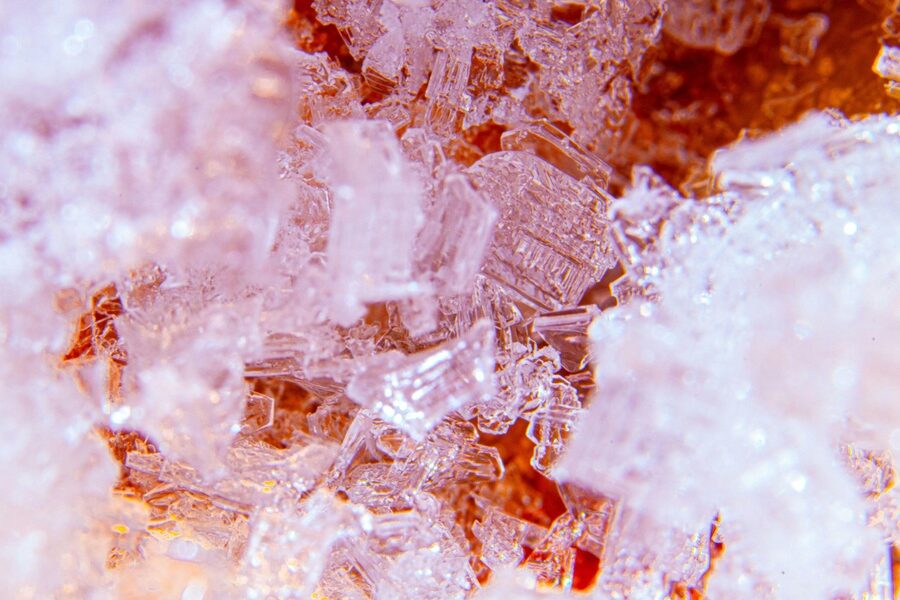
Copper nitrate’s bright blue–green aqueous solutions and crystalline hydrates make it a go-to for classroom demonstrations and crystal-growth exercises. Teaching-lab manuals commonly list copper(II) salts for color and coordination chemistry demonstrations.
Typical classroom uses include small-scale crystal growth (gram-scale samples), qualitative flame tests that show a blue–green color, and preparation of simple coordination complexes. Suppliers such as Sigma-Aldrich and Fisher Scientific provide reagent specs and MSDS information for instructors.
Safety: even on the gram scale copper nitrate is toxic if ingested and harmful to aquatic life. Use gloves, goggles, work in a fume hood when heating, and collect spent solutions for proper disposal.
7. Role in electrochemistry, corrosion studies, and material research
Copper nitrate is commonly used to prepare electrodeposition baths, as an electrolyte for cyclic voltammetry, and as a controlled source of Cu2+ in corrosion testing. Researchers use it to model corrosion phenomena and to synthesize thin films for sensors and electronic prototypes.
Electrodeposition studies report a wide range of current densities and film thicknesses; many lab reports show electrodeposited copper films from tens of nanometers up to several micrometers depending on conditions. Cyclic voltammetry experiments use Cu(NO3)2 to characterize redox behavior and nucleation mechanisms on test electrodes.
As with other lab uses, waste streams containing copper must be neutralized and collected for disposal or recycling. Research groups typically follow institutional hazardous-waste procedures and consult reagent pages on sites like PubChem for chemical properties and safety data.
Summary
Across industry, agriculture, and teaching labs, copper nitrate’s solubility and redox chemistry make it a versatile tool: a catalytic reagent, a precursor to oxides and nanoparticles, a mordant and pigment source, a dual micronutrient feed, an antimicrobial agent, and a useful teaching and research reagent. That versatility comes with responsibility—safety procedures, regulatory compliance, and proper waste management are essential.
- Copper nitrate serves as both a chemical reagent and a materials precursor, useful from catalysis to nanoparticle synthesis.
- In agriculture it can supply Cu2+ and NO3– for targeted foliar correction, but soil tests and local approvals must guide use.
- Its bright aqueous colors and crystalline forms make it pedagogically valuable in undergraduate labs, provided safe handling and disposal.
- Because copper nitrate connects traditional craft uses (glazes, mordants) with modern nanomaterials and electrochemistry, it illustrates how simple salts bridge many fields.
Overall, the benefits of copper nitrate are practical and varied—but use informed judgment: consult material-safety data sheets, follow local regulations (EPA, FAO, or your national authority), and read supplier documentation from Sigma-Aldrich, Merck, or Fisher Scientific before working with it.