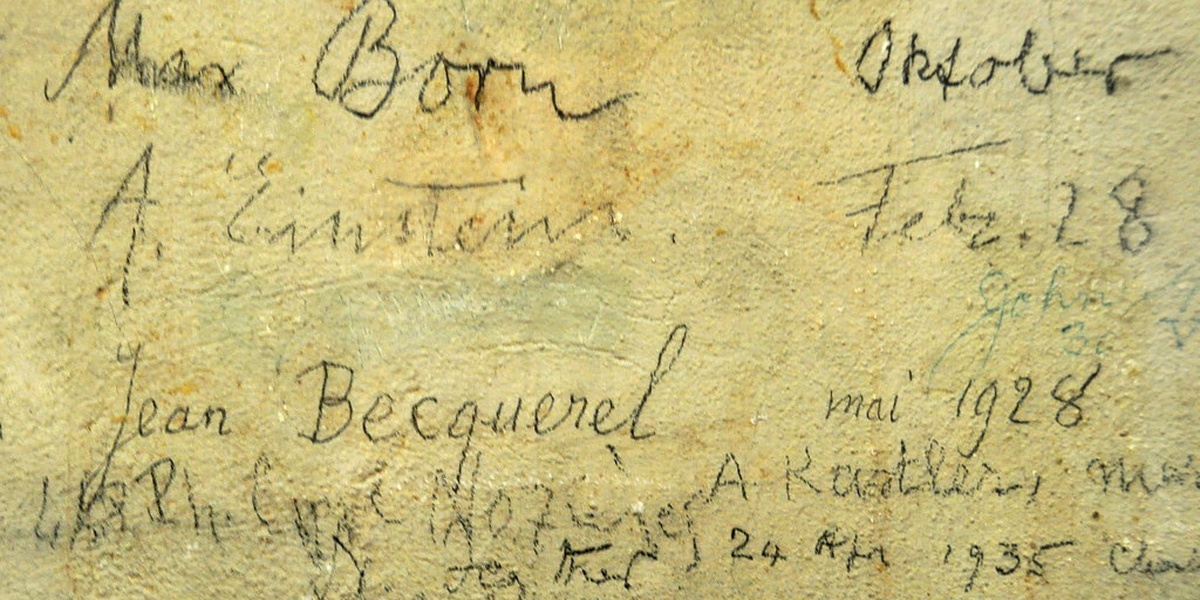
Across history, a birthday can add a human detail to the scientists whose ideas changed the world. Noting zodiac signs is a lighthearted way to connect personalities, eras, and fields without overstating causation.
There are 11 Scientists that are Sagittarius (Zodiac Sign), ranging from Ada Lovelace to Werner Heisenberg and covering areas from early computation to quantum theory. Each entry lists Birthdate (YYYY-MM-DD),Field,Notable work — you’ll find below.
How were these scientists identified as Sagittarius?
They were identified by their documented birthdates falling within the Sagittarius range (roughly November 22–December 21); I used historical records and standard Gregorian dates where available, noting that very old entries might require calendar adjustments or verification of exact birth records.
Does being Sagittarius explain their achievements?
No—zodiac signs don’t determine talent or discovery; the list is meant to show an interesting cross-section of scientists who share a birth window (from Ada Lovelace to Werner Heisenberg) rather than imply any causal link to their work.
Scientists that are Sagittarius (zodiac Sign)
| Name | Birthdate (YYYY-MM-DD) | Field | Notable work |
|---|---|---|---|
| Werner Heisenberg | 1901-12-05 | Physics | Formulated quantum uncertainty principle |
| Ada Lovelace | 1815-12-10 | Mathematics | Early computer algorithm for Analytical Engine |
| Max Born | 1882-12-11 | Physics | Born rule in quantum mechanics |
| Robert Koch | 1843-12-11 | Microbiology | Discovered tuberculosis bacterium; Koch’s postulates |
| J. J. Thomson | 1856-12-18 | Physics | Discovered the electron |
| Alfred Nobel | 1833-12-21 | Chemistry | Invented dynamite; established Nobel Prizes |
| Margaret Mead | 1901-12-16 | Anthropology | Pioneering cultural anthropology fieldwork |
| Philip W. Anderson | 1923-12-13 | Physics | Theory of localization in solids |
| Noam Chomsky | 1928-12-07 | Linguistics | Developed generative grammar theory |
| Freeman Dyson | 1923-12-15 | Theoretical Physics | Contributions to quantum electrodynamics |
| Christian Doppler | 1803-11-29 | Physics | Described the Doppler effect |
Images and Descriptions

Werner Heisenberg
German theoretical physicist born in Würzburg; led development of quantum mechanics and introduced the uncertainty principle, later contributing to nuclear physics and wartime research, reshaping how measurement and particles are understood.
Ada Lovelace
English mathematician and writer born in London; collaborated with Charles Babbage and wrote influential notes on the Analytical Engine, often regarded as the first computer programmer for her algorithmic insights.
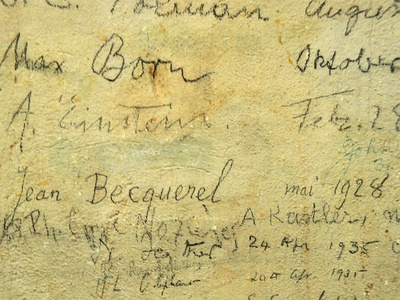
Max Born
German physicist born in Breslau; key figure in establishing quantum mechanics, proposed the Born rule interpreting wavefunctions probabilistically, advised generations of physicists, and won the 1954 Nobel Prize for his foundational work.
Robert Koch
German physician and microbiologist born in Clausthal; pioneered bacteriology, discovered Mycobacterium tuberculosis, developed Koch’s postulates, and transformed infectious disease diagnosis and public health practices worldwide.
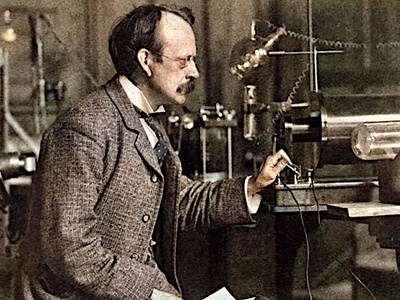
J. J. Thomson
British physicist born in Cheetham Hill, Manchester; discovered the electron through cathode-ray experiments, proposed the plum-pudding atomic model, and received the 1906 Nobel Prize for contributions to atomic physics.
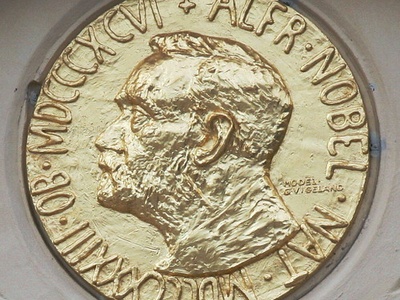
Alfred Nobel
Swedish chemist, engineer, and industrialist born in Stockholm; invented dynamite, held numerous patents, and founded the Nobel Prizes to honor outstanding contributions in science, literature, and peace.
Margaret Mead
American cultural anthropologist born in Philadelphia; conducted influential fieldwork in Samoa and New Guinea, popularized anthropology for wider audiences, and shaped mid-20th-century understanding of culture and human development.
Philip W. Anderson
American physicist born in Indianapolis; major contributor to condensed matter physics, explained electron localization and interactions in solids, and won the 1977 Nobel Prize for theoretical discoveries in the field.
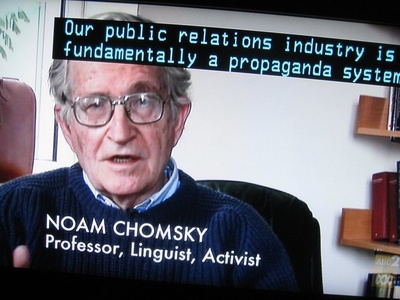
Noam Chomsky
American linguist and cognitive scientist born in Philadelphia; pioneered generative grammar, transformed modern linguistics, and influenced cognitive science and philosophy through decades of research and teaching at MIT.
Freeman Dyson
British-born theoretical physicist and mathematician born in Crowthorne; made influential contributions to quantum electrodynamics and many-body theory, and shaped public discussion of science and technology across decades.
Christian Doppler
Austrian mathematician and physicist born in Salzburg; described the Doppler effect linking wave frequency shifts to relative motion, a principle foundational to astronomy, radar, and medical imaging technologies.