Global installed wind capacity surpassed roughly 800 GW by 2022, making wind one of the fastest-growing sources of electricity worldwide (IEA).
Picture a coastal town watching an offshore farm rise above the horizon, or a Midwest county adding a few tall turbines to a patchwork of corn and pasture. People notice turbines. They talk about birds, views, noise, and electric bills. Those conversations shape whether projects move forward.
Many widely repeated claims about wind power are outdated, exaggerated, or based on incomplete comparisons — understanding the facts matters for climate policy, local planning, and everyday perceptions. This article tackles common myths about wind energy with data, examples, and practical takeaways (IPCC, Berkeley Lab, USFWS).
We’ll group eight myths into four categories: Environmental; Reliability & Grid; Health & Nuisance; and Economics & Land Use. First up: wildlife and the environment.
Environmental concerns and wildlife
Environmental worries tend to be the most emotional objections to wind projects. People worry about birds and bats, habitat loss, and whether wind’s lifecycle emissions really beat fossil fuels. Those concerns are valid at the local scale but often get stretched into system-wide claims.
Scale matters: a collision hotspot with raptors at an old site is not the same as nationwide population risk. Mitigation works — better siting, timed curtailment, radar systems, and turbine design have cut impacts where they matter most. (Alt-text suggestion for editorial image: Wind turbines on a coastal ridge with seabirds in flight, illustrating wildlife interactions.)
1. Myth: Wind turbines kill huge numbers of birds and are a major threat to bird populations
Collisions do occur. But the total number of bird deaths attributed to wind turbines in the U.S. is in the low hundreds of thousands per year, not millions (USFWS; peer-reviewed estimates). By contrast, domestic and feral cats kill hundreds of millions to over a billion birds annually in the U.S., and window and vehicle collisions add hundreds of millions more.
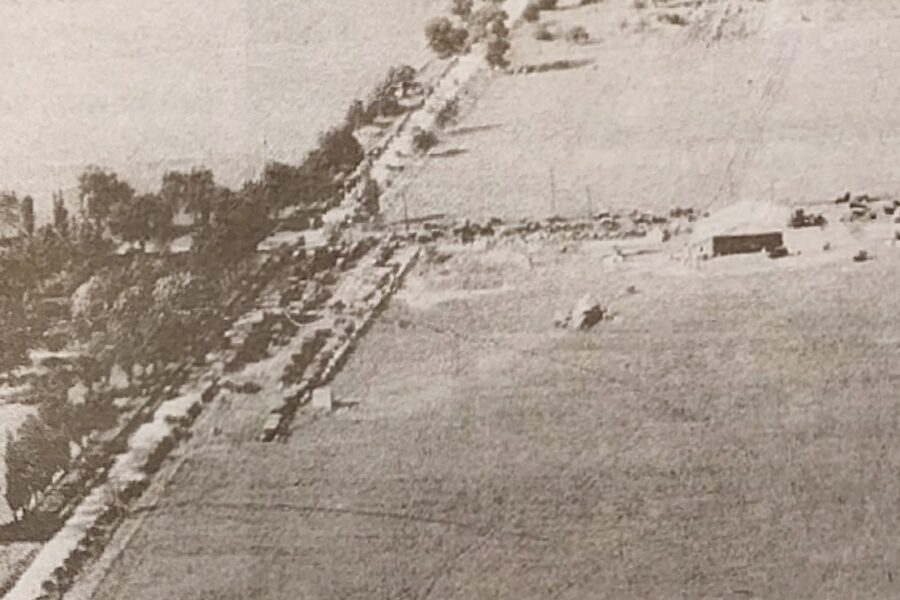
Historic problems existed — Altamont Pass in California is a well-known case where older, dense turbine fields hurt raptor populations. The response was retrofit and repowering with fewer, larger machines plus targeted siting. Bat fatalities have been reduced substantially through curtailment during low-wind nights and operational changes (Bat Conservation International; journal studies on curtailment).
Practical takeaway: treat risk as site- and species-specific. Good permitting, monitoring, and technologies like radar-triggered shutdowns or blade-painting trials dramatically cut collisions where they occur.
2. Myth: Wind power requires massive land destruction and permanently ruins landscapes
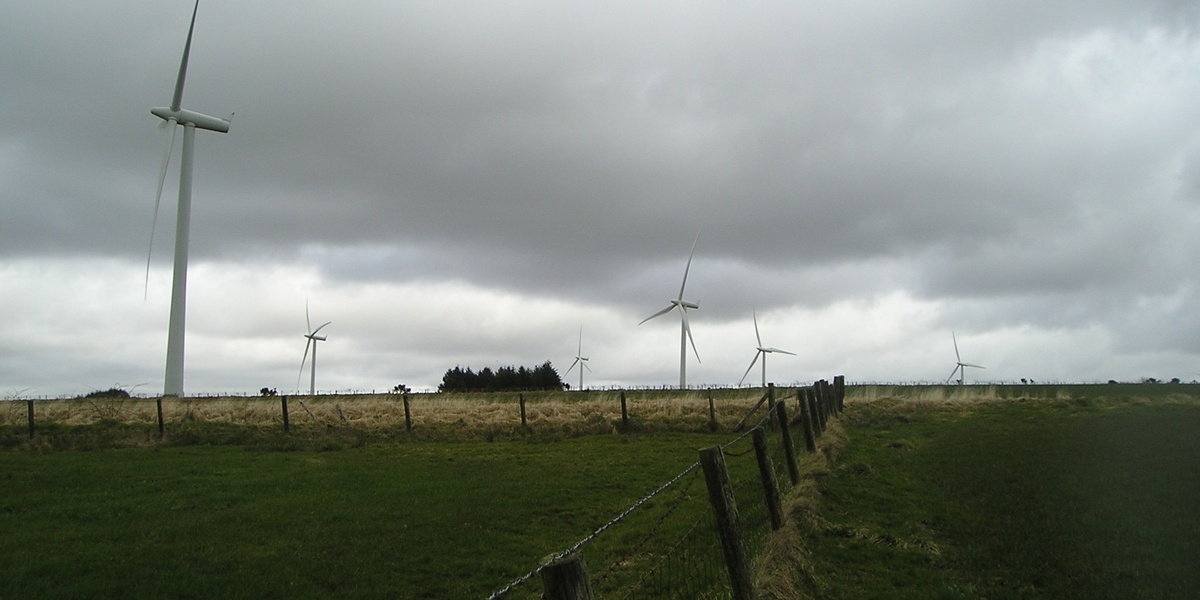
It’s true wind farms cover large geographic areas when you include spacing between turbines. That spacing is for aerodynamic performance, not continuous pavement or concrete. The actual physical footprint — foundations, crane pads, and access roads — is small: often a fraction of an acre per turbine.
Most onshore sites remain working farmland or grazing land. In Iowa and parts of Spain, farmers plant corn or raise cattle right up to turbine bases and keep farming for decades. Decommissioning is possible; foundations can be removed and land restored under current best practices.
Offshore wind offers an option to avoid terrestrial visual and land-use concerns entirely. The right question is how land is used alongside turbines, not whether turbines occupy a broad planning boundary.
Reliability, grid integration, and technical limits
Many objections assume wind is so intermittent it can’t be trusted to power a modern grid. That misunderstands both terminology and system design. Nameplate capacity is a maximum rating. Capacity factor measures average output relative to nameplate across time.
Wind’s variability is managed with geographic diversification, better forecasting, storage, demand response, and transmission. Grid planners plan for variability the same way they plan for storms or fuel outages. The technology and operational toolbox has expanded rapidly.
Typical capacity factors vary by resource: onshore roughly 25–45%; offshore commonly 40–60%. Those crude ranges matter for planning, but they don’t mean wind is unusable — they mean you pair wind with complementary assets and grid investments.
3. Myth: Wind energy is too unreliable to serve as baseload power
“Baseload” as a fixed-stack, always-on supply is an old grid model. Modern systems manage variable generation by matching resources to demand in real time. That’s the norm now, not an exception.
Regions already get very large shares of their electricity from wind during certain hours. Denmark and parts of Scotland have seen hourly wind shares exceed 50% during high-wind periods. Texas (ERCOT) records show wind providing a large fraction of demand at times, and operators balance that with flexible gas plants, storage, and imports/exports.
Tools like long-distance transmission (HVDC interconnectors), grid-scale batteries, and demand-response programs convert variability into manageable dispatchable options. In practice, wind replaces fuel risk and adds energy diversity rather than serving as a single, fixed “baseload.”
4. Myth: Offshore wind is inherently too risky and expensive to scale
Offshore started expensive. Then scale, standardization, and bigger turbines brought costs down. Auction results in Europe and project contracts in the U.S. show steady declines in levelized costs over the past decade as supply chains matured and turbines grew larger.
Modern offshore projects — think Hornsea in the U.K., Block Island and Vineyard Wind in the U.S. — use 10+ MW machines and benefit from higher capacity factors (40–60%). Engineering challenges remain, like foundations and O&M logistics, but they’re solvable with port upgrades and better construction planning.
Conclusion: offshore is capital-intensive but moving quickly down the cost curve. Risk exists, but it’s increasingly a project-management and supply-chain issue, not a technological showstopper.
Health, noise, and local quality-of-life concerns
Health and noise worries often drive local opposition. People report sleep disruption, headaches, or annoyance. Those reports are real. The question is whether turbines cause chronic physiological harm beyond annoyance and stress.
Measured sound differs from perceived nuisance. Infrasound claims get a lot of headlines, but measured infrasound levels from turbines at normal residential distances are typically below thresholds associated with direct physiological effects. Setbacks, operational limits, and community engagement reduce most conflicts.
Planners use standard noise limits, independent monitoring, and benefit-sharing to address local impacts. Community benefit agreements, local revenue sharing, and clear complaint procedures go a long way toward acceptance.
5. Myth: Wind turbines cause long-term health problems through infrasound or vibration
Systematic reviews and public-health agencies have found no consistent evidence that infrasound from modern turbines causes long-term physical illness at typical residential distances (WHO reviews and national health assessments). Physiological harm requires exposure much higher than the levels usually recorded near turbines.
For context, measured nighttime turbine noise at 350–500 meters often falls in the mid-30s dB(A) range — comparable to a quiet suburban street. That’s below many WHO nighttime guidance values for community sleep disturbance.
That said, annoyance, sleep disturbance, and stress are real outcomes for some people. Those effects are often tied to attitudes, visual prominence, and lack of engagement. Better siting, communication, and monitoring reduce complaints.
6. Myth: Wind turbines are unbearably noisy for nearby residents
Modern turbines are quieter than older designs. At typical setback distances (several hundred meters), audible noise is often lower than common urban sounds like a busy road or factory hum. People do notice a whoosh at times, but it’s not constant loudness.
Municipal and provincial noise criteria commonly set limits in dB(A) and require pre- and post-construction monitoring. Mitigations include minimum setbacks, operational curtailment at night, and independent sound audits. Communities should ask for clear noise-monitoring plans and third-party verification.
Practical checklist: request modeled sound maps, agree on independent monitoring, set clear complaint-resolution steps, and consider revenue-sharing as a local benefit that offsets perceived nuisance.
Cost, jobs, and policy realities
Claims that wind is forever dependent on subsidies or that it kills jobs miss two facts: costs have fallen, and the industry creates a variety of local jobs across its value chain. Policy helped early markets scale; markets are now helping cut costs further.
Auction prices and LCOE estimates in many regions have roughly halved over the past decade, depending on market and technology. That decline reflects larger turbines, competitive procurement, supply-chain learning, and better project execution.
Wind projects create manufacturing, construction, and long-term operations and maintenance jobs. They generate land-lease payments for farmers, tax revenue for counties, and new industrial activity around ports and assembly facilities.
7. Myth: Wind power is only viable because of permanent subsidies and is unaffordable without them
Some myths about wind energy focus narrowly on subsidies. Early support — feed-in tariffs, tax credits, and grant programs — helped scale supply chains and lower costs. Many incentives were explicitly time-limited.
Now, procurement auctions and corporate power-purchase agreements show wind competing head-to-head with fossil generation in many markets. Large tech and industrial buyers routinely sign multi-year PPAs for wind at prices that beat conventional alternatives.
Policy still matters for grid integration and fair competition, but the industry’s declining costs mean it’s increasingly viable on market terms rather than permanent subsidy models.
8. Myth: Wind energy creates few local jobs and minimal economic benefit
Wind’s value chain includes turbine component manufacturing, tower and blade fabrication, construction crews, site engineering, and long-term O&M teams. Globally, the sector supports hundreds of thousands to over a million jobs across manufacturing and services (national estimates vary by country).
At the local level, landowners often receive lease payments (often several thousand dollars per turbine per year), and counties gain property or tax revenues. Regions with manufacturing clusters — think parts of Denmark, Spain, and U.S. states like Iowa — see concrete payroll and supplier benefits.
Offshore developments also spur port upgrades, heavy-assembly work, and specialized logistics jobs that can last for the life of the project. Construction jobs are concentrated but O&M roles provide steady long-term employment.
Summary
- Bird collisions are real but small compared with other human causes; targeted siting, retrofits (Altamont Pass), and operational fixes cut the worst impacts.
- Wind’s land footprint is mostly compatible with farming and grazing; direct foundations take little space and decommissioning can restore land to prior uses.
- Intermittency is a planning challenge, not a showstopper; capacity factors, geographic smoothing, storage, and transmission let grids absorb high wind shares.
- Measured infrasound and audible noise at normal setbacks are below levels tied to physiological harm; annoyance is real and best addressed with engagement, monitoring, and setbacks.
- Costs have dropped substantially and local economies benefit via manufacturing, construction, O&M jobs, and land-lease or tax revenues; careful policy design moves projects from subsidized pilots to competitive supply.
Weigh the evidence, show up at local hearings with data, and support policies that cut emissions while protecting wildlife and community quality of life.