From shallow kelp forests to the deep sea, cephalopods show up in a surprising variety of marine settings and play many roles in food webs, research and fisheries. Their shapes and behaviors change with habitat — some dart and chase prey, others hide or float — so a short, organized list helps make sense of that diversity.
There are 20 Examples of Cephalopods, ranging from Ammonite to Vampire squid. For each entry, you’ll find below a concise table organized with Scientific name,Size (cm),Range so you can quickly compare identity, typical size and distribution before diving into details you’ll find below.
How were the species on this list chosen?
I selected species to represent major cephalopod groups and a spread of sizes and habitats, using sources with reliable measurements and distribution records so the list highlights taxonomic breadth and geographic range.
Can I use this list to identify cephalopods I find?
Yes as a starting point: use the Scientific name, Size (cm), and Range columns to narrow candidates, but confirm identifications with photos, regional field guides or experts — note too that entries like Ammonite are fossil taxa and not living animals.
Examples of Cephalopods
| Common name | Scientific name | Size (cm) | Range |
|---|---|---|---|
| Common octopus | Octopus vulgaris | 100 | NE Atlantic, Mediterranean, worldwide warm-temperate |
| Giant Pacific octopus | Enteroctopus dofleini | 430 | North Pacific (Alaska to California, Japan) |
| Blue-ringed octopus | Hapalochlaena lunulata | 12 | Indo-Pacific, Australia |
| Dumbo octopus | Grimpoteuthis spp. | 30 | Deep oceans worldwide (benthic) |
| Blanket octopus | Tremoctopus violaceus | 200 (female) | Tropical and subtropical oceans worldwide |
| Giant squid | Architeuthis dux | 1,300 (total) | Deep oceans worldwide |
| Colossal squid | Mesonychoteuthis hamiltoni | 250 (mantle) | Southern Ocean (Antarctic) |
| Humboldt squid | Dosidicus gigas | 150 | Eastern Pacific (California to Chile) |
| Market squid | Doryteuthis opalescens | 25 | NE Pacific (California) |
| Common flying squid | Todarodes pacificus | 50 | NW Pacific (Japan, Korea) |
| Vampire squid | Vampyroteuthis infernalis | 30 | Deep Atlantic, Pacific (oxygen-poor midwaters) |
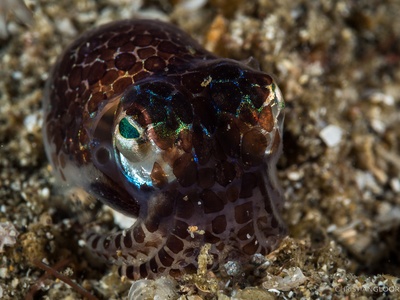
| Bobtail squid | Euprymna scolopes | 5 | Indo-Pacific, Hawaii |
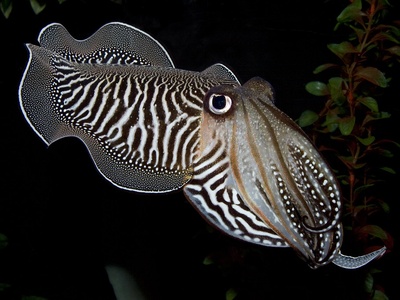
| Common cuttlefish | Sepia officinalis | 45 (mantle) | NE Atlantic, Mediterranean |
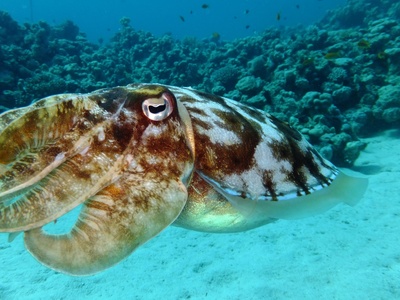
| Giant cuttlefish | Sepia apama | 50 (mantle) | Southern Australia |
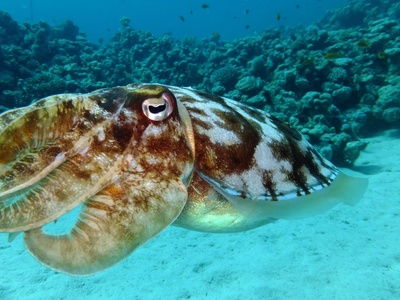
| Flamboyant cuttlefish | Metasepia pfefferi | 8 (mantle) | Indo-West Pacific (northern Australia, SE Asia) |
| Chambered nautilus | Nautilus pompilius | 20 (shell) | Indo-Pacific reefs (Philippines, Australia) |
| Pearly nautilus | Allonautilus scrobiculatus | 16 (shell) | Western Pacific (Papua New Guinea region) |
| Ammonite | Ammonoidea | 200 (shell) | Extinct; fossil record worldwide |
| Belemnite | Belemnitida | 60 (rostrum) | Extinct; fossil record worldwide |
| Orthocone (Orthoceras) | Orthoceras sp. | 100 (shell) | Extinct; Paleozoic seas worldwide |
Images and Descriptions
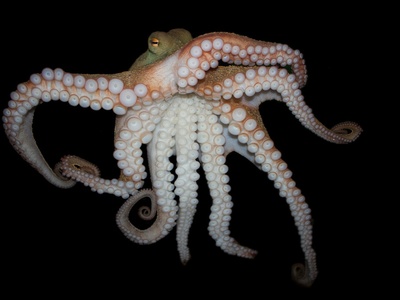
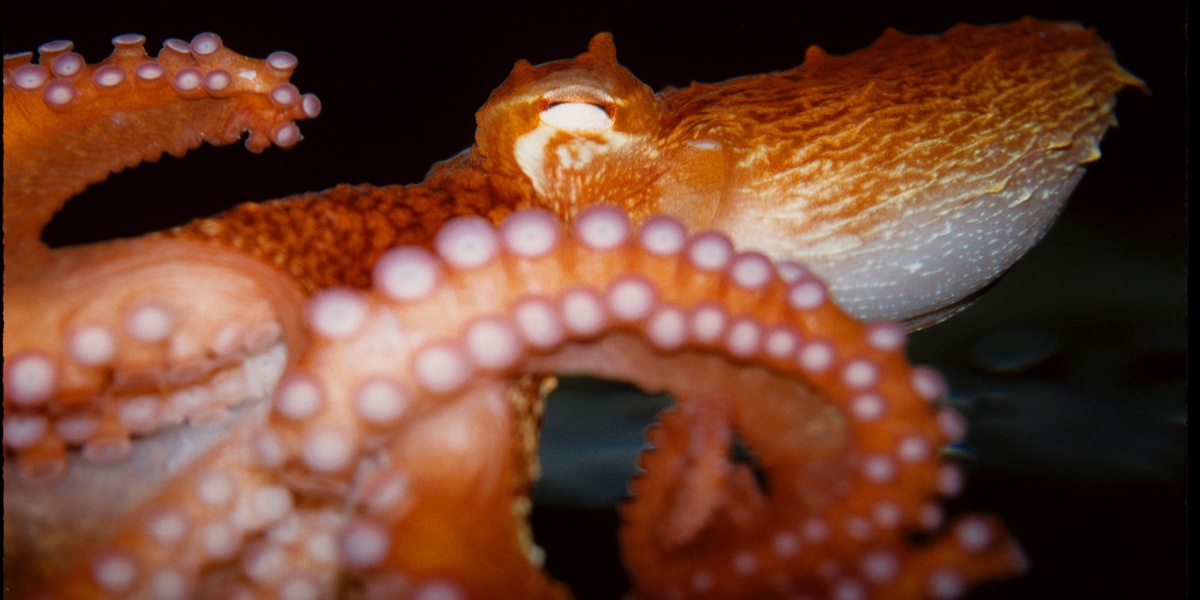
Common octopus
A muscular, bulbous-bodied octopus with eight long arms and keen problem-solving skills. Grows to about 100 cm arm span, hunts crabs and fish using camouflage and jet-propelled escapes. Notable for intelligence, tool use, and rapid color change.
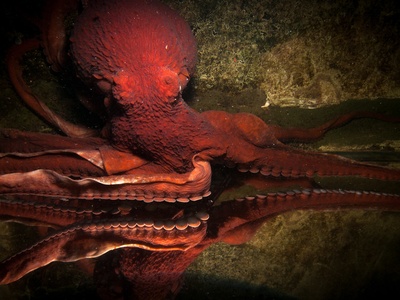
Giant Pacific octopus
Huge red-brown octopus reaching roughly 430 cm arm span, famous for immense strength and curiosity. Lives in cold North Pacific waters, shelters in dens, and uses clever hunting techniques. Notable for size, problem-solving, and arm regeneration.
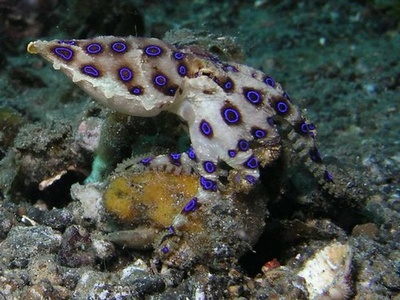
Blue-ringed octopus
Tiny but highly venomous octopus with bright blue rings that flash when threatened. Reaches about 12 cm, lives in shallow reefs and tidal pools, and feeds on small crabs and shrimp. Notable for potent tetrodotoxin and bold warning colors.

Dumbo octopus
Small, umbrella-shaped deep-sea octopus with ear-like fins that resemble Disney’s Dumbo. Typically around 30 cm, it hovers above the seafloor and feeds on crustaceans and worms. Notable for its cute appearance and extreme deep-sea adaptations.
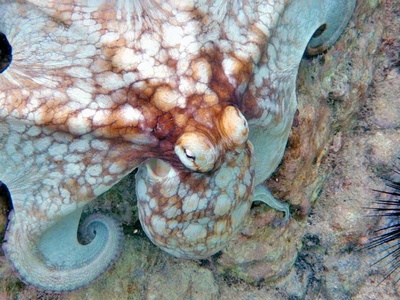
Blanket octopus
Sexually dimorphic species where females can reach 200 cm and males are tiny. Females unfurl expansive webbing between arms like a blanket to appear larger, inhabit warm seas, and sometimes wield stolen jellyfish tentacles for defense.
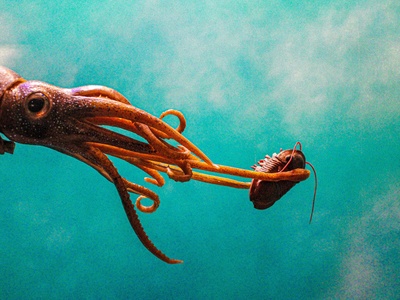
Giant squid
Legendary deep-sea squid potentially reaching 1,300 cm total length, with long feeding tentacles and enormous eyes. Found in deep, cold oceans worldwide, it grasps large prey and is rare in shallow waters. Notable for inspiring sea-monster tales.
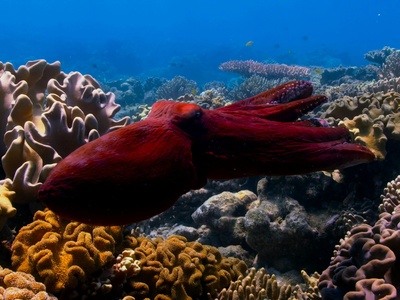
Colossal squid
Massive Antarctic squid with a thick body and a mantle about 250 cm. Equipped with swiveling hooks on its arms, it inhabits deep, cold Southern Ocean waters. Notable for heavy build and scarcity of specimens.
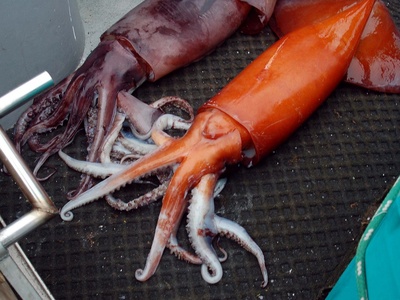
Humboldt squid
Fast-swimming, schooling squid up to about 150 cm, known as Jumbo or Humboldt squid. Inhabits the eastern Pacific, migratory and aggressive hunters capable of coordinated attacks and inking. Notable for bold behavior and commercial importance.
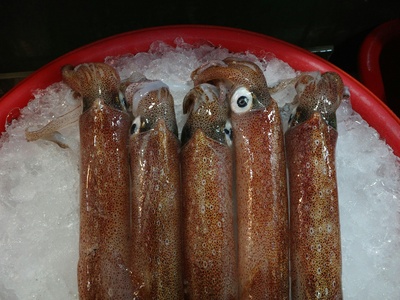
Market squid
Small schooling squid reaching about 25 cm, abundant along the California coast. Important commercially and ecologically, they form large shoals, breed rapidly, and serve as key prey for many predators. Notable for fisheries value and resilience.
Common flying squid
Streamlined squid often seen leaping above the surface; reaches about 50 cm. Common in the NW Pacific, it supports large fisheries and migrates seasonally. Notable for gliding behavior and strong population cycles.
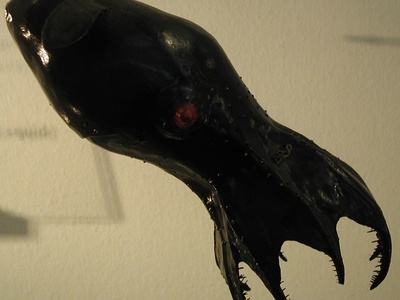
Vampire squid
Deep-sea, velvety-dark cephalopod about 30 cm long with cloak-like webbing and bioluminescent organs. Lives in oxygen-poor midwaters worldwide, feeds on marine detritus with filamentous tentacles. Notably represents an ancient, unique lineage.
Bobtail squid
Small rounded cephalopod about 5 cm mantle length found in shallow Indo-Pacific sands. Buries itself by day and uses a bioluminescent bacterial light organ at night to erase its silhouette while hunting small prey. Notable for symbiosis with glowing bacteria.
Common cuttlefish
Broad-bodied cuttlefish with a wavy fin and internal cuttlebone, mantle around 45 cm. Found in the NE Atlantic and Mediterranean, it is an expert color-changer and ambush predator. Notable for sophisticated camouflage and learning ability.
Giant cuttlefish
Largest cuttlefish species with mantle up to 50 cm, native to southern Australia. Famous for dramatic color changes and dense spawning aggregations where males display intense patterns. Notable for size and complex social behavior during breeding.
Flamboyant cuttlefish
Small, vividly colored cuttlefish about 8 cm that often “walks” on the seafloor. Found in shallow Indo-West Pacific waters, it displays brilliant patterns and carries toxins. Notable for unique locomotion and striking warning colors.
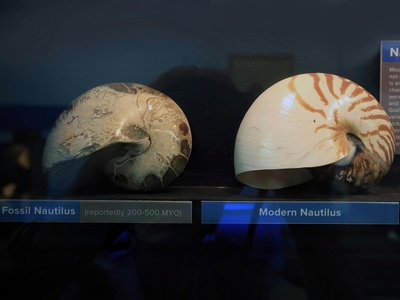
Chambered nautilus
Living fossil with a coiled, chambered shell about 20 cm across, inhabiting steep reef slopes in the Indo-Pacific. Uses jet propulsion and gas-filled chambers to control buoyancy and depth. Notable for ancient lineage and simple pinhole eyes.
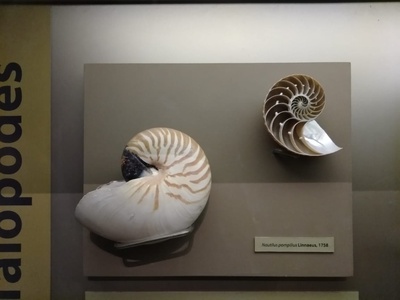
Pearly nautilus
Close relative of the chambered nautilus with a slightly hairy shell and up to 16 cm diameter. Found near Papua New Guinea, it lives on deep reef slopes and forages nocturnally. Notable for rarity and conservation concern.
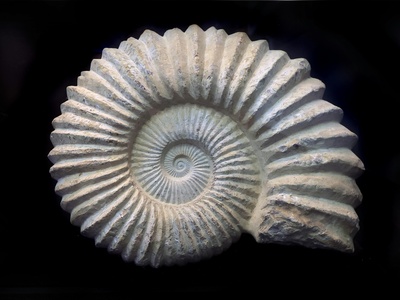
Ammonite
Extinct group of coiled-shelled cephalopods with ornate suture patterns and shells that could reach about 200 cm. Thrived in Mesozoic seas and are common and iconic fossils used in dating rock layers. Notable for diversity and striking shells.
Belemnite
Extinct squid-like cephalopods known by bullet-shaped internal rostra up to about 60 cm. Common in Mesozoic marine rocks, they were likely fast swimmers and active predators. Notable for abundant fossils and importance in paleoecology.
Orthocone (Orthoceras)
Straight-shelled nautiloid from Paleozoic seas with a long conical shell often around 100 cm. Lived as active predators and left abundant, recognizable fossils. Notable for distinctive straight shells frequently seen in collections and decor.