From engine rooms and chemical plants to weather models and nanoscale devices, thermodynamics is the language that describes how energy and matter change across places and scales. A clear map of its subfields helps you pick the right tools for analysis or design.
There are 12 Branches of Thermodynamics, ranging from Atmospheric thermodynamics to Stochastic thermodynamics. For each entry you’ll find below the columns Scope/scale, Key concept/equation, Typical applications, so you can see where a branch applies and how it approaches problems — you’ll find below the full list and organized details.
How do these branches actually differ, and when does that matter?
Branches differ by the assumptions, scale, and variables they prioritize: some treat bulk systems with averaged properties (classical, chemical), others focus on fluctuations or small systems (statistical, stochastic), and some couple with fluids or radiation (atmospheric, radiative). Choosing the right branch matters because it determines which equations and simplifications give reliable predictions for your problem.
Which branch should I learn first for practical engineering problems?
Start with classical (engineering) thermodynamics to master energy balances, cycles, and practical concepts like entropy and exergy; then add transport, chemical, and statistical perspectives as needed for fluids, reactions, or microscopic effects. Follow application needs—power systems, materials, or climate modeling—and explore the related branches listed below.
Branches of Thermodynamics
| Branch | Scope/scale | Key concept/equation | Typical applications |
|---|---|---|---|
| Classical thermodynamics | Macroscopic, equilibrium systems | First and Second Laws; thermodynamic potentials (ΔG=ΔH−TΔS) | Heat engines, phase equilibria, refrigeration |
| Statistical thermodynamics | Microscopic, many-body ensembles | Boltzmann factor p_i∝e^{-βE_i}; S=k ln W; partition function | Predicting properties of gases, solids, molecular systems |
| Chemical thermodynamics | Molecular/reaction scale, open systems | Gibbs free energy ΔG=ΔH−TΔS; chemical potential μ | Reaction spontaneity, equilibria, electrochemistry, batteries |
| Non-equilibrium thermodynamics | Near- and far-from-equilibrium, transport processes | Entropy production σ≥0; Onsager relations J_i=ΣL_ijX_j | Diffusion, heat conduction, coupled transport phenomena |
| Stochastic thermodynamics | Mesoscopic, fluctuating small systems | Fluctuation theorems e.g., Jarzynski ⟨e^{-βW}⟩=e^{-βΔF} | Molecular motors, nanoscale engines, single-molecule experiments |
| Quantum thermodynamics | Quantum-scale, open quantum systems | von Neumann entropy S=−kTr(ρ lnρ); quantum master equations | Quantum engines, thermalization, nanoscale devices |
| Relativistic thermodynamics | High-speed or strong-gravity regimes | Energy–momentum tensor T^{μν}; Tolman temperature relation | Astrophysics, cosmology, high-energy plasmas |
| Finite-time thermodynamics | Finite-rate processes, engineered systems | Curzon–Ahlborn efficiency η=1−√(T_c/T_h) (max-power result) | Power plants, engine optimization, energy conversion design |
| Radiative thermodynamics | Photon gas and electromagnetic radiation | Planck’s law for spectral radiance; Stefan–Boltzmann j*=σT^4 | Astrophysics, thermal radiation engineering, solar energy |
| Biological thermodynamics | Cellular and biochemical networks, open systems | ΔG governs reactions; chemical potentials drive pathways | Metabolism, enzyme energetics, molecular motors, bioenergetics |
| Continuum thermodynamics | Continuum media, coupled fields | Local balance laws and Clausius–Duhem inequality (entropy production) | Thermoelasticity, constitutive modeling, porous media flow |
| Atmospheric thermodynamics | Planetary boundary layer, weather and climate scale | Clausius–Clapeyron relation; potential temperature θ | Weather prediction, cloud formation, climate models |
Images and Descriptions

Classical thermodynamics
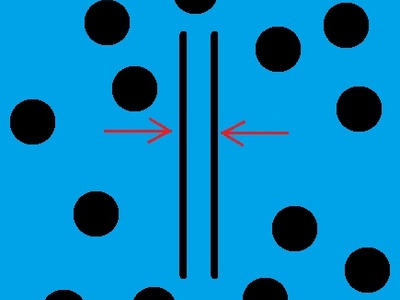
Studies macroscopic systems at equilibrium using variables like T, P, and S. It formulates energy conservation and entropy increase, defines thermodynamic potentials, and sets limits on work and heat—foundational for engines, phase behavior, and energy analysis.
Statistical thermodynamics
Links microscopic particle states to macroscopic thermodynamic properties via ensembles. Uses the Boltzmann factor and partition function to derive entropy and equations of state, essential for connecting microscopic physics to observable thermodynamic behavior.

Chemical thermodynamics
Focuses on energy and matter exchange in chemical reactions, using chemical potentials and Gibbs free energy to predict spontaneity and equilibrium. Crucial for electrochemistry, batteries, industrial chemistry, and materials synthesis.
Non-equilibrium thermodynamics
Studies irreversible processes, transport, and relaxation toward equilibrium. Emphasizes entropy production and flux–force relations to model diffusion, viscosity, and coupled transport in engineering and natural systems.
Stochastic thermodynamics
Extends thermodynamics to small fluctuating systems using stochastic trajectories and fluctuation theorems. Quantifies work, heat, and entropy at the mesoscale and links thermal fluctuations to energetic performance.
Quantum thermodynamics
Explores thermodynamic behavior of quantum systems, coherence, and correlations. Uses quantum statistical tools to study thermalization, quantum heat engines, and the limits of energy control at quantum scales.
Relativistic thermodynamics
Applies thermodynamic concepts where relativity matters, relating temperature, energy, and momentum in moving or gravitating systems. Important for stellar interiors, relativistic plasmas, and cosmological thermodynamic questions.
Finite-time thermodynamics
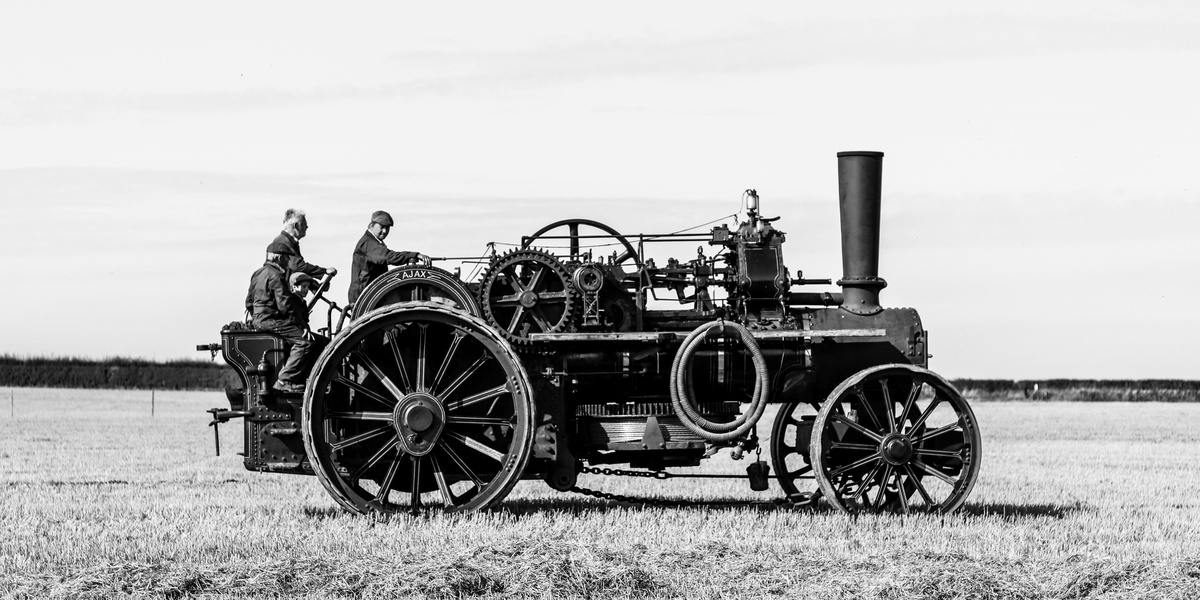
Addresses performance limits when processes occur in finite time, balancing power and efficiency. Provides realistic bounds and optimization strategies for engines and converters operating under time constraints.
Radiative thermodynamics
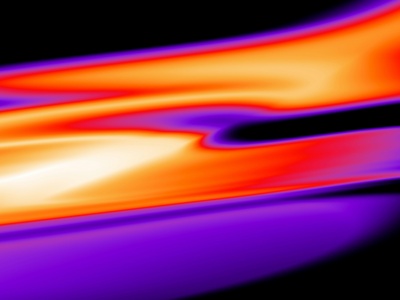
Treats electromagnetic radiation as a thermodynamic carrier of energy, applying Planck and Stefan–Boltzmann laws. Essential for understanding stellar radiation, thermal imaging, and radiative heat transfer in engineering.
Biological thermodynamics
Applies thermodynamic principles to living systems and biochemical networks, focusing on free-energy transduction, non-equilibrium steady states, and information–energy relations. Explains metabolism, enzyme energetics, and cellular energy budgets.
Continuum thermodynamics
Formulates thermodynamics within continuum mechanics using local balances and the Clausius–Duhem inequality. Provides constitutive constraints for thermoelastic, viscoelastic, and coupled heat–mass transport models in materials science.
Atmospheric thermodynamics
Studies thermodynamic processes in Earth’s atmosphere such as moist convection, stability, and phase changes of water. Uses potential temperature and vapor thermodynamics to underpin weather forecasting and climate science.