When wolves were reintroduced to Yellowstone National Park in 1995, ecologists and the public watched a chain of changes unfold — elk shifted where and how they fed, willow and aspen began to recover in some valleys, and river channels showed unexpected shifts in vegetation. Those outcomes captivated attention because they looked tidy: remove a top predator, and the system snaps back into balance.
That tidy story masks a deeper truth. Many common beliefs about nature simplify complex dynamics and can steer conservation, policy, and everyday choices in the wrong direction.
This piece debunks seven widespread myths about ecosystems and explains better ways to think about disturbance, species interactions, human impacts, and recovery. Expect concrete examples — Yellowstone (1995 and the 1988 fires), coral bleaching (2016–2017), invasive species like zebra mussels and the brown tree snake — and references to authoritative sources such as IPBES, the IPCC, NOAA, and the IUCN.
Below are seven common ecological misconceptions, why they persist, and what real-world examples teach us about managing for resilient landscapes and seascapes.
Misconceptions about ecosystem balance and stability

Popular metaphors like a single, static “balance of nature” obscure how ecosystems actually work. Ecologists debated this for decades (think Frederic Clements’ climax community versus Henry Gleason’s individualistic concept). Modern work emphasizes disturbance regimes, non-equilibrium dynamics, and context-dependence.
Key ideas: ecosystems are dynamic; succession can follow multiple pathways; and keystone roles come in many forms.
1. Myth: Ecosystems are always in balance
Ecosystems are not fixed, harmonious machines — they’re dynamic systems shaped by disturbance and change. Fires, floods, storms, pest outbreaks, and human actions all create variability over time.
The Yellowstone example shows this. Wolves returned in 1995 and altered elk behavior and numbers, which contributed to vegetation recovery in places. But that story overlays earlier landscape-scale events: the 1988 Yellowstone fires reshaped plant communities and nutrient cycles long before wolves arrived.
Managers increasingly aim to sustain processes — fire regimes, seasonal migrations, hydrology — rather than freeze a map into a single “correct” state. Agencies such as NOAA and numerous ecological journals recommend prescribed burns and flow management as tools to maintain functioning systems.
2. Myth: Succession always leads to a single “climax” community
Succession does not follow one inevitable route to a single climax. Instead, multiple pathways exist and are shaped by disturbance frequency, the local species pool, and changing climate.
For example, longleaf pine savannas depend on frequent fire. If fire is excluded, they often convert to closed-canopy forest or shrubland — a different trajectory than what “climax” theory might predict.
Abandoned agricultural fields show another range of outcomes: some revert toward native forest, others become persistent grasslands or invasive-dominated patches unless managers intervene. Restoration goals therefore must be site-specific and adaptive rather than assuming a single end state.
3. Myth: Keystone species are always top predators
A keystone species exerts a disproportionate influence on community structure, but that influence can come from many kinds of organisms. Predators are classic keystones, but so are engineers and critical mutualists.
Sea otters in the North Pacific suppress sea urchins and keep kelp forests intact; beavers engineer wetlands by building dams that increase habitat diversity; fig trees in tropical forests provide essential fruits during seasonal shortages. Robert Paine’s early work identified predators as keystones, but later syntheses broadened the concept.
Conservation should focus on protecting functional roles — engineers, pollinators, resource-providers — not only charismatic apex predators.
Misunderstandings about human impact and conservation
Human activity operates at local, landscape, and global scales. Simplistic views — that a protected area alone is enough, or that impacts always look obvious — miss cumulative pressures and governance limitations. Authoritative assessments such as IPBES (2019) quantify widespread risks to biodiversity worldwide.
4. Myth: Human impacts are always obvious and local
Not all impacts are immediate or visible. Many are subtle, cumulative, or distant from the original source. Greenhouse gas emissions, for example, drive ocean warming and acidification that harm reefs thousands of miles from emission sources.
The IPBES 2019 assessment estimates roughly one million species face extinction risks without rapid action. The IPCC reports climate-driven range shifts and changing disturbance regimes that alter ecosystems at continental scales.
Practical implications include planning at landscape scales, tightening pollution controls, and integrating climate mitigation into conservation strategies to address lagged and remote pressures.
5. Myth: Protected areas alone save ecosystems
Protected areas are a cornerstone of conservation but not a cure-all. Globally, roughly 15% of land and about 7–8% of oceans are formally protected (figures vary with definitions and recent commitments).
Coverage does not guarantee ecological integrity. Many reserves suffer from edge effects, fragmentation, poor enforcement, and governance gaps. Climate change also shifts suitable habitat outside old boundaries.
Effective strategies pair protected areas with connectivity (corridors), sustainable management on surrounding lands, and community engagement. Examples include well-enforced marine protected areas and community forestry programs that combine legal protection with local stewardship.
Mistakes about species interactions and ecosystem resilience
Resilience is a nuanced property with limits. Species interactions — competition, mutualism, predation — create outcomes that can be non-linear and sometimes irreversible. Misunderstanding these dynamics leads to poor restoration and biosecurity choices.
Expectations about invaders and recovery often ignore thresholds, hysteresis, and social-ecological feedbacks. Below are two common misbeliefs that affect policy and management.
6. Myth: Invasive species only harm their new ecosystems
Many invasions are damaging, but impacts vary by species, ecosystem, and time. The blanket statement that nonnatives only harm is an oversimplification that can hamper nuanced management.
Zebra mussels in the Great Lakes have caused billions in infrastructure and control costs and altered food webs. The brown tree snake introduced to Guam drove multiple endemic bird extinctions, changing island ecosystems profoundly.
Yet some introduced species temporarily increase local diversity or provide beneficial services in novel contexts. Policy should emphasize early detection, risk assessment, and targeted control where impacts are high rather than universal eradication rhetoric.
7. Myth: Ecosystems can easily bounce back after damage
Some systems recover quickly, but many cross thresholds into alternate states that are hard to reverse. Concepts like hysteresis and regime shifts explain why returning to a previous state can be expensive or impossible.
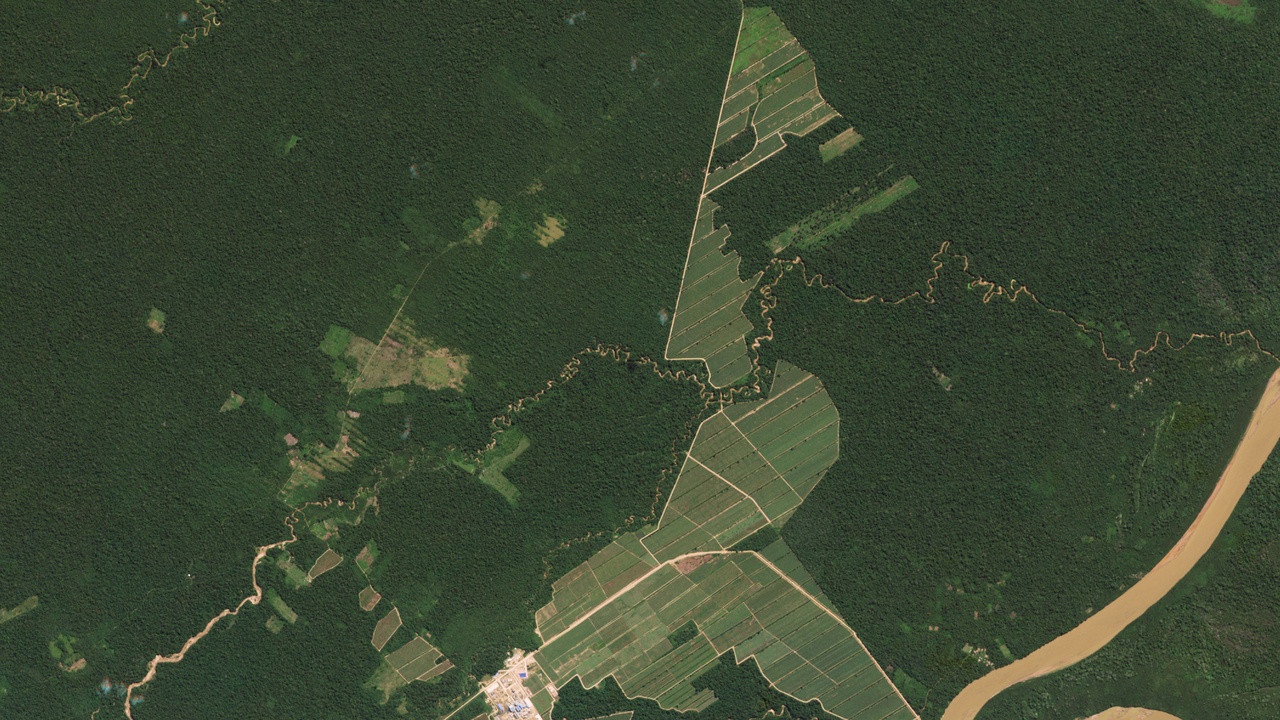
Coral reefs suffered severe bleaching during the 2016–2017 global events, and repeated bleaching increases the risk of reefs shifting to algal-dominated systems. In other cases, deforestation combined with drought raises the specter of Amazon dieback.
Prevention and resilience-building — reducing greenhouse gases, maintaining connectivity, and reducing local stresses — are generally more effective and cheaper than attempting large-scale ecological recovery after a collapse. Agencies like the IUCN and IPBES emphasize such precautionary strategies.
Some of the myths about ecosystems persist because simple stories sell well. The science is messier but also more useful.
Summary
- Ecosystems are dynamic; disturbance and change are normal, so manage for processes (fire regimes, hydrology, migrations) not fixed end states.
- Succession, keystone roles, and species interactions are context-dependent; restoration goals should be site-specific and flexible.
- Human impacts act across scales and can be subtle or cumulative; protected areas help but must be paired with connectivity, governance, and climate action.
- Invasions and recovery vary: prioritize early detection and targeted responses, and invest in prevention and resilience because some losses are effectively irreversible.