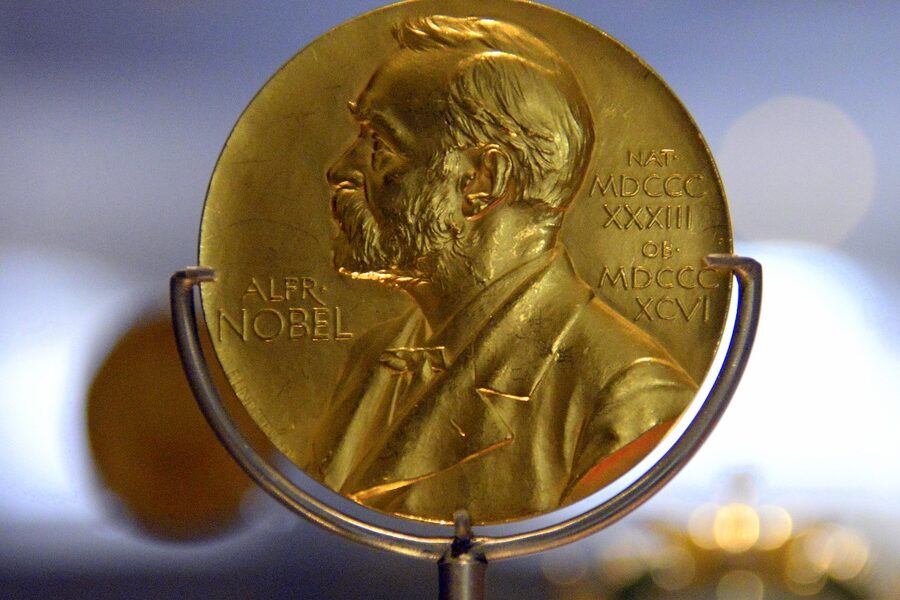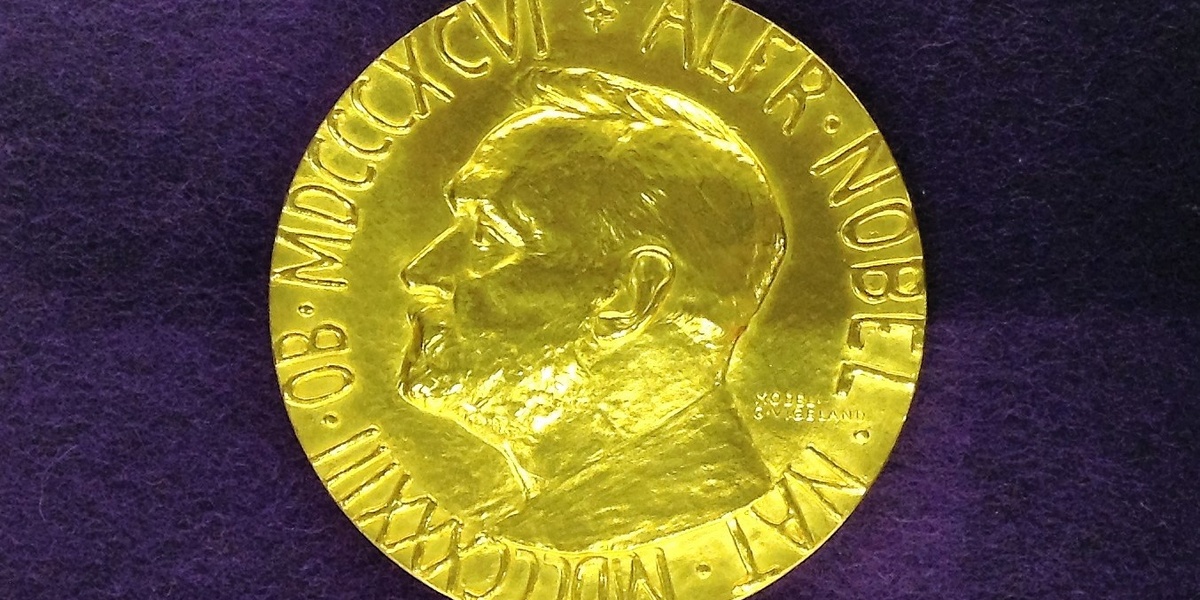
1968 was a year of notable shifts in science and the arts, with laureates whose work still threads through modern research and literature. Looking at that year’s winners gives a compact view of the discoveries and voices that shaped the late 20th century.
There are 7 1968 Nobel Prize Winners, ranging from Har Gobind Khorana to Yasunari Kawabata; the group covers contributions from laboratory breakthroughs to literary achievement. For each person, you’ll find below Prize category, Country, and Citation.
Which areas of work are represented among the 1968 laureates?
The 1968 winners span both scientific research and literature, showing how the Nobel committees recognized technical discoveries alongside artistic achievement that year. Scanning the list by category quickly reveals whether a laureate was honored for physics, chemistry, medicine, literature or other recognized fields.
How should I use the Prize category, Country, and Citation columns to compare winners?
Use Prize category to group similar achievements, Country to note national or institutional contexts, and Citation to understand the specific contribution being honored; together they let you compare scope (experimental vs. theoretical), geographic distribution, and the exact reason each laureate was awarded — all laid out for quick side-by-side review below.
1968 Nobel Prize Winners
| Name | Prize category | Country | Citation |
|---|---|---|---|
| Luis W. Alvarez | Physics | United States | For decisive contributions to elementary-particle physics via hydrogen bubble chamber discoveries. |
| Lars Onsager | Chemistry | United States | For discovery of reciprocal relations in irreversible thermodynamics. |
| Robert W. Holley | Physiology or Medicine | United States | For interpretation of the genetic code and its function in protein synthesis. |
| Har Gobind Khorana | Physiology or Medicine | United States | For interpretation of the genetic code and its function in protein synthesis. |
| Marshall W. Nirenberg | Physiology or Medicine | United States | For interpretation of the genetic code and its function in protein synthesis. |
| Yasunari Kawabata | Literature | Japan | For his narrative mastery expressing the essence of the Japanese mind. |
| René Cassin | Peace | France | For contributions to human rights, notably role in drafting the Universal Declaration of Human Rights. |
Images and Descriptions

Luis W. Alvarez
Luis Walter Alvarez was an experimental physicist who developed the hydrogen bubble chamber technique and discovered many resonant particle states. His methods transformed particle detection and advanced understanding of subatomic particles, influencing accelerator experiments and particle physics for decades.
Lars Onsager
Lars Onsager was a theoretical chemist and physicist who formulated reciprocal relations fundamental to nonequilibrium thermodynamics. His mathematical insights clarified transport processes in chemistry and physics, providing tools used across electrochemistry, statistical mechanics, and engineering.
Robert W. Holley
Robert W. Holley was a biochemist who determined the structure of transfer RNA, revealing how amino acids are matched to codons. His work clarified the mechanics of translation and provided foundational knowledge for molecular biology and genetic research.
Har Gobind Khorana
Har Gobind Khorana was a molecular biologist who synthesized defined RNA sequences and helped decode how nucleotide triplets specify amino acids. His synthetic approach proved codon assignments and paved the way for genetic engineering and modern biotechnology.
Marshall W. Nirenberg
Marshall W. Nirenberg was a geneticist who cracked the first codons of the genetic code, demonstrating how nucleotide sequences direct protein synthesis. His experiments established the rules of translation and launched molecular genetics as a precise experimental science.
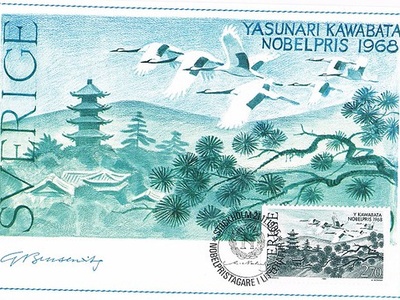
Yasunari Kawabata
Yasunari Kawabata was a novelist whose lyrical, spare prose and evocative imagery explored loneliness, memory, and beauty. Works like Snow Country and The Sound of the Mountain brought Japanese aesthetics to global readers and influenced modern world literature.
René Cassin
René Cassin was a jurist and diplomat instrumental in drafting the Universal Declaration of Human Rights. His legal scholarship and advocacy established frameworks for international human rights law, influencing courts, treaties, and global human-rights institutions.