Copper chemistry touches many places you might not expect — from weathered bronze and mineral veins to photographic processes and classroom demonstrations — so a compact reference can save time whether you’re a student, conservator, or hobbyist.
There are 30 Copper Compounds, ranging from Atacamite to Tetraamminecopper(II) hydroxide (Schweizer’s reagent). For each entry you’ll find below the Formula, Oxidation state, and Common uses to help you compare structures, reactivity, and practical applications at a glance — a mix of minerals, salts, and coordination complexes useful in industry, art, and research you’ll find below.
How can I use the Formula, Oxidation state, and Common uses to pick the right compound for a project?
Check the oxidation state first (Cu(I) vs Cu(II)) because it determines typical reactivity and color; the formula gives stoichiometry and solubility clues, and the common uses note practical roles (e.g., fungicide, pigment, reagent), so combine those three to match chemical behavior with your application and safety needs.
Which of these compounds require special handling or disposal?
Many copper compounds are toxic to aquatic life and can be irritants or oxidizers; solids like Atacamite are lower-risk to handle than soluble complexes, but always consult the safety data sheet for each entry, use gloves and eye protection, and follow local disposal regulations to prevent environmental contamination.
Copper Compounds
| Name | Formula | Oxidation state | Common uses |
|---|---|---|---|
| Copper(II) sulfate pentahydrate | CuSO4·5H2O | +2 | Algicide, school reagent, root killer |
| Copper(II) sulfate (anhydrous) | CuSO4 | +2 | Desiccant, catalyst, analytical reagent |
| Copper(I) oxide | Cu2O | +1 | Pigment, antifouling, semiconductor |
| Copper(II) oxide | CuO | +2 | Pigment, catalyst, battery material precursor |
| Copper(I) chloride | CuCl | +1 | Organic synthesis, cuprous source |
| Copper(II) chloride dihydrate | CuCl2·2H2O | +2 | Etching, catalyst, wood preservative |
| Copper(I) iodide | CuI | +1 | Organic synthesis, photoconductor |
| Copper(I) bromide | CuBr | +1 | Organic synthesis, halogen-exchange reagent |
| Copper(II) nitrate trihydrate | Cu(NO3)2·3H2O | +2 | Oxidizer, dyeing, catalyst |
| Copper(I) cyanide | CuCN | +1 | Electroplating, organic synthesis reagent |
| Copper(II) acetate monohydrate | Cu(CH3COO)2·H2O | +2 | Catalyst, mordant, wood preservative |
| Copper(II) hydroxide | Cu(OH)2 | +2 | Fungicide, pigment precursor, lab reagent |
| Malachite (basic copper carbonate) | Cu2CO3(OH)2 | +2 | Gemstone, pigment, ornamental stone |
| Azurite | Cu3(CO3)2(OH)2 | +2 | Blue pigment, gemstone, historical art pigment |
| Copper(II) sulfide (covellite) | CuS | +2 | Mineral ore, semiconductor research material |
| Chalcocite (copper(I) sulfide) | Cu2S | +1 | Ore mineral, photovoltaic research, conductor |
| Copper(II) phosphate | Cu3(PO4)2 | +2 | Pigment, corrosion product, research material |
| Copper(I) thiocyanate | CuSCN | +1 | Transparent conductor, photovoltaic hole transport layer |
| Atacamite | Cu2Cl(OH)3 | +2 | Corrosion product, mineral specimen, conservation concern |
| Brochantite | Cu4SO4(OH)6 | +2 | Corrosion crust, mineral specimen, pigment precursor |
| Tetraamminecopper(II) hydroxide (Schweizer’s reagent) | [Cu(NH3)4](OH)2 | +2 | Dissolves cellulose, historical fiber processing reagent |
| Copper(II) acetylacetonate | Cu(acac)2 | +2 | Catalyst precursor, vapor deposition, coordination chemistry |
| Copper phthalocyanine | C32H16CuN8 | +2 | Blue-green pigment in paints, inks, plastics |
| Copper(II) azide | Cu(N3)2 | +2 | Primary explosive, detonator primer (rare) |
| Copper(II) perchlorate | Cu(ClO4)2 | +2 | Oxidizer, laboratory reagent, hygroscopic |
| Copper(II) fluoride | CuF2 | +2 | Ceramics, fluoride source, catalyst research |
| Copper(II) bromide | CuBr2 | +2 | Catalyst, bromination reagent, photography |
| Copper oxalate | CuC2O4 | +2 | Pigment, catalyst precursor, ceramics precursor |
| Copper(II) arsenate | Cu3(AsO4)2 | +2 | Historical pigment, wood preservative (toxic) |
| Copper(I) selenide | Cu2Se | +1 | Thermoelectric, photovoltaic research material |
Images and Descriptions

Copper(II) sulfate pentahydrate
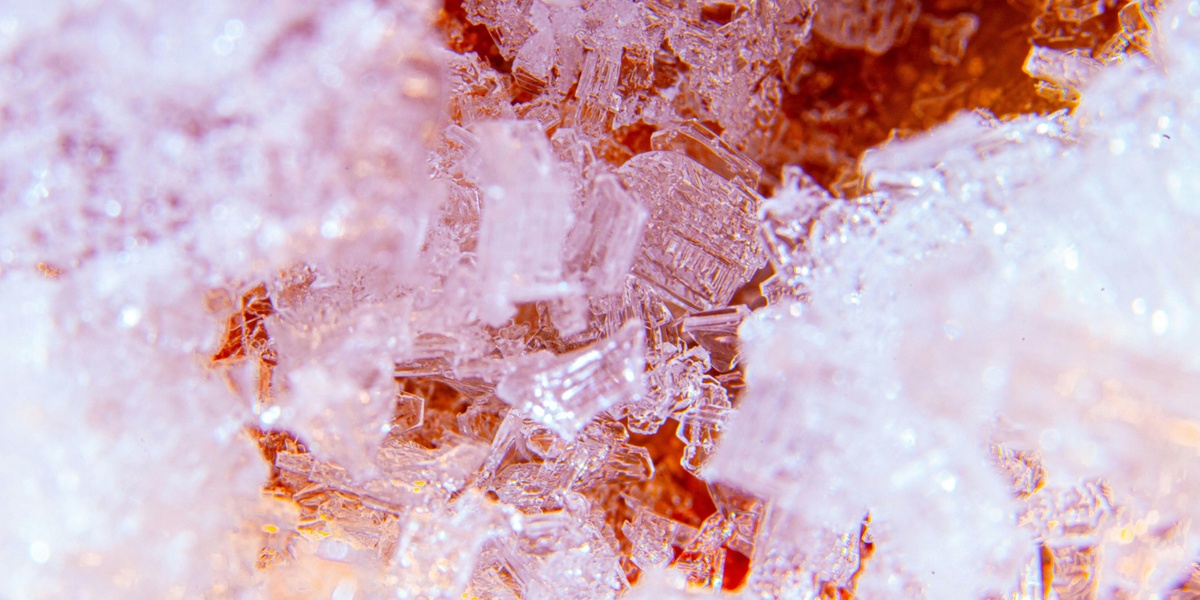
Bright blue crystalline salt used in labs and agriculture; stains and is moderately toxic if ingested. Commonly used to kill algae, teach chemical reactions and test for water. Handle with gloves, avoid inhalation and aquatic release.
Copper(II) sulfate (anhydrous)
White to gray powder that turns blue on hydration; used as desiccant and reagent in analysis and catalysis. Corrosive to tissues and toxic to aquatic life; store dry and avoid ingestion or skin contact.
Copper(I) oxide
Red to reddish-brown solid used historically as pigment and in antifouling paints; a p-type semiconductor. Low solubility in water but reactive with acids; can be toxic if inhaled as dust or ingested.
Copper(II) oxide
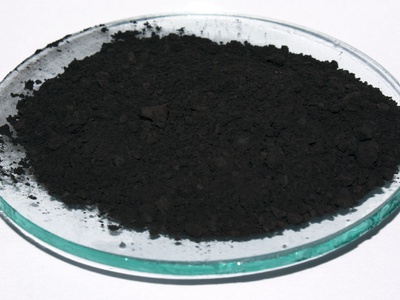
Black powder used as a pigment, catalyst and precursor in battery and ceramic materials. Insoluble in water but reacts with acids; can cause respiratory irritation and is hazardous in fine particulate form.
Copper(I) chloride
White to greenish solid used as source of Cu(I) in organic synthesis and coordination chemistry. Sensitive to oxidation to Cu(II); mildly toxic and should be handled to avoid dust inhalation and skin contact.
Copper(II) chloride dihydrate
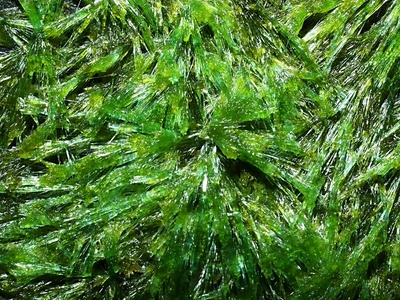
Blue-green crystals used in metal etching, as a catalyst and wood preservative. Hygroscopic and corrosive; solutions are toxic and corrosive to skin and eyes and harmful to aquatic organisms and environments.
Copper(I) iodide
White to tan solid used in organic synthesis and as a photoconductive material. Insoluble in water; relatively stable but can release dust. Handle to avoid ingestion and inhalation; may cause irritation.
Copper(I) bromide
Pale to white powder used in organic synthesis and halogen-exchange reactions; source of Cu(I). Sensitive to moisture and air, it slowly oxidizes to Cu(II) species. Toxic if swallowed or inhaled.
Copper(II) nitrate trihydrate
Blue crystalline oxidizing salt used in metal finishing, dyeing and as a catalyst precursor. Hygroscopic and corrosive; decomposes on heating, releasing toxic nitrogen oxides; therefore avoid contact and environmental release.
Copper(I) cyanide
White to gray solid used in electroplating and as a reagent in organic syntheses; forms coordination polymers. Highly toxic due to cyanide content; extreme care required to avoid exposure and environmental contamination.
Copper(II) acetate monohydrate
Blue-green crystalline salt used as a catalyst and mordant in dyes; historically known as verdigris precursor. Moderately toxic and corrosive; can stain surfaces and irritate skin, eyes and respiratory tract.
Copper(II) hydroxide
Blue-green amorphous or crystalline solid used as a fungicide and precursor to pigments and basic copper salts. Insoluble in water; corrosive and can be harmful if ingested or inhaled as dust.
Malachite (basic copper carbonate)
Green banded mineral used as an ornamental stone and historic green pigment. Slowly soluble in acids, it can release copper ions; polishing dust and ingestion pose health hazards to humans.
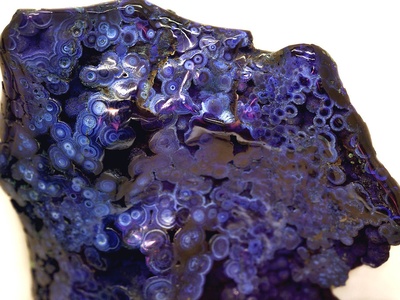
Azurite
Deep blue mineral used historically as a pigment and decorative stone. Weathering changes it to green malachite; contains toxic copper ions so avoid ingestion and long term exposure to dust.
Copper(II) sulfide (covellite)
Dark metallic mineral with low solubility; an ore of copper and an interesting semiconductor with complex electrical properties. Toxic when heated; mining and processing can release harmful particulates and sulfur gases.
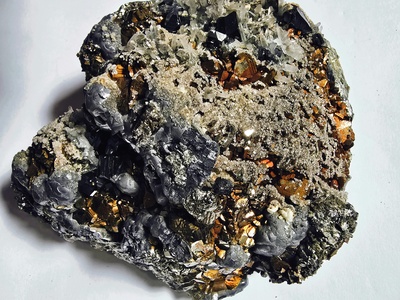
Chalcocite (copper(I) sulfide)
Gray to black mineral used as a copper ore; exhibits metallic conductivity and is studied for electronic and photovoltaic applications. Reacts with oxygen to form sulfates and can produce sulfur dioxide during roasting.
Copper(II) phosphate
Bluish-green solid that appears as corrosion products on copper alloys and is used experimentally as a pigment and catalyst precursor. Insoluble in water; phosphates present environmental concerns if released to ecosystems.
Copper(I) thiocyanate
White insoluble powder used as a hole-transport material in certain photovoltaics and transparent conductive films. Relatively stable but can decompose with strong acids; handle to avoid dust inhalation and contamination.
Atacamite
Green copper chloride hydroxide mineral commonly formed on corroded bronze artifacts; of interest to conservators because it indicates chloride-induced bronze disease. Notable for its green color and potential to damage metals if untreated.
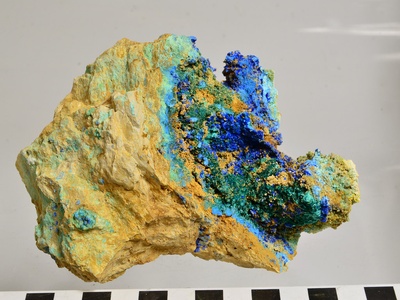
Brochantite
Dark green sulfate hydroxide mineral forming on weathered copper and bronze; seen as a corrosion crust. Chemically reactive and indicative of long-term sulfate exposure; can flake off and damage artifacts.
Tetraamminecopper(II) hydroxide (Schweizer’s reagent)
Deep blue complex that dissolves cellulose, historically used to make soluble cotton and in fiber research. Strongly alkaline and amine-containing; corrosive and toxic, requiring careful handling and neutralization before disposal.
Copper(II) acetylacetonate
Green crystalline coordination compound used as a catalyst precursor and metalorganic chemical vapor deposition source. Stable under normal conditions but thermally decomposes; handle with care and avoid inhalation of decomposition products.
Copper phthalocyanine
Intense blue-green macrocyclic complex pigment widely used in paints, inks and plastics for excellent colorfastness. Chemically stable and low toxicity in solid form, though nanoparticle or dust exposure should be minimized.
Copper(II) azide
Highly explosive copper azide forms shock-sensitive crystals used experimentally as a primary explosive; rarely used due to instability. Extremely hazardous; must be handled only by specialists with strict safety controls.
Copper(II) perchlorate
Strongly oxidizing, highly hygroscopic salt used infrequently in labs as an oxidizer and reagent. Extremely hazardous when mixed with organics and combustible materials; store dry and with strict safety precautions.
Copper(II) fluoride
Greenish powder used in specialized ceramics and as a fluoride source in synthesis and catalysis research. Moisture sensitive and corrosive; fluoride toxicity risk requires careful handling and waste control measures.
Copper(II) bromide
Brown-red solid used as a bromination reagent and catalyst in organic chemistry; historically used in photography. Corrosive and oxidizing; toxic if swallowed and harmful to aquatic life and damaging to ecosystems.
Copper oxalate
Blue-green insoluble salt used as a pigment and as a precursor for catalysts and ceramic materials. Decomposes on heating to oxides; oxalate compounds are potentially harmful if ingested or inhaled.
Copper(II) arsenate
Greenish solid used historically in pigments and as a wood preservative; highly toxic due to arsenic. Environmental and health risks are significant; largely phased out for safety reasons worldwide today.
Copper(I) selenide
Black crystalline semiconductor studied for thermoelectric and photovoltaic applications. Sensitive to oxidation and can form nonstoichiometric phases; selenium compounds can be toxic, so handle with care and control emissions during heating.