France’s volcanic heritage shapes much of its central highlands and island territories, from rolling puys to broad volcanic plateaus. Whether you’re curious about hiking routes or geological history, the variety tells a long story of eruptions and erosion across distinct regions.
There are 14 Volcanoes in France, ranging from Cantal Massif to Puy de Sancy. For each entry you’ll find below the columns Region,Status,Height (m) so you can quickly compare location, current classification and elevation — you’ll find below.
Are any of these volcanoes currently active or dangerous to visitors?
Most sites listed for mainland France are classified as extinct or dormant; active volcanic activity in French territory is primarily in overseas areas like Réunion (Piton de la Fournaise) and historically in Martinique. Check the Status column for each entry and consult local authorities or park services before visiting, especially for restricted slopes or monitored zones.
Where do the Region, Status and Height (m) values come from and how current are they?
Heights and regional assignments come from national mapping and geological surveys, while status reflects recent volcanological assessments; these can be updated as new studies appear. Use the provided columns to prioritize sites and verify details against official sources if planning research or travel.
Volcanoes in France
| Name | Region | Status | Height (m) |
|---|---|---|---|
| Puy de Dôme | Auvergne | Dormant | 1,465.00 |
| Chaîne des Puys | Auvergne | Dormant | 1,465.00 |
| Puy de Sancy | Monts Dore | Extinct | 1,886.00 |
| Cantal Massif | Auvergne | Extinct | 1,858.00 |
| Piton de la Fournaise | Réunion | Active | 2,632.00 |
| Piton des Neiges | Réunion | Extinct | 3,069.00 |
| La Grande Soufrière | Guadeloupe | Active | 1,467.00 |
| Mount Pelée | Martinique | Active | 1,397.00 |
| Mayotte submarine volcano | Mayotte (French EEZ) | Active | -3,500.00 |
| Mont Orohena | Tahiti (French Polynesia) | Extinct | 2,241.00 |
| Mount Tohivea | Moorea (French Polynesia) | Extinct | 1,207.00 |
| Mount Otemanu | Bora Bora (French Polynesia) | Extinct | 727.00 |
| Mount Tekao | Nuku Hiva (Marquesas, French Polynesia) | Extinct | 1,224.00 |
| Mont Ross | Kerguelen (French Southern Lands) | Extinct | 1,850.00 |
Images and Descriptions

Puy de Dôme
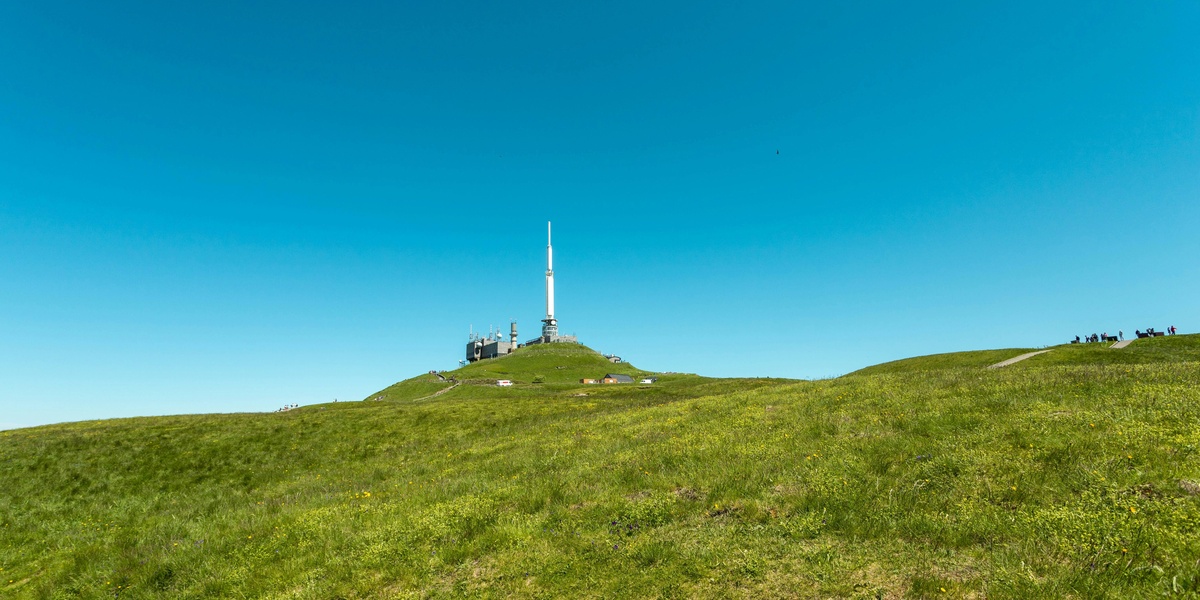
Near Clermont-Ferrand in Auvergne, Puy de Dôme tops the Chaîne des Puys. Last eruptions in the Holocene roughly 6,000–10,000 years ago. Famous Roman temple ruins, panoramic train and hiking trails make it France’s best-known volcanic landmark and a UNESCO-listed landscape.
Chaîne des Puys
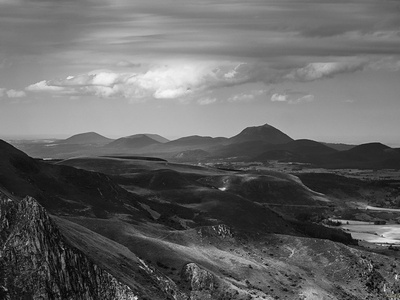
A 40-kilometre chain of cinder cones and lava domes west of Clermont-Ferrand. Active in the Holocene with last eruptions several thousand years ago. Now dormant, it’s a popular hiking area and UNESCO World Heritage site prized for clear volcanic landforms.
Puy de Sancy
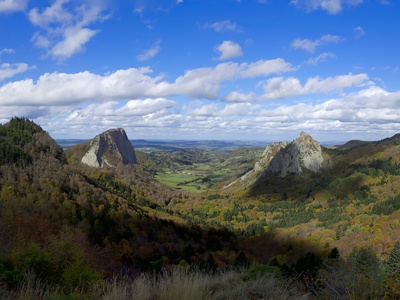
Highest peak of the Massif Central (Monts Dore) near Clermont-Ferrand. Volcanic activity ceased in the Pleistocene, making it effectively extinct. Popular for hiking, skiing and mountain lakes; its volcanic origins shape rugged ridges and glacial cirques attractive to visitors.
Cantal Massif
The large, heavily eroded Cantal volcanic massif in central France is one of Europe’s biggest extinct volcanoes, last active millions of years ago. Its plateaulike relief, deep valleys and dairy landscapes draw hikers; geology is key to studying long-term volcanic erosion.
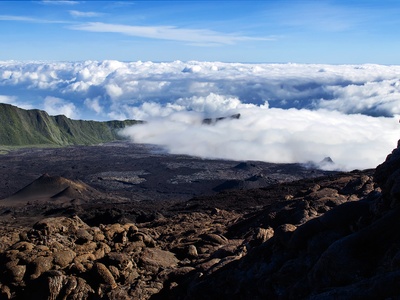
Piton de la Fournaise
Located on eastern Réunion Island, Piton de la Fournaise is one of the world’s most active shield volcanoes with frequent lava flows. Eruptions are recorded regularly in the 21st century; it’s closely monitored and popular for guided hikes to safe viewing points.
Piton des Neiges
Piton des Neiges crowns Réunion at over 3,000 meters; it’s an ancient shield volcano now deeply eroded and extinct for hundreds of thousands of years. Popular for multi-day hikes and sunrise viewpoints; its calderas and rivers shape the island’s dramatic interior.
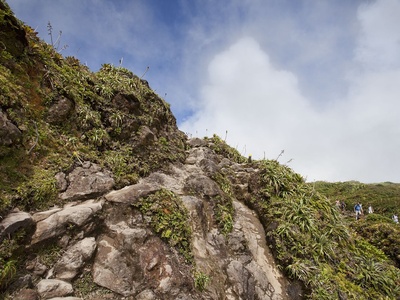
La Grande Soufrière
Also called La Soufrière, this andesitic stratovolcano dominates Basse-Terre island. Last eruptive episode occurred in 1976–1977; persistent fumaroles and unrest keep it monitored. Hikers can reach the summit through guided trails; authorities maintain volcano-alert plans for local communities.
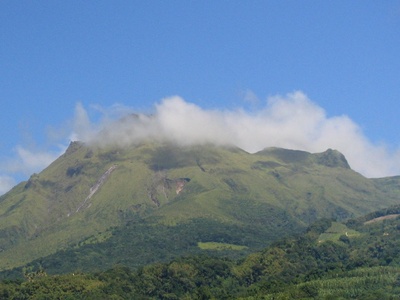
Mount Pelée
On the northern tip of Martinique, Mount Pelée famously erupted in 1902, destroying Saint-Pierre and causing massive fatalities. That catastrophic 20th-century eruption is the defining event; the volcano is closely monitored and has had minor activity in the 20th century.
Mayotte submarine volcano
A submarine volcano south of Mayotte produced a major seismic swarm and eruption in 2018–2019, building a new seamount with a summit several kilometres below sea level. Ongoing scientific study monitors deformation, earthquakes and potential hazards to the island.
Mont Orohena
Mont Orohena is Tahiti’s highest peak on the island’s volcanic massif; its eruptions are prehistoric with no historical activity. Rugged ridgelines and deep valleys attract hikers; the mountain represents the main shield-building phase that formed Tahiti’s high volcanic terrain.
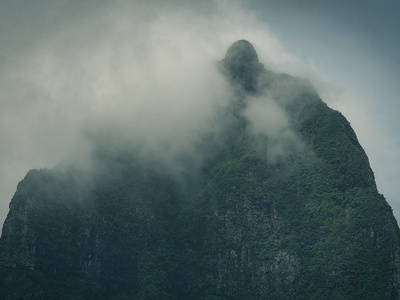
Mount Tohivea
Moorea’s steep volcanic backbone, Mount Tohivea, is part of the Society Islands’ shield-volcanic islands. No recorded historical eruptions; its dramatic ridges and valleys are popular with hikers and provide insight into island-building and reef development.
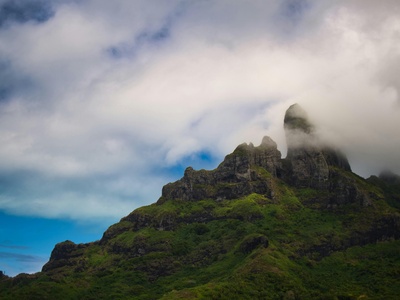
Mount Otemanu
Iconic eroded volcanic peak rising from Bora Bora lagoon, Mount Otemanu is an extinct remnant of a large shield volcano. No historic eruptions; the jagged summit and surrounding lagoon scenery make it a major tourist landmark and photographic subject.
Mount Tekao
Mount Tekao dominates Nuku Hiva island in the Marquesas as an eroded volcanic massif. Volcanism is prehistoric with no recorded historical eruptions. Rugged terrain and archaeological sites draw trekkers; geology records island-building events in the remote North Pacific.
Mont Ross
Mont Ross is the highest massif on the Kerguelen Islands (French Southern and Antarctic Lands), an old volcanic complex largely inactive for millions of years. Remote and glaciated, it’s of scientific interest for sub-Antarctic volcanism and inaccessible except to research expeditions.