From lab benches to industrial plants, potassium chemistry touches fertilizers, food additives, batteries and more. A quick, organized list can save time whether you’re studying formulations or sourcing reagents.
There are 20 Potassium Compounds, ranging from Dipotassium phosphate to Potassium superoxide. The entries are laid out so each shows Formula,Molar mass (g/mol),Common uses — you’ll find below.
How do I pick the right potassium compound for a specific use?
Match the compound’s chemical properties to the application: solubility and ionic form for fertilizers and food, oxidizing power for oxidizers, and stability for storage. Check the Formula and Molar mass (g/mol) to confirm stoichiometry and dose, then consult the listed Common uses as a practical guide.
Which safety precautions are important when handling these compounds?
Treat each compound based on reactivity and toxicity: follow SDS guidance, use gloves and eye protection for corrosives or irritants, avoid ignition sources with oxidizers like superoxides, and store hygroscopic salts in sealed containers. Small lab procedures and proper labeling reduce most risks.
Potassium Compounds
| Name | Formula | Molar mass (g/mol) | Common uses |
|---|---|---|---|
| Potassium chloride | KCl | 74.55 | Fertilizer, medical electrolyte, food salt substitute |
| Potassium nitrate | KNO3 | 101.10 | Fertilizer, food curing, pyrotechnics |
| Potassium sulfate | K2SO4 | 174.25 | Fertilizer, glass manufacturing |
| Potassium carbonate | K2CO3 | 138.20 | Soap, glass, pH control, food processing |
| Potassium hydroxide | KOH | 56.11 | Chemical manufacturing, soap, battery electrolytes |
| Potassium permanganate | KMnO4 | 158.03 | Disinfectant, water treatment, oxidizer in labs |
| Monopotassium phosphate | KH2PO4 | 136.08 | Fertilizer, food additive, buffering agent |
| Dipotassium phosphate | K2HPO4 | 174.17 | Food additive, buffering agent, fertilizer |
| Potassium bicarbonate | KHCO3 | 100.11 | Baking, fire extinguishers, fungicide |
| Potassium iodide | KI | 166.00 | Thyroid medicine, nutrition, photography |
| Potassium bromide | KBr | 119.00 | Historical sedative, photography, research reagent |
| Potassium chlorate | KClO3 | 122.55 | Pyrotechnics, oxygen generation in labs |
| Potassium perchlorate | KClO4 | 138.54 | Pyrotechnics, rocket propellants, explosives |
| Potassium cyanide | KCN | 65.12 | Metal extraction, organic synthesis (strictly controlled) |
| Potassium superoxide | KO2 | 71.10 | Rebreathers, CO2 scrubbing, oxygen source |
| Potassium oxide | K2O | 94.20 | Ceramics, glass precursors (industrial) |
| Potassium peroxide | K2O2 | 110.19 | Oxidizer, oxygen generation (specialty uses) |
| Potassium alum | KAl(SO4)2·12H2O | 474.37 | Water purification, deodorant, tanning |
| Potassium bitartrate (cream of tartar) | KC4H5O6 | 188.18 | Baking stabilizer, wine byproduct, culinary use |
| Orthoclase (feldspar) | KAlSi3O8 | 278.33 | Ceramics, glass raw material, geological mineral |
Images and Descriptions
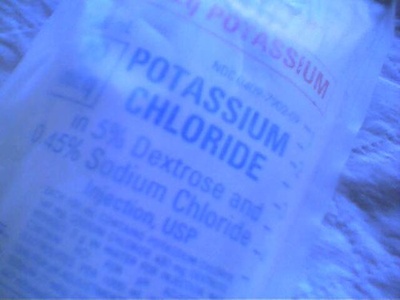
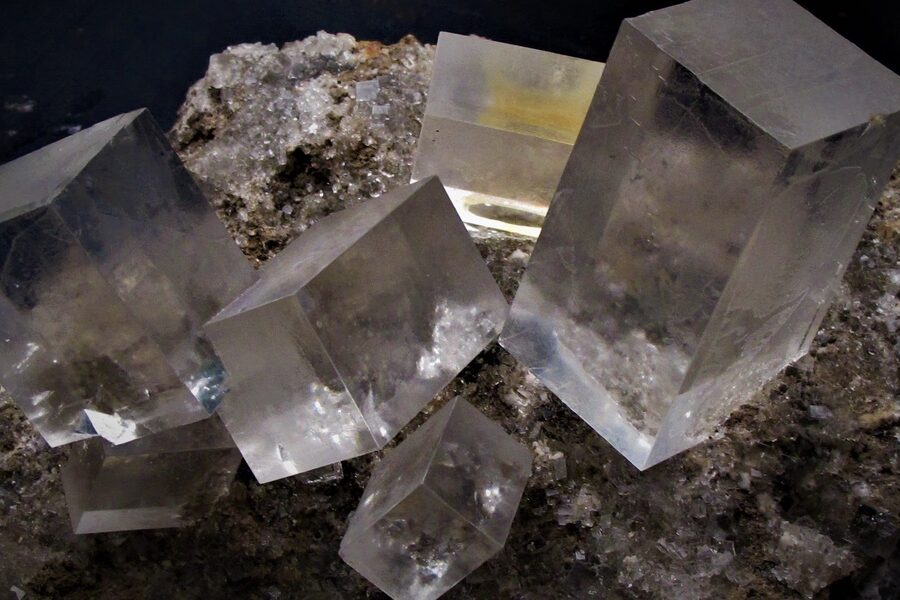
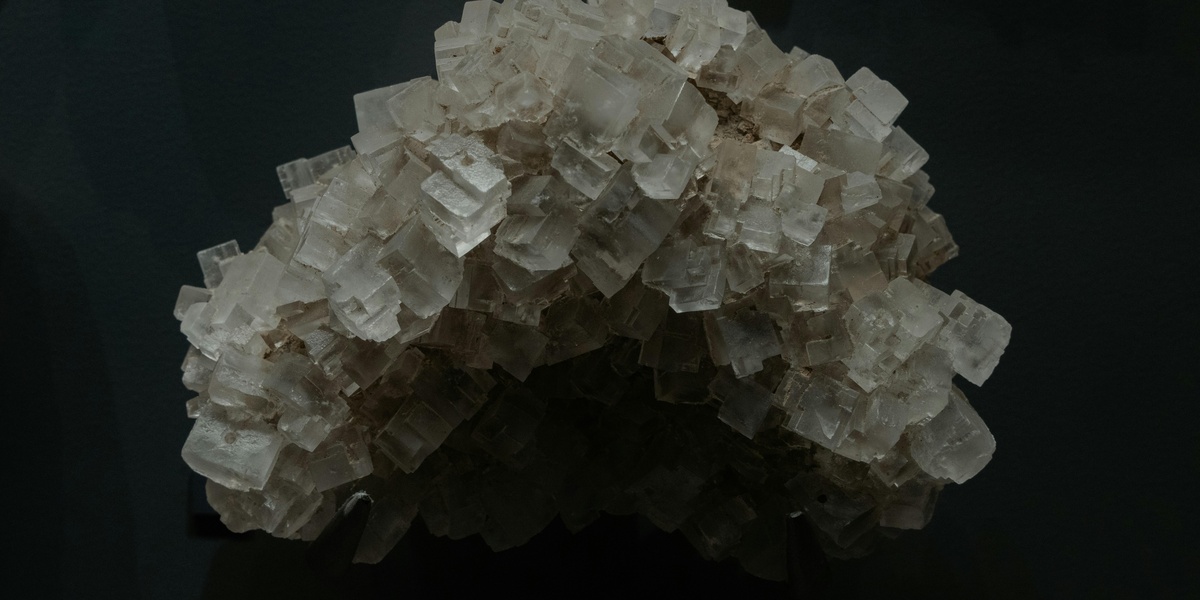
Potassium chloride
A common white salt found naturally as the mineral sylvite and produced industrially from potash. Widely used in fertilizers and medical electrolyte solutions; safe in food amounts but harmful in excess for kidney patients due to high potassium.

Potassium nitrate
A naturally occurring mineral (niter) and industrial fertilizer component, historically used in gunpowder and currently in pyrotechnics and curing meats. Strong oxidizer—care needed storing away from combustible materials and heat.
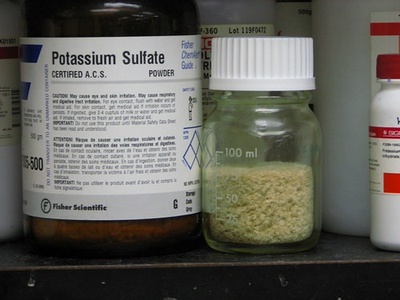
Potassium sulfate
A common potassium fertilizer supplying potassium and sulfur; often mined or manufactured from potash. Relatively safe to handle, but dust can irritate eyes and lungs; not a reducing agent.
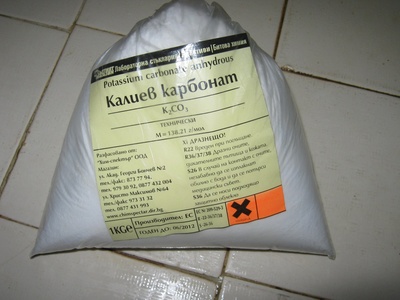
Potassium carbonate
A white, water-soluble salt used in glassmaking, soap production and as a mild alkaline in food processing. Hygroscopic and mildly alkaline; can irritate skin and eyes on contact.
Potassium hydroxide
A strong, caustic base used in soap (liquid), biodiesel, and industrial chemistry. Highly corrosive—causes severe burns on skin and eyes and requires careful handling and protective equipment.
Potassium permanganate
A deep purple crystalline oxidizer used as a disinfectant and in organic chemistry. Effective antiseptic in dilute solutions; strong oxidizer that stains and can cause burns at higher concentrations.
Monopotassium phosphate
A water-soluble phosphate salt used in fertilizers, baking powders and pH buffers. Supplies phosphorus and potassium for plants; generally low toxicity but overuse affects waterways.
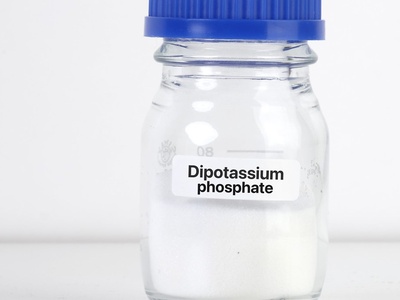
Dipotassium phosphate
A buffering and nutrient salt used in food, pharmaceuticals and agriculture. Soluble and stable; safe in typical food amounts but contributes to phosphate load if overapplied environmentally.
Potassium bicarbonate
Used as baking powder component, mild antacid, and dry chemical fire suppressant for grease/oxygen fires. Less alkaline than carbonate; generally safe but can irritate if inhaled as dust.
Potassium iodide
A water-soluble iodide used to treat iodine deficiency, as a thyroid-blocking agent in nuclear emergencies, and in photography. Generally safe at nutritional doses; excess iodide can upset thyroid function.
Potassium bromide
Once used medically as a sedative and still used in photography and laboratory reagents. Soluble salt that can affect the nervous system at high doses; handled as a chemical reagent.
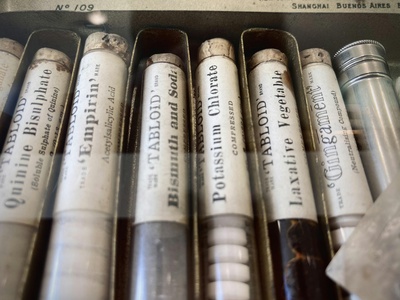
Potassium chlorate
A powerful oxidizer used in match and pyrotechnic mixtures and oxygen generators; historically common but hazardous. Can form explosive mixtures with organics and requires extreme care storing and handling.
Potassium perchlorate
A stable oxidizer used in fireworks, propellants and explosives. Less soluble and more stable than chlorate but still an oxidizer that can enhance combustion and pose explosion risks.
Potassium cyanide
A highly toxic salt used in gold mining and organic synthesis. Extremely poisonous—can cause rapid respiratory failure; strict controls and emergency protocols are essential where it’s used.
Potassium superoxide
A reactive yellow solid used in closed-circuit breathing systems to generate oxygen and remove CO2. Reacts vigorously with water and organics, producing oxygen and heat; handle dry and with caution.
Potassium oxide
A basic oxide used in ceramics and glass manufacture as a potassium source. Not commonly handled as a pure substance; reactive with water to form potassium hydroxide, so it’s corrosive and moisture-sensitive.
Potassium peroxide
A solid peroxide that releases oxygen upon reaction with water; used in niche applications for oxygen supply. Strong oxidizer and reacts violently with organics and moisture—handled only under controlled conditions.
Potassium alum
Also called potash alum; a crystalline mineral and household compound used for water clarification, deodorants and leather tanning. Mild astringent; generally safe but can irritate skin in concentrated form.
Potassium bitartrate (cream of tartar)
A natural wine byproduct used in baking to stabilize egg whites and as acidulant. Prized in kitchens; non-toxic in culinary use but can form crusts in fermenting equipment.
Orthoclase (feldspar)
A common potassium feldspar mineral in granite and soils, used as a raw material for ceramics and glass. Abundant and stable; generally nonhazardous though dust can irritate lungs on prolonged exposure.