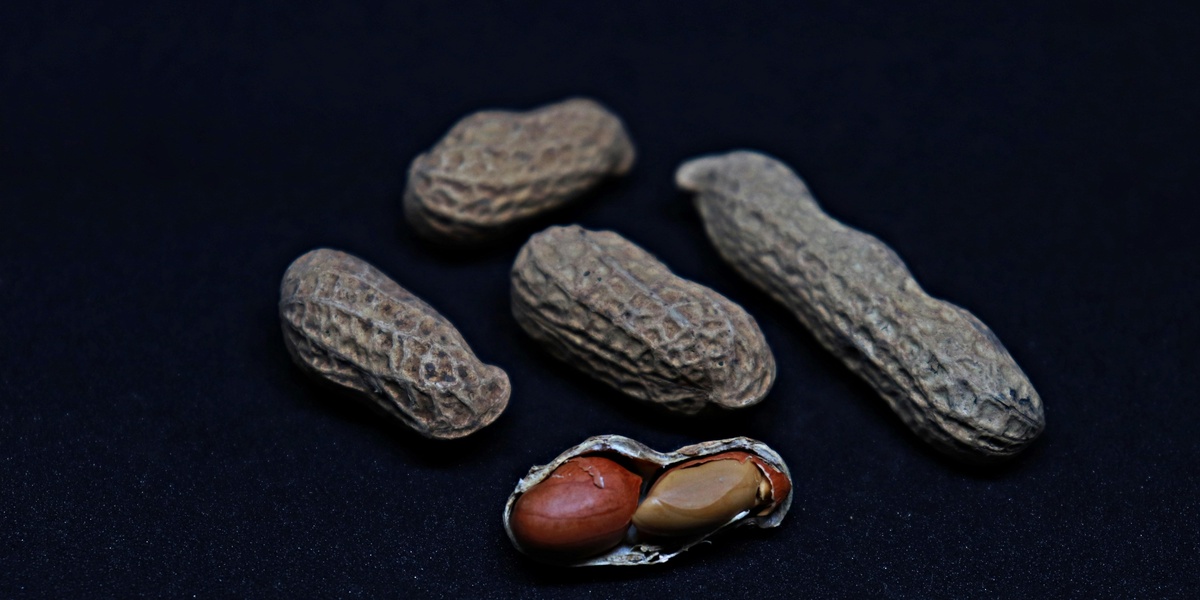
Seeds hide a tiny world you can hold in your hand: from a backyard vegetable plot to a commercial grain silo, each seed carries structures that decide if a plant will sprout, store food, or survive harsh conditions. Noticing those parts helps gardeners, students, and researchers understand growth and storage needs.
There are 20 Parts of a Seed, ranging from Aleurone layer to Tegmen. For each part, you’ll find below entries organized by Scientific name,Location,Main function so you can quickly compare anatomy and role across species — you’ll find below.
How do the major seed parts affect germination?
Each part plays a role: the embryo becomes the seedling, the endosperm or cotyledons supply nutrients, and protective layers like testa and tegmen regulate water and gas exchange. Damage or immaturity in any key part can delay or prevent germination, so observing seed condition gives a quick prediction of viability.
Can I identify these parts without a microscope?
Yes—many features are visible with a hand lens or careful dissection: note size and texture of the testa, look for the hilum and micropyle, and split larger seeds to see cotyledons and the embryo axis. For tiny or internal tissues like the aleurone layer, a microscope or reference images will help.
Parts of a Seed
| Part | Scientific name | Location | Main function |
|---|---|---|---|
| Embryo | Arabidopsis thaliana | Central inside seed | Develops into the new seedling after germination. |
| Cotyledon | Phaseolus vulgaris | Inside embryo; one or two seed leaves | Stores nutrients; may act as first photosynthetic leaves. |
| Radicle | Pisum sativum | Basal tip of the embryo | Becomes the primary root of the seedling. |
| Plumule | Pisum sativum | Embryonic shoot above cotyledons | Develops into the shoot (stem and leaves). |
| Endosperm | Triticum aestivum | Surrounding or adjacent to embryo | Nutrient tissue that feeds the developing embryo. |
| Perisperm | Beta vulgaris | Derived from nucellus around embryo | Stores nutritive reserves from maternal tissue. |
| Seed coat/Testa | Glycine max | Outer covering of the seed | Protects embryo and controls water and gas exchange. |
| Tegmen | Ricinus communis | Inner layer of the seed coat beneath testa | Inner protective layer often thin and membranous. |
| Micropyle | Pisum sativum | Small pore near seed surface | Small opening for water uptake and pollen-tube entry in development. |
| Hilum | Phaseolus vulgaris | Scar on seed surface at funiculus attachment | Marks attachment point; exit scar of ovule’s stalk. |
| Funiculus | Phaseolus vulgaris | Short stalk connecting seed to placenta | Connects seed to parent; supplies nutrients during development. |
| Aril | Litchi chinensis | Fleshy outgrowth covering seed or part of it | Attracts animals for seed dispersal; protects seed. |
| Caruncle (Strophiole) | Ricinus communis | Fleshy appendage near the hilum | Aids dispersal or water uptake; attracts animals. |
| Elaiosome | Trillium grandiflorum | Oil-rich appendage on seed surface | Attracts ants for dispersal (myrmecochory). |
| Raphe | Phaseolus vulgaris | Raised ridge along seed surface from funiculus | Marks funiculus fusion path; influences seed shape. |
| Chalaza | Pisum sativum | Base region opposite the micropyle | Nexus where tissues meet; nutrient path to embryo. |
| Scutellum | Zea mays | Single cotyledon of grass (embryo side) | Absorbs endosperm nutrients during monocot germination. |
| Coleoptile | Zea mays | Protective sheath over the plumule in monocots | Protects emerging shoot as it grows through soil. |
| Coleorhiza | Zea mays | Protective sheath around radicle in monocots | Encloses and protects the embryonic root during germination. |
| Aleurone layer | Triticum aestivum | Outer cell layer of endosperm | Secretes enzymes to mobilize stored reserves at germination. |
Images and Descriptions
Embryo
The embryo is the tiny, multicellular young plant inside the seed containing the future root, shoot and seed leaves. It forms during fertilization and remains dormant until conditions trigger germination, then grows into a seedling using stored reserves.
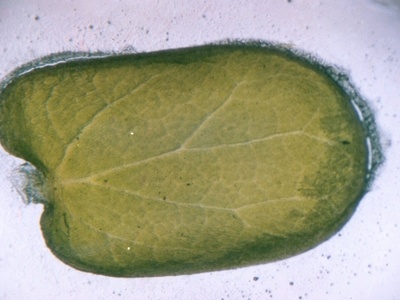
Cotyledon
Cotyledons are seed leaves within the embryo that supply stored food to the young plant. Dicots often have two thick, storage cotyledons (beans), while monocots have a single reduced cotyledon (scutellum) specialized for nutrient absorption.
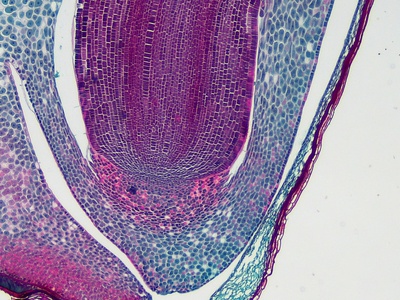
Radicle
The radicle is the embryonic root that elongates first at germination to anchor the seedling and absorb water and nutrients. Its growth orientation determines the primary root system and it develops root meristems and root hairs.
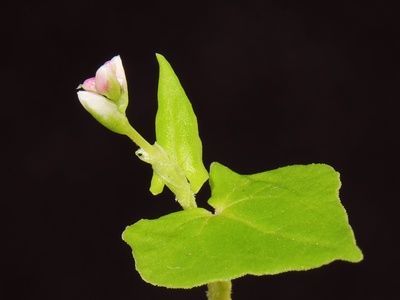
Plumule
The plumule is the young shoot inside the embryo that forms the stem and first true leaves after germination. It is protected by surrounding structures (cotyledons or coleoptile in monocots) until it reaches light and begins photosynthesis.
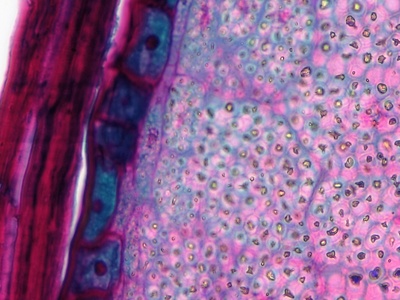
Endosperm
Endosperm is nutritive tissue formed by double fertilization in many seeds, rich in starch, proteins and oils. It sustains the embryo during germination; in cereals (wheat, maize) it is a major food reserve for the seedling and for humans.
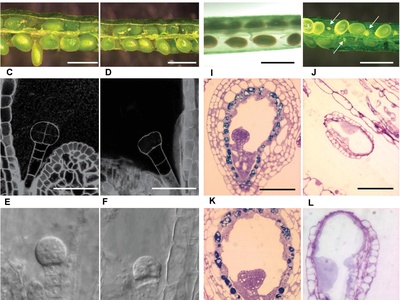
Perisperm
Perisperm is nutritive tissue derived from the nucellus (maternal tissue) rather than the endosperm. It occurs in some species (e.g., beet, coffee relatives) and stores carbohydrates or oils that support embryo development and germination.
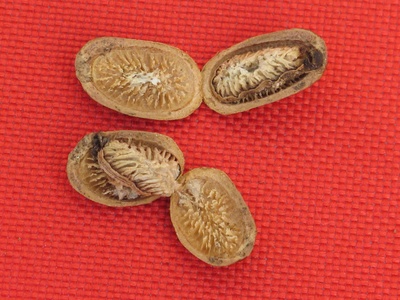
Seed coat/Testa
The seed coat (testa) develops from the ovule integuments and forms a tough outer layer protecting the embryo and reserves. It regulates dormancy, water uptake and gas diffusion, and often bears surface features like hairs, colors, or seed markings.

Tegmen
The tegmen is the inner integument-derived layer of the seed coat lying beneath the testa. In many species it is a delicate, membranous layer that contributes to protection and sometimes forms distinctive patterns or colored layers inside the seed coat.
Micropyle
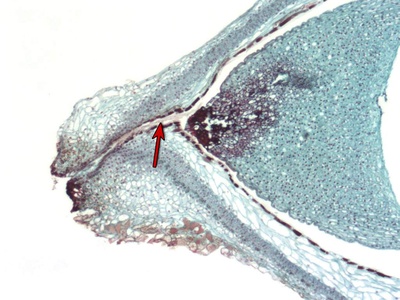
The micropyle is a tiny opening in the seed coat at the site where the pollen tube entered during fertilization. In mature seeds it often acts as a channel for water uptake during germination and can be a key identifying feature on seed surfaces.
Hilum
The hilum is the scar left on the seed where it was attached to the ovary by the funiculus. It appears as a small mark or groove and is useful for identifying species and determining seed orientation and polarity.
Funiculus
The funiculus is the stalk that joins the developing seed to the maternal tissue in the fruit wall (placenta). It carries nutrients and hormones to the ovule during development and later leaves the hilum scar when the seed detaches.
Aril
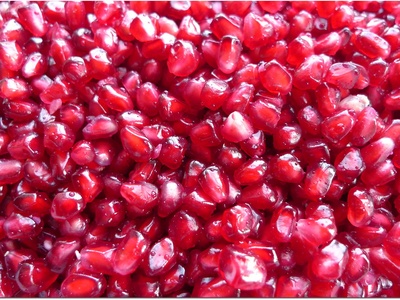
An aril is a fleshy, often colorful outgrowth from the seed that covers part or all of it (like lychee flesh or yew aril). It is rich in sugars or lipids and entices animals to eat and disperse the seeds.
Caruncle (Strophiole)
The caruncle or strophiole is a small, often fleshy or lipoid appendage at the hilum seen in some seeds (e.g., castor bean). It may attract dispersers, aid in water absorption at germination, or play a role in seed-soil interactions.
Elaiosome
Elaiosomes are nutrient-rich, fatty appendages on seeds that attract ants and other insects. Ants carry seeds back to nests, eat the elaiosome, and discard the seed in nutrient-rich microsites, aiding dispersal and safe burial for germination.
Raphe
The raphe is a ridge on the seed surface formed where the funiculus becomes fused or extends along the seed. It is prominent in many legumes and can affect seed curvature and orientation; useful in seed identification and anatomy studies.
Chalaza
The chalaza is the region of the seed where the integuments, nucellus and funiculus converge, serving as a structural and nutritional junction. It often anchors maternal tissue connections and can include specialized cells for nutrient transfer to the embryo.
Scutellum
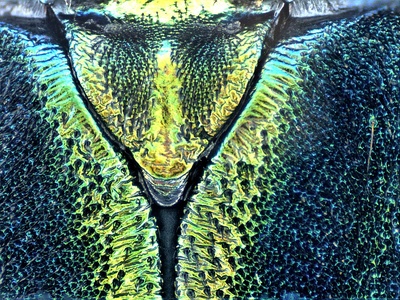
The scutellum is the single, shield-shaped cotyledon of grasses and cereals that lies against the endosperm. It absorbs and transfers stored nutrients from the endosperm to the growing embryo and secretes enzymes to mobilize food reserves.
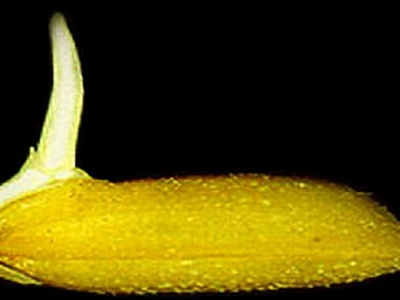
Coleoptile
The coleoptile is a protective, pointed sheath that surrounds the young shoot (plumule) in monocot seeds like maize. It shields delicate tissues as the shoot pushes through soil; once above ground, the coleoptile stops elongating and the true leaves emerge.
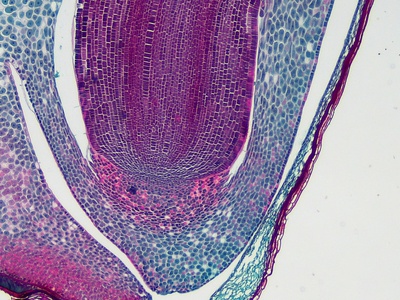
Coleorhiza
The coleorhiza is a sheath that surrounds the radicle in many monocot seeds, protecting the embryonic root as it penetrates soil. It may regulate root emergence timing and interacts with surrounding tissues during initial root growth.
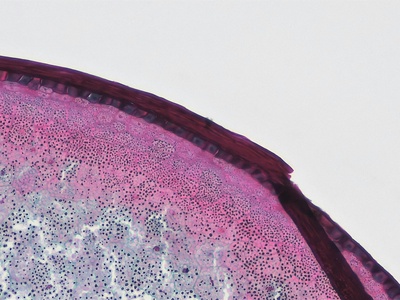
Aleurone layer
The aleurone is a living layer of protein-rich cells lining the endosperm in many cereals. At germination it produces enzymes (like amylases and proteases) that break down starches and proteins in the endosperm, releasing nutrients for the growing embryo.