On a clear night or in a star atlas, some stars stand out not for brightness alone but for their swollen, reddish profiles; these are the evolved giants that mark late stages of stellar life across constellations and catalogs.
There are 10 Examples of Red Giants, ranging from Aldebaran to VY Canis Majoris. For each entry you’ll find below data organized as Designation,Radius (R☉),Distance (ly) so you can quickly compare how size and distance vary among these stars — see the full list you’ll find below.
How do astronomers determine a red giant’s radius?
Radius estimates come from combining an angular diameter (measured by interferometry or lunar occultations) with a distance measurement; when direct angular sizes aren’t available, models use luminosity and temperature to infer radius in solar radii.
What does a star being a red giant tell us about its future?
A red giant has exhausted core hydrogen and expanded while burning hydrogen in a shell; lower-mass giants will shed envelopes and form planetary nebulae, while very massive ones may progress toward core collapse, depending on their mass.
Examples of Red Giants
| Name | Designation | Radius (R☉) | Distance (ly) |
|---|---|---|---|
| Betelgeuse | Alpha Orionis | 764.00 | 642.50 |
| Antares | Alpha Scorpii | 680.00 | 550.00 |
| Arcturus | Alpha Bootis | 25.40 | 36.72 |
| Aldebaran | Alpha Tauri | 44.20 | 65.10 |
| Pollux | Beta Geminorum | 8.80 | 33.78 |
| Mira | Omicron Ceti | 332.00 | 300.00 |
| Mu Cephei | Mu Cephei (Herschel’s Garnet Star) | 1,420.00 | 3,840.00 |
| VY Canis Majoris | VY CMa | 1,420.00 | 3,900.00 |
| R Leporis | R Leporis (Hind’s Crimson Star) | 350.00 | 1,300.00 |
| Gacrux | Gamma Crucis | 84.00 | 88.62 |
Images and Descriptions

Betelgeuse
M2 Iab red supergiant famous for its huge size and recent dimming events; roughly 760 times the Sun’s radius and about 640 light-years away, notable as a nearby candidate to explode as a supernova within astronomical timescales.
Antares
M1.5 Iab red supergiant anchoring Scorpius; about 680 times the Sun’s radius and ~550 light-years away. Its deep red color and binary companion make it an iconic naked-eye example of a massive evolved star.
Arcturus
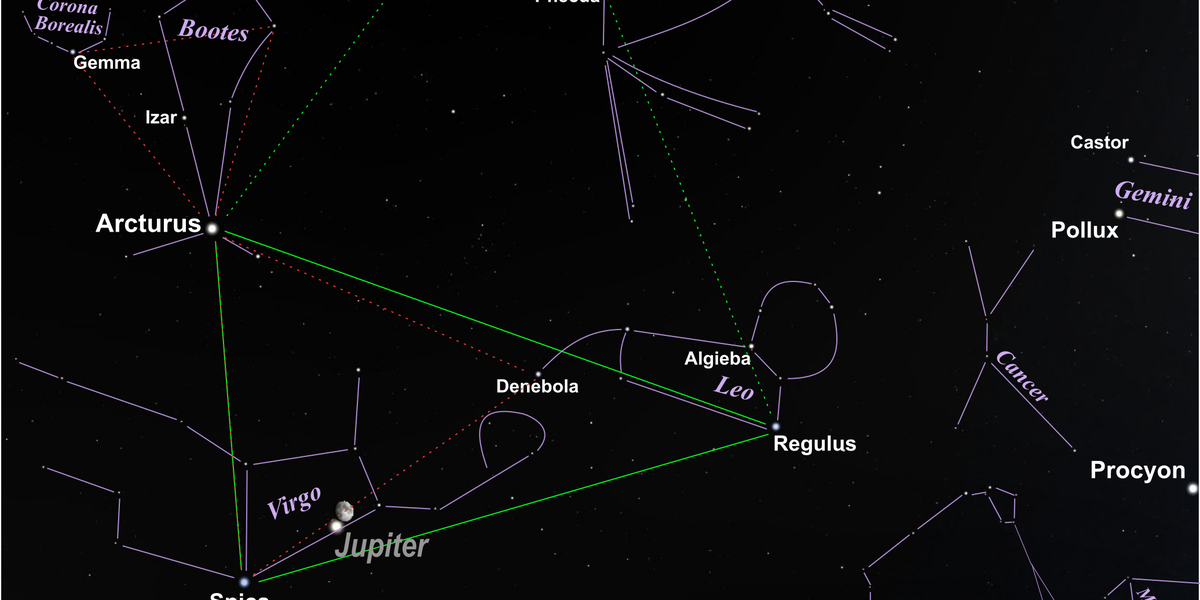
K1.5 III orange-red giant and one of the brightest stars in the night sky; about 25 times the Sun’s radius and 36.7 light-years away. Notable as a nearby, well-studied example of a low-mass red giant.
Aldebaran
K5 III orange giant marking the eye of Taurus; roughly 44 times the Sun’s radius and about 65 light-years distant. Known for its brightness, reddish hue, and role as a guide star in the winter sky.
Pollux
K0 III orange giant in Gemini with a confirmed exoplanet; about 9 times the Sun’s radius and 33.8 light-years away. Notable as the brightest star in Gemini and a nearby evolved star with a planet.
Mira
M-type Mira variable (M6–M9e) classical pulsating red giant; around 300–350 times the Sun’s radius and ~300 light-years away. Famous for dramatic brightness changes visible to early telescopic observers and modern amateurs.
Mu Cephei
M2 Ia red supergiant nicknamed the “Garnet Star” for its deep red color; roughly 1,400 times the Sun’s radius and several thousand light-years away. Notable for its extreme size and striking appearance to early astronomers.
VY Canis Majoris
M-type red hypergiant among the largest known stars; about 1,400 times the Sun’s radius and nearly 4,000 light-years distant. Famous for enormous size and heavy mass loss shaping a dusty, asymmetric envelope.
R Leporis
M-type Mira-variable red giant known for an intense deep-red color; roughly 300–400 times the Sun’s radius and ~1,300 light-years away. Popular with amateurs for its vivid red appearance and variability.
Gacrux
M3.5 III red giant at the head of the Southern Cross; about 84 times the Sun’s radius and ~88.6 light-years away. Notable as the nearest M-type giant in Crux and a bright southern celestial landmark.