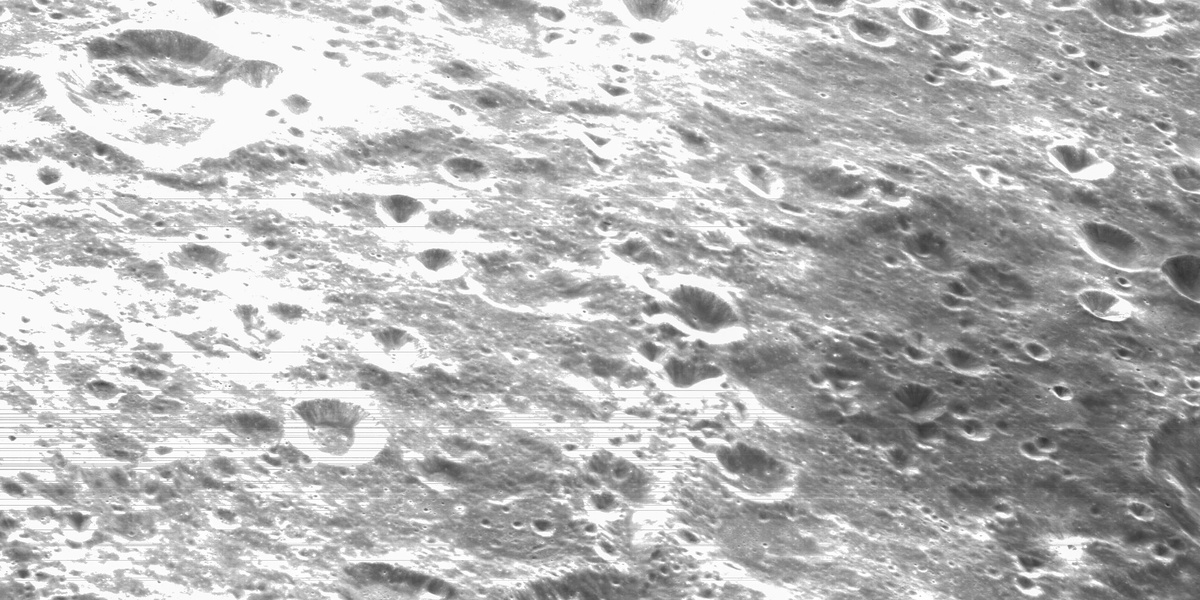
Across the Solar System, natural satellites orbiting planets and dwarf planets record the outcomes of collisions, captures and tidal interactions; studying them helps map planetary history and dynamics. This list gathers those small worlds in one place so you can scan their basic properties quickly.
There are 42 Moons, ranging from Actaea to Xiangliu. For each entry we list Host body,Diameter (km),Orbital period (days), which you’ll find below.
How comprehensive is this list and does it include newly discovered moons?
This list reflects 42 named or confirmed satellites compiled from current catalogs; astronomers continue to find provisional objects, and some discoveries are later reclassified or renamed. For the very latest additions check primary sources such as the IAU or recent survey publications.
What do the columns Host body,Diameter (km),Orbital period (days) tell me?
Host body names the planet or dwarf planet the satellite orbits, Diameter (km) gives an estimated physical size across the object, and Orbital period (days) shows how long it takes to complete one orbit; together these let you compare scale and motion at a glance.
Moons
| Name | Host body | Diameter (km) | Orbital period (days) |
|---|---|---|---|
| Moon | Earth | 3,474 | 27.32 |
| Phobos | Mars | 22 | 0.32 |
| Deimos | Mars | 12 | 1.26 |
| Io | Jupiter | 3,643 | 1.77 |
| Europa | Jupiter | 3,122 | 3.55 |
| Ganymede | Jupiter | 5,268 | 7.15 |
| Callisto | Jupiter | 4,820 | 16.69 |
| Amalthea | Jupiter | 167 | 0.50 |
| Thebe | Jupiter | 100 | 0.67 |
| Himalia | Jupiter | 170 | 250.56 |
| Titan | Saturn | 5,151 | 15.95 |
| Rhea | Saturn | 1,527 | 4.52 |
| Iapetus | Saturn | 1,469 | 79.32 |
| Dione | Saturn | 1,123 | 2.74 |
| Tethys | Saturn | 1,062 | 1.89 |
| Enceladus | Saturn | 504 | 1.37 |
| Mimas | Saturn | 396 | 0.94 |
| Hyperion | Saturn | 270 | 21.28 |
| Phoebe | Saturn | 213 | 550.48 |
| Janus | Saturn | 179 | 0.69 |
| Epimetheus | Saturn | 116 | 0.69 |
| Titania | Uranus | 1,578 | 8.71 |
| Oberon | Uranus | 1,523 | 13.46 |
| Ariel | Uranus | 1,158 | 2.52 |
| Umbriel | Uranus | 1,169 | 4.14 |
| Miranda | Uranus | 472 | 1.41 |
| Triton | Neptune | 2,710 | 5.88 |
| Nereid | Neptune | 340 | 360.13 |
| Proteus | Neptune | 420 | 1.12 |
| Despina | Neptune | 148 | 0.34 |
| Charon | Pluto | 1,212 | 6.39 |
| Nix | Pluto | 49 | 24.85 |
| Hydra | Pluto | 51 | 38.20 |
| Styx | Pluto | 16 | 20.16 |
| Kerberos | Pluto | 19 | 32.13 |
| Dysnomia | Eris | 700 | 15.78 |
| Hi’iaka | Haumea | 320 | 49.12 |
| Namaka | Haumea | 170 | 18.28 |
| Vanth | Orcus | 442 | 9.54 |
| Weywot | Quaoar | 80 | 12.04 |
| Xiangliu | Gonggong | 100 | — |
| Actaea | Salacia | 170 | 5.49 |
Images and Descriptions
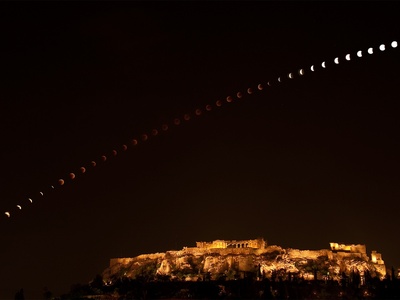
Moon
Known since antiquity, the Moon orbits Earth and measures about 3,474 km across. First observed by humans long before recorded history; it is tidally locked, drives tides, and remains the most familiar and studied natural satellite in our sky.
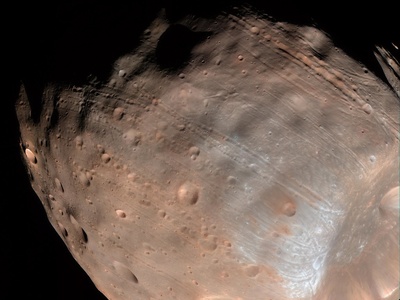
Phobos
Discovered 1877, Phobos is Mars’s larger inner moon, about 22 km across. It orbits very quickly every 0.32 days and shows grooves and a battered surface; its inward migration suggests it may eventually break up into a ring.

Deimos
Discovered 1877, Deimos is Mars’s smaller moon at about 12 km diameter. With a 1.26-day orbit it is distant, smooth and asteroid-like, suggesting a captured origin; its low gravity and slow rotation complicate surface operations.
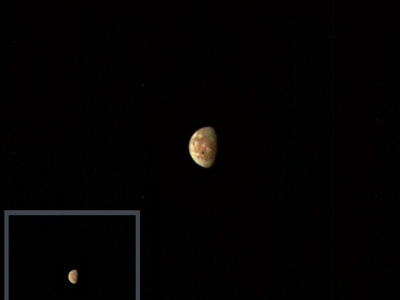
Io
Discovered 1610, Io is a 3,643 km world orbiting Jupiter every 1.77 days. It’s the Solar System’s most volcanically active body, coated with sulfur compounds and constantly resurfaced by lava, offering a dramatic view of tidal heating.
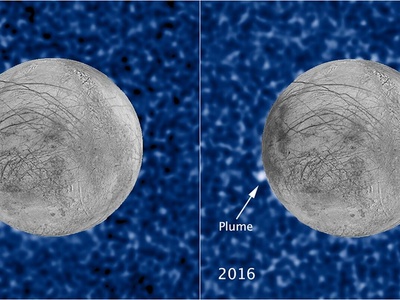
Europa
Discovered 1610, Europa is a 3,122 km icy moon orbiting Jupiter every 3.55 days. Its smooth, cracked surface hides a likely subsurface ocean beneath an icy shell, making Europa a premier destination in the search for extraterrestrial habitability.
Ganymede
Discovered 1610, Ganymede is Jupiter’s giant moon at about 5,268 km diameter, larger than Mercury. It orbits every 7.15 days and hosts an intrinsic magnetic field plus complex geology and possible subsurface oceans.
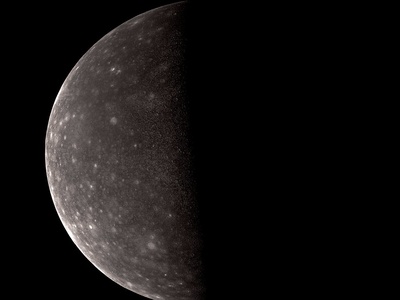
Callisto
Discovered 1610, Callisto spans about 4,820 km and orbits Jupiter every 16.69 days. Its heavily cratered ancient surface records early Solar System history, and its deep subsurface may host layered ice and liquid layers.
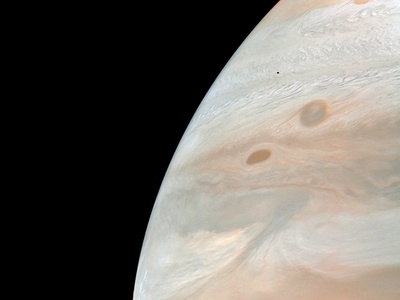
Amalthea
Discovered 1892, Amalthea is an irregular inner moon of Jupiter about 167 km across. It orbits close in 0.50 days, contributes to Jupiter’s faint ring material, and has a reddish, porous surface indicative of primitive material.
Thebe
Discovered 1979, Thebe is a small irregular Jovian moon around 100 km across with a 0.67-day orbit. It’s embedded in Jupiter’s inner magnetosphere and supplies material to faint rings while showing a heavily cratered surface.
Himalia
Discovered 1904, Himalia is Jupiter’s largest irregular prograde moon at roughly 170 km across. It orbits far out in about 250.56 days and is likely a captured asteroid or a fragment from an ancient collisional family.
Titan
Discovered 1655, Titan is Saturn’s huge moon at about 5,151 km diameter with a 15.95-day orbit. It has a thick nitrogen atmosphere, methane weather and surface lakes, making it one of the most Earthlike bodies in the Solar System.
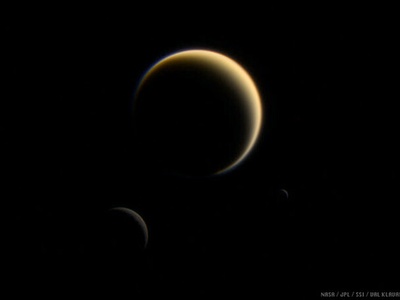
Rhea
Discovered 1672, Rhea is Saturn’s second-largest icy moon at about 1,527 km across with a 4.52-day orbit. Its cratered surface and wispy rings of debris suggest a complex collisional past and interesting internal structure.
Iapetus
Discovered 1671, Iapetus is a distinctive Saturnian moon about 1,469 km wide with a 79.32-day orbit. It shows a dramatic two-tone surface and an equatorial ridge, raising questions about its formation and evolution.
Dione
Discovered 1684, Dione is an icy Saturn moon about 1,123 km across with a 2.74-day orbit. Its bright, fractured terrain and wispy fractures suggest past tectonic activity and possible subsurface layers worth studying.
Tethys
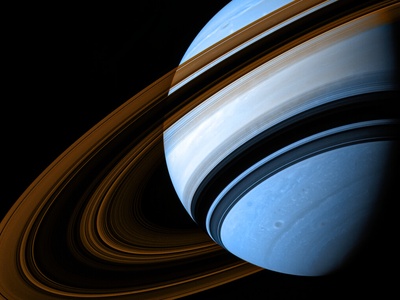
Discovered 1684, Tethys is a 1,062 km Saturnian moon orbiting every 1.89 days. Its enormous Odysseus crater and the massive Ithaca Chasma canyon reveal a dramatic collisional and tectonic history.
Enceladus
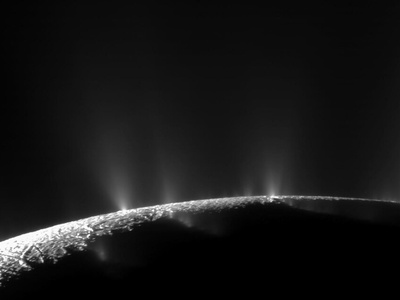
Discovered 1789, Enceladus is a bright 504 km Saturn moon with a 1.37-day orbit. Its south-pole geysers eject water ice and organics, feeding Saturn’s E ring and making Enceladus a prime target for habitability studies.
Mimas
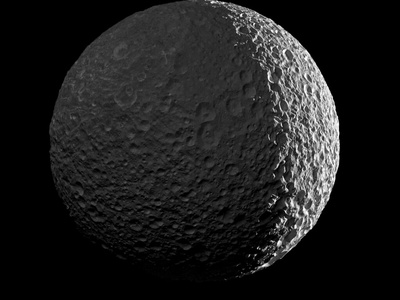
Discovered 1789, Mimas is a 396 km Saturn moon with a 0.94-day orbit known for its giant Herschel crater giving it a “Death Star” appearance; it provides clues about crustal strength and impact history.
Hyperion
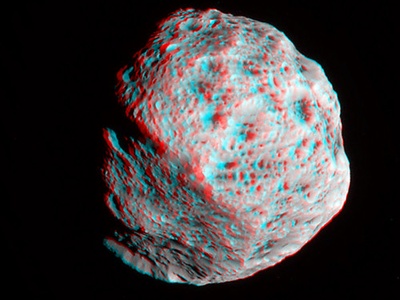
Discovered 1848, Hyperion is a sponge-like, chaotic-rotating Saturn moon about 270 km across with a 21.28-day orbit. Its irregular shape and low density make it one of the Solar System’s most porous bodies.
Phoebe
Discovered 1898, Phoebe is a 213 km retrograde outer moon of Saturn orbiting in about 550.48 days. Its dark, carbon-rich surface suggests it is a captured object from the outer Solar System, possibly a centaur or Kuiper belt body.

Janus
Discovered 1966, Janus is a 179 km co-orbital moon of Saturn that swaps orbital positions with Epimetheus roughly every four years. It orbits in about 0.69 days and helps shepherd parts of Saturn’s rings.
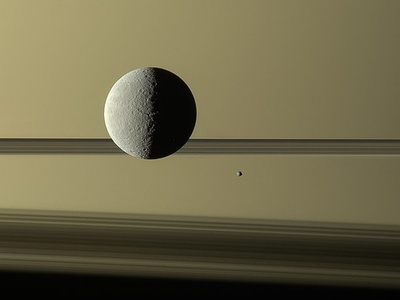
Epimetheus
Discovered 1980 (distinct from earlier sightings), Epimetheus is about 116 km across and shares Janus’s orbit, swapping positions every few years. Its 0.69-day period and irregular shape point to a collisional origin.
Titania
Discovered 1787, Titania is Uranus’s largest moon at about 1,578 km across with an 8.71-day orbit. It displays faults and canyon systems, indicating a complex internal evolution likely driven by ancient heating or impacts.
Oberon
Discovered 1787, Oberon is about 1,523 km in diameter and orbits Uranus every 13.46 days. Its heavily cratered, ancient surface preserves records of early bombardment and shows enigmatic darker regions.
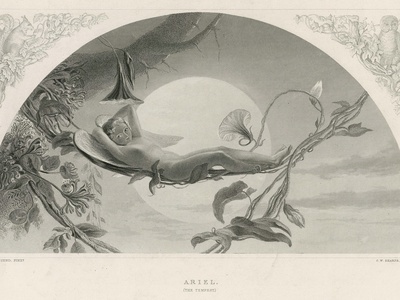
Ariel
Discovered 1851, Ariel is an icy Uranian moon about 1,158 km across that orbits every 2.52 days. Its bright, faulted terrain and canyons suggest past internal activity and significant resurfacing events.
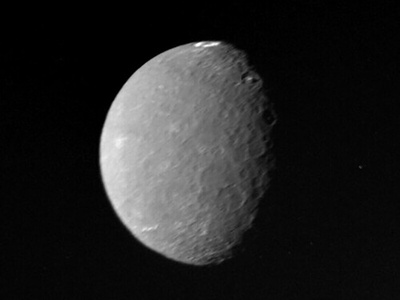
Umbriel
Discovered 1851, Umbriel is about 1,169 km across and orbits Uranus every 4.14 days. Its dark surface and abundant craters mark an ancient world that is little altered since heavy bombardment.
Miranda
Discovered 1948, Miranda is a small but geologically extreme Uranian moon about 472 km across with a 1.41-day orbit. Its patchwork of terraces, cliffs and coronae suggests past melting and massive tectonic reshaping.
Triton
Discovered 1846, Triton is Neptune’s largest moon at roughly 2,710 km and orbits retrograde every 5.88 days, implying capture. Its young surface, geysers, and possible subsurface ocean make it an intriguing, active captured Kuiper belt object.
Nereid
Discovered 1949, Nereid is a roughly 340 km irregular outer moon of Neptune with a highly eccentric 360.13-day orbit. Its variable distance and brightness suggest a chaotic dynamical past or capture from the Kuiper belt.
Proteus
Discovered 1989, Proteus is a dark, irregular inner moon of Neptune about 420 km across that orbits every 1.12 days. It is heavily cratered and was likely shaped by large impacts long ago.
Despina
Discovered 1989, Despina is a small inner moon of Neptune around 148 km across with a 0.34-day orbit. It lies close to Neptune’s Roche limits and shows a smooth, heavily scarred surface from impacts.
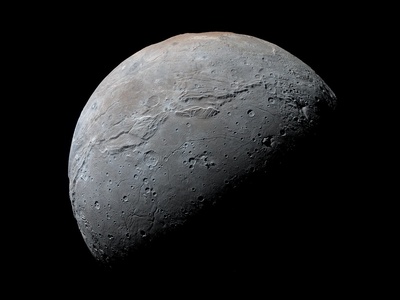
Charon
Discovered 1978, Charon is Pluto’s largest moon at roughly 1,212 km across, locked in a mutual orbit every 6.39 days. Its vast chasms and water-ice-rich surface reflect a complex collisional formation history with Pluto.
Nix
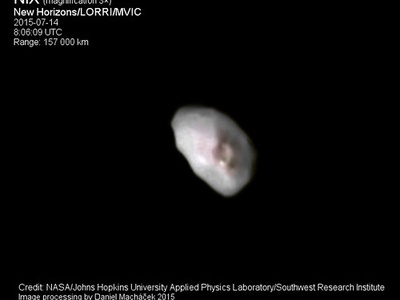
Discovered 2005, Nix is a small Pluto moon about 49 km across orbiting in 24.85 days. It has a bright, icy surface and contributes to the dynamical complexity of Pluto’s compact satellite system.
Hydra
Discovered 2005, Hydra is about 51 km across and orbits Pluto every 38.20 days. It’s icy and bright, and its orbital resonances with the other small moons help maintain Pluto’s stabilized satellite architecture.
Styx
Discovered 2012, Styx is a tiny 16 km inner moon of Pluto with a 20.16-day orbit. It orbits close among Pluto’s small moons in a tightly packed system and has an irregular, elongated shape.
Kerberos
Discovered 2011, Kerberos is a small 19 km moon orbiting Pluto in about 32.13 days. Its dark surface and chaotic rotations likely result from collisions during the formation and evolution of Pluto’s satellite family.
Dysnomia
Discovered 2005, Dysnomia is Eris’s moon with an estimated diameter of about 700 km and a 15.78-day orbit. Its presence enabled precise mass estimates for Eris and confirmed Eris’s status among the largest dwarf planets.
Hi’iaka
Discovered 2005, Hi’iaka is Haumea’s larger moon at about 320 km across with a 49.12-day orbit. Its icy surface and fast rotation tie it to Haumea’s collisional family and the dwarf planet’s rapid spin.
Namaka
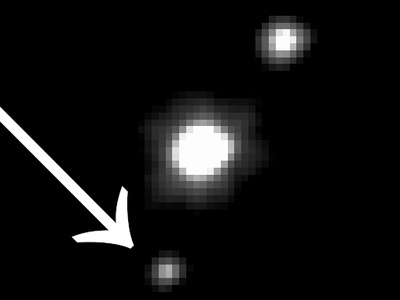
Discovered 2005, Namaka is Haumea’s smaller moon, roughly 170 km across, with an 18.28-day orbit. Its inclined, interacting orbit with Hi’iaka reflects a dynamically active history after Haumea’s giant collisional event.
Vanth
Discovered 2005, Vanth orbits the dwarf planet Orcus and is roughly 442 km in diameter, with a 9.54-day orbit. Its relatively large size compared to Orcus hints at a possible binary formation or capture origin.
Weywot
Discovered 2007, Weywot is Quaoar’s small moon, about 80 km across, orbiting in roughly 12.04 days. Its presence allowed precise mass estimates for Quaoar and illustrates collisions among large Kuiper belt objects.
Xiangliu
Discovered 2016, Xiangliu is the small moon of dwarf planet Gonggong (2007 OR10), roughly 100 km across with a multi-day orbit. Its detection confirmed Gonggong’s binary nature and aided estimates of the system’s mass and dynamics.
Actaea
Discovered 2006, Actaea is the moon of dwarf planet Salacia, about 170 km in diameter, orbiting roughly every 5.49 days. Its discovery enabled mass and density estimates for Salacia, suggesting a mostly icy composition.